 I
Walls & gates · listed 1951Ypres TowerOn the list as Ypres Tower and part of Rye Town WallPhoto: Tilman2007 · CC BY-SA 4.0
 Ypres Tower and part of Rye Town Wall · Photo: Tilman2007 · CC BY-SA 4.0
A+History Grade
History of Rye · Historic England
303 listed buildings, 4 of them Grade I
On the Historic England list, all of them stand inside Rye’s built-up area, 620 for every 10,000 residents. It also has 8 scheduled monuments. 32% of its homes were built before 1919. We have photos of 17 of its listed buildings and 2 old views of the town. Rye grades A+ for history: #1 of 26 in East Sussex.
Listed buildings
303
620 per 10,000 residents
Grade I
4
exceptional interest
Grade II*
10
more than special interest
Scheduled monuments
8
nationally important sites
Homes built before 1919
32%
typical UK town 15%
In pictures
Rye in 23 photos and old views
Nearly every Grade I and II* building, photographed, and the town before 1950. Tap a photo to step through them full screen.
 Church of St MaryGrade I listed
 Rye Working Men's Conservative ClubGrade I listed
 Rye WindmillGrade II listed
 The Crown InnGrade II listed
 Harbour LightsGrade II listed+18See all photos
Photos from Wikimedia Commons and Geograph, copied to our own server, each credited to its photographer with its licence; names open the building’s page or its official list entry.
Through time
Rye from 1720 to 1945
An old map and 2 old photos and postcards, in date order. All public domain, made before 1950.
 c. 1720
 c. 1944
 1945
Public domain, from Wikimedia Commons, copied to our own server. Each credit opens the image’s page with its full description and history.
The map
Where Rye’s history is
Every Grade I and II* building, monument and historic park.
Grade IGrade II*Scheduled monument400 m from Church of St Mary
4 of 4Grade I buildings stand within 400 m of Church of St Mary, a five-minute walk. So do 268 of the 303 listed buildings.
0 of 5neighbourhoods have mostly pre-1919 homes; in the oldest, 49% were built before 1919.
Hover a dot for its name; tap one with a photo to open it.
303 listed buildings by grade
4 Grade I10 Grade II*289 Grade II
Historic England lists buildings in three grades: Grade I for buildings of exceptional interest (about 2.5% of all listed buildings), Grade II* for particularly important buildings of more than special interest (about 5.8%), and Grade II for buildings of special interest (about 91.7%). Listing protects the whole building, inside and out.
Every entry on the National Heritage List for England whose point lies inside the ONS 2022 built-up-area boundary. One list entry can cover a terrace or a group of buildings.
Grade I
The 4 Grade I listed buildings in Rye
Buildings of exceptional interest, about 2.5% of all listed buildings; 4 of these stand within 400 m of Church of St Mary. Every one is photographed. Each opens its own page, with the official list entry.
 I
Church · listed 1951Church of St MaryPhoto: Tilman2007 · CC BY-SA 4.0
 I
House · listed 1951The Old Grammar SchoolOn the list as Rye Working Men's Conservative ClubPhoto: Tilman2007 · CC BY-SA 4.0
 I
House · listed 1951The LandgatePhoto: Tilman2007 · CC BY-SA 4.0
Grade II*
The 10 Grade II* listed buildings in Rye
Particularly important buildings of more than special interest. Every one is photographed.
 II*
Public · listed 1951Bank Chambers (The Justices' Clerk's Offices)Photo: Tilman2007 · CC BY-SA 4.0
 II*
House · listed 1951Cobble CottagePhoto: Tilman2007 · CC BY-SA 4.0
 II*
Inns & shops · listed 1951Flushing Inn Monks WayPhoto: Tilman2007 · CC BY-SA 4.0
 II*
House · listed 1951Hartshorn House the LinkPhoto: Tilman2007 · CC BY-SA 4.0
 II*
House · listed 1951Lamb HousePhoto: Tilman2007 · CC BY-SA 4.0
 II*
Inns & shops · listed 1951The Mermaid InnOn the list as Mermaid House the Mermaid HotelPhoto: Herman.vandenbroeck · CC BY-SA 4.0
 II*
House · listed 1951St Anthony of PaduaPhoto: Tilman2007 · CC BY-SA 4.0
 II*
Public · listed 1951The Town HallPhoto: Tilman2007 · CC BY-SA 4.0
 II*
House · listed 1951The Water Tower (Standing in the North East Corner of the Churchyard)Photo: Tilman2007 · CC BY-SA 4.0
 II*
House · listed 1951104 and 104A, High StreetPhoto: Tilman2007 · CC BY-SA 4.0
Historic streets
High Street has the most listed buildings
Streets by the listed entries with an address on them. One entry can be a whole terrace, so long rows count once.
High Street45 listed · 1 II*

Church Square13 listed
Watchbell Street13 listed
Landgate8 listed
Mermaid Street8 listed
East Street7 listed
Lion Street6 listed
Landgate Square5 listed
Market Street5 listed
Tower Street5 listed
West Street5 listed
Cinque Ports Street4 listed
Of the 303 entries, 139 are named by a street address; the rest are named buildings such as churches, halls and bridges.
What’s protected
Most of Rye’s listed buildings are homes
Every listed building sorted by what its list name says it is.
Houses, terraces & villas262
Inns, shops & warehouses14
Walls, gates & bridges10
Public & civic buildings9
Churches, chapels & priories4
Street furniture3
Memorials, crosses & tombs1
262 entries (86%) are houses, terraces and villas. 4 are churches, chapels and priories, including 1 of the 4 Grade I buildings.
Buildings are sorted by words in each entry’s name (church, gate, inn, memorial…): the list’s open data has no building type. An entry named only by its address counts as a house.
Grade II
289 Grade II listed buildings
Most listed buildings are in this grade, which covers buildings of special interest. Open any building to read its official list entry.
The first 150 of 289 Grade II listed buildings, A to Z
Adult Education Centre and Library Including Attached Wall and GatepiersBlack LanternCadborough OastCannon HouseCauseway CottageChequerChurch HouseCobbled Forecourt, Iron Railings, Gate and Gatepiers to Dormy House ClubCobbled Forecourts to Forge House and the Forge Adjoining Forge HouseCobbled Forecourts to Nos 1-4 (Consecutive)Cobbled LaneCobbled LaneCobbled LaneCobbled LaneCobbled LaneCobbled LaneCobbled LaneCobbled StreetCobbled StreetCobbled StreetCobbled StreetCobbled StreetCobbled and Brick LaneCobblesCourt HayDormers the Point West Point HouseDormy House ClubDurrant HouseEagle CottageEagle HouseEaster CottageElders HouseFerry CottageFletcher's HouseForge House the Forge Adjoining Forge HouseGarage and Garden Room to Point LodgeGarage, Chauffeurs Flat and Attached Walls and Steps to StarlockGardensideGate piers, High StreetGatekeeper's CottageGazebo and Associated Features in the Garden of Point Hill HouseGazebo in Garden of the Tower HouseGazebo in the Garden of No 11GoalthorpeGreensillsHarbour LightsHolloway HouseHolmleaHoneysuckle CottageHope Anchor Hotel, former No 17 (now part of hotel) and 16 Watchbell Street,Jeake's HouseK6 Telephone KioskK6 Telephone Kiosk Adjacent to the Old Borough Arms HotelKing's Head Cottages the King's Head InnKingsland HouseKnowle HouseLa RochelleLamb CottageLandgate HouseLangford HouseLantern CottageLonger HouseMartello TowerMermaid CottageMermaid Rose CottageMint ChambersMint CourtMonastery Guest HouseMountsfieldNeedles CottageNorman HouseOak CottageOak HouseOckman CottageOld RhodesPeacock Lounge and Tea RoomsPoint Hill Point Hill SouthPoint LodgePortion of the Town WallsPortion of the Town Walls to the South of Cinque Ports Street and Adjoining Wish WardPortion of the Town Walls to the South of Cinque Ports Street and West of Conduit HillPortion of the Town Walls to the South of Cinque Ports Street and West of Market RoadPremises on the North Corner of the Strand at Its Junction with the West Side of Wish WardPumpQuaker's HouseQuarter Boys CottageRc Church of St Anthony of PaduaRobin HillRother ViewRye Railway StationRye Signal BoxRye WindmillSail Loft to Point HillSchool Lane CottageSeymour HouseShip CottageSimon the PiemanSouth RidgeSpring PlaceSt Andrews and Part of Cap Griz NezSt MarysSt MichaelsStarlockTara HouseThe Church of the Holy SpiritThe CottageThe Crown InnThe Customs HouseThe End HouseThe ForecastleThe Former Wright and Pankhurst BuildingThe George HotelThe House of GillThe Martello TowerThe MonasteryThe Old Bell Inn and 32, High StreetThe Old Borough ArmsThe Old Coach HouseThe Old Dairy Market (Including Rear Part of Rye Town Wall)The Old HouseThe Old Stone HouseThe Old Trader Traders' CottageThe Old VicarageThe Priest HouseThe PumpThe Ship InnThe Standard InnThe Store HouseThe Studio ChambersThe Tower HouseThe Undercroft of No 46 (The Store House)The Union InnThe Vicarage and TavernersThe Watch HouseThe White HouseThomas HouseTower PlaceTudor CottageTwelveWar Memorial in St Mary's churchyard, RyeWarehouse (Now Rye Tiles Limited)Warehouse at the North West Junction of the Strand and the Quay in the Occupation of Hinds WoodyardWarehouses or Granaries on the West Side of the Strand and in the Occupation of Stonham and Company Agricultural Merchants and H R Clothier Agricultural and Marine Engineers and the Garden CentreWatchbell HouseWaterloo TerraceWest PointWhitefriarsWillow Tree HouseWinston CottageWish House
Conservation areas
1 conservation area covers 100% of Rye
Areas the council protects as a whole: demolition and changes to how buildings look need consent, and trees are protected.
No data available for publication by HE220 ha
220 hain conservation areas, of 220 ha inside the built-up area.
303 of the 303 listed buildings stand in one.
Historic England’s conservation areas layer, supplied by councils (incomplete in places, so a page fact, never graded). Hectares are the part of each area inside the built-up area.
How the list grew
137 of Rye’s 303 listed buildings were added in 1972
The year each building now on the list was first listed.
1972 · 1371951 · 961968 · 34
19501960197019801990200020102020
The first 96 entries were listed in 1951, 4 of the 4 Grade I buildings among them. 137 came in 1972, in the national resurvey of the 1970s and 80s. Only 4 have been added in the last 15 years.
Monuments & landscapes
Monuments, parks and gardens
Designations that overlap the town by a tenth of their area or half a hectare.
8 scheduled monuments
Nationally important archaeological sites and monuments, protected by law; work on them needs consent from the Secretary of State, advised by Historic England.


History Grade
Rye grades A+ for history
Protected heritage and the age of the town’s homes, against all UK towns.
Protected heritage, for its size and in all (337 points, 689 per 10,000 residents)More than 98% of UK towns
Homes built before 1919 (32%)More than 86% of UK towns
Two measures, each ranked against every UK town of 1,000 or more, with protected heritage counting twice as much as the age of homes. Protected heritage counts each listed building by its grade (Grade I three points, II* two, II one), each scheduled monument and battlefield two, and each registered park or garden by its grade; it is ranked both per 10,000 residents and as a total, so a village with one fine church doesn’t outrank a historic city. The second measure is the share of homes built before 1919, from the Valuation Office Agency’s council tax records. History is a character grade: it describes the town and isn’t part of the overall grade.
Homes by age
32% of Rye’s homes were built before 1919
Every home by when it was built, from council tax records, against England & Wales (the dark tick).
28%
Before 1900
3.8%
1900–18
5.3%
1919–29
9.9%
1930s
11%
1945–54
4.2%
1955–64
9.5%
1965–72
5.8%
1973–82
5.9%
1983–92
2.8%
1993–99
5.3%
2000–08
7%
2009–15
1.8%
2016–25
RyeEngland & Wales
28% of homes are Victorian or older, against 16% across England and Wales. The busiest period since was 1945–54, which added 11% of today’s homes.
Valuation Office Agency, council tax stock of properties by build period, 31 March 2025, for the neighbourhoods (LSOAs) that make up the town, split by where their residents live. Homes with no recorded build period (32 here) are left out; 1939–44 is not a period in the data.
Born here
8 notable people born in Rye before 1900
Their lives on one timeline, earliest first.
John Fletcher (playwright)
Bourn Russell
Charles Knight
Isaac Todhunter
George Slade Butler
John Braxton Hicks
Fred Boreham
Alec Vidler
155016001650170017501800185019001950
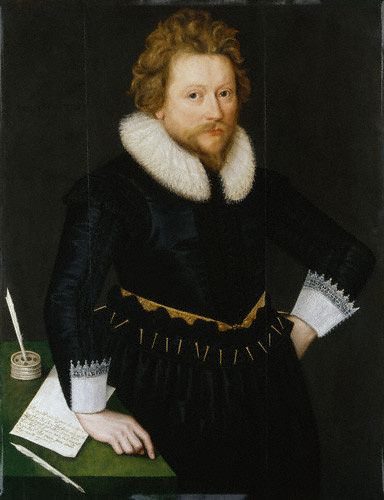
John Fletcher (playwright)1579–1625 · English Jacobean playwright (1579–1625)

Isaac Todhunter1820–1884 · English mathematician (1820-1884)

John Braxton Hicks1823–1897 · English doctor
CK
Charles Knight1808–1891 · British born New Zealand doctor, public servant, botanist and mycolog…
FB
Fred Boreham1885–1951 · English footballer (1885-1951)

Bourn Russell1794–1880 · Politician, mariner, pastoralist, politician and businessman in New S…
GB
George Slade Butler1821–1882 · English lawyer and antiquarian
AV
Alec Vidler1899–1991 · English theologian (1899–1991)
Everyone born in Rye → Birthplaces from Wikidata; portraits from Wikimedia Commons.
Towns its size
Rye has the 14th most Grade I buildings of 953 towns its size
Places of 3,000–8,000 people outside London, by Grade I listed buildings.
Rye4
#4 of 953for listed buildings per resident (620 per 10,000). Sandwich, Tenby and Arundel lead.
13 have more. The typical town its size has 0.
Neighbours
Listed buildings in the places around Rye
In brief
Rye in brief
Few towns are as rich in listed heritage as Rye: per resident it has more than 98% of UK towns. In all there are 303 listed buildings, 4 of them Grade I, including Ypres Tower. Its housing is old: 32% of homes date from before 1919, against 15% in the typical UK town. Its Grade I buildings cluster together: 4 of them stand within 400 m of Church of St Mary.
Only 13 of the 953 towns nearest its size have more Grade I buildings. On High Street alone there are 45 listed buildings. A conservation area protects part of it.
Questions about Rye’s history
How many listed buildings are there in Rye?
Historic England lists 303 buildings inside Rye’s built-up area: 4 Grade I, 10 Grade II* and 289 Grade II.
What are the Grade I listed buildings in Rye?
4, including Church of St Mary, Rye Working Men's Conservative Club, The Landgate and Ypres Tower and part of Rye Town Wall.
Which street in Rye has the most listed buildings?
High Street (45), Church Square (13) and Watchbell Street (13) have the most listed entries named by an address. One entry can be a whole terrace.
Are there scheduled monuments in Rye?
Yes, 8 scheduled monuments, including Austin Friars Chapel, Martello tower no 28 at Rye Harbour, Martello tower no 30, 300m east of Gate Borough Cottage and Rye Hill medieval pottery and tilery, 60m south of Spains.
How many conservation areas are there in Rye?
1, covering about 220 hectares of the town. The largest is No data available for publication by HE.
When were Rye’s buildings listed?
The first in 1951; the most, 137, in 1972.
Are there old photos of Rye?
Yes: 2 public-domain photos and postcards from 1720 to 1944, and an old map from 1945, all on this page.
Who was born in Rye?
Among people born before 1900: John Fletcher (playwright) (1579), Isaac Todhunter (1820), John Braxton Hicks (1823), Charles Knight (1808) and Fred Boreham (1885).
How old are the homes in Rye?
32% of homes were built before 1919 and 47% before 1940, from the Valuation Office Agency’s council tax records (March 2025).
© Historic England 2026. Contains Ordnance Survey data © Crown copyright and database right 2026. The National Heritage List for England is the official, up-to-date register of all nationally protected historic buildings and sites in England; check an entry on Historic England’s website before relying on it.
Sources: Historic England, National Heritage List for England (listed buildings, scheduled monuments, registered parks and gardens, battlefields, World Heritage Sites), October 2026, inside the ONS 2022 built-up-area boundary · Valuation Office Agency, Council Tax: stock of properties by build period (31 March 2025) · TownRatings grades: our own summary of the data, ranked against UK towns only · Historic England conservation areas (supplied by local planning authorities; October 2026). All under the Open Government Licence v3.0.
Contains public sector information licensed under the Open Government Licence v3.0. Contains HM Land Registry data © Crown copyright and database right 2026. Contains OS data © Crown copyright and database right 2026 (ONS boundaries). Northern Ireland: Source: NISRA; contains Land & Property Services data and Ordnance Survey of Northern Ireland information, © Crown copyright, licensed under the Open Government Licence v3.0. Scotland: contains National Records of Scotland data, Registers of Scotland data and SEPA data, © Crown copyright / © SEPA 2025, licensed under the Open Government Licence v3.0.