Scranton’s post office opened in 1851, and 52% of its homes were built before 1940
More historic than 87% of U.S. towns · #228 of 1,035 in Pennsylvania. What drives it
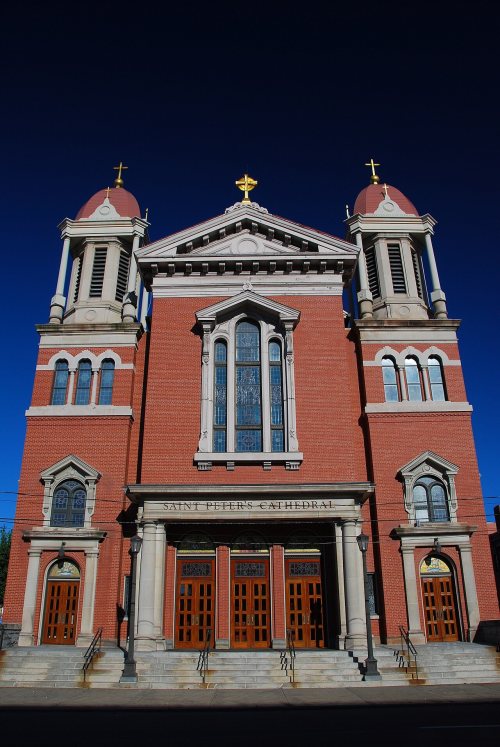
35 places in town are on the National Register, among them the Terence V. Powderly House, a National Historic Landmark, and four historic districts with 101 buildings between them. 35 places in town are on the National Register, among them the Terence V. Powderly House, a National Historic Landmark, and four historic districts with 101 buildings between them. Below: 4 old photos and papers, maps from 1884 on, and the census since 1850.
The Scranton post office opened in 1851, the earliest record of the town by name. Four smaller post offices, Providence (1811), Hyde Park (1832) and Scrantonia (1850), opened inside today’s city and later closed.
First census: 2,730 in 18502020 census: 76,328175 years
How historic is Scranton?
A
More historic than 87% of U.S. towns, on its age, its old homes and the National Register.
Founding year: the first Scranton post office (Blevins & Helbock, CC0).The full story ↓
History grade
What drives Scranton’s History grade
On its age, its old homes and the National Register, Scranton is more historic than 87% of U.S. towns, #228 of 1,035 in Pennsylvania. Its share of homes from before 1940 holds the grade up; its age pulls it down.
A
HistoryA character grade: shown, never part of Scranton’s overall grade.
Pennsylvania towns list about as much on the Register as the country (a typical Pennsylvania town has 2.1 per 10,000 residents, the U.S. 2.4), so Scranton’s 21.8 sits above most of its state (82% of Pennsylvania towns have fewer) while its 166 historic buildings outnumber those of 92% of U.S. towns.
How sure. Graded on any two of the three inputs instead, the letter would range from B+ to A+. The pre-1940 share (±1.9 points) is firm at this size. The founding year is the first post office, not a stated founding date.
Founding year: the first post office (other dates in Quick answers). Homes: Census ACS 2020–24. National Register: National Park Service, May 2026 list; each listing counted once (boundary changes and added documentation belong to their listing), and a historic district counts its contributing buildings. How TownRatings grades history →
What stands out about Scranton’s past
Read from the archive, the National Register and the record. The page puts what stands out first.
The country’s official list of buildings and places worth saving. One is a National Historic Landmark, the highest tier. Boundary changes and added documentation are counted with their listing.
25family graveyards and cemeteries inside Scranton
CathedralGriffenHeermans FamilyItalian AmericanMcDonnellPetersburg MemorialPittston AvenueProvidence JewishRussian Orthodox Cemetery of Saints Peter and PaulSacred Heart LebanesesSacred Hearts of Jesus and MarySaint AnnsSaint John the BaptistSaint Johns Byzantine CatholicSaint Josephs Roman CatholicSaint Mary's Greek OrthodoxSaint MarysSaint Michaels OrthodoxSaint StanislausSaint Stanisluas Polish NationalSaint VladimirSaint Vladimir OidStratfordVon Storch FamilyWashburn Street
See all 25
Cathedral Cemetery · Griffen Cemetery · Heermans Family Burying Ground · Italian American Cemetery · McDonnell Cemetery · Petersburg Memorial Cemetery · Pittston Avenue Cemetery · Providence Jewish Cemetery · Russian Orthodox Cemetery of Saints Peter and Paul · Sacred Heart Lebaneses Cemetery · Sacred Hearts of Jesus and Mary Cemetery · Saint Anns Cemetery · Saint John the Baptist Cemetery · Saint Johns Byzantine Catholic Cemetery · Saint Josephs Roman Catholic Cemetery · Saint Mary's Greek Orthodox Cemetery · Saint Marys Cemetery · Saint Michaels Orthodox Cemetery · Saint Stanislaus Cemetery · Saint Stanisluas Polish National Cemetery · Saint Vladimir Cemetery · Saint Vladimir Oid Cemetery · Stratford Cemetery · Von Storch Family Cemetery · Washburn Street Cemetery
US Post Offices dataset (Blevins & Helbock, CC0). Places and cemeteries from the USGS Geographic Names Information System (2021).
Help out
Start Scranton’s collection
The first neighbors to add old photos shape how Scranton’s history is told.
Decades since 1900 with photos
00s10s20s30s40s50s60s70s80s90s
0 of 10 decades. The empty ones are waiting for someone’s album.
In 1771, during the colonial era, Isaac Tripp, the area's first known white settler, built his home here; it still stands in North Scranton, formerly a separate town known as Providence. More settlers from Connecticut Colony came to the area in the late 18th and early 19th centuries following the end of the American Revolutionary War, since their state claimed the area as part of their colonial charter.
Passages that mention Scranton, cut from the printed page as they were published.
Scranton Semi-Centennial Celebration and Third Industrial Exposition1916 · page 54Read the page →
Read the text
county a service that combines a great business executive ability and an unexcelled efficiency in public office. He was born with the city of Scranton and in the city of Scranton in August, 1866, and he has grown with the city and served it well.
Text read by machine from the scan; it may contain errors.
A city's danger and defense. Or, Issues and results of the strikes of 1877, containing the origin and history of the Scranton city guard1887 · page 154Read the page →
Read the text
Scranton was fortunate in having for her chief officer on that day Robert H. McKune, one of the few Mayors of the cities of Pennsylvania who, in the almost general troubles of the times, manfully stood up for law and order. If it is the true history, the city of Scranton was fortunate that the Mayor's posse was composed of just such men as W. W. Scranton, Lewis Bortree, and their associates. If it is the true history, these defendants I repeat, are entitled to a general finding of not guilty. The case is now with you.
Text read by machine from the scan; it may contain errors.
Scranton Semi-Centennial Celebration and Third Industrial Exposition1916 · page 45Read the page →
Read the text
For the past nine years the Scranton & Binghamton Railroad Company has been an important factor in the growth of the City of Scranton. Operating directly or through subsidiary companies a high speed electric interurban railway it provides the thriving towns and villages in the rich agricultural region to the north with a more
Text read by machine from the scan; it may contain errors.
abouts. By inheritance and purchase he owned at one time over 600 acres of coal lands in the heart of the city of Scranton, and by the sale of these lands he realized a considerable fortune. He was the first burgess of Scranton, and for many
Text read by machine from the scan; it may contain errors.
Scans and text from the Internet Archive. Books published in 1930 or earlier, which are in the public domain.
Timeline
Scranton, 1811 to 1946
Woven from the archive, old maps, post office records, the National Register and the people born here.
Every edition of the U.S. Geological Survey’s map of Scranton. Tap a year, or press play to watch the town change.
1889Scranton sheet · 1:62,500
U.S. Geological Survey historical topographic maps (public domain), via Esri’s collection of the scans. The red ring marks the center of Scranton.
Every building
Scranton, building by building, 1884–1920
Fire insurance maps drew every building, what it was made of and what it was used for, so insurers could price the risk of fire. Pick a year, then a sheet.
The Scranton post office opened in 1851, the earliest record of the town by name (U.S. post office records).
How does Scranton rank for history?
Scranton is more historic than 87% of U.S. towns, #228 of 1,035 in Pennsylvania. The History grade combines the town’s founding era, the share of homes built before 1940 and its National Register listings. It’s a character grade, so it isn’t part of the overall grade. How it works.
What is on the National Register in Scranton?
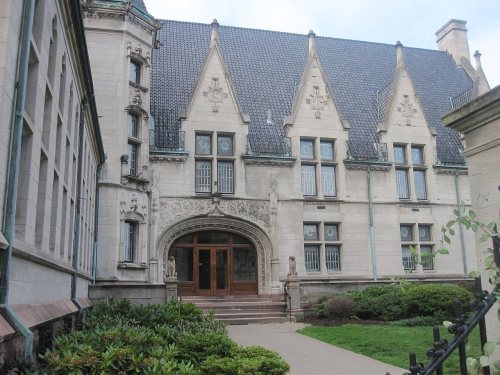
35 listings: 29 buildings, among them the Terence V. Powderly House (a National Historic Landmark since 1966), 4 historic districts with 101 contributing buildings, and 2 structures. 166 historic buildings in all.
How old are the homes in Scranton?
52% of Scranton’s homes were built before 1940 (Census estimate, ±1.9 points), against a typical 18% for a Pennsylvania town; the median home was built in 1938.
Founding dates: Wikidata, Wikipedia, the U.S. post office records of Blevins & Helbock (CC0) and the Census. Homes by year built: Census ACS 2020–24. National Register of Historic Places: National Park Service (list of May 22, 2026). Old photos, postcards and papers: Wikimedia Commons, the Library of Congress and other public archives, credited on each item’s page. Maps: U.S. Geological Survey historical topographic maps (via Esri) and Sanborn fire-insurance maps (Library of Congress). History text and census tables: Wikipedia (CC BY-SA 4.0). Places that used to be: USGS Geographic Names Information System (2021).
From Wikimedia Commons (3), the Library of Congress (1), Wikidata (2), the National Register of Historic Places (35), Wikipedia, Wikidata and Wikipedia for famous people, U.S. Geological Survey historical maps, U.S. Census counts (via Wikipedia), the US Post Offices dataset (Blevins & Helbock), the USGS Geographic Names Information System, Sanborn fire insurance maps (Library of Congress) and old county and town histories (Internet Archive). Archive images are copied here with their credits and licenses, shown on each photo’s page. Refreshed monthly.


 ★ Landmark





 c. 1868


