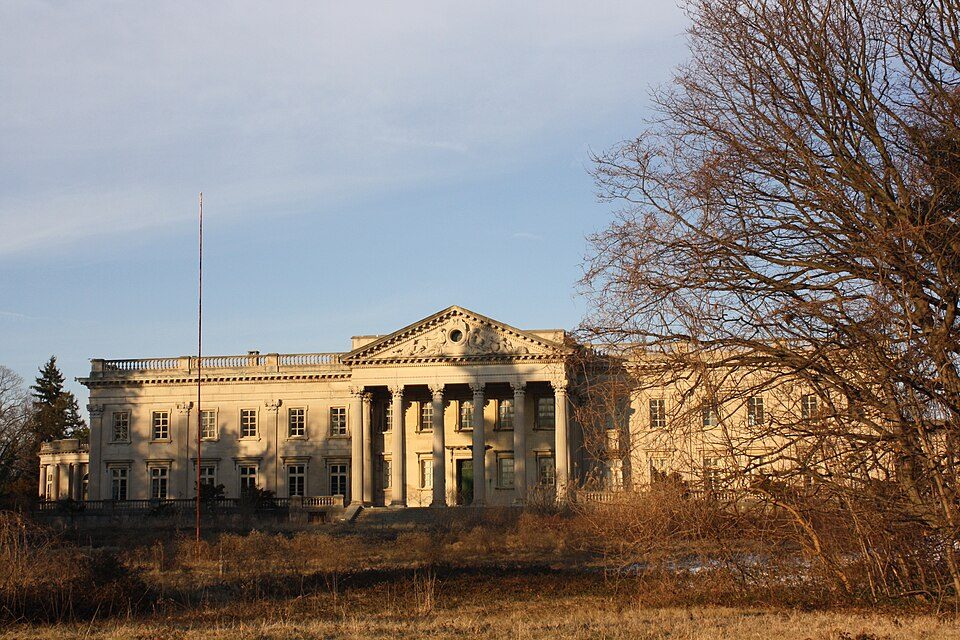
Radnor Township’s overall grade is A+, better than 97% of U.S. towns. The ranking puts it 84th of 1032 in Pennsylvania. Where it does best is schools (A+). Health is a strength too: CDC estimates put its residents' health ahead of 98% of the country. What counts against it is cost of living — the typical home is worth about $834K, 9.1 years of the Philadelphia metro’s $91K median household income. Its National Register listings include Glenays and Saturday Club. Three quarters of adults 25 and older hold a bachelor’s degree or more locally, above both the Pennsylvania town median (29%) and the median of U.S. towns (29%). History is its standout character grade: an A+, better than 97% of U.S. towns, with 12 places on the National Register.
Figures: schools, state test and graduation results · health, CDC PLACES · home values, Zillow · incomes, Census ACS, 2020–24 · National Register of Historic Places.
Its founding year, 1686, comes before those of 95% of the Pennsylvania towns we grade with a known year. Its 12 National Register listings are more than in 96% of Pennsylvania towns with a listing.
The archive holds 12 old photos and papers going back to 1860 and 7 maps from 1894 on.
Its A+ ranks #1 of the 1,037 Pennsylvania towns we grade for schools. Its A+ for schools comes with a D− for cost of living: the typical home is worth about $834K.
The public schools here belong to Radnor Township SD. Three of the 19 schools are below, and why each made the list. 3 public schools serve Radnor Township, with 1,617 students in all.
Its widest gap with Pennsylvania is tooth loss: 6.1% of those 65+ have lost all their teeth, against 14.5% statewide.
For adults in Radnor Township, the share who say their health is fair or poor is 11%. Among 1,035 Pennsylvania towns, just one has a lower share of adults who have obesity than Radnor Township. Also worth knowing: on the CDC’s 26 measures, Radnor Township is ahead of Pennsylvania on 18 and behind on 1.
The biggest place to walk is Skunk Hollow, 94 acres with 3.2 miles of trail. Count the trails in 31 parks and preserves and they come to 15 miles. The concentration of trails for Radnor Township comes to 1.1 miles per square mile.
21,577 jobs are based in Radnor Township, 1.8 for every working resident, so most of the people who work here commute in. 27.6% of workers work from home, against 15.6% across Pennsylvania.
The top destinations are Philadelphia (25%), Lower Merion Township (6%) and Tredyffrin Township (6%). Only 11% of working residents stay in Radnor Township for work; the rest commute out. Its typical household income is $164,000. Half of commuters travel less than 10 miles.
11%work in town
Radnor Township
Pennsylvania towns
U.S. towns
Median household income
$164,000
$81,000
$80,000
Work from home
28%
12%
11%
Working residents who work in town
11%
6.3%
8%
Average trip to work
24 minutes
26 minutes
25 minutes
Where working residents work
In Radnor Township11%
Philadelphia25%
Lower Merion Township6%
Tredyffrin Township6%
Upper Merion Township4%
10 mi
median commute distance
21,577
jobs based in Radnor Township
A job hub
jobs vs. working residents
A+
Walkability grade: more walkable than 98% of U.S. towns
103 flood insurance claims have been filed here, and 19 properties have flooded more than once.
For Radnor Township, the natural-hazard score from FEMA is 7 of 100. 103 flood insurance claims have been paid locally since 1979. FEMA puts 58% of the town’s expected hazard losses down to inland flooding, and 9% to heat waves. One declared disaster, in 2004, has brought federal aid to Radnor Township households.
Reported crimes fell from 367 to 162 over the last three FBI years, a drop beyond ordinary year-to-year swings. Violent crime is rare: 24 reported in 2024, 0.7 per 1,000 residents.
The property crime rate in Radnor Township is 5 per 1,000 residents. Pennsylvania has less reported crime than most states, so among its own towns Radnor Township sits closer to the middle.
At 9.1 years of the Philadelphia metro’s $91K median household income, the typical home costs more against local pay than in any other Pennsylvania town; that ratio is one input to that grade.
Radnor Township’s going rate for rent stands at $1,927 a month. The median sale price was $1,000,000 in May 2026. In Radnor Township, nearly two thirds of households are owner-occupiers.
Radnor is a community which straddles Montgomery and Delaware Counties, Pennsylvania, United States. It is located approximately 13 miles west of Philadelphia, in the Main Line suburbs. The community was named after Radnor, in Wales. Radnor is home to Cabrini University and a large office complex by the train station. The southern portion, by Lancaster Avenue, was rapidly commercialized in the 1980s, and it is currently one of suburban Philadelphia's premier office destinations.
Tredyffrin Township reports no FBI crime data of its own. Wayne isn’t graded (fewer than 1,000 residents, or not enough data). Compare Radnor Township with a neighbor →
Questions about Radnor Township
Short answers, built from the data on this page.
Is Radnor Township, PA a good place to live?
Yes, by almost any measure. Radnor Township grades A+ overall, better than 97% of U.S. towns and #84 of 1032 in Pennsylvania. It grades A+ for health, A− for safety and A+ for schools. Cost of living is its weak spot, with a D−.
Is Radnor Township, PA safe?
Yes, by national standards. Pennsylvania has less crime than most states, so among its own towns Radnor Township sits nearer the middle.
Is Radnor Township, PA expensive?
Yes. The typical home is worth about $834,000, 190% above the Pennsylvania typical home. Cost of living, which also weighs rents, property taxes and how many households pay 30% or more of their income for housing, grades D−.
What is Radnor Township, PA known for?
3 notable people were born here, including Kelly Corrigan and Mary Astor Paul.