Lock Haven dates to 1769, and 38% of its homes were built before 1940
More historic than 98% of U.S. towns · #58 of 1,035 in Pennsylvania. What drives it
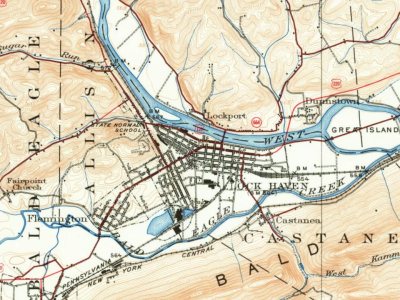
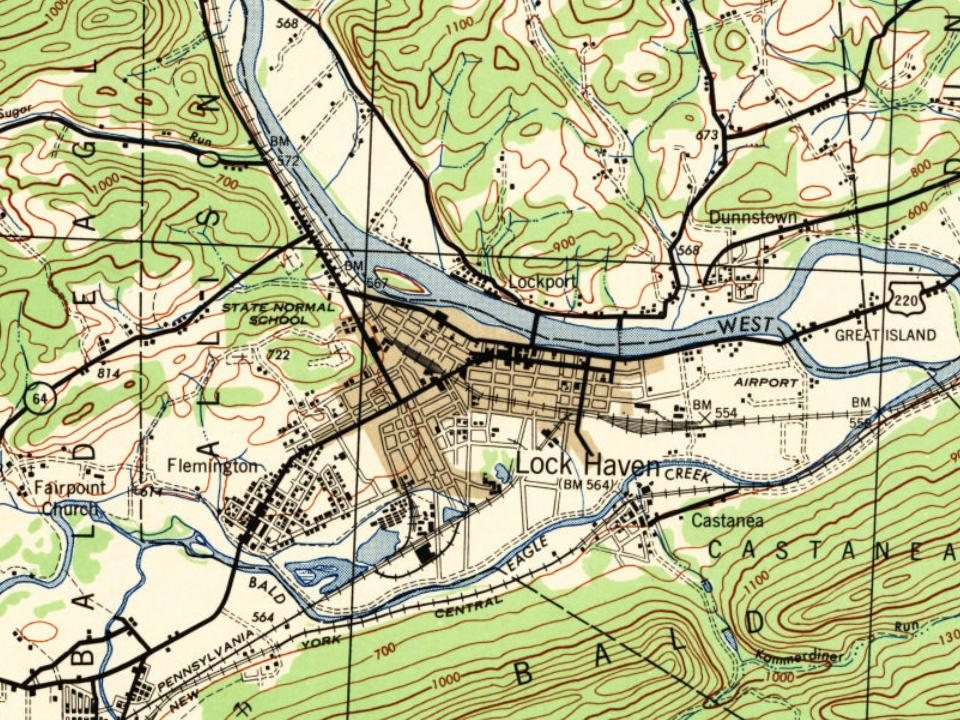
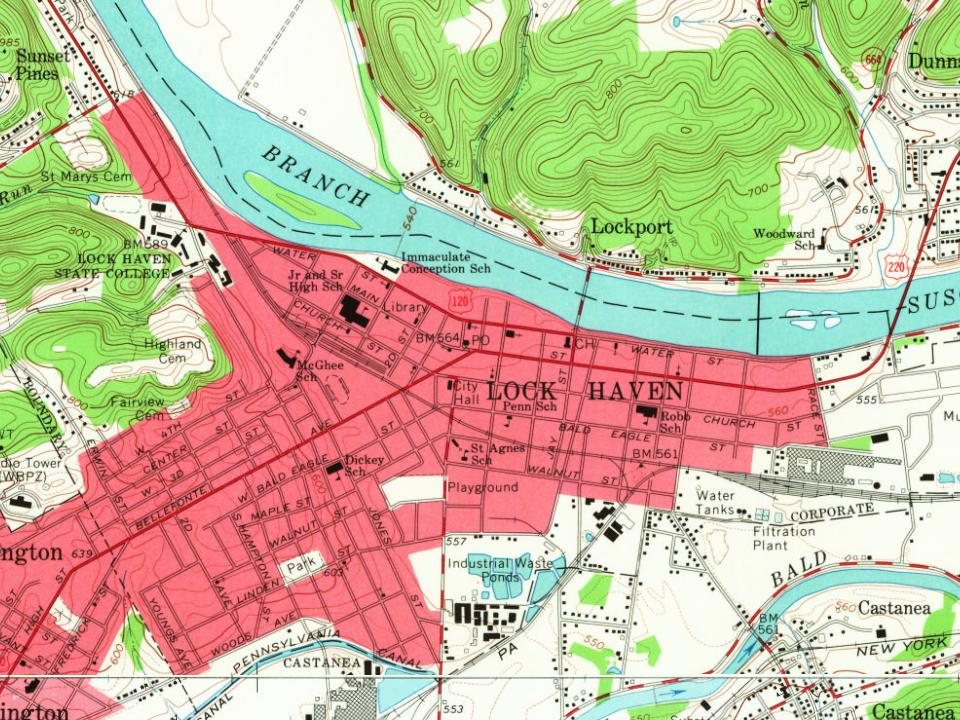
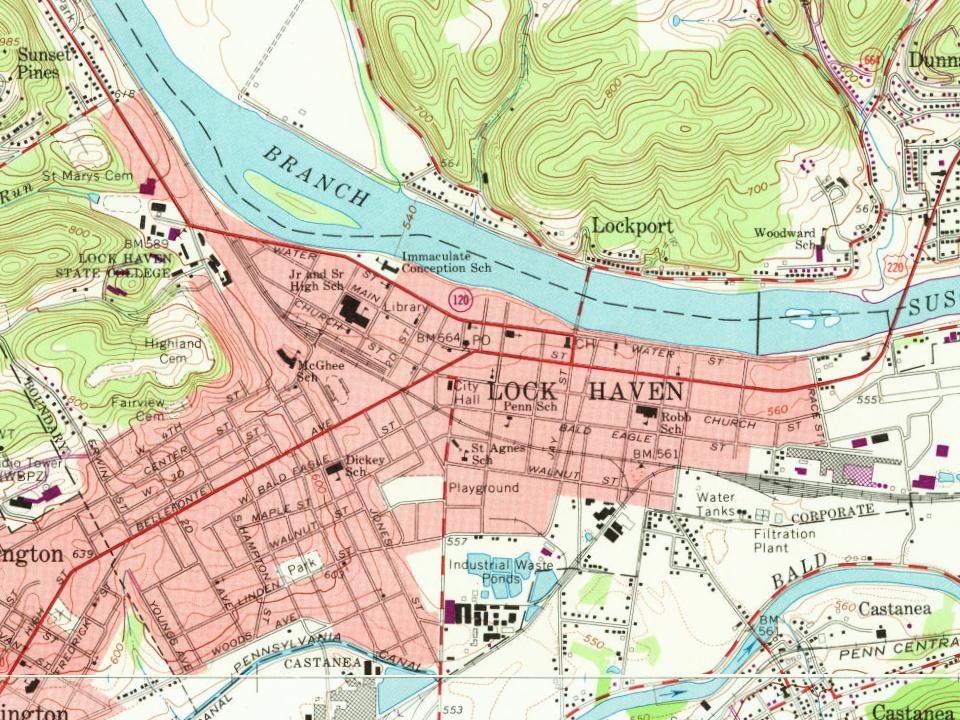
2 places in town are on the National Register, among them a historic district with 17 buildings. Below: 15 old photos and papers, maps from 1885 on, and the census since 1850.
Founding year: Wikidata. First post office: 1839.The full story ↓
History grade
What drives Lock Haven’s History grade
On its age, its old homes and the National Register, Lock Haven is more historic than 98% of U.S. towns, #58 of 1,035 in Pennsylvania. All 3 inputs are above most U.S. towns; its age ranks highest and its National Register listings lowest.
A+
HistoryA character grade: shown, never part of Lock Haven’s overall grade.
Pennsylvania towns list about as much on the Register as the country (a typical Pennsylvania town has 2.1 per 10,000 residents, the U.S. 2.4), so Lock Haven’s 21.3 sits above most of its state (82% of Pennsylvania towns have fewer) while its 18 historic buildings outnumber those of 79% of U.S. towns.
NoteThe founding year comes from Wikidata alone; no second source gives 1769.
How sure. Graded on any two of the three inputs instead, the letter would range from A to A+. The pre-1940 share is a Census survey estimate (±6.8 points).
Founding year: Wikidata (other dates in Quick answers). Homes: Census ACS 2020–24. National Register: National Park Service, May 2026 list; each listing counted once (boundary changes and added documentation belong to their listing), and a historic district counts its contributing buildings. How TownRatings grades history →
What stands out about Lock Haven’s past
Read from the archive, the National Register and the record. The page puts what stands out first.
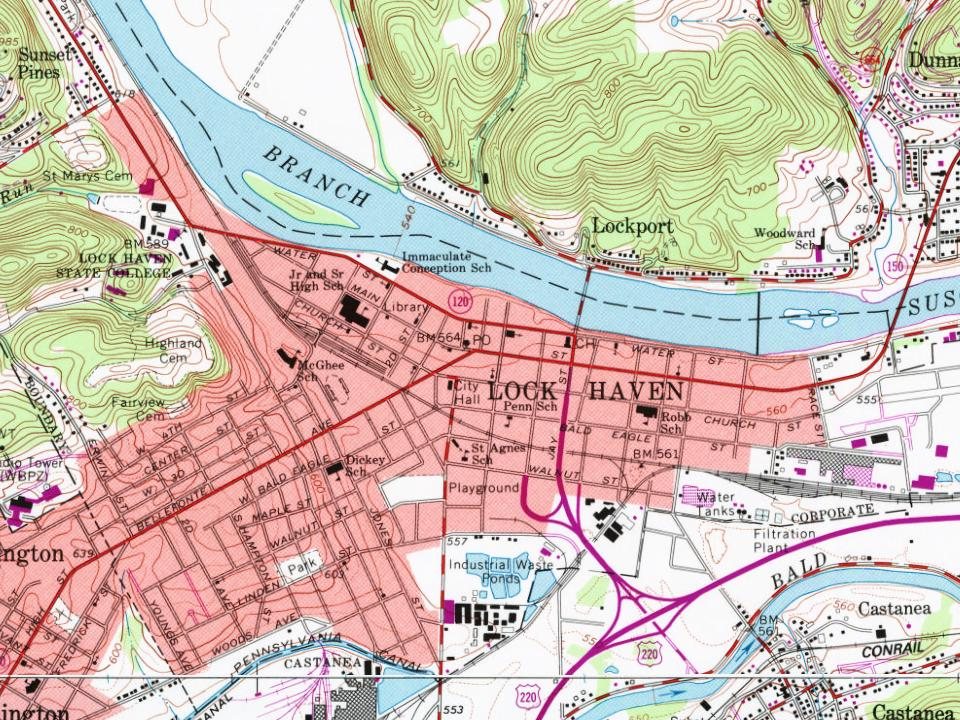
Fire insurance maps drew every building, what it was made of and what it was used for, so insurers could price the risk of fire. Pick a year, then a sheet.
Nothing in the archives for these yearsWeddings on Main Street, storms, parades, school pictures, the old store. If it’s in your family album, it belongs here.
Nothing in the archives for these yearsWeddings on Main Street, storms, parades, school pictures, the old store. If it’s in your family album, it belongs here.
The earliest settlers in Pennsylvania arrived from Asia between 12000 BCE and 8000 BCE, when the glaciers of the Pleistocene Ice Age were receding. Fluted point spearheads from this era, known as the Paleo-Indian Period, have been found in most parts of the state. Archeological discoveries at the Memorial Park Site 36Cn164 near the confluence of the West Branch Susquehanna River and Bald Eagle Creek collectively span about 8,000 years and represent every major prehistoric period from the Middle Archaic to the Late Woodland period. Prehistoric cultural periods over that span included the Middle Archaic starting at 6500 BCE; the Late Archaic starting at 3000 BCE; the Early Woodland starting at 1000 BCE; the Middle Woodland starting at 0 CE; and the Late Woodland starting at 900 CE. First contact with Europeans occurred in Pennsylvania between 1500 and 1600 CE.
way as their Southwestern agent, headquarters at St. Louis, Mo. From there he entered the army in 1861, and was placed in control of the military railroad for the Western army, which position he held until the close of the war. In 1866 he came to Lock Haven and entered the service of the Pennsylvania railroad as train dispatcher, which position he held for over twenty-five years, when, for long and meritorious service, he was placed on the retired list by the company. In February, 1891, Major Wynne was elected mayor of the city of Lock Haven, a position which he holds at
Text read by machine from the scan; it may contain errors.
Historical and biographical work1892 · page 327Read the page →
Read the text
souls, in Chapman township, three miles east of the borough of Renovo, on the line of the Philadelphia & Erie railroad, and has the largest local freight traffic of any station between Renovo and the city of Lock Haven. Its gentlemanly and efficient agent and operator, Mr. H. G. Haynes, has been in charge of the depot here for over twenty-four years.
Text read by machine from the scan; it may contain errors.
Scans and text from the Internet Archive. Books published in 1930 or earlier, which are in the public domain.
Timeline
Lock Haven, 1769 to 1969
Woven from the archive, old maps, post office records, the National Register and the people born here.
In 1769, according to Wikidata. Lock Haven’s post office opened in 1839, and the census of 1850 counted 830 people here.
How does Lock Haven rank for history?
Lock Haven is more historic than 98% of U.S. towns, #58 of 1,035 in Pennsylvania. The History grade combines the town’s founding era, the share of homes built before 1940 and its National Register listings. It’s a character grade, so it isn’t part of the overall grade. How it works.
What is on the National Register in Lock Haven?
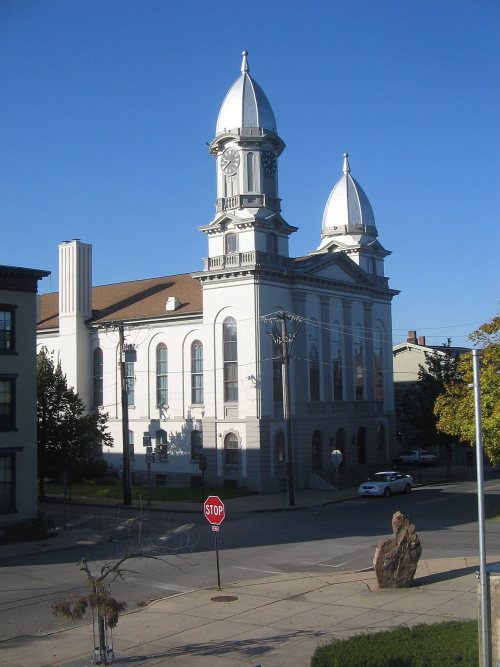
Two places: the Heisey House (listed 1972) and the Water Street District (1973).
How old are the homes in Lock Haven?
38% of Lock Haven’s homes were built before 1940 (Census estimate, ±6.8 points), against a typical 18% for a Pennsylvania town; the median home was built in 1958.
Founding dates: Wikidata, Wikipedia, the U.S. post office records of Blevins & Helbock (CC0) and the Census. Homes by year built: Census ACS 2020–24. National Register of Historic Places: National Park Service (list of May 22, 2026). Old photos, postcards and papers: Wikimedia Commons, the Library of Congress and other public archives, credited on each item’s page. Maps: U.S. Geological Survey historical topographic maps (via Esri) and Sanborn fire-insurance maps (Library of Congress). History text and census tables: Wikipedia (CC BY-SA 4.0). Places that used to be: USGS Geographic Names Information System (2021).
From Wikimedia Commons (10), the Library of Congress (8), the National Register of Historic Places (2), Wikipedia, Wikidata and Wikipedia for famous people, U.S. Geological Survey historical maps, U.S. Census counts (via Wikipedia), the US Post Offices dataset (Blevins & Helbock), the USGS Geographic Names Information System, Sanborn fire insurance maps (Library of Congress) and old county and town histories (Internet Archive). Archive images are copied here with their credits and licenses, shown on each photo’s page. Refreshed monthly.


 1898
 1905
 1905
 1905
 1905
 1905
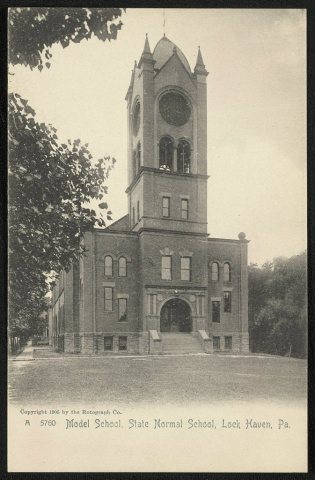 1905
 1905
 1905
 1917
 1917
 1923
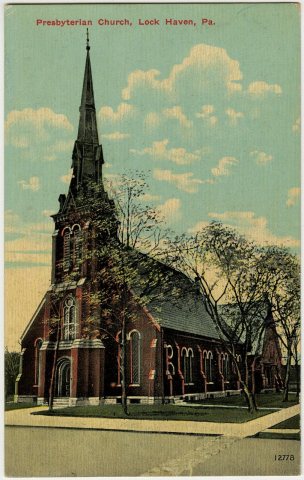 1923
 1923
 1969
 2009
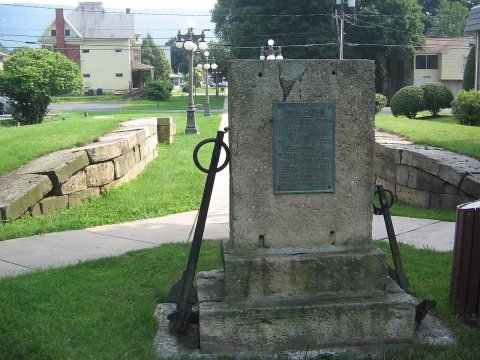 2006
 2005