Founding year: Wikidata. First post office: 1822.The full story ↓
History grade
What drives Sugar Creek Township’s History grade
On its age, its old homes and the National Register, Sugar Creek Township is more historic than 59% of U.S. towns, #545 of 993 in Ohio. Its age holds the grade up; its National Register listings pull it down.
B
HistoryA character grade: shown, never part of Sugar Creek Township’s overall grade.
Ohio towns list about as much on the Register as the country (a typical Ohio town has 2.9 per 10,000 residents, the U.S. 2.4), so Sugar Creek Township’s 0.0 sits below most of its state (23% of Ohio towns have fewer) while its 0 listings outnumber those of 23% of U.S. towns.
NoteThe founding year comes from Wikidata alone; no second source gives 1814.
How sure. Graded on any two of the three inputs instead, the letter would range from C+ to A−. The pre-1940 share is a Census survey estimate (±7.7 points).
Founding year: Wikidata (other dates in Quick answers). Homes: Census ACS 2020–24. National Register: National Park Service, May 2026 list; each listing counted once (boundary changes and added documentation belong to their listing), and a historic district counts its contributing buildings. How TownRatings grades history →
What stands out about Sugar Creek Township’s past
Read from the archive, the National Register and the record. The page puts what stands out first.
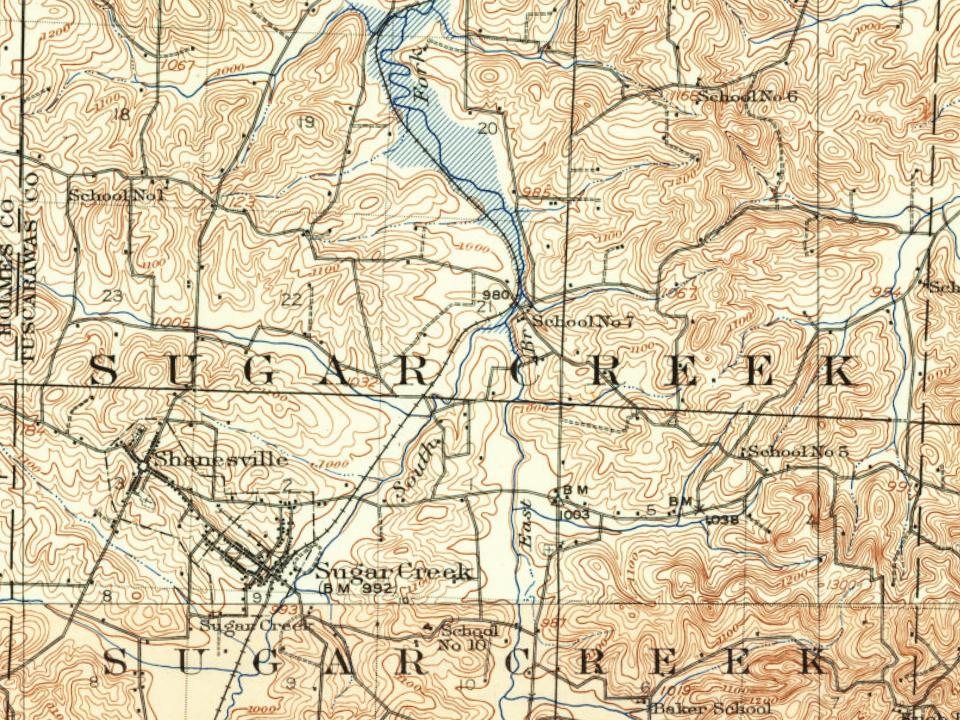
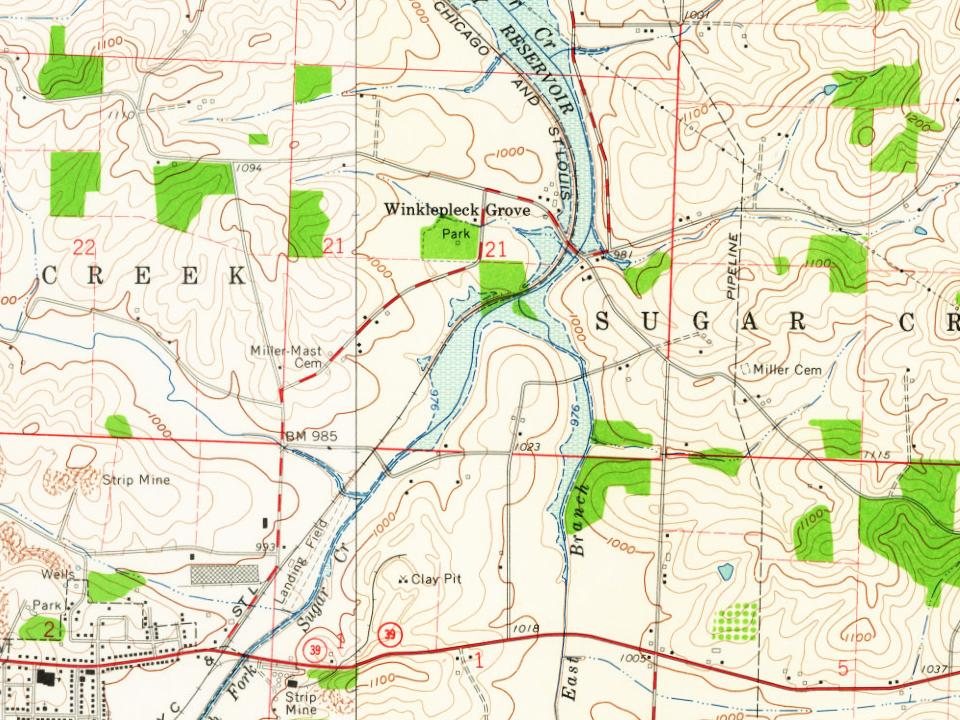
Every edition of the U.S. Geological Survey’s map of Sugar Creek Township. Tap a year, or press play to watch the town change.
1914Navarre sheet · 1:62,500
U.S. Geological Survey historical topographic maps (public domain), via Esri’s collection of the scans. The red ring marks the center of Sugar Creek Township.
Timeline
Sugar Creek Township, 1814 to 1993
Woven from the archive, old maps, post office records, the National Register and the people born here.
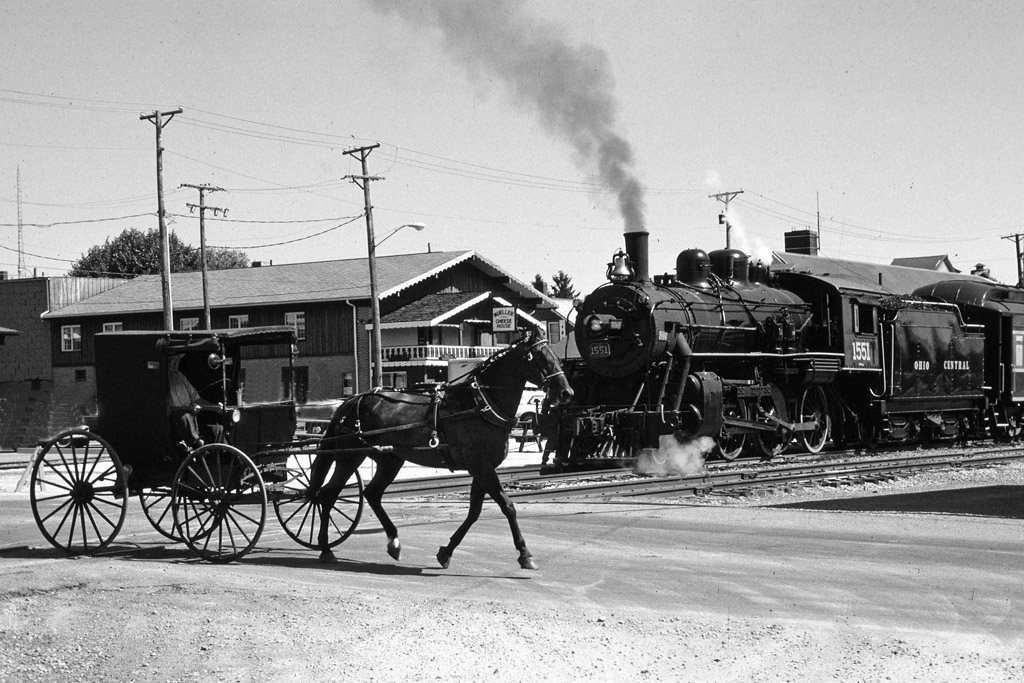
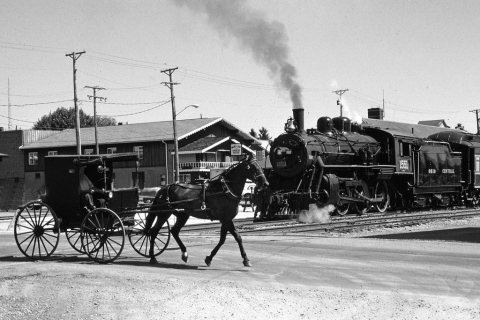
Sugarcreek's historical beginnings were rooted in cheese production. Swiss immigrants arrived in the early 1830s and used the milk from Amish dairy farms to produce their cheese. In the 1950s they created an annual Ohio Swiss Festival; the success of early festivals as an attraction for tourists resulted in local business leaders transforming the town into a Swiss village starting in 1965. By the early 1970s the first tourist-oriented businesses were opening, and the tourism industry in Sugarcreek was centered not only around the Amish but also around a steam engine passenger train operated by the Ohio Central Railroad which ran between Sugarcreek and Baltic until 2004. Since the train stopped running, tourism in Sugarcreek has decreased. Trollinger theorizes that unlike Walnut Creek and Berlin, which support a nostalgia that reassures tourists that what they are nostalgic for still exi…
What they wrote about Sugar Creek Township in 1884
Passages that mention Sugar Creek Township, cut from the printed page as they were published.
The History of Tuscarawas County, Ohio1884 · page 658Read the page →
Read the text
The Ornish are a German people of plain attire and simple habits. They came to the valley of Sugar Creek from Pennsylvania in an early day, and still inhabit its fertile lands. Probably thirty families of this sect still dwell in Sugar Creek Township, and in the adjoining townships of Holmes County they also flourish. For years after their settlement here they maintained the severely simple life and customs of their forefathers, but innovations have gradually entered the church and rent it in twain. The new or progressive order has erected a church in Holmes County, but the old branch, to which
Text read by machine from the scan; it may contain errors.
The History of Tuscarawas County, Ohio1884 · page 931Read the page →
Read the text
John Burky. Our subject was educated in his native country and emigrated to the United States, coming to Holmes County, Ohio, in 1853. He began the study of the medical profession in early boyhood, and in March, 1863, engaged in the practice of medicine, living on a farm in Sugar Creek Township, where he also kept a small drug store. In 1859, he took a trip back to his fatherland, and on the journey there was appointed the ship’s physician, the duties of which he discharged to the end of the voyage. On the 1st of September, 1879, he purchased Dr. Miller’s interest in the drug store, becoming a partner
Text read by machine from the scan; it may contain errors.
Scans and text from the Internet Archive. Books published in 1930 or earlier, which are in the public domain.
By decade
Sugar Creek Township, decade by decade
One decade in the archive so far: the 1990s. Scroll each row; tap a photo for its story.
Grew from 243 people in 1900 to 2,373 in 2020, 9 times over.
13 censuses, 1900–2020.
U.S. Census Bureau decennial counts, from the census table on Sugar Creek Township’s Wikipedia page.
Places that used to be
Lost post offices, old corners, places now gone and burying grounds
Another post office, Barrs Mills, opened and closed inside today’s town.
Hamlets and corners on the map
Barrs MillsWinklepleck Grove
Gone or out of use
Baker SchoolschoolBarrs Mills Post Officepost officeKnob Hill SchoolschoolSchool Number 1schoolSchool Number 10schoolSchool Number 12schoolSchool Number 5schoolSchool Number 6schoolSchool Number 7schoolSchool Number 9school
8cemeteries and burying grounds inside Sugar Creek Township
In 1814, according to Wikidata. Sugar Creek Township’s post office opened in 1822, and the census of 1900 counted 243 people here.
How does Sugar Creek Township rank for history?
Sugar Creek Township is more historic than 59% of U.S. towns, #545 of 993 in Ohio. The History grade combines the town’s founding era, the share of homes built before 1940 and its National Register listings. It’s a character grade, so it isn’t part of the overall grade. How it works.
How old are the homes in Sugar Creek Township?
19% of Sugar Creek Township’s homes were built before 1940 (Census estimate, ±7.7 points), against a typical 15% for an Ohio town; the median home was built in 1975.
Founding dates: Wikidata, Wikipedia, the U.S. post office records of Blevins & Helbock (CC0) and the Census. Homes by year built: Census ACS 2020–24. National Register of Historic Places: National Park Service (list of May 22, 2026). Old photos, postcards and papers: Wikimedia Commons, the Library of Congress and other public archives, credited on each item’s page. Maps: U.S. Geological Survey historical topographic maps (via Esri) and Sanborn fire-insurance maps (Library of Congress). History text and census tables: Wikipedia (CC BY-SA 4.0). Places that used to be: USGS Geographic Names Information System (2021).
From Wikimedia Commons (12), Wikipedia, U.S. Geological Survey historical maps, U.S. Census counts (via Wikipedia), the US Post Offices dataset (Blevins & Helbock), the USGS Geographic Names Information System and old county and town histories (Internet Archive). Archive images are copied here with their credits and licenses, shown on each photo’s page. Refreshed monthly.





 2025
 2020
 2016
 2016
 2015
 2009
 2007
 2007
 2007
 2006
 2004