Springfield dates to 1801, and 36% of its homes were built before 1940
More historic than 96% of U.S. towns · #48 of 993 in Ohio. What drives it
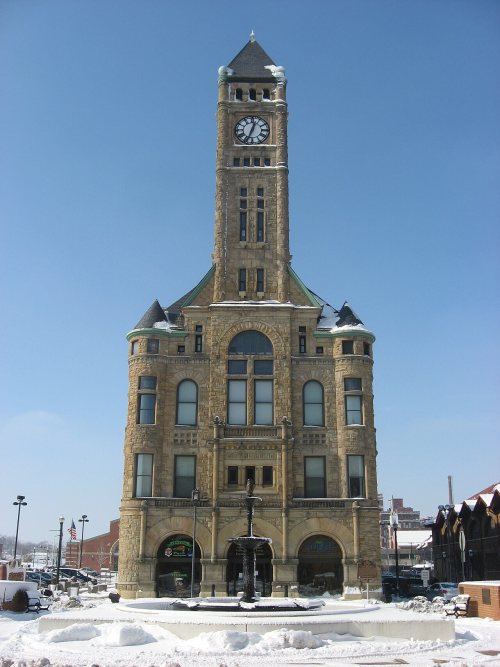
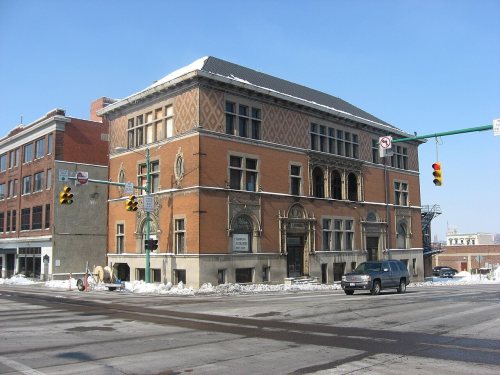
31 places in town are on the National Register, among them six historic districts with 131 buildings between them. Below: 4 old photos and papers, maps from 1886 on, and the census since 1810.
Founding year: Wikidata; Wikipedia’s history section gives the same year. First post office: 1804.The full story ↓
History grade
What drives Springfield’s History grade
On its age, its old homes and the National Register, Springfield is more historic than 96% of U.S. towns, #48 of 993 in Ohio. All 3 inputs are above most U.S. towns; its share of homes from before 1940 ranks highest and its age lowest.
A+
HistoryA character grade: shown, never part of Springfield’s overall grade.
Ohio towns list about as much on the Register as the country (a typical Ohio town has 2.9 per 10,000 residents, the U.S. 2.4), so Springfield’s 28.2 sits above most of its state (84% of Ohio towns have fewer) while its 164 historic buildings outnumber those of 92% of U.S. towns.
How sure. Graded on any two of the three inputs instead, the letter would range from A to A+. The pre-1940 share (±2.0 points) is firm at this size. Two sources give 1801.
Founding year: Wikidata (other dates in Quick answers). Homes: Census ACS 2020–24. National Register: National Park Service, May 2026 list; each listing counted once (boundary changes and added documentation belong to their listing), and a historic district counts its contributing buildings. How TownRatings grades history →
What stands out about Springfield’s past
Read from the archive, the National Register and the record. The page puts what stands out first.
The original pre-contact inhabitants of Springfield were the Shawnee people.
During the 18th century, the Ohio Country saw warfare, waves of migration and displacement, and imposition of claims by rivaling colonial powers France and Britain. With the end of the French and Indian War in 1763, the British became the sole European claimants of the region.
The area was home to the major Shawnee village in the region, called Peckuwe or Piqua. It belonged to the Shawnee septs (sub-clans) of Pekowi and Kispoko and had a population of about 3,000. It stood at 39° 54.5′ N, 83° 54.68′ W, less than four miles southwest of the current city of Springfield and less than six miles from its center.
Passages that mention Springfield, cut from the printed page as they were published.
The centennial celebration of Springfield, Ohio1901 · page 145Read the page →
Read the text
Avas admitted to the bar in 1848. In the same year he opened an office in the City of Springfield. He was Mayor of the City of Springfield and Prosecuting Attorney for two terms. He died after an illness of but a few days, on April 10, i8c)T. Judge Goode is remembered kindly by all the older members of the present bar, and by many of the younger ones. When he took his seat upon the bench, the docket was crowded by the accumulation of years, justice was tardily administered; "the law's de-
Text read by machine from the scan; it may contain errors.
The centennial celebration of Springfield, Ohio, held August 4th to 10th, 19011901Read the page →
Read the text
In January", 1839, my father died. I went to live with my grandfather, Adam Mayne, who came to this county from Georgetown, D. C., in 1825, and during the thirties kept a tavern on the old stage road running from Cincinnati to Springfield. This tavern, called ‘‘Travelers’ Rest,” by A. jMayne, four and one-half miles from Springfield, was run until the pike was built from Cincinnati via Dayton to Springfield, when the stage coaches and travel mostly left the mud road. Did I say “mud road ?’’ Well,
Text read by machine from the scan; it may contain errors.
The centennial celebration of Springfield, Ohio1901 · page 104Read the page →
Read the text
One hundred years ago there was nothing but nature where now stands the city of Springfield. There is nothing peculiar about Springfield's origin and growth. To a house or two on what afterward became the famous National Road, were added a house or two, and then another or two, and finally enough to be something of a settlement. Springfield became incorporated as a village in 1834, ialthough an organization had been eft'ected in 1827, with the usual six trustees and with Edward H. Gumming
Text read by machine from the scan; it may contain errors.
The centennial celebration of Springfield, Ohio, held August 4th to 10th, 19011901Read the page →
Read the text
One hundred years ago there was nothing but nature where now stands the city of Springfield. There is nothing .peculiar about Springfield’s origin and growth. To a house or two on what afterward became the famous National Road, were added a house or two. and then another or two, and finally enough to be something of a settlement. Springfield became incorporated as a village in 1834, although an organization had been effected in 1827, with tile ustial six trustees and with Edward II. Cuinming
Text read by machine from the scan; it may contain errors.
Scans and text from the Internet Archive. Books published in 1930 or earlier, which are in the public domain.
Timeline
Springfield, 1801 to 1978
Woven from the archive, old maps, post office records, the National Register and the people born here.
Nothing in the archives for these yearsWeddings on Main Street, storms, parades, school pictures, the old store. If it’s in your family album, it belongs here.
Every edition of the U.S. Geological Survey’s map of Springfield. Tap a year, or press play to watch the town change.
1904Springfield sheet · 1:62,500
U.S. Geological Survey historical topographic maps (public domain), via Esri’s collection of the scans. The red ring marks the center of Springfield.
Every building
Springfield, building by building, 1886–1928
Fire insurance maps drew every building, what it was made of and what it was used for, so insurers could price the risk of fire. Pick a year, then a sheet.
In 1801, according to Wikidata and Wikipedia’s history of the town. Springfield’s post office opened in 1804, and the census of 1810 counted 593 people here.
How does Springfield rank for history?
Springfield is more historic than 96% of U.S. towns, #48 of 993 in Ohio. The History grade combines the town’s founding era, the share of homes built before 1940 and its National Register listings. It’s a character grade, so it isn’t part of the overall grade. How it works.
What is on the National Register in Springfield?
31 listings: 25 buildings and 6 historic districts with 131 contributing buildings. 164 historic buildings in all.
How old are the homes in Springfield?
36% of Springfield’s homes were built before 1940 (Census estimate, ±2.0 points), against a typical 15% for an Ohio town; the median home was built in 1953.
Founding dates: Wikidata, Wikipedia, the U.S. post office records of Blevins & Helbock (CC0) and the Census. Homes by year built: Census ACS 2020–24. National Register of Historic Places: National Park Service (list of May 22, 2026). Old photos, postcards and papers: Wikimedia Commons, the Library of Congress and other public archives, credited on each item’s page. Maps: U.S. Geological Survey historical topographic maps (via Esri) and Sanborn fire-insurance maps (Library of Congress). History text and census tables: Wikipedia (CC BY-SA 4.0). Places that used to be: USGS Geographic Names Information System (2021).
From Wikimedia Commons (2), the Library of Congress (2), Wikidata (2), the National Register of Historic Places (31), Wikipedia, Wikidata and Wikipedia for famous people, U.S. Geological Survey historical maps, U.S. Census counts (via Wikipedia), the US Post Offices dataset (Blevins & Helbock), the USGS Geographic Names Information System, Sanborn fire insurance maps (Library of Congress) and old county and town histories (Internet Archive). Archive images are copied here with their credits and licenses, shown on each photo’s page. Refreshed monthly.






 1905


