
The story
Read it all →How Jamestown came to be
From Wikipedia’s history of Jamestown.
Jamestown was platted in 1816, and named after Jamestown, Virginia, the native home of a first settler.
Text from Wikipedia, licensed CC BY-SA 4.0.
Each edition grades its towns against each other only.
More historic than 92% of U.S. towns. What drives it
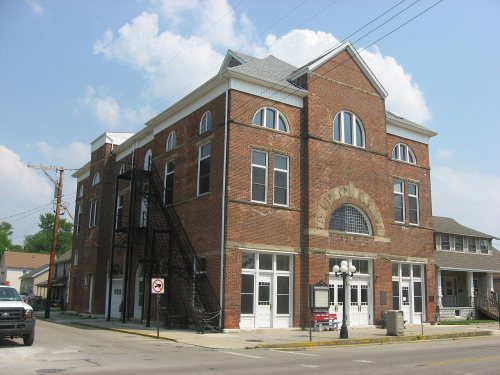
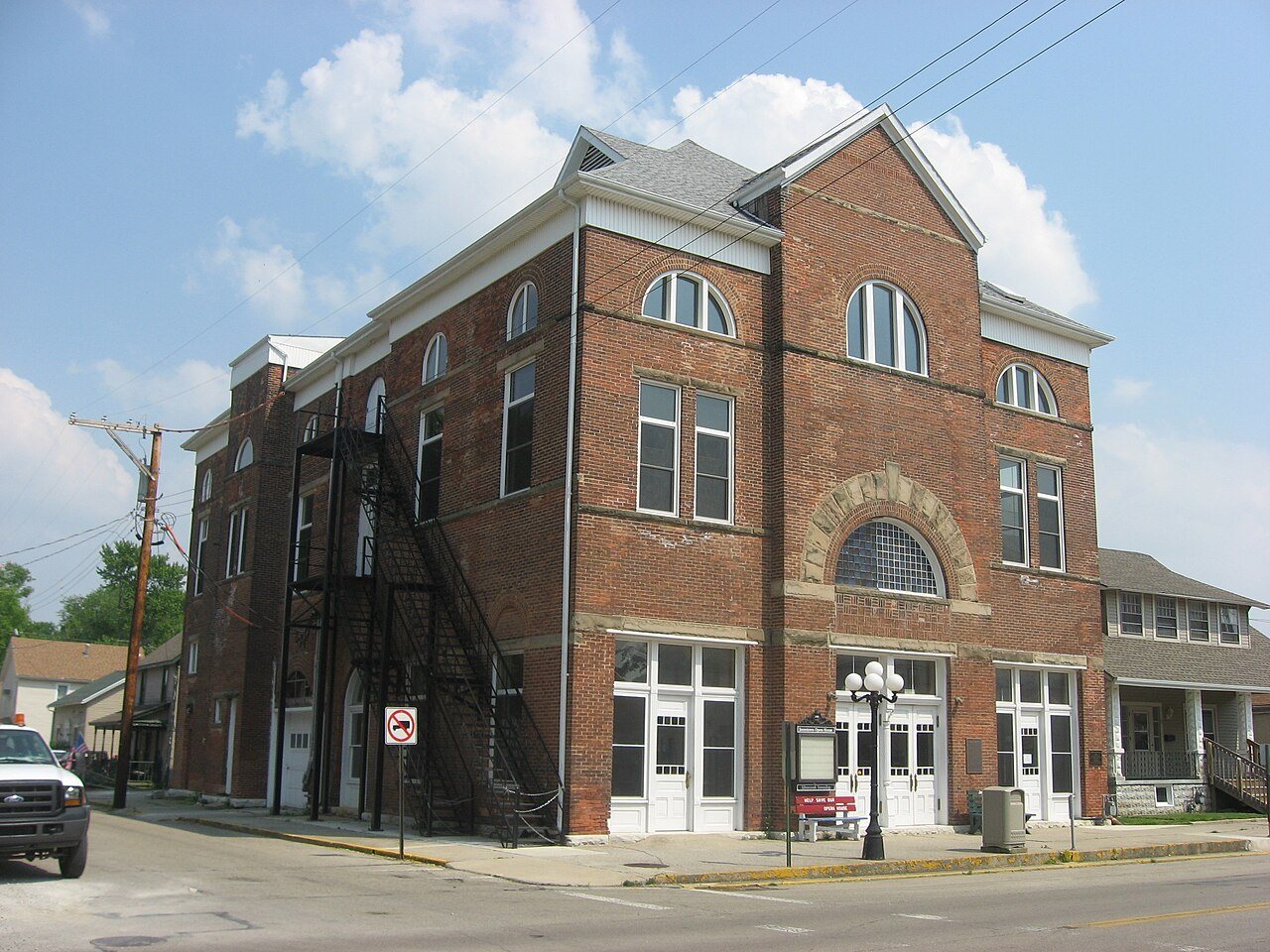
Its Register listings are the Jamestown Opera House and the Wickersham House. Below: old-book passages.
The Jamestown post office opened in 1823, the earliest record of the town by name.
More historic than 92% of U.S. towns, on its age, its old homes and the National Register.
On its age, its old homes and the National Register, Jamestown is more historic than 92% of U.S. towns. All 3 inputs are above most U.S. towns; its share of homes from before 1940 ranks highest and its National Register listings lowest.
Ohio towns list about as much on the Register as the country (a typical Ohio town has 2.9 per 10,000 residents, the U.S. 2.4), so Jamestown’s 9.0 sits above most of its state (73% of Ohio towns have fewer) while its 2 listings outnumber those of 60% of U.S. towns.
Founding year: the first post office (other dates in Quick answers). Homes: Census ACS 2020–24. National Register: National Park Service, May 2026 list; each listing counted once (boundary changes and added documentation belong to their listing), and a historic district counts its contributing buildings. How TownRatings grades history →
Read from the archive, the National Register and the record. The page puts what stands out first.
The first neighbors to add old photos shape how Jamestown’s history is told.
From Wikipedia’s history of Jamestown.
Jamestown was platted in 1816, and named after Jamestown, Virginia, the native home of a first settler.
Text from Wikipedia, licensed CC BY-SA 4.0.
Woven from the archive, old maps, post office records, the National Register and the people born here.
Passages that mention Jamestown, cut from the printed page as they were published.

returned to Ohio and became engaged in farming in Greene county, but three years later returned to Clinton county and there made his residence for eight years, at the end of which time he came back into Greene county and located on a farm just south of the village of Jamestown, where he remained for twelve years, moving thence to a farm in the vicinity of the village of Xew Jasper, where he made his home for another period of twelve years, at the end of which time he retired from the farm and moved to Jamestown, where he has since made his home. UiX)n taking up his residence in Jamestown
Text read by machine from the scan; it may contain errors.
Father Conroy is an earnest and energetic j-oung clergyman and during his pastorate at Jamestown has ilone much to build up his parish and to create a livelier interest in the affairs of the church. Since his arrival in Jamestown several new Catholic families have located there, with a resultant addition to the membership of the church, there now being thirty-four families in the parish, and admirable progress is reported along all lines of parish work. Father Conroy is a member of the Knights of Columbus, affiliated with the council of that order at Xenia, and takes a warm interest in the
Text read by machine from the scan; it may contain errors.Scans and text from the Internet Archive. Books published in 1930 or earlier, which are in the public domain.
The country’s official list of buildings and places worth saving.
National Park Service, National Register of Historic Places. Photos from Wikimedia Commons, credited on each place’s page.
Writers, athletes, leaders and more, ranked by how widely they’re known.
The Jamestown post office opened in 1823, the earliest record of the town by name (U.S. post office records).
Jamestown is more historic than 92% of U.S. towns. The History grade combines the town’s founding era, the share of homes built before 1940 and its National Register listings. It’s a character grade, so it isn’t part of the overall grade. How it works.
Two places: the Jamestown Opera House (listed 2007) and the Wickersham House (2018).
45% of Jamestown’s homes were built before 1940 (Census estimate, ±10.8 points), against a typical 15% for an Ohio town; the median home was built in 1951.
What the archives can’t tell you, neighbors can.
Founding dates: Wikidata, Wikipedia, the U.S. post office records of Blevins & Helbock (CC0) and the Census. Homes by year built: Census ACS 2020–24. National Register of Historic Places: National Park Service (list of May 22, 2026). Old photos, postcards and papers: Wikimedia Commons, the Library of Congress and other public archives, credited on each item’s page. Maps: U.S. Geological Survey historical topographic maps (via Esri) and Sanborn fire-insurance maps (Library of Congress). History text and census tables: Wikipedia (CC BY-SA 4.0). Places that used to be: USGS Geographic Names Information System (2021).
From Wikimedia Commons (6), the National Register of Historic Places (2), Wikipedia, Wikidata and Wikipedia for famous people, the US Post Offices dataset (Blevins & Helbock), the USGS Geographic Names Information System and old county and town histories (Internet Archive). Archive images are copied here with their credits and licenses, shown on each photo’s page. Refreshed monthly.


 2016
 2016
 2015
 2011
 2008
 2004