Gahanna’s post office opened in 1849, and 2 of its places are on the National Register
More historic than 51% of U.S. towns · #646 of 993 in Ohio. What drives it
Its Register listings are the Shepard Street School and the Nafzger-Miller House. Most of Gahanna was built recently: 2% of its homes predate 1940 and the median home dates from 1985. Below: 5 old photos and papers, maps from 1902 on, and the census since 1880.
Founding year: the first Gahanna post office (Blevins & Helbock, CC0).The full story ↓
History grade
What drives Gahanna’s History grade
On its age, its old homes and the National Register, Gahanna is more historic than 51% of U.S. towns, #646 of 993 in Ohio. Its age holds the grade up; its share of homes from before 1940 pulls it down.
B−
HistoryA character grade: shown, never part of Gahanna’s overall grade.
Ohio towns list about as much on the Register as the country (a typical Ohio town has 2.9 per 10,000 residents, the U.S. 2.4), so Gahanna’s 1.1 sits near the middle of its state (50% of Ohio towns have fewer) while its 4 historic buildings outnumber those of 68% of U.S. towns.
How sure. Graded on any two of the three inputs instead, the letter would range from C to B+. The pre-1940 share (±0.7 points) is firm at this size. The founding year is the first post office, not a stated founding date.
Founding year: the first post office (other dates in Quick answers). Homes: Census ACS 2020–24. National Register: National Park Service, May 2026 list; each listing counted once (boundary changes and added documentation belong to their listing), and a historic district counts its contributing buildings. How TownRatings grades history →
What stands out about Gahanna’s past
Read from the archive, the National Register and the record. The page puts what stands out first.
Gahanna was founded along the Big Walnut Creek in 1849 by John Clark of Ross County from 800 acres (320 ha) of land that his father, Joseph Clark, had purchased from Governor Worthington in 1814. Clark named his property the Gahanna Plantation, from which the City of Gahanna derives its name. The name Gahanna is derived from a Native American word for three creeks joining into one and is the former name of the Big Walnut Creek. The City of Gahanna's Official Seal refers to this confluence of three creeks with the inscription "Three In One".
Passages that mention Gahanna, cut from the printed page as they were published.
History of Franklin County [Ohio]1858 · page 227Read the page →
Read the text
or '36, and afterward owned by J. M. Walcutt, Esq., and one erected by A. McElvain, on Alum Creek, about the year 1838 or '39. There is but one town or village in this township, and that is Gahanna, or Bridgeport, laid out part by John Clark, Esq., in 1848 or '49, and called Gahanna, and part by Jesse Baughman, Esq., in 1853, and called Bridgeport. There is a post office in this place, established in August, 1849. Thos. Young, Esq.,
Text read by machine from the scan; it may contain errors.
Centennial history of Columbus and Franklin County, Ohio1909 · page 425Read the page →
Read the text
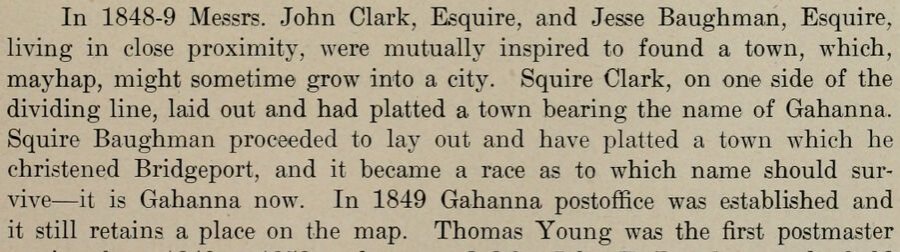
In 1848-9 Messrs. John Clark, Esquire, and Jesse Baughman, Esquire, living in close proximity, were mutually inspired to found a town, which, mayhap, might sometime grow into a city. Squire Clark, on one side of the dividing line, laid out and had platted a town bearing the name of Gahanna. Squire Baughman proceeded to lay out and have platted a town which he christened Bridgeport, and it became a race as to which name should survive— it is Gahanna now. In 1849 Gahanna postoffice was established and it still retains a place on the map. Thomas Young was the first postmaster
Text read by machine from the scan; it may contain errors.
A Centennial biographical history of the city of Columbus and Franklin County, Ohio ..1901 · page 964Read the page →
Read the text
entered the office of Drs'! Stimson & Williams, at Alexandria, Ohio. He became a student of medicine under Dr. David Williams, now of Columbus, and later attended the Eclectic Medical Institute, at Cincinnati, Ohio, graduating with the class of 1881. He began practice at Gahanna. Franklin county, and after seven years spent in Gahanna and in Westerville he secured the position of assistant physician in the Columbus State Hospital fcir the Insane. He spent two and a half years, making a specialty of the study of mental diseases among the unfortunate patients there. Thiis work was greatly
Text read by machine from the scan; it may contain errors.
History of Franklin County [Ohio]1858 · page 207Read the page →
Read the text
year 1807 or 1808. It was quite an acquisition to the settlement ; but it has long since disappeared, and no vestige remains to show where it stood. About the year 1810 or '11, George Sharp erected mills on Gahanna, which were afterward owned by John Sharp ; but have, a number of years since, entirely disappeared. There is now but one grist mill in the township, and that is Chaney's valuable mill on the canal, near Winchester.
Text read by machine from the scan; it may contain errors.
Scans and text from the Internet Archive. Books published in 1930 or earlier, which are in the public domain.
By decade
Gahanna, decade by decade
One decade in the archive so far: the 1890s. Scroll each row; tap a photo for its story.
Nothing in the archives for these yearsWeddings on Main Street, storms, parades, school pictures, the old store. If it’s in your family album, it belongs here.
The Gahanna post office opened in 1849, the earliest record of the town by name (U.S. post office records).
How does Gahanna rank for history?
Gahanna is more historic than 51% of U.S. towns, #646 of 993 in Ohio. The History grade combines the town’s founding era, the share of homes built before 1940 and its National Register listings. It’s a character grade, so it isn’t part of the overall grade. How it works.
What is on the National Register in Gahanna?
Two places: the Shepard Street School (listed 1979) and the Nafzger-Miller House (1999).
How old are the homes in Gahanna?
2% of Gahanna’s homes were built before 1940 (Census estimate), against a typical 15% for an Ohio town; the median home was built in 1985.
Founding dates: Wikidata, Wikipedia, the U.S. post office records of Blevins & Helbock (CC0) and the Census. Homes by year built: Census ACS 2020–24. National Register of Historic Places: National Park Service (list of May 22, 2026). Old photos, postcards and papers: Wikimedia Commons, the Library of Congress and other public archives, credited on each item’s page. Maps: U.S. Geological Survey historical topographic maps (via Esri) and Sanborn fire-insurance maps (Library of Congress). History text and census tables: Wikipedia (CC BY-SA 4.0). Places that used to be: USGS Geographic Names Information System (2021).
From Wikimedia Commons (18), the National Register of Historic Places (2), Wikipedia, Wikidata and Wikipedia for famous people, U.S. Geological Survey historical maps, U.S. Census counts (via Wikipedia), the US Post Offices dataset (Blevins & Helbock), the USGS Geographic Names Information System, Sanborn fire insurance maps (Library of Congress) and old county and town histories (Internet Archive). Archive images are copied here with their credits and licenses, shown on each photo’s page. Refreshed monthly.


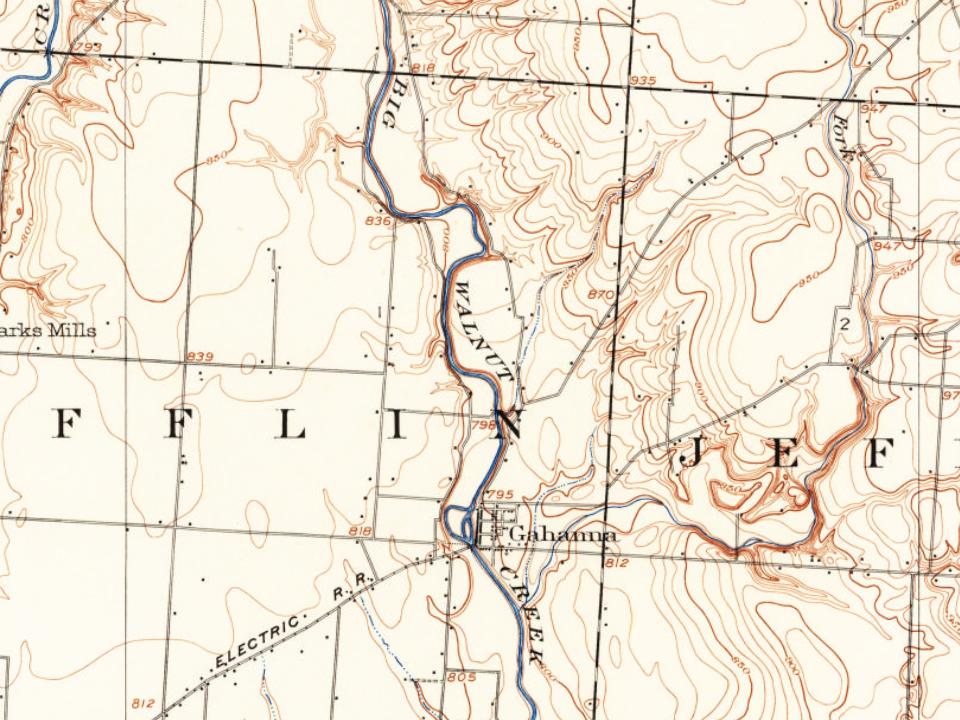






 1899
 1899
 1899
 1899
 2013
 2013
 2013
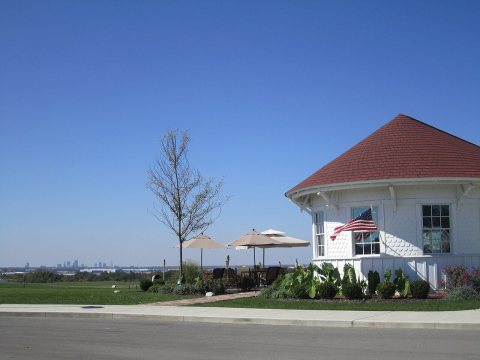 2013
 2006
 2006
 2006
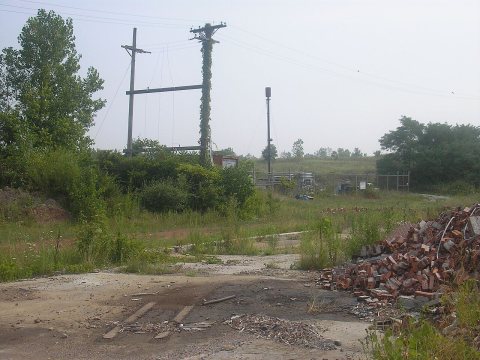 2005
 2005
 2005
 2005
 2005
 2005


