Dublin’s post office opened in 1820, and 49 of its places are on the National Register
More historic than 63% of U.S. towns · #502 of 993 in Ohio. What drives it
Most of Dublin was built recently: 1% of its homes predate 1940 and the median home dates from 1996. 49 places in town are on the National Register, among them a historic district with 18 buildings. Below: 1 old photo or paper, maps from 1901 on, and the census since 1850.
Founding year: the first Dublin post office (Blevins & Helbock, CC0). Wikidata: 1987.The full story ↓
History grade
What drives Dublin’s History grade
On its age, its old homes and the National Register, Dublin is more historic than 63% of U.S. towns, #502 of 993 in Ohio. Its National Register listings hold the grade up; its share of homes from before 1940 pulls it down.
B
HistoryA character grade: shown, never part of Dublin’s overall grade.
Ohio towns list about as much on the Register as the country (a typical Ohio town has 2.9 per 10,000 residents, the U.S. 2.4), so Dublin’s 13.8 sits above most of its state (78% of Ohio towns have fewer) while its 68 historic buildings outnumber those of 87% of U.S. towns.
How sure. Graded on any two of the three inputs instead, the letter would range from C+ to A. The pre-1940 share (±0.8 points) is firm at this size. The founding year is the first post office, not a stated founding date; Wikidata gives 1987.
Founding year: the first post office (other dates in Quick answers). Homes: Census ACS 2020–24. National Register: National Park Service, May 2026 list; each listing counted once (boundary changes and added documentation belong to their listing), and a historic district counts its contributing buildings. How TownRatings grades history →
What stands out about Dublin’s past
Read from the archive, the National Register and the record. The page puts what stands out first.
Native Americans from the Hopewell, Adena, Delaware, Shawnee, and Wyandot were among the first known inhabitants of the countryside that was to become Dublin, Ohio.
The Wyandot had moved to the Ohio countryside after being decimated by disease and a disastrous war with the Five Nations of the Iroquois in their homeland near Georgian Bay. In 1794, General Anthony Wayne defeated the Wyandot and other Ohio American Indian peoples at the Battle of Fallen Timbers, leading to the Wyandot surrendering most of their land in Ohio with the signing of the Treaty of Greenville.
Passages that mention Dublin, cut from the printed page as they were published.
History of Franklin County [Ohio]1858 · page 41Read the page →
Read the text
was first incorporated, and the same year, the town of Georges ville was laid out. In 1817, the town of Oregon, originally called Middletown, was laid out, and in 1818, the town of Dublin. They will all be noticed under the head of their respective localities. In 1816, John Kilbourne obtained a copy-right for the " Ohio Gazetteer," and published the first edition of that work. The demand for it was such, that within
Text read by machine from the scan; it may contain errors.
Centennial history of Columbus and Franklin County, Ohio1909 · page 410Read the page →
Read the text
In 1801 or 1802 (the date is not precisely fixed), a settlement was made at the place where the town of Dublin was subsequently located. The Sells Family. Among the first settlers was the patriarchal Ludwick Sells, a migrant from Huntington county, Pennsylvania, and his family of sons, Samuel, Peter, Benjamin and William. In 1808 another son, John Sells, joined his father and brothers, and subsequently in 1818 he laid out the town of Dublin, which grew and prospered rapidly, had a population of some four hundred,
Text read by machine from the scan; it may contain errors.
A Centennial biographical history of the city of Columbus and Franklin County, Ohio ..1901 · page 813Read the page →
Read the text
Mr. Wing has a creditable war record, having enlisted at Dublin, Franklin county, Ohio, May 2, 1864, as a private in Company E, One Hundred and Thirty-third Regiment, Ohio Volunteer Infantry, with which he served faithfully one hundred days, receiving honorable discharge at Columbus, Ohio, September 15, 1864. During his term of service he was stationed at Fort Powhattan, Virginia, and June 16, 1864, was' in a warm engagement at a point between Richmond and Petersburg, Virginia. His company commander was Captain Hegner and his regimental commander was Colonel Innis. He
Text read by machine from the scan; it may contain errors.
Scans and text from the Internet Archive. Books published in 1930 or earlier, which are in the public domain.
Timeline
Dublin, 1820 to 2020
Woven from the archive, old maps, post office records, the National Register and the people born here.
The Dublin post office opened in 1820, the earliest record of the town by name (U.S. post office records). Wikidata gives 1987.
How does Dublin rank for history?
Dublin is more historic than 63% of U.S. towns, #502 of 993 in Ohio. The History grade combines the town’s founding era, the share of homes built before 1940 and its National Register listings. It’s a character grade, so it isn’t part of the overall grade. How it works.
What is on the National Register in Dublin?
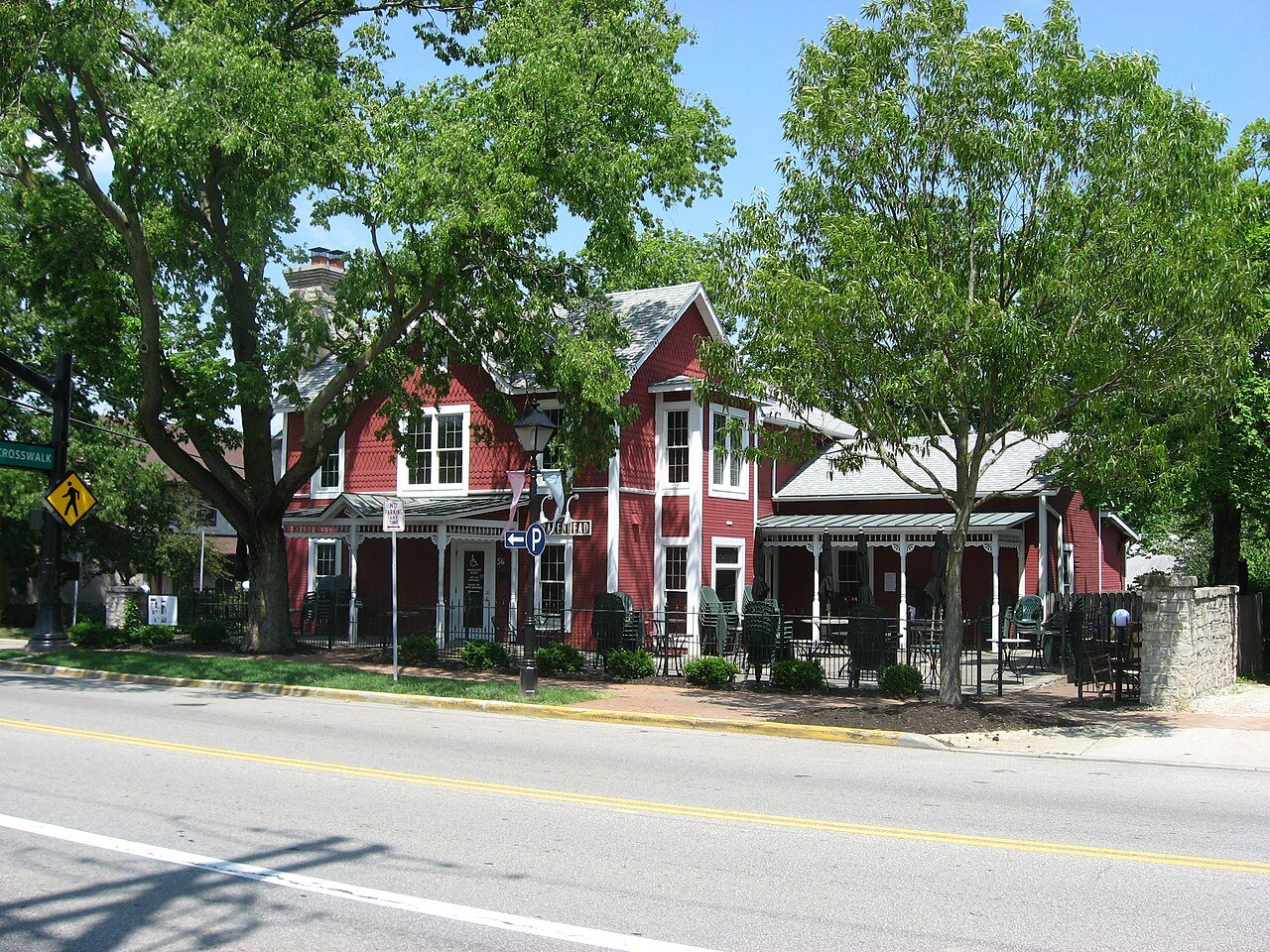
49 listings: 46 buildings, among them the Artz House (listed 1979, the first), 1 historic district, the Dublin High Street Historic District, with 18 contributing buildings, and 2 structures. 68 historic buildings in all.
How old are the homes in Dublin?
1% of Dublin’s homes were built before 1940 (Census estimate), against a typical 15% for an Ohio town; the median home was built in 1996.
Founding dates: Wikidata, Wikipedia, the U.S. post office records of Blevins & Helbock (CC0) and the Census. Homes by year built: Census ACS 2020–24. National Register of Historic Places: National Park Service (list of May 22, 2026). Old photos, postcards and papers: Wikimedia Commons, the Library of Congress and other public archives, credited on each item’s page. Maps: U.S. Geological Survey historical topographic maps (via Esri) and Sanborn fire-insurance maps (Library of Congress). History text and census tables: Wikipedia (CC BY-SA 4.0). Places that used to be: USGS Geographic Names Information System (2021).
From Wikimedia Commons (21), Wikidata (3), the National Register of Historic Places (49), Wikipedia, Wikidata and Wikipedia for famous people, U.S. Geological Survey historical maps, U.S. Census counts (via Wikipedia), the US Post Offices dataset (Blevins & Helbock), the USGS Geographic Names Information System and old county and town histories (Internet Archive). Archive images are copied here with their credits and licenses, shown on each photo’s page. Refreshed monthly.






 2011
 2010
 2010
 2010
 2010
 2010
 2010
 2010
 2009
 2009
 2008
 2008
 2008
 2007
 2007
 2005
 2005
 2005
 2005
 2004


