Watertown dates to 1800, and 44% of its homes were built before 1940
More historic than 94% of U.S. towns · #173 of 758 in New York. What drives it
13 places in town are on the National Register, among them two historic districts with 67 buildings between them. Below: 6 old photos and papers, maps from 1884 on, and the census since 1870.
Founding year: Wikidata. First post office: 1804.The full story ↓
History grade
What drives Watertown’s History grade
On its age, its old homes and the National Register, Watertown is more historic than 94% of U.S. towns, #173 of 758 in New York. All 3 inputs are above most U.S. towns; its share of homes from before 1940 ranks highest and its age lowest.
A
HistoryA character grade: shown, never part of Watertown’s overall grade.
New York towns list more on the Register than most of the country (a typical New York town has 12.3 per 10,000 residents, the U.S. 2.4), so Watertown’s 32.4 sits near the middle of its state (63% of New York towns have fewer) while its 79 historic buildings outnumber those of 88% of U.S. towns.
How sure. Graded on any two of the three inputs instead, the letter would range from A− to A. The pre-1940 share is a Census survey estimate (±3.1 points). Two sources give 1800.
Founding year: Wikidata (other dates in Quick answers). Homes: Census ACS 2020–24. National Register: National Park Service, May 2026 list; each listing counted once (boundary changes and added documentation belong to their listing), and a historic district counts its contributing buildings. How TownRatings grades history →
What stands out about Watertown’s past
Read from the archive, the National Register and the record. The page puts what stands out first.
Watertown got its name from straddling the Black River. It is unknown which settler chose it, but it is commonly believed to have been a consensus choice in order to attract mills. By 1850, mills manufacturing different products, powered by the Black river, were being built throughout Watertown.
In 1791, New York City resident Alexander Macomb purchased the land of Jefferson, Lewis, St. Lawrence and Oswego counties. He sent out multiple surveyors to sell the land to passing settlers. The area of Watertown was first surveyed in 1796 by Benjamin Wright, who was employed by Macomb to survey the northern and central portions of New York State. Wright made the following statement about the land after returning:
The first mill built within the limits of the original town of Watertown was the "water-mill" referred to on page 21 in connection with the grant of lands to the wear. It was a grist-mill, built as early as 1634, upon Mill Creek, a probably natural canal or raceway flowing around the lower fall and affording sufficient power for the mill, without the erection of a dam. The volume of water in the river was very much greater then than now, and the natural current of Mill Creek would give all the needed power for
Text read by machine from the scan; it may contain errors.
tion, in the Narragansett, Mohegan, and Nyantic tribes. And from savage violence the land had rest forty years.'' ^ There is nothing in the records to show the location of the first Church built in Watertown, but it was doubtless East of Mount Auburn, in the principle settlement called "the town," near the homestead of Sir Richard Saltonstall, in the part of the town now belonging to Cambridge. The next house of worship was built I. "Our commons were verj' fhort, ihere being a general fcarcity throughout the Colony of all
Text read by machine from the scan; it may contain errors.
Scans and text from the Internet Archive. Books published in 1930 or earlier, which are in the public domain.
Timeline
Watertown, 1800 to 1973
Woven from the archive, old maps, post office records, the National Register and the people born here.
Fire insurance maps drew every building, what it was made of and what it was used for, so insurers could price the risk of fire. Pick a year, then a sheet.
In 1800, according to Wikidata. Watertown’s post office opened in 1804, and the census of 1870 counted 9,336 people here.
How does Watertown rank for history?
Watertown is more historic than 94% of U.S. towns, #173 of 758 in New York. The History grade combines the town’s founding era, the share of homes built before 1940 and its National Register listings. It’s a character grade, so it isn’t part of the overall grade. How it works.
What is on the National Register in Watertown?
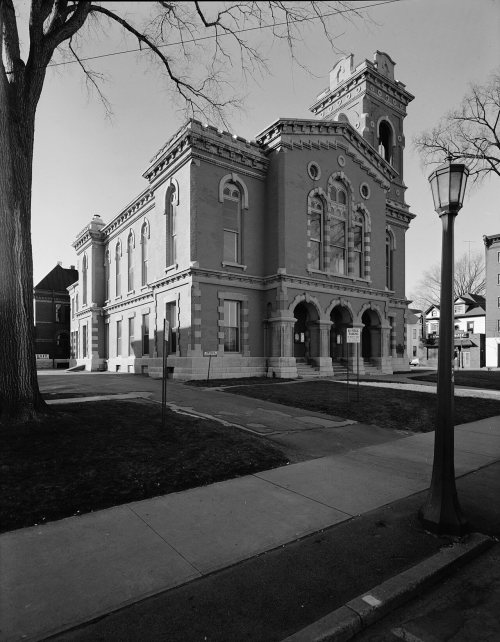
13 listings: 11 buildings and 2 historic districts, the Jefferson County Courthouse Complex and the Public Square Historic District, with 67 contributing buildings. 79 historic buildings in all.
How old are the homes in Watertown?
44% of Watertown’s homes were built before 1940 (Census estimate, ±3.1 points), against a typical 27% for a New York town; the median home was built in 1945.
Founding dates: Wikidata, Wikipedia, the U.S. post office records of Blevins & Helbock (CC0) and the Census. Homes by year built: Census ACS 2020–24. National Register of Historic Places: National Park Service (list of May 22, 2026). Old photos, postcards and papers: Wikimedia Commons, the Library of Congress and other public archives, credited on each item’s page. Maps: U.S. Geological Survey historical topographic maps (via Esri) and Sanborn fire-insurance maps (Library of Congress). History text and census tables: Wikipedia (CC BY-SA 4.0). Places that used to be: USGS Geographic Names Information System (2021).
From Wikimedia Commons (6), the National Register of Historic Places (13), Wikipedia, Wikidata and Wikipedia for famous people, U.S. Geological Survey historical maps, U.S. Census counts (via Wikipedia), the US Post Offices dataset (Blevins & Helbock), the USGS Geographic Names Information System, Sanborn fire insurance maps (Library of Congress) and old county and town histories (Internet Archive). Archive images are copied here with their credits and licenses, shown on each photo’s page. Refreshed monthly.







 1864
 1864
 1876

