Founding year: Wikipedia. First post office: 1803.The full story ↓
History grade
What drives Pompey’s History grade
On its age, its old homes and the National Register, Pompey is more historic than 84% of U.S. towns, #363 of 758 in New York. All 3 inputs are above most U.S. towns; its share of homes from before 1940 ranks highest and its National Register listings lowest.
A−
HistoryA character grade: shown, never part of Pompey’s overall grade.
New York towns list more on the Register than most of the country (a typical New York town has 12.3 per 10,000 residents, the U.S. 2.4), so Pompey’s 15.6 sits near the middle of its state (52% of New York towns have fewer) while its 11 historic buildings outnumber those of 76% of U.S. towns.
How sure. Graded on any two of the three inputs instead, the letter would still be A−. The pre-1940 share is a Census survey estimate (±8.2 points). Two sources give 1789.
Founding year: Wikipedia (other dates in Quick answers). Homes: Census ACS 2020–24. National Register: National Park Service, May 2026 list; each listing counted once (boundary changes and added documentation belong to their listing), and a historic district counts its contributing buildings. How TownRatings grades history →
What stands out about Pompey’s past
Read from the archive, the National Register and the record. The page puts what stands out first.
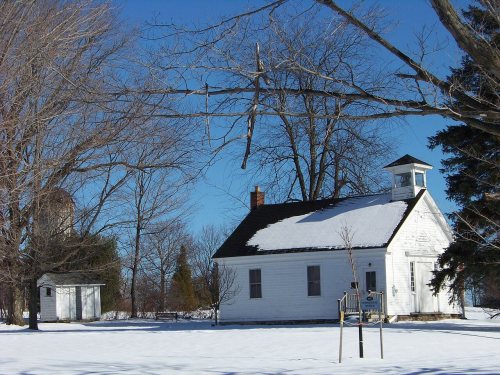
Delphi PitmineSchool Number 10schoolSchool Number 12schoolSchool Number 13schoolSchool Number 14schoolSchool Number 15schoolSchool Number 16schoolSchool Number 17schoolSchool Number 18schoolSchool Number 19schoolSchool Number 3schoolSchool Number 4schoolSchool Number 6schoolSchool Number 7schoolSchool Number 8schoolWallbridge Airportairport
12cemeteries and burying grounds inside Pompey
BakerBlocktownBushClarkDelphiDelphi Falls Baptist ChurchDodgeImmaculate ConceptionOranPeasePompey CenterPompey Hill Protestant
US Post Offices dataset (Blevins & Helbock, CC0). Places and cemeteries from the USGS Geographic Names Information System (2021).
People over time
Pompey, census by census
Lost two-thirds of its people between 1820 and 1920, then grew 3-fold.
21 censuses, 1820–2020.
U.S. Census Bureau decennial counts, from the census table on Pompey’s Wikipedia page.
On the map
Pompey on the map, 1900 to 1973
Every edition of the U.S. Geological Survey’s map of Pompey. Tap a year, or press play to watch the town change.
1900Tully sheet · 1:62,500
U.S. Geological Survey historical topographic maps (public domain), via Esri’s collection of the scans. The red ring marks the center of Pompey.
The area of Pompey was originally part of the territory traditionally occupied by the Onondaga, one of the Five Nations of the Haudenosaunee Confederacy, or Iroquois. After the American Revolutionary War, when most of the Haudenosaunee were forced to cede their land to the victorious United States, many of the Onondaga migrated to Canada. The British Crown awarded them land there for resettlement for their support during the war. New York State took over the former Haudenosaunee lands and sold much of the public land for development (and speculation). It reserved part as the Central New York Military Tract. Veterans of the Revolution were awarded land grants in this tract as payments for service. The town was first settled by outsiders around 1789, as Yankees from New England and other migrants moved into western New York.
Passages that mention Pompey, cut from the printed page as they were published.
Plutarch's lives of Romulus, Lycurgus, Solon, Pericles, Cato, Pompey, Alexander the Great, Julius Caesar, Demosthenes, Cicero, Mark Antony, Brutus, and others, and his comparisons. With notes, critical and historical1889 · page 495Read the page →
Read the text
Pompey." And In private he tried every healing and conciliating method, by writing to Caesar, and entreating Pompey. After it came to an open rupture, and Csesar was on his march to Rome, Pompey did not choose to wait for him, but retired, with numbers of the principal citizens in his train. Cicero did not attend him in his flight ; and therefore it was believed that he would join Caesar. It is certain that he fluctuated greatly in his opinion, and was
Text read by machine from the scan; it may contain errors.
Plutarch's lives of Romulus, Lycurgus, Solon, Pericles, Cato, Pompey, Alexander the Great, Julius Caesar, Demosthenes, Cicero, Mark Antony, Brutus, and others, and his comparisons. With notes, critical and historical1889 · page 245Read the page →
Read the text
Pompey having exhausted most of his own fortune in support of the war, applied to the senate for money to pay the troops, declaring he would return with his army to Italy, if they did not send it him. LucuUus, who was then consul, though he was upon ill terms with Pompey, took care to furnish him with the money as soon as possible ; because he wanted to be employed himself in the Mithridatic war, and he was afraid to
Text read by machine from the scan; it may contain errors.
Scans and text from the Internet Archive. Books published in 1930 or earlier, which are in the public domain.
Timeline
Pompey, 1789 to 2010
Woven from the archive, old maps, post office records, the National Register and the people born here.
Nothing in the archives for these yearsWeddings on Main Street, storms, parades, school pictures, the old store. If it’s in your family album, it belongs here.
In 1789, according to Wikipedia’s history of the town. Pompey’s post office opened in 1803, and the census of 1820 counted 6,701 people here.
How does Pompey rank for history?
Pompey is more historic than 84% of U.S. towns, #363 of 758 in New York. The History grade combines the town’s founding era, the share of homes built before 1940 and its National Register listings. It’s a character grade, so it isn’t part of the overall grade. How it works.
What is on the National Register in Pompey?
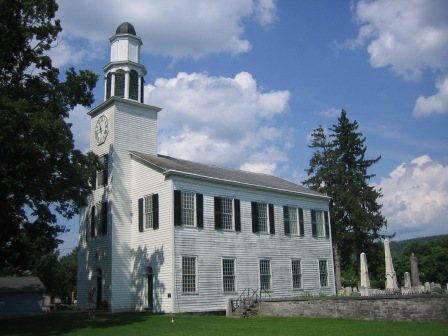
6 listings: 6 buildings, among them the Delphi Baptist Church (listed 1979, the first). 11 historic buildings in all.
How old are the homes in Pompey?
24% of Pompey’s homes were built before 1940 (Census estimate, ±8.2 points), against a typical 27% for a New York town; the median home was built in 1980.
Founding dates: Wikidata, Wikipedia, the U.S. post office records of Blevins & Helbock (CC0) and the Census. Homes by year built: Census ACS 2020–24. National Register of Historic Places: National Park Service (list of May 22, 2026). Old photos, postcards and papers: Wikimedia Commons, the Library of Congress and other public archives, credited on each item’s page. Maps: U.S. Geological Survey historical topographic maps (via Esri) and Sanborn fire-insurance maps (Library of Congress). History text and census tables: Wikipedia (CC BY-SA 4.0). Places that used to be: USGS Geographic Names Information System (2021).
From Wikimedia Commons (6), the National Register of Historic Places (6), Wikipedia, Wikidata and Wikipedia for famous people, U.S. Geological Survey historical maps, U.S. Census counts (via Wikipedia), the US Post Offices dataset (Blevins & Helbock), the USGS Geographic Names Information System and old county and town histories (Internet Archive). Archive images are copied here with their credits and licenses, shown on each photo’s page. Refreshed monthly.


 1933
 1933
 1933
 1933
 1933