194 years in pictures
Census counts: 1,061 in 1870, 13,079 in 2020. The archive holds 6 old photos and papers going back to 1884 and 3 maps from 1915 on.
12 places on the National Register of Historic Places.
- 1832Oneonta is settled
Each edition grades its towns against each other only.

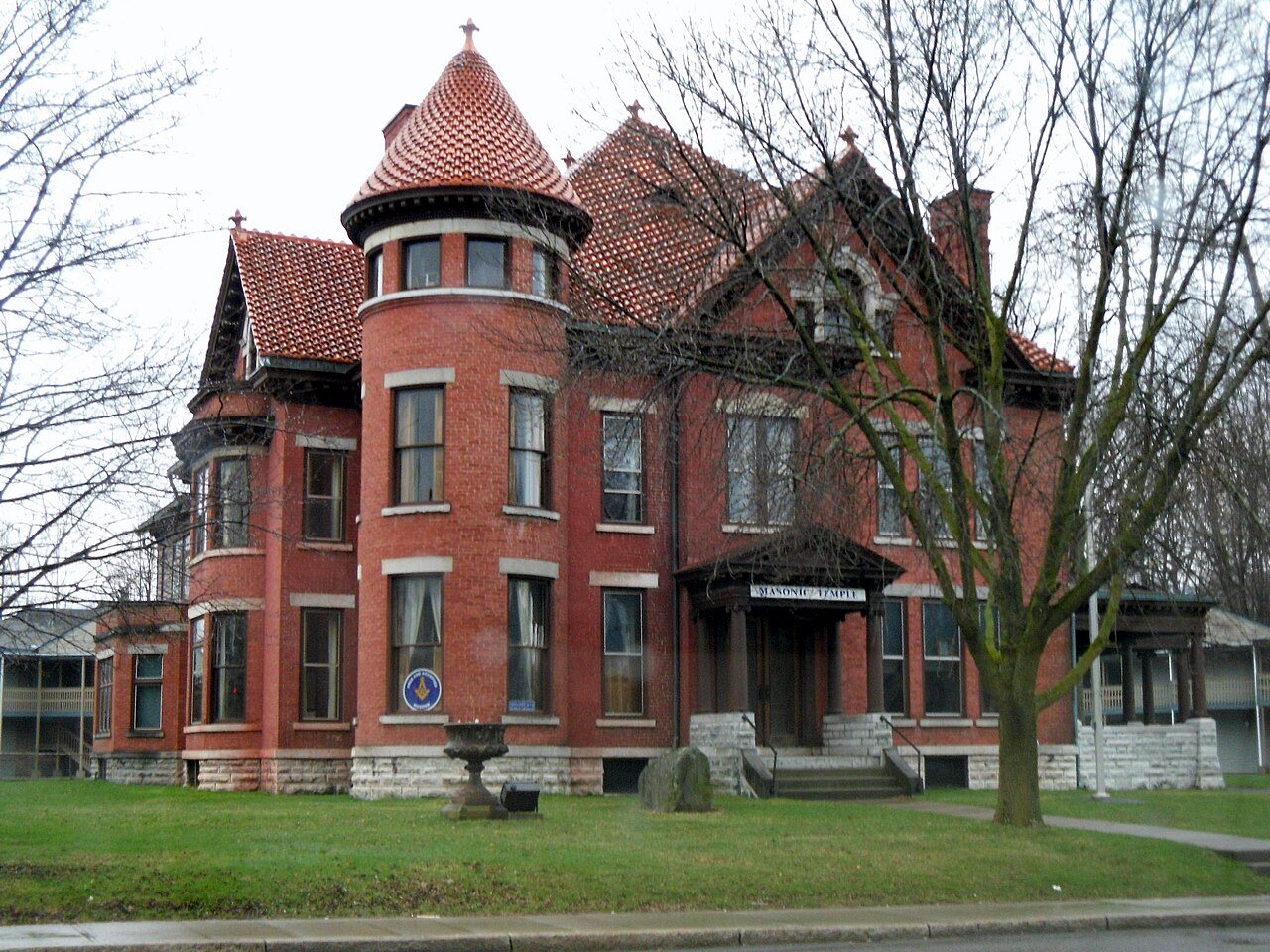
Incomes is its weak spot: the median household income is $61K, and 17% of residents live below the poverty line. Its strongest subject is walkability — it is easier to get around on foot or by transit than 91% of U.S. towns. Homes run about $184K for a typical one, 2.7 times the Oneonta area’s $69K median household income. All told, that adds up to a B− overall and a rank of 424th of 745 in New York. On that grade it does better than 46% of U.S. towns. The town’s density of trails is 3.7 miles per square mile, where New York’s towns sit at 0.4 and U.S. towns at 0.4. Its National Register listings include Fairchild Mansion and Old Post Office. History is its standout character grade: an A+, better than 96% of U.S. towns, with 12 places on the National Register.
Figures: incomes, Census ACS, 2020–24 · home values, Zillow · OpenStreetMap · National Register of Historic Places.
Where Oneonta beats most towns.
Fairchild MansionCensus counts: 1,061 in 1870, 13,079 in 2020. The archive holds 6 old photos and papers going back to 1884 and 3 maps from 1915 on.
12 places on the National Register of Historic Places.
Each subject compared with towns across the country (schools within New York), ordered by how far Oneonta is from typical.
How TownRatings grades towns →
Who provides power, water and the rest in Oneonta, and how to reach them.
EPA SDWIS (Oct 9, 2026) · HIFLD + EIA-861 2025 · Census 2020 ZCTAs · NCES 2024–25 · registration: vote.gov, updated Aug 3, 2026.
Ordered by what stands out in Oneonta.
Oneonta has more trail for its size than nearly any town in New York and is shaped by its college students, but it carries more natural-hazard risk than most of New York (mostly inland flooding).
At 3.7 miles of trail per square mile, it ranks #2 of 617 New York towns.
In 4 parks and preserves, walkers have 16 miles of trail. The biggest place to walk is Neahwa Park, 98 acres with 1.4 miles of trail. Parks and preserves in Oneonta: 4, covering 152 acres.
| Oneonta | New York towns | U.S. towns | |
|---|---|---|---|
| Miles of trail per square mile | 3.7 miles per square mile | 0.4 | 0.4 |
| Conserved land | 5.7% | 5.2% | 4.3% |
| Biggest places to walk | Trails | Acres |
|---|---|---|
| 1. Neahwa Park | 1.4 mi | 98 |
| 2. Wilbur Park | 1.4 mi | 48 |
| 3. Huntington Memorial Park | 0.3 mi | 4 |
Trails & parks © OpenStreetMap contributors · Conserved land: USGS PAD-US
Two of the 4 schools are below, and why each made the list. The largest public high school is Oneonta Senior High School, with 499 students. The Oneonta City School District runs its public schools.
| School | Level | Students | Letter |
|---|---|---|---|
| Oneonta Middle SchoolLargest public middle schoolGrades 6–8 | Grades 6–8 | 388 | C |
| Oneonta Senior High SchoolLargest public high schoolGrades 9–12 | Grades 9–12 | 499 | A− |
NCES · EDFacts · graded within NY on state tests and graduation
37.8% of residents are enrolled in college, against 7% statewide, which pulls the median age down.
In Oneonta, the median age is 23.1 years. The town is growing: up 20% since 2020, to 15,665 residents (2025 estimate). 14% of Oneonta residents are 65 or older. Here, 48% of adults 25 and older have a bachelor’s degree, against 40% in New York as a whole.
| Oneonta | New York towns | U.S. towns | |
|---|---|---|---|
| Under 18 | 9.3% | 20% | 22% |
| Median age | 23.1 years | 43 years | 40.5 years |
| Bachelor’s degree or more, 25+ | 48% | 32% | 29% |
| Aged 65 or older | 14% | 20% | 18% |
52% women, 48% men
That’s an even split within the survey’s margin of ±2.6 points. Across New York, 51.2% of residents are women. Median age: women 22.2, men 23.8.
| Oneonta | NY | U.S. | |
|---|---|---|---|
| Under 10 | 4.3% | 11% | 11.6% |
| 10 to 17 | 5.1% | 9.5% | 10.3% |
| 18 to 24 | 44% | 8.9% | 9.1% |
| 25 to 34 | 10.3% | 14.2% | 13.7% |
| 35 to 44 | 7.6% | 13% | 13.2% |
| 45 to 54 | 7.3% | 12.2% | 12.2% |
| 55 to 64 | 7.3% | 13.3% | 12.7% |
| 65 to 74 | 9.2% | 10.3% | 10.2% |
| 75 and older | 4.9% | 7.6% | 7% |
| No diploma | 5% | 12% | 10.4% |
| High school | 21.4% | 24.3% | 26% |
| Some college | 17.2% | 14.6% | 19.1% |
| Associate’s | 9% | 8.8% | 8.8% |
| Bachelor’s | 25.4% | 22.4% | 21.6% |
| Graduate | 22.1% | 17.9% | 14.1% |
Census population estimates, 2025 · U.S. Census Bureau · ACS 2020-2024 5-year estimates
Against the 9,197 U.S. towns with household incomes like Oneonta’s, it is healthier than 97%, so its A− isn’t only a matter of income. Its widest gap with New York is diabetes: 6.8% of its 11,724 adults have diabetes, against 11.5% statewide.
Nearly two in five adults in Oneonta feel lonely; 21% report frequent mental distress. On the CDC’s 32 measures, Oneonta is ahead of New York on 15 and behind on 6. In Oneonta, 6.8% of adults have diabetes. Also worth knowing: among 755 New York towns, just 8 have a lower share of adults who had a checkup this year than Oneonta.
| Oneonta | New York towns | U.S. towns | |
|---|---|---|---|
| High blood pressure (CDC PLACES) | 23% | 34% | 35% |
| Feel lonely (CDC PLACES) | 39% | 32% | 33% |
| Frequent mental distress (CDC PLACES) | 21% | 16% | 17% |
| Diabetes (CDC PLACES) | 6.8% | 11% | 12% |
| What stands out | Oneonta | NY |
|---|---|---|
| Fewer adults with diabetes | 6.8% | 11.5% |
| Fewer adults who have had a stroke | 2.3% | 3.4% |
| More adults in frequent mental distress | 20.7% | 15% |
CDC PLACES 2025 · modeled estimates for adults · CMS · HRSA
At 10.9 crimes per 1,000 residents a year, it reports less crime than 57% of New York’s graded towns. Reported crimes rose from 73 to 202 over the last three FBI years, a rise beyond ordinary year-to-year swings.
For Oneonta, the rate of reported violence is 1.6 per 1,000 residents. In Oneonta, the property crime rate is 10.6 per 1,000 residents.
| Oneonta | New York towns | U.S. towns | |
|---|---|---|---|
| Violent crimes per 1,000 (2025) | 1.6 per 1,000 residents | 0.8 | 1.6 |
| Property crimes per 1,000 (2025) | 10.6 per 1,000 residents | 7.5 | 9.9 |
FBI crime data, 2025 · crimes reported to police
The Emmons weather station records that 83 inches of snow fall in a normal winter, more than in 95% of U.S. towns.
The typical July afternoon high in Oneonta is 80°F.
NOAA U.S. Climate Normals, 1991–2020
The average commute for its 4,045 working residents takes 15.3 minutes, against 32.6 across New York.
Oneonta’s average commute is 15 minutes. Half commute less than 25 miles. The share of working residents in Oneonta who work locally: 22%. Since 2013, Oneonta has lost 608 jobs, to 5,372 in 2023.
| Oneonta | New York towns | U.S. towns | |
|---|---|---|---|
| Average trip to work | 15 minutes | 25 minutes | 25 minutes |
| Working residents who work in town | 22% | 10% | 8% |
| Below the poverty line | 17% | 9.5% | 9.6% |
| Median household income | $61,000 | $82,000 | $80,000 |
Census LEHD 2023 · ACS
FEMA rates its natural-hazard risk higher than 82% of New York towns, with expected losses of about $340 per resident a year; that rating is what its C for hazard risk is built on.
42 flood insurance claims have been paid in Oneonta since 1978. The natural-hazard score from FEMA for Oneonta comes to 61 of 100. Of the losses FEMA expects here, 71% come from inland flooding and 19% from cold waves. Households here have drawn federal disaster aid in 6 declared disasters, most recently in 2017.
FEMA flood insurance claims · FEMA disaster declarations and aid · FEMA National Risk Index · OpenFEMA
For households in Oneonta, the share who live in a home they own is 46%. In Oneonta, 43% of sales closed above the list price. Homes sold in Oneonta spent a median 77 days on the market.
| Oneonta | New York towns | U.S. towns | |
|---|---|---|---|
| Households that own their home | 46% | 75% | 73% |
| Median rent | $1,021 a month | $1,103 a month | $1,185 a month |
Census ACS, 2020–24 · Zillow Home Value Index · Redfin Data Center
Museums, parks, gardens and other places to visit around Oneonta. Close and well known come first.
Big draw18 mi MuseumNational Baseball Hall of Fame and Museum315K visitors a year
39 mi Park & preserveCatskill Park40 mi LandmarkFort Dayton38 mi CaveHowe Caverns
19 mi MuseumFenimore Art Museum37 mi Ski areaBelleayre Mountain Ski Center66 runs · 1,374 ft verticalNational Baseball Hall of Fame and Museum: Beyond My Ken, CC BY-SA 4.0 · Catskill Park: The original uploader was Daniel Case at English Wikipedia., CC BY-SA 3.0 · Fenimore Art Museum: Ser Amantio di Nicolao, CC BY-SA 3.0
3 within 15 miles of the center of Oneonta
College town 38 of every 100 Oneonta residents are enrolled in college, against 7 across New York.
5.7% of the town is conserved land, across 4 parks and preserves.
12 places in Oneonta on the National Register of Historic Places.
21 notable people were born in Oneonta.
City in New York, United States
Oneonta ( OH-nee-ON-tə) is a city in southern Otsego County, New York, United States. It is one of the northernmost cities of Appalachia. Oneonta is home to the State University of New York at Oneonta and Hartwick College. SUNY Oneonta began as a normal school and a teacher's college in 1889, and Hartwick College moved into the city in 1928. The approximately 5,800 students from SUNY Oneonta and the approximately 1,500 students at Hartwick make up a significant percentage of the population of Oneonta. As of the 2020 census, Oneonta had a population of 13,079. While the word "oneonta" is of undetermined origin, it is popularly believed to mean "place of open rocks" in the Mohawk language. Th…
From Wikipedia, licensed CC BY-SA 4.0 · facts via Wikidata (CC0)
One town shares a border with Oneonta.
West End isn’t graded (fewer than 1,000 residents, or not enough data). Compare Oneonta with a neighbor →
Short answers, built from the data on this page.
Oneonta grades B− overall, better than 46% of U.S. towns and #424 of 745 in New York. It grades A− for health, B+ for safety and C− for schools. Jobs & income is its weak spot, with a C−.
The typical home is worth about $184,000, 65% below the New York typical home. Cost of living, which also weighs rents, property taxes and how many households pay 30% or more of their income for housing, grades C+.
21 notable people were born here, including Jerry Jeff Walker and Jim Metzler.