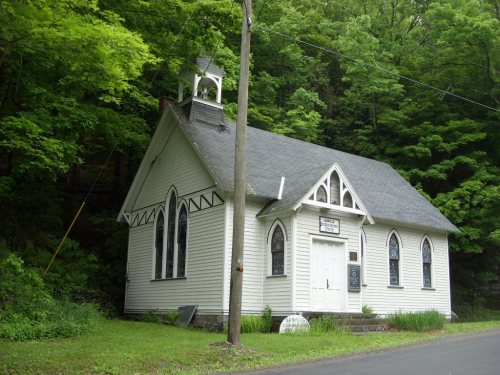
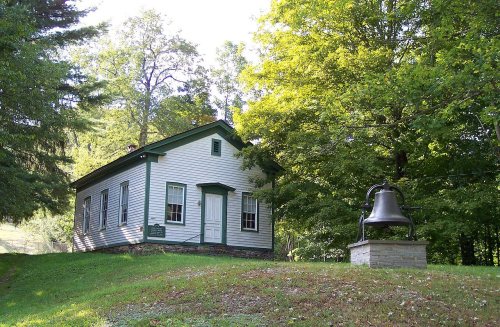
Hancock’s post office opened in 1815, and 36% of its homes were built before 1940
More historic than 91% of U.S. towns · #239 of 758 in New York. What drives it
5 places in town are on the National Register, among them a historic district with 6 buildings. Below: 7 old photos and papers, maps from 1886 on, and the census since 1820.
The Hancock post office opened in 1815, the earliest record of the town by name. Ten smaller post offices, Partridge Island (1825), Harvard (1849) and Cadosia Valley (1853), opened inside today’s town and later closed.
First census: 525 in 18202020 census: 2,764211 years
How historic is Hancock?
A
More historic than 91% of U.S. towns, on its age, its old homes and the National Register.
Founding year: the first Hancock post office (Blevins & Helbock, CC0).The full story ↓
History grade
What drives Hancock’s History grade
On its age, its old homes and the National Register, Hancock is more historic than 91% of U.S. towns, #239 of 758 in New York. All 3 inputs are above most U.S. towns; its share of homes from before 1940 ranks highest and its National Register listings lowest.
A
HistoryA character grade: shown, never part of Hancock’s overall grade.
New York towns list more on the Register than most of the country (a typical New York town has 12.3 per 10,000 residents, the U.S. 2.4), so Hancock’s 36.1 sits near the middle of its state (64% of New York towns have fewer) while its 10 historic buildings outnumber those of 76% of U.S. towns.
How sure. Graded on any two of the three inputs instead, the letter would range from A− to A. The pre-1940 share is a Census survey estimate (±5.8 points). The founding year is the first post office, not a stated founding date.
Founding year: the first post office (other dates in Quick answers). Homes: Census ACS 2020–24. National Register: National Park Service, May 2026 list; each listing counted once (boundary changes and added documentation belong to their listing), and a historic district counts its contributing buildings. How TownRatings grades history →
What stands out about Hancock’s past
Read from the archive, the National Register and the record. The page puts what stands out first.
Lost post offices, old corners, places now gone and burying grounds
Hancock’s post office has been open since 1815. 18 other post offices opened and closed inside today’s town.
Hancock
1815–today
East Branch
1825–today
Partridge Island
1825–1873
Harvard
1849–1959
Cadosia Valley
1853–1886
Lordville
1855–1967
Fishers Eddy
1873–1874
Fishs Eddy
1874–today
Trout Brook
1874–1895
Peakville
1882–1972
18101920today
Hamlets and corners on the map
BurnwoodCadosiaCentervilleChilowayEast BranchElk BrookFishs EddyFrench WoodsGouldsHarvardKerryvilleLong FlatLordvilleLuzerneMetholPacatacanPea BrookPeakvillePeas EddyReadburnRock Valley
Gone or out of use
Hancock Quarrymine
12cemeteries and burying grounds inside Hancock
East BranchFrench Woods ChurchGouldHarvardLong FlatOld East BranchOld Village CommunityPartridge IslandPea BrookRickardRiverviewRock Valley
US Post Offices dataset (Blevins & Helbock, CC0). Places and cemeteries from the USGS Geographic Names Information System (2021).
People over time
Hancock, census by census
Peaked at 5,308 in 1900; 2,764 people lived here in 2020.
21 censuses, 1820–2020.
U.S. Census Bureau decennial counts, from the census table on Hancock’s Wikipedia page.
Every building
Hancock, building by building, 1886–1911
Fire insurance maps drew every building, what it was made of and what it was used for, so insurers could price the risk of fire. Pick a year, then a sheet.
Passages that mention Hancock, cut from the printed page as they were published.
History of Winnebago County and Hancock County, Iowa, a record of settlement, organization, progress and achievement ..1917Read the page →
Read the text
The History, of Hancock County, publislied in 1884, has the following to say in regard to the early settlement of the county: ''Years ago the public lands embraced by the present limits of Hancock County were thrown into the market and sold, the purchasers being generally men of extensive means who obtained the lands in large tracts for speculative purposes. Consequently, since the organization of the county, it has had no public lands, if we except the sixteenth sections for school purposes, and the swamp land grant, which the
Text read by machine from the scan; it may contain errors.
History of Winnebago County and Hancock County, Iowa, a record of settlement, organization, progress and achievement ..1917 · page 253Read the page →
Read the text
and delivered to Hancock County, Iowa, a deed to the following described real estate, to wit: "Block No. Twelve (12), of Tallman's Addition to the town of Garner, Hancock County, Iowa, as a gift to said county for certain prescribed purposes, which deed is recorded in the records of Hancock County, Iowa, in Book 10 of deeds on page 575, and whereas circumstances have up until this time prevented said Hancock County, Iowa, from taking possession and occupying said premises for the purposes
Text read by machine from the scan; it may contain errors.
A centennial biographical history of Hancock County, Ohio..1903 · page 134Read the page →
Read the text
This name has long been a famihar one in Hancock county, and its representatives, commencing in pioneer days, have at every period since their settlement been influential in connection with the general development. David and Fannie Roberts, whose births occurred in Fairfield county, Ohio, about the closing of the first decade of the nineteenth century, came shortly after their marriage to Hancock county, where they located on forty acres of land in Big Lick township. The warrant for this land was signed by no less a person than General Andrew Jackson, better known as "Old Hickoiy," who
Text read by machine from the scan; it may contain errors.
History of Hancock County, Indiana1882 · page 474Read the page →
Read the text
We quote from the record : " WhereaSy It has been shown to the full satisfaction of the County Commissioners of Hancock county, Indiana, by competent and sufficient evidence, that on the night of the 12th of January, 1866, the Treasurer's office of this, Hancock county, was feloniously entered, the iron safe broken open and a large sum of money stolen therefrom, of which five thousand dollars was money belonging to Hancock county, the same having been
Text read by machine from the scan; it may contain errors.
Scans and text from the Internet Archive. Books published in 1930 or earlier, which are in the public domain.
Timeline
Hancock, 1796 to 1987
Woven from the archive, old maps, post office records, the National Register and the people born here.
Nothing in the archives for these yearsWeddings on Main Street, storms, parades, school pictures, the old store. If it’s in your family album, it belongs here.
The Hancock post office opened in 1815, the earliest record of the town by name (U.S. post office records).
How does Hancock rank for history?
Hancock is more historic than 91% of U.S. towns, #239 of 758 in New York. The History grade combines the town’s founding era, the share of homes built before 1940 and its National Register listings. It’s a character grade, so it isn’t part of the overall grade. How it works.
What is on the National Register in Hancock?
5 listings: 3 buildings, 1 historic district, the Ravina, with 6 contributing buildings, and 1 structure. 10 historic buildings in all.
How old are the homes in Hancock?
36% of Hancock’s homes were built before 1940 (Census estimate, ±5.8 points), against a typical 27% for a New York town; the median home was built in 1960.
Founding dates: Wikidata, Wikipedia, the U.S. post office records of Blevins & Helbock (CC0) and the Census. Homes by year built: Census ACS 2020–24. National Register of Historic Places: National Park Service (list of May 22, 2026). Old photos, postcards and papers: Wikimedia Commons, the Library of Congress and other public archives, credited on each item’s page. Maps: U.S. Geological Survey historical topographic maps (via Esri) and Sanborn fire-insurance maps (Library of Congress). History text and census tables: Wikipedia (CC BY-SA 4.0). Places that used to be: USGS Geographic Names Information System (2021).
From Wikimedia Commons (18), the National Register of Historic Places (5), Wikipedia, Wikidata and Wikipedia for famous people, U.S. Geological Survey historical maps, U.S. Census counts (via Wikipedia), the US Post Offices dataset (Blevins & Helbock), the USGS Geographic Names Information System, Sanborn fire insurance maps (Library of Congress) and old county and town histories (Internet Archive). Archive images are copied here with their credits and licenses, shown on each photo’s page. Refreshed monthly.


 1968
 1968
 1968
 1987
 2009
 2009
 2009
 2009
 2009
 2009
 2009
 2009
 2009
 2008
 2002