Guest, Sign inJoin

Post to Floral Park

We’ll email a one-tap link to publish your post. No password, and nothing is public until you click it.
Already a member? Sign in
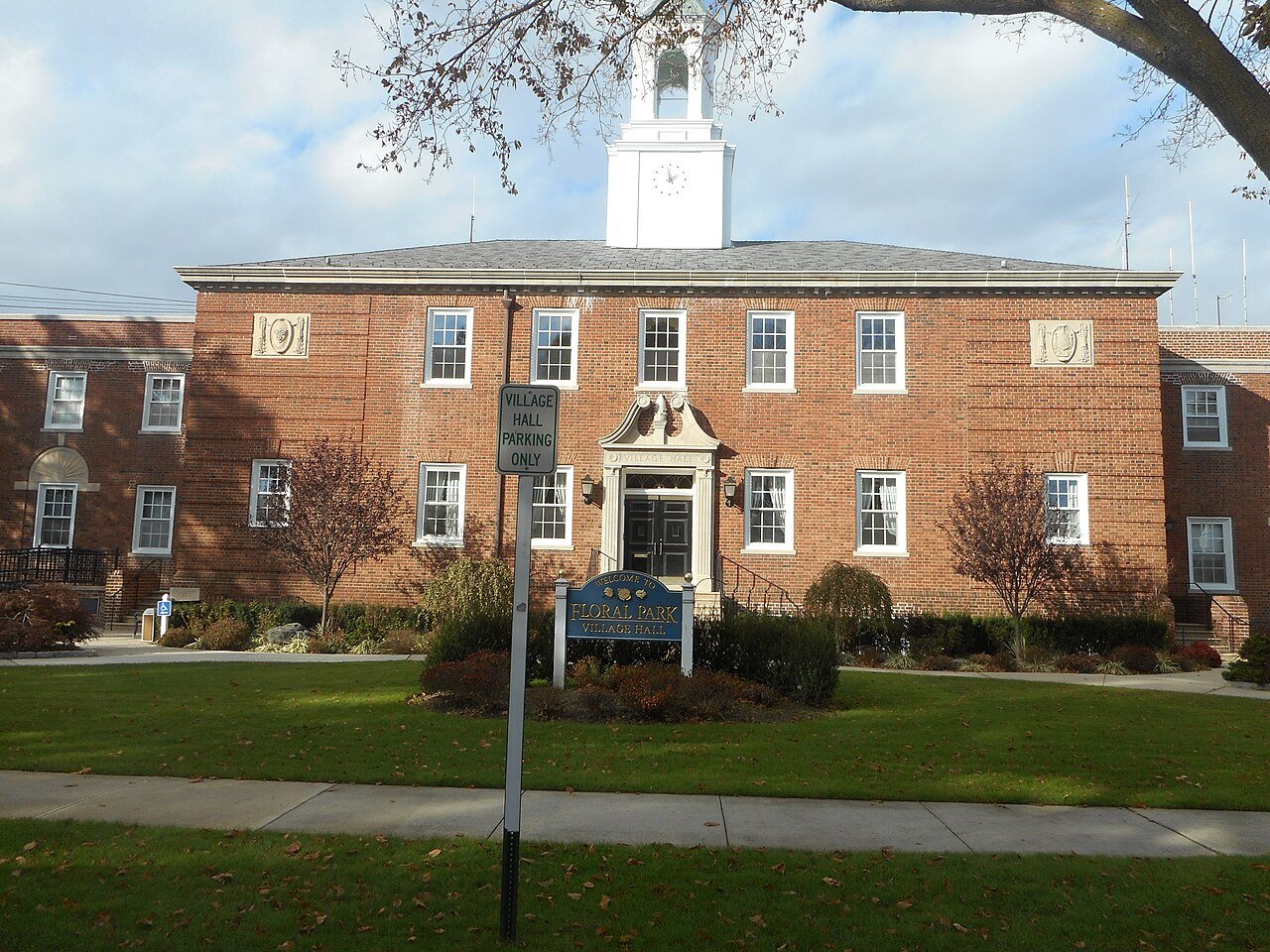
Floral Park Village Hall; Front DoorPhoto: DanTD · CC BY-SA 4.0
B−History
History · Floral Park

Floral Park dates to 1874, and 53% of its homes were built before 1940

More historic than 52% of U.S. towns · #665 of 758 in New York. What drives it

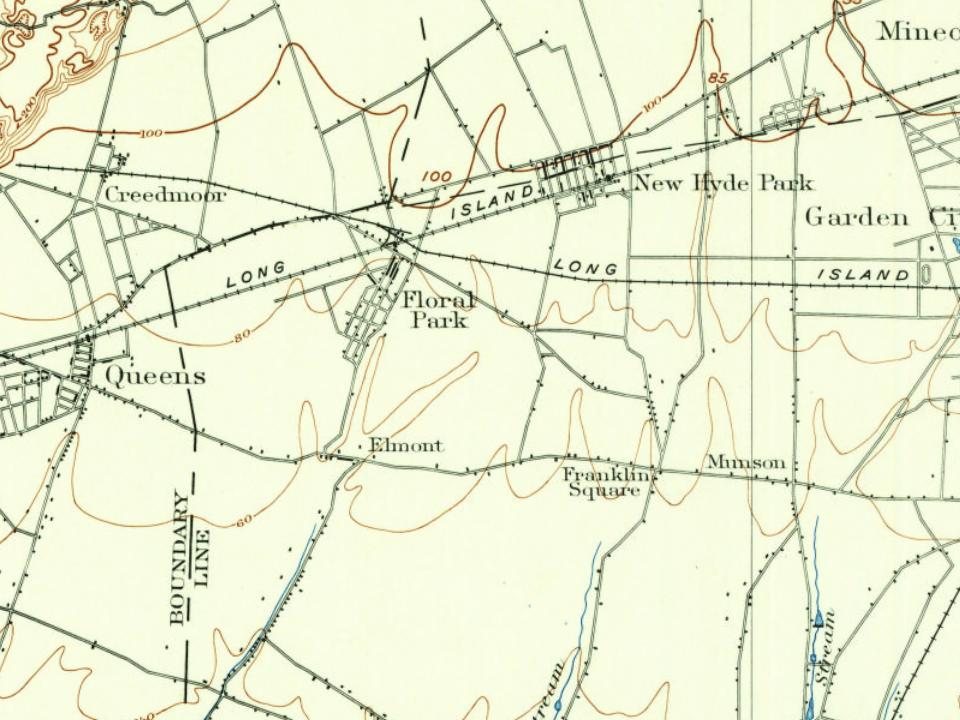
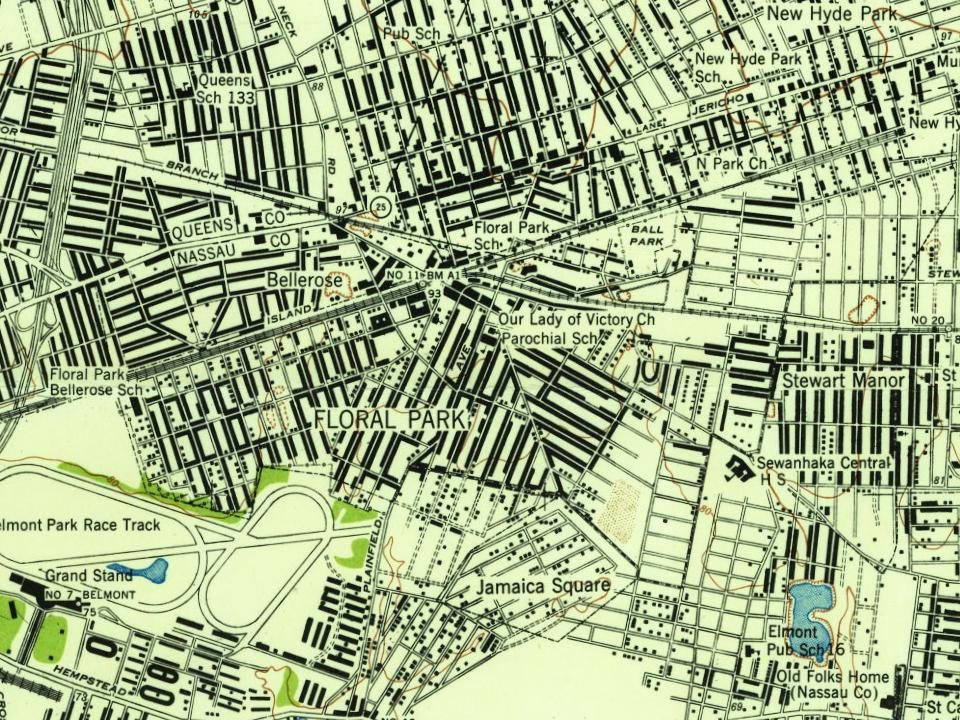
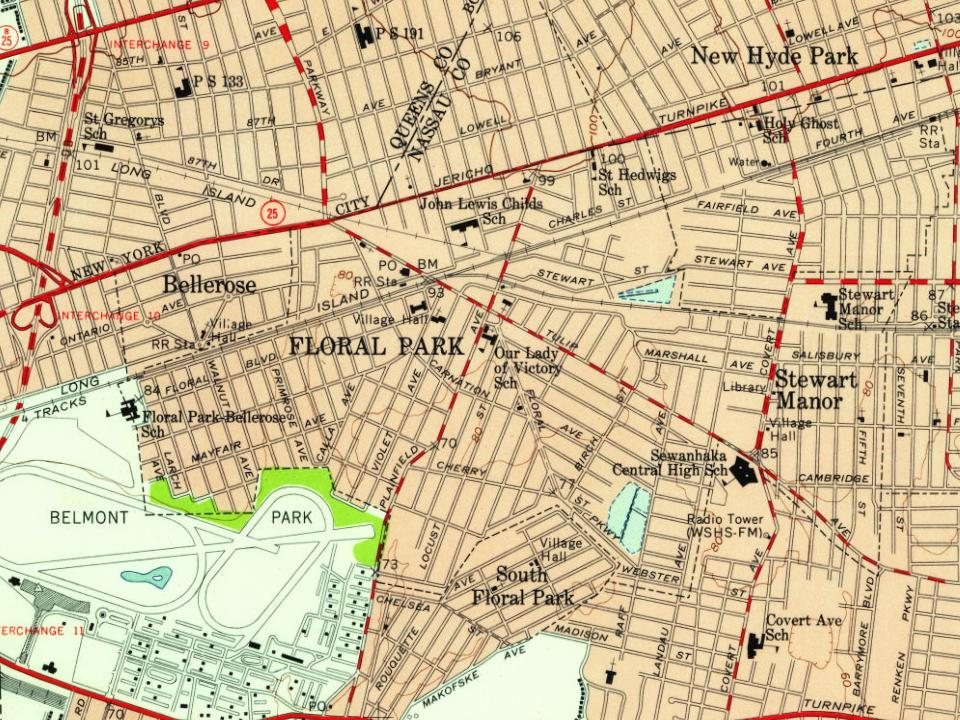
Below: maps from 1897 on and the census since 1910.

1874founded
0on the National Register
53%homes built before 1940
7famous people
Photo: DanTD · CC BY-SA 4.0
Quick answers

How Floral Park began

When was Floral Park founded?

1874

Floral Park dates its founding to 1874 (Wikidata). The census first counted it in 1910.

First census: 1,225 in 19102020 census: 16,172152 years

How historic is Floral Park?

B−

More historic than 52% of U.S. towns, on its age, its old homes and the National Register.

What drives the grade ↓
Founding year: Wikidata. First post office: 1887.The full story ↓
History grade

What drives Floral Park’s History grade

On its age, its old homes and the National Register, Floral Park is more historic than 52% of U.S. towns, #665 of 758 in New York. Its share of homes from before 1940 holds the grade up; its National Register listings pull it down.

B−
HistoryA character grade: shown, never part of Floral Park’s overall grade.
All U.S. towns we grade (21,289)Ahead of 52%
NewerOlder
New York towns of 2,500+ (758)Ahead of 12%

New York towns list more on the Register than most of the country (a typical New York town has 12.3 per 10,000 residents, the U.S. 2.4), so Floral Park’s 0.0 sits below most of its state (10% of New York towns have fewer) while its 0 listings outnumber those of 23% of U.S. towns.

How sure. Graded on any two of the three inputs instead, the letter would range from D to B+. The pre-1940 share is a Census survey estimate (±4.6 points). Two sources give 1874.

Founding year: Wikidata (other dates in Quick answers). Homes: Census ACS 2020–24. National Register: National Park Service, May 2026 list; each listing counted once (boundary changes and added documentation belong to their listing), and a historic district counts its contributing buildings. How TownRatings grades history →

What stands out about Floral Park’s past

Read from the archive, the National Register and the record. The page puts what stands out first.

★ What stands out · Help out

Start Floral Park’s collection

The first neighbors to add old photos shape how Floral Park’s history is told.

Decades since 1900 with photos
00s10s20s30s40s50s60s70s80s90s
0 of 10 decades. The empty ones are waiting for someone’s album.
On the map

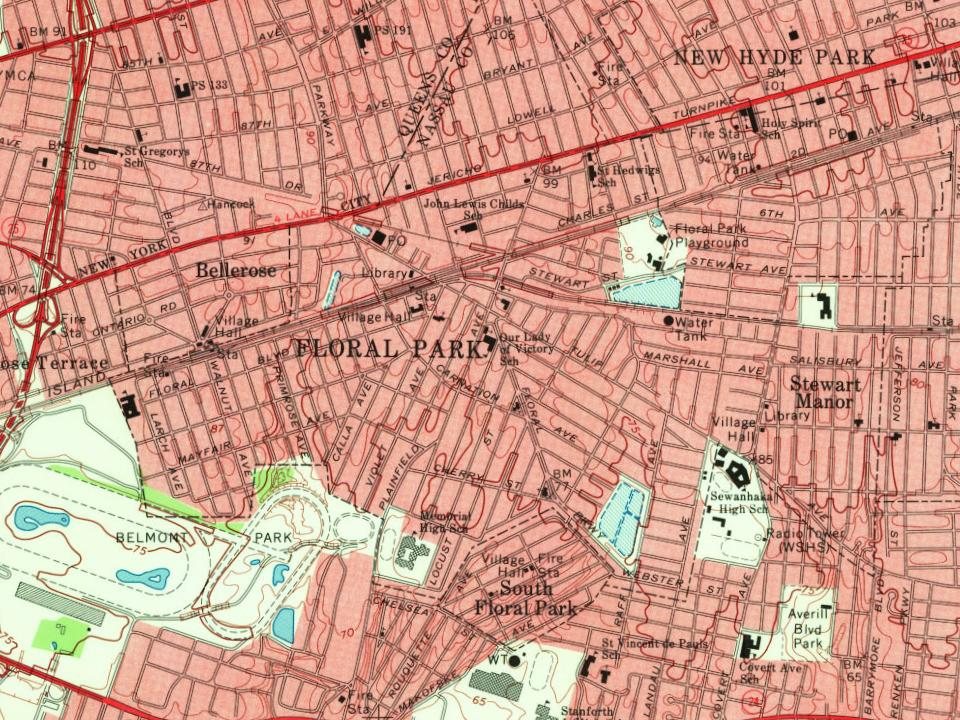
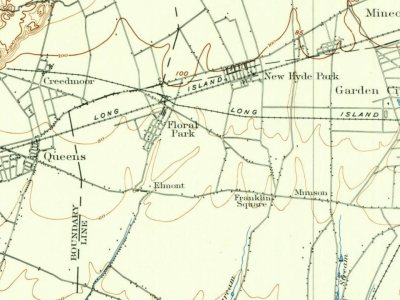
Floral Park on the map, 1897 to 1969

Every edition of the U.S. Geological Survey’s map of Floral Park. Tap a year, or press play to watch the town change.

Floral Park on the 1897 USGS mapFloral Park on the 1903 USGS mapFloral Park on the 1947 USGS mapFloral Park on the 1954 USGS mapFloral Park on the 1969 USGS map1897Hempstead sheet · 1:62,500

U.S. Geological Survey historical topographic maps (public domain), via Esri’s collection of the scans. The red ring marks the center of Floral Park.

The story

How Floral Park came to be

From Wikipedia’s history of Floral Park.

Read it all →

The area that is now Floral Park once marked the western edge of the great Hempstead Plains, and by some reports was initially known as Plainfield. Farms and tiny villages dominated the area through the 1870s when the development of the Long Island Rail Road Hempstead Branch and Jericho Turnpike cut through the area. Hinsdale had more than two dozen flower farms after the Civil War. The present-day village of Floral Park was once called East Hinsdale.

Text from Wikipedia, licensed CC BY-SA 4.0.

Timeline

Floral Park, 1874 to 1975

Woven from the archive, old maps, post office records, the National Register and the people born here.

  1. 19th century
  2. 1874
    FoundingFloral Park is established
  3. 1897On the mapFirst mapped by the U.S. Geological Survey
  4. 20th century
  5. 1933Born hereAlex Cord is born here
  6. 1937Born hereDiana Diamond is born here
  7. 1943Born hereCharles Ludlam is born here
  8. 1975Born hereZendon Hamilton is born here
By decade

Floral Park, decade by decade

Every building

Floral Park, building by building, 1910

Fire insurance maps drew every building, what it was made of and what it was used for, so insurers could price the risk of fire. Pick a sheet.

Floral Park fire insurance map, 1910, sheet 11910Sheet 1 of 6

Sanborn Map Company, via the Library of Congress. Editions published in 1930 or earlier, which are in the public domain.

People over time

Floral Park, census by census

05,00010,00015,00020,000192019401960198020002020Peak: 18,466

Between 1,225 and 18,466 people in every census since 1910.

12 censuses, 1910–2020.

U.S. Census Bureau decennial counts, from the census table on Floral Park’s Wikipedia page.

Famous people

7 famous people were born in Floral Park

Writers, athletes, leaders and more, ranked by how widely they’re known.

See all →
Stories next door

History across the town line

Each neighbor’s History grade, on the same three inputs.

Questions about Floral Park’s history

What year was Floral Park founded?

In 1874, according to Wikidata. Floral Park’s post office opened in 1887, and the census of 1910 counted 1,225 people here.

How does Floral Park rank for history?

Floral Park is more historic than 52% of U.S. towns, #665 of 758 in New York. The History grade combines the town’s founding era, the share of homes built before 1940 and its National Register listings. It’s a character grade, so it isn’t part of the overall grade. How it works.

How old are the homes in Floral Park?

53% of Floral Park’s homes were built before 1940 (Census estimate, ±4.6 points), against a typical 27% for a New York town; the median home was built in 1938.

Memory lane

What the archives can’t tell you, neighbors can.

Town Square →
Start a conversation
Sources

Where this page comes from

Founding dates: Wikidata, Wikipedia, the U.S. post office records of Blevins & Helbock (CC0) and the Census. Homes by year built: Census ACS 2020–24. National Register of Historic Places: National Park Service (list of May 22, 2026). Old photos, postcards and papers: Wikimedia Commons, the Library of Congress and other public archives, credited on each item’s page. Maps: U.S. Geological Survey historical topographic maps (via Esri) and Sanborn fire-insurance maps (Library of Congress). History text and census tables: Wikipedia (CC BY-SA 4.0). Places that used to be: USGS Geographic Names Information System (2021).

From Wikimedia Commons (12), Wikipedia, Wikidata and Wikipedia for famous people, U.S. Geological Survey historical maps, U.S. Census counts (via Wikipedia) and Sanborn fire insurance maps (Library of Congress). Archive images are copied here with their credits and licenses, shown on each photo’s page. Refreshed monthly.