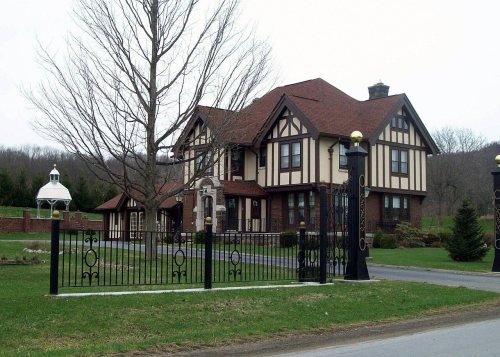
Its Register listings are the Larrowe House, the Rowe House and the Presbyterian Church of Atlanta. Below: 1 old photo or paper from 1873 on and old-book passages.
Founding year: Wikidata. First post office: 1818.The full story ↓
History grade
What drives Cohocton’s History grade
On its age, its old homes and the National Register, Cohocton is more historic than 92% of U.S. towns. All 3 inputs are above most U.S. towns; its share of homes from before 1940 ranks highest and its National Register listings lowest.
A
HistoryA character grade: shown, never part of Cohocton’s overall grade.
New York towns list more on the Register than most of the country (a typical New York town has 12.3 per 10,000 residents, the U.S. 2.4), so Cohocton’s 21.1 sits near the middle of its state (57% of New York towns have fewer) while its 5 historic buildings outnumber those of 70% of U.S. towns.
How sure. Graded on any two of the three inputs instead, the letter would range from A− to A+. The pre-1940 share is a Census survey estimate (±6.2 points). Two sources give 1794.
Founding year: Wikidata (other dates in Quick answers). Homes: Census ACS 2020–24. National Register: National Park Service, May 2026 list; each listing counted once (boundary changes and added documentation belong to their listing), and a historic district counts its contributing buildings. How TownRatings grades history →
What stands out about Cohocton’s past
Read from the archive, the National Register and the record. The page puts what stands out first.
The town was formed from the towns of Bath and Dansville in 1812. It was originally known as the town of Liberty. Part of the town was later used to form new towns in the county: Avoca (1843) and Wayland (1848). In 1874, the town was enlarged by the addition of a part of the town of Prattsburgh. The Larrowe House, also known as The Cohocton Town and Village Hall and located at the village of Cohocton, was listed on the National Register of Historic Places in 1989. At least as late as 1836 the spellings Cohocton and Conhocton were used, even in the same text, but by 1860 the shorter spelling was consistent.
Brown Hill SchoolschoolCohocton Gravel PitmineLake Hollow SchoolschoolPotter Hill SchoolschoolSchool Number 1schoolSchool Number 12schoolSchool Number 2schoolSchool Number 4schoolSchool Number 6schoolSchool Number 8school
9cemeteries and burying grounds inside Cohocton
ClearviewHatchLarroweLentMaple ViewParkhillSaint Pius OldWheatonZion Lutheran
US Post Offices dataset (Blevins & Helbock, CC0). Places and cemeteries from the USGS Geographic Names Information System (2021).
From the old history books
What they wrote about Cohocton, 1879–1916
Passages that mention Cohocton, cut from the printed page as they were published.
A history of Steuben County, New York, and its people1911 · page 193Read the page →
Read the text
In 1802 a Presbyterian church was organized in the town of Cohocton by Reverends Aaron C. Collins and Abijah Warren. A Methodist Episcopal church was organized in the town of Wayland in 1809 ; in Cameron, 1812 ; and in the town of Dansville, now in Steuben county, 1817. In 1798 Rev. Andrew Gray held religious services in the town of Dansville, then in Steuben county, and in 1800 organized a Presbyterian church in the same town.
Text read by machine from the scan; it may contain errors.
Be it remembered that at a meeting of the Universalist Society held at the school house in School District No. 5, in the town of Cohocton on the 28th day of January, 1833, pursuant to public notice and according to the statute incorporating roMgious societies in such case made ji.n i pro-
Text read by machine from the scan; it may contain errors.
History of Steuben county, New York, with illustrations and biographical sketches of some of its prominent men and pioneers1879 · page 237Read the page →
Read the text
then built another house, where he settled with his family, just south of the Davis Mill, now owned by Thomas Warner. He also built the first sawand grist-mill in the town of Cohocton. The saw-mill stood on the site of the present Warner Mill ; the grist-mill was built on the opposite side of the road from Mr. Cleland's house, the road then runninsr down on the flat instead of where it now does. The sawmill was built about 1808 ; the irons used in it were manu-
Text read by machine from the scan; it may contain errors.
of Orange S. Searl, Tuesday evening, March 24, 1891, for the purpose of taking action on the incorporation of the village of Cohocton, Stephen D. Shattuck was chosen chairman, and Andrew E. Shults, secretary. On motion the following committee was appointed to make a survey and map
Text read by machine from the scan; it may contain errors.
Scans and text from the Internet Archive. Books published in 1930 or earlier, which are in the public domain.
Timeline
Cohocton, 1794 to 1892
Woven from the archive, old maps, post office records, the National Register and the people born here.
In 1794, according to Wikidata. Cohocton’s post office opened in 1818.
How does Cohocton rank for history?
Cohocton is more historic than 92% of U.S. towns. The History grade combines the town’s founding era, the share of homes built before 1940 and its National Register listings. It’s a character grade, so it isn’t part of the overall grade. How it works.
What is on the National Register in Cohocton?
Three places: the Larrowe House (listed 1989), the Rowe House (2008) and the Presbyterian Church of Atlanta (2010).
How old are the homes in Cohocton?
49% of Cohocton’s homes were built before 1940 (Census estimate, ±6.2 points), against a typical 27% for a New York town; the median home was built in 1942.
Founding dates: Wikidata, Wikipedia, the U.S. post office records of Blevins & Helbock (CC0) and the Census. Homes by year built: Census ACS 2020–24. National Register of Historic Places: National Park Service (list of May 22, 2026). Old photos, postcards and papers: Wikimedia Commons, the Library of Congress and other public archives, credited on each item’s page. Maps: U.S. Geological Survey historical topographic maps (via Esri) and Sanborn fire-insurance maps (Library of Congress). History text and census tables: Wikipedia (CC BY-SA 4.0). Places that used to be: USGS Geographic Names Information System (2021).
From Wikimedia Commons (6), the National Register of Historic Places (3), Wikipedia, Wikidata and Wikipedia for famous people, the US Post Offices dataset (Blevins & Helbock), the USGS Geographic Names Information System and old county and town histories (Internet Archive). Archive images are copied here with their credits and licenses, shown on each photo’s page. Refreshed monthly.

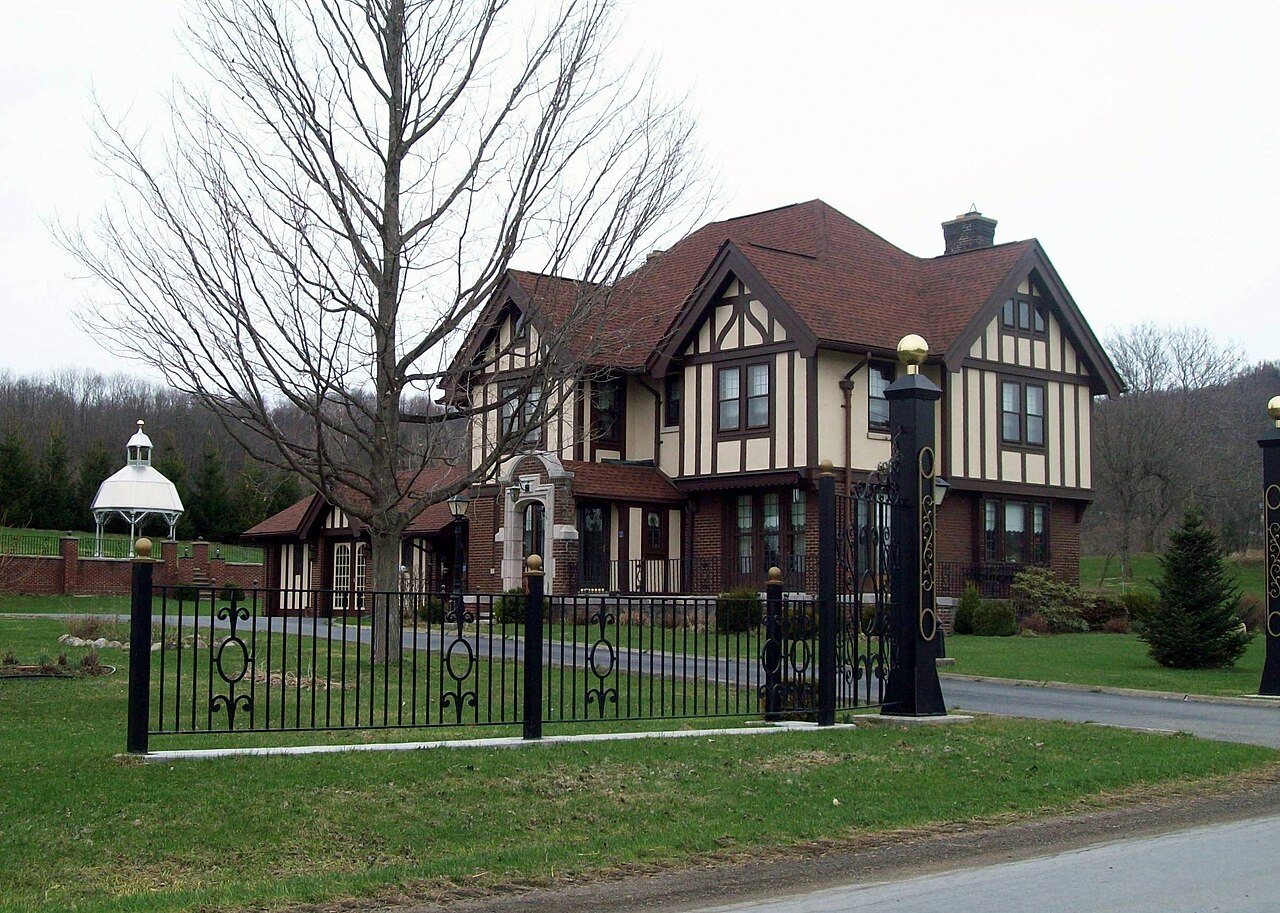


 2010
 2009
 2009
 2009
 2008