Busti dates to 1811, and 24% of its homes were built before 1940
More historic than 78% of U.S. towns · #448 of 758 in New York. What drives it
Its Register listings are the Busti Mill, the Dr. John Lord House and the Lakewood Village Hall. Below: 4 old photos and papers, maps from 1904 on, and the census since 1830.
Founding year: Wikidata. First post office: 1823.The full story ↓
History grade
What drives Busti’s History grade
On its age, its old homes and the National Register, Busti is more historic than 78% of U.S. towns, #448 of 758 in New York. Its share of homes from before 1940 holds the grade up; its National Register listings pull it down.
A−
HistoryA character grade: shown, never part of Busti’s overall grade.
New York towns list more on the Register than most of the country (a typical New York town has 12.3 per 10,000 residents, the U.S. 2.4), so Busti’s 4.0 sits below most of its state (32% of New York towns have fewer) while its 3 listings outnumber those of 65% of U.S. towns.
How sure. Graded on any two of the three inputs instead, the letter would range from B+ to A−. The pre-1940 share is a Census survey estimate (±4.8 points). Two sources give 1811.
Founding year: Wikidata (other dates in Quick answers). Homes: Census ACS 2020–24. National Register: National Park Service, May 2026 list; each listing counted once (boundary changes and added documentation belong to their listing), and a historic district counts its contributing buildings. How TownRatings grades history →
What stands out about Busti’s past
Read from the archive, the National Register and the record. The page puts what stands out first.
Passages that mention Busti, cut from the printed page as they were published.
History of Chautauqua County, New York1894 · page 823Read the page →
Read the text
First Settlers in Busti. — It is uncertain who was the first settler in Busti, or tlie date of his settlement, but the first purchases I find on record are those of Russell Dyer, lot 47, James Slade, lot 38 and Hezekiah Seymour, lot 38, T, I, R. II, in September, 1808. The original purchasers in this town were: June, 1809, J^abon Case, lot 36, T. i, R. 11 ; April, 1810, Samuel Griffith, lot 4, R. 12 ; May, 18 10, Theodore Benius, lot 12, R. 12 ; December, 1810, Jonas Lamphear, lot 48, R. 12 ; 1810, Aaron Martin, lot 44, R. 11 ; April, 1811, Lawrence Frank, lots 62-63, T. i, R. 11 ; May, 1811, Palmer
Text read by machine from the scan; it may contain errors.
History of Chautauqua County, New York1875 · page 239Read the page →
Read the text
He was a prominent citizen. He was elected, in i8i6, supervisor of Harmony, then including Busti, and held the oflBce by reelection until the town of Busti was formed, in 1823, and including that year. He was the leader of the first Methodist class formed within the limits of the town. It was formed by Elder John Lewis ; and its original members were Palmer Phillips and Asa Smith, and their wives, John Whittam, and Joseph and Daniel Phillips sons of Palmer. Daniel became a preacher, and died at Sug&r Grove, Pa., in 1851.
Text read by machine from the scan; it may contain errors.
History of Chautauqua County, New York, and its people1921Read the page →
Read the text
Busti — Extending from Chautauqua Lake south to the Pennsylvania line and from the town of Kiantone on the east to the town of Harmony on the west, Busti contains an area of 29,152 acres, or about forty-five and onehalf square miles.
Text read by machine from the scan; it may contain errors.
History of Chautauqua County, New York, and its people1921Read the page →
Read the text
Uriah Bentley settled in what is now the town of Busti in 1810. He was a brave and sturdy pioneer, a practical cooper and blacksmith. He built in 1837 a large brick house, the first of its kind in Southern Chautauqua county. This house was the later summer residence of Fred A. Bentley, then president of the Bank of Jamestown.
Text read by machine from the scan; it may contain errors.
Scans and text from the Internet Archive. Books published in 1930 or earlier, which are in the public domain.
Timeline
Busti, 1811 to 1907
Woven from the archive, old maps, post office records, the National Register and the people born here.
In 1811, according to Wikidata. Busti’s post office opened in 1823, and the census of 1830 counted 1,680 people here.
How does Busti rank for history?
Busti is more historic than 78% of U.S. towns, #448 of 758 in New York. The History grade combines the town’s founding era, the share of homes built before 1940 and its National Register listings. It’s a character grade, so it isn’t part of the overall grade. How it works.
What is on the National Register in Busti?
Three places: the Busti Mill (listed 1976), the Dr. John Lord House (1991) and the Lakewood Village Hall (2023).
How old are the homes in Busti?
24% of Busti’s homes were built before 1940 (Census estimate, ±4.8 points), against a typical 27% for a New York town; the median home was built in 1963.
Founding dates: Wikidata, Wikipedia, the U.S. post office records of Blevins & Helbock (CC0) and the Census. Homes by year built: Census ACS 2020–24. National Register of Historic Places: National Park Service (list of May 22, 2026). Old photos, postcards and papers: Wikimedia Commons, the Library of Congress and other public archives, credited on each item’s page. Maps: U.S. Geological Survey historical topographic maps (via Esri) and Sanborn fire-insurance maps (Library of Congress). History text and census tables: Wikipedia (CC BY-SA 4.0). Places that used to be: USGS Geographic Names Information System (2021).
From Wikimedia Commons (7), the National Register of Historic Places (3), Wikipedia, Wikidata and Wikipedia for famous people, U.S. Geological Survey historical maps, U.S. Census counts (via Wikipedia), the US Post Offices dataset (Blevins & Helbock), the USGS Geographic Names Information System and old county and town histories (Internet Archive). Archive images are copied here with their credits and licenses, shown on each photo’s page. Refreshed monthly.


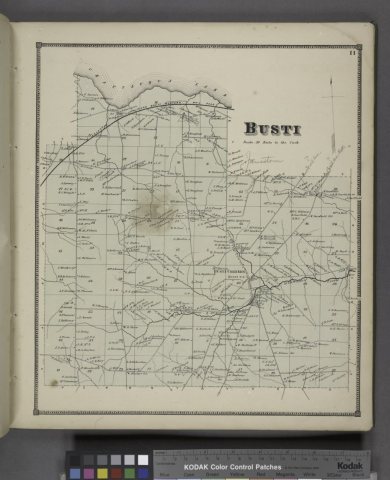

 1867
 1867
 2020
 2012
 2003


