Auburn dates to 1793, and 44% of its homes were built before 1940
More historic than 96% of U.S. towns · #131 of 758 in New York. What drives it
20 places in town are on the National Register, among them 4 National Historic Landmarks and a historic district with 151 buildings. Below: 8 old photos and papers, maps from 1886 on, and the census since 1810.
Founding year: Wikidata; Wikipedia’s history section gives the same year. First post office: 1818.The full story ↓
History grade
What drives Auburn’s History grade
On its age, its old homes and the National Register, Auburn is more historic than 96% of U.S. towns, #131 of 758 in New York. All 3 inputs are above most U.S. towns; its share of homes from before 1940 ranks highest and its age lowest.
A+
HistoryA character grade: shown, never part of Auburn’s overall grade.
New York towns list more on the Register than most of the country (a typical New York town has 12.3 per 10,000 residents, the U.S. 2.4), so Auburn’s 67.3 sits above most of its state (72% of New York towns have fewer) while its 177 historic buildings outnumber those of 92% of U.S. towns.
How sure. Graded on any two of the three inputs instead, the letter would range from A to A+. The pre-1940 share is a Census survey estimate (±3.3 points). Two sources give 1793.
Founding year: Wikidata (other dates in Quick answers). Homes: Census ACS 2020–24. National Register: National Park Service, May 2026 list; each listing counted once (boundary changes and added documentation belong to their listing), and a historic district counts its contributing buildings. How TownRatings grades history →
What stands out about Auburn’s past
Read from the archive, the National Register and the record. The page puts what stands out first.
The country’s official list of buildings and places worth saving. 4 are National Historic Landmarks, the highest tier. Boundary changes and added documentation are counted with their listing.
Auburn was founded in 1793, during the post-Revolutionary period of settlement of western New York. The founder, John L. Hardenbergh, was a veteran of the Sullivan-Clinton campaign against the Iroquois during the American Revolution. Hardenbergh settled in the vicinity of the Owasco River with his infant daughter and two African-American indentured servants, Harry and Kate Freeman. After his death in 1806, Hardenbergh was buried in Auburn's North Street Cemetery, and was re-interred in 1852 in Fort Hill Cemetery – the first burial in the city's newly opened burial ground. The community grew up around Hardenbergh's gristmill and sawmill.
Passages that mention Auburn, cut from the printed page as they were published.
Historical records of a hundred and twenty years, Auburn, N. Y.1913 · page 161Read the page →
Read the text
In 1836 the village of Auburn extended its limits to include the whole town of Auburn. This year too the village streets were lighted with oil lamps for the first
Text read by machine from the scan; it may contain errors.
History of Cayuga County, New York1908 · page 565Read the page →
Read the text
Division of the Pennsylvania & New York Canal and Railroad Company, holding the new office till December i, 1888. From January 1st of the same year till March 16, 1892, he was superintendent of the Auburn Division of the Lehigh Valley Railroad Company, when for five months he served as superintendent of the Auburn Division of the Philadelphia & Reading Railroad.
Text read by machine from the scan; it may contain errors.
Historical records of a hundred and twenty years, Auburn, N. Y.1913 · page 150Read the page →
Read the text
CAYUGA COUNTY NATIONAL BANK The second bank to be established in Auburn was the Cayuga County Bank in 1833. By that date Auburn had more than trebled in population since the foundation of the Bank of Auburn. Many strong industries had been established since 1817 and, moreover, there was a definite movement toward building a steam railroad.
Text read by machine from the scan; it may contain errors.
History of Cayuga County, New York1879 · page 189Read the page →
Read the text
adopted by the bare two-thirds majority required : " Resolved, That we hereby consent to the transfer of the Auburn Academy property to the Board of Education of the city of Auburn, to be occupied for the purposes of an Academic High School, as set forth in the act of the Legislature of the State of New York entitled 'an act to
Text read by machine from the scan; it may contain errors.
Scans and text from the Internet Archive. Books published in 1930 or earlier, which are in the public domain.
Timeline
Auburn, 1793 to 2001
Woven from the archive, old maps, post office records, the National Register and the people born here.
Nothing in the archives for these yearsWeddings on Main Street, storms, parades, school pictures, the old store. If it’s in your family album, it belongs here.
Fire insurance maps drew every building, what it was made of and what it was used for, so insurers could price the risk of fire. Pick a year, then a sheet.
Auburn Hose Company Number 3buildingCapitol TheaterbuildingLehigh Valley StationlocaleLincoln SchoolschoolMercy HospitalhospitalSaint Francis Italian Catholic ChurchchurchSchool Number 3school
4cemeteries and burying grounds inside Auburn
Cold SpringFort HillNorth StreetSaint Peter's Church
US Post Offices dataset (Blevins & Helbock, CC0). Places and cemeteries from the USGS Geographic Names Information System (2021).
Help out
Finish Auburn’s story
Most archives stop around 1920. The photos from after that are in family albums, not libraries.
Decades since 1900 with photos
00s10s20s30s40s50s60s70s80s90s
1 of 10 decades. The empty ones are waiting for someone’s album.
In 1793, according to Wikidata and Wikipedia’s history of the town. Auburn’s post office opened in 1818, and the census of 1810 counted 500 people here.
How does Auburn rank for history?
Auburn is more historic than 96% of U.S. towns, #131 of 758 in New York. The History grade combines the town’s founding era, the share of homes built before 1940 and its National Register listings. It’s a character grade, so it isn’t part of the overall grade. How it works.
What is on the National Register in Auburn?
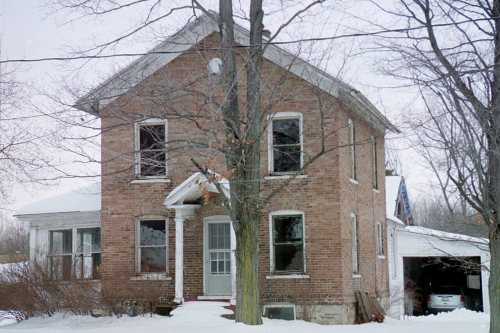
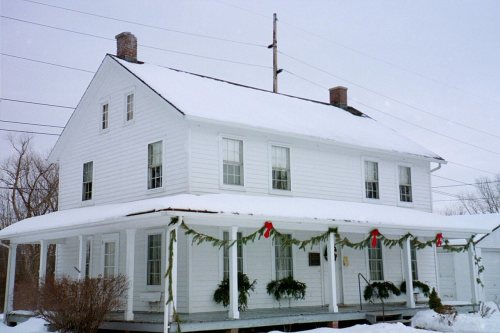
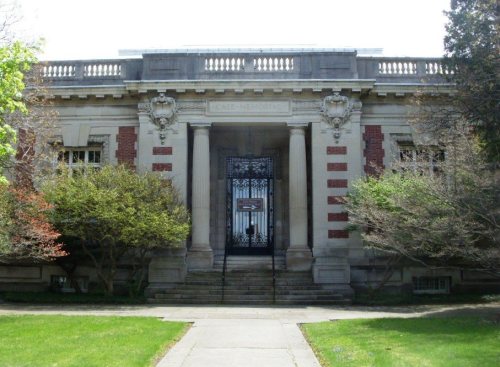
20 listings, 3 of them National Historic Landmarks: 19 buildings, among them the William H. Seward House (a National Historic Landmark since 1964), 1 historic district, the South Street Area Historic District, with 151 contributing buildings, and 1 site. 177 historic buildings in all.
How old are the homes in Auburn?
44% of Auburn’s homes were built before 1940 (Census estimate, ±3.3 points), against a typical 27% for a New York town; the median home was built in 1947.
Founding dates: Wikidata, Wikipedia, the U.S. post office records of Blevins & Helbock (CC0) and the Census. Homes by year built: Census ACS 2020–24. National Register of Historic Places: National Park Service (list of May 22, 2026). Old photos, postcards and papers: Wikimedia Commons, the Library of Congress and other public archives, credited on each item’s page. Maps: U.S. Geological Survey historical topographic maps (via Esri) and Sanborn fire-insurance maps (Library of Congress). History text and census tables: Wikipedia (CC BY-SA 4.0). Places that used to be: USGS Geographic Names Information System (2021).
From Wikimedia Commons (6), the Library of Congress (2), Wikidata (2), the National Register of Historic Places (21), Wikipedia, Wikidata and Wikipedia for famous people, U.S. Geological Survey historical maps, U.S. Census counts (via Wikipedia), the US Post Offices dataset (Blevins & Helbock), the USGS Geographic Names Information System, Sanborn fire insurance maps (Library of Congress) and old county and town histories (Internet Archive). Archive images are copied here with their credits and licenses, shown on each photo’s page. Refreshed monthly.


 ★ Landmark
 ★ Landmark
 ★ Landmark
 ★ Landmark


 1875
 1875
 1875
 1882


