Guest, Sign inJoin

Post to Dublin

We’ll email a one-tap link to publish your post. No password, and nothing is public until you click it.
Already a member? Sign in
A+History
History · Dublin

Dublin dates to 1771, and 28% of its homes were built before 1940

Among the most historic 1% of U.S. towns. What drives it

67 places in town are on the National Register, among them two historic districts with 119 buildings between them. Below: 11 old photos and papers, maps from 1898 on, and the census since 1790.

1771founded
67on the National Register
28%homes built before 1940
11old photos & papers
1famous people
From Dublin’s archive · credits on each photo
Quick answers

How Dublin began

When was Dublin founded?

1771

Dublin dates its founding to 1771 (Wikidata). It appears in the first U.S. census, 1790.

First census: 901 in 17902020 census: 1,532255 years

How historic is Dublin?

A+

Among the most historic 1% of U.S. towns, on its age, its old homes and the National Register.

What drives the grade ↓
Founding year: Wikidata. First post office: 1813.The full story ↓
History grade

What drives Dublin’s History grade

On its age, its old homes and the National Register, Dublin is among the most historic 1% of U.S. towns. All 3 inputs are above most U.S. towns; its National Register listings ranks highest and its share of homes from before 1940 lowest.

A+
HistoryA character grade: shown, never part of Dublin’s overall grade.
All U.S. towns we grade (21,289)Among the top 1%
NewerOlder

New Hampshire towns list more on the Register than most of the country (a typical New Hampshire town has 9.5 per 10,000 residents, the U.S. 2.4), so Dublin’s 1,280 sits above most of its state (99% of New Hampshire towns have fewer) while its 216 historic buildings outnumber those of 94% of U.S. towns.

NoteThe founding year comes from Wikidata alone; no second source gives 1771.
How sure. Graded on any two of the three inputs instead, the letter would still be A+. The pre-1940 share is a Census survey estimate (±6.8 points).

Founding year: Wikidata (other dates in Quick answers). Homes: Census ACS 2020–24. National Register: National Park Service, May 2026 list; each listing counted once (boundary changes and added documentation belong to their listing), and a historic district counts its contributing buildings. How TownRatings grades history →

What stands out about Dublin’s past

Read from the archive, the National Register and the record. The page puts what stands out first.

★ What stands out · On the National Register

67 listings protect 216 historic buildings

The country’s official list of buildings and places worth saving.

places listed
67
National Historic Landmarks
0
none yet
historic buildings protected
216
each building in a district counts
first listed
1980
Dublin Town Hall
All 67 listings
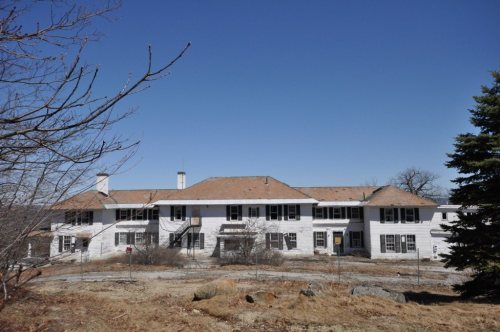
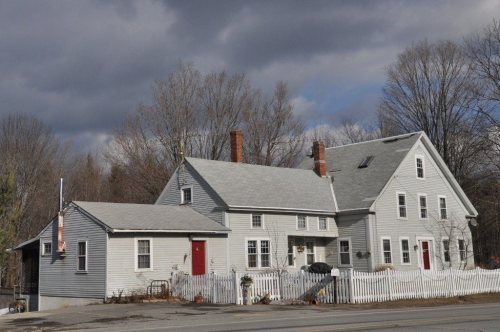
Capt. Thomas Morse FarmBuilding · listed 1983Corey FarmBuilding · listed 1983Deacon Abijah Richardson HouseBuilding · listed 1983Dublin Village Historic DistrictDistrict · listed 1983Far HorizonsBuilding · listed 1983Foothill FarmBuilding · listed 1983Frost FarmBuilding · listed 1983Henry Strongman HouseBuilding · listed 1983Ivory Perry HomesteadBuilding · listed 1983Joseph Gowing FarmBuilding · listed 1983Lattice CottageBuilding · listed 1983Learned HomesteadBuilding · listed 1983Luke Richardson HouseBuilding · listed 1983Mason HouseBuilding · listed 1983Moses Greenwood HouseBuilding · listed 1983Pumpelly StudioBuilding · listed 1983Richard Strong CottageBuilding · listed 1983Rufus Piper HomesteadBuilding · listed 1983Spur HouseBuilding · listed 1983Stone-Darracott HouseBuilding · listed 1983T.H. Cabot CottageBuilding · listed 1983Townsend FarmBuilding · listed 1983WeldwoodBuilding · listed 1983Wood HouseBuilding · listed 1983Abijah Richardson Sr. HomesteadBuilding · listed 1983Appleton FarmBuilding · listed 1983Ballou-Newbegin HouseBuilding · listed 1983Benjamin Learned HouseBuilding · listed 1983Brackett HouseBuilding · listed 1983Burpee FarmBuilding · listed 1983Capt. Richard Strong HouseBuilding · listed 1983Capt. Samuel Allison HouseBuilding · listed 1983Eveleth FarmBuilding · listed 1983Fisk BarnBuilding · listed 1983Frost FarmBuilding · listed 1983Isaac Greenwood HouseBuilding · listed 1983Ivanov-Rinov HouseBuilding · listed 1983James Gowing FarmBuilding · listed 1983James Robbe Jr. HouseBuilding · listed 1983John Perry HomesteadBuilding · listed 1983John Richardson HomesteadBuilding · listed 1983KnollwoodBuilding · listed 1983Louis Cabot HouseBuilding · listed 1983Markham HouseBuilding · listed 1983Mary Anne Wales HouseBuilding · listed 1983McKenna CottageBuilding · listed 1983Micajah Martin FarmBuilding · listed 1983Moore Farm and Twitchell Mill SiteBuilding · listed 1983Morse, Eli, Sawmill FoundationsSite · listed 1983Mountain View FarmBuilding · listed 1983Parsons Studio and CasinoBuilding · listed 1983Solomon Piper FarmBuilding · listed 1983Stone FarmBuilding · listed 1983StonehengeBuilding · listed 1983William Strongman HouseBuilding · listed 1983Windmill HillBuilding · listed 1983Amory BallroomBuilding · listed 1985Amory-Appel CottageBuilding · listed 1985Dublin Lake Historic DistrictDistrict · listed 1983

National Park Service, National Register of Historic Places. Photos from Wikimedia Commons, credited on each place’s page.

People over time

Dublin, census by census

02004006008001,0001,2001,4001,6001,800180018501900195020001,620 in 1820Low: 408

Lost two-thirds of its people between 1820 and 1920, then grew 3-fold.

24 censuses, 1790–2020.

U.S. Census Bureau decennial counts, from the census table on Dublin’s Wikipedia page.

The story

How Dublin came to be

From Wikipedia’s history of Dublin.

Read it all →

In 1749, the Masonian proprietors granted the town as "Monadnock No. 3" (or North Monadnock) to Matthew Thornton and 39 others. The 40 grantees came mostly from middle and eastern parts of New Hampshire; none of them became settlers in the township. The deed of grant, which dated November 3, 1749, was given by Col. Joseph Blanchard of Dunstable.

The French and Indian War thwarted permanent settlement until the 1760s, when Irishman Henry Strongman moved from Peterborough. Other early settlers arrived from Sherborn, Massachusetts. In 1771, Governor John Wentworth incorporated the town, naming it after Strongman's birthplace: Dublin, Ireland.

Text from Wikipedia, licensed CC BY-SA 4.0.

From the old history books

What they wrote about Dublin in 1920

Passages that mention Dublin, cut from the printed page as they were published.

And it is agreed that the remainder of money due to the several School Districts, September 8, 1870, shall be paid by the Treasurer of the town of Dublin, the amount due being eleven hundred and fifty -four dollars, and the dog tax divided to said districts, agreeably to the appropriation and divis…
The history of Dublin, N.H.1920Read the page →
Read the text

And it is agreed that the remainder of money due to the several School Districts, September 8, 1870, shall be paid by the Treasurer of the town of Dublin, the amount due being eleven hundred and fifty -four dollars, and the dog tax divided to said districts, agreeably to the appropriation and division of school money by the town and Selectmen of Dublin for the year 1870, and that the town of Harrisville shall pay to the town of Dublin, the sum of two hundred and twenty-two dollars and ninety-one cents ($222.91).

Text read by machine from the scan; it may contain errors.

Scans and text from the Internet Archive. Books published in 1930 or earlier, which are in the public domain.

Timeline

Dublin, 1771 to 1981

Woven from the archive, old maps, post office records, the National Register and the people born here.

  1. 18th century
  2. 1771
    FoundingDublin is established
  3. 1789Born hereMoses Mason, Jr. is born here
  4. 19th century
  5. 1813Post officeThe Dublin post office opens
  6. 1820CensusPopulation peaks at 1,620
  7. 1898In the archiveDublin from the West, Dublin, N. H
  8. 1898On the mapFirst mapped by the U.S. Geological Survey
  9. 20th century
  10. 1900In the archiveDublin Lake and Monadnoek Mountain
  11. 1910BuiltAmory Ballroom is built
  12. 1937BuiltIvanov-Rinov House is built
  13. 1981In the archiveEliMorseSawmill
By decade

Dublin, decade by decade

3 decades in the archive, from the 1890s to the 1980s. Scroll each row; tap a photo for its story.

On the map

Dublin on the map, 1898 to 1998

Every edition of the U.S. Geological Survey’s map of Dublin. Tap a year, or press play to watch the town change.

Dublin on the 1898 USGS mapDublin on the 1936 USGS mapDublin on the 1949 USGS mapDublin on the 1984 USGS mapDublin on the 1998 USGS map1898Monadnock sheet · 1:62,500

U.S. Geological Survey historical topographic maps (public domain), via Esri’s collection of the scans. The red ring marks the center of Dublin.

Then & now

Stand where they stood

No then-and-now pairs yet. Take a photo from the same spot as an old one and they appear here side by side.

Dublin from the West, Dublin, N. H
Retake this viewDublin from the West, Dublin, N. H, 1898

Find the spot, match the angle, and add your photo. It becomes the first then-and-now pair on Dublin’s page.

Retake this view · +15
Places that used to be

Old corners

Dublin’s post office has been open since 1813.

Hamlets and corners on the map
Bonds Corner

US Post Offices dataset (Blevins & Helbock, CC0). Places and cemeteries from the USGS Geographic Names Information System (2021).

Help out

Finish Dublin’s story

Most archives stop around 1920. The photos from after that are in family albums, not libraries.

Decades since 1900 with photos
00s10s20s30s40s50s60s70s80s90s
2 of 10 decades. The empty ones are waiting for someone’s album.
Stories next door

History across the town line

Each neighbor’s History grade, on the same three inputs.

Questions about Dublin’s history

What year was Dublin founded?

In 1771, according to Wikidata. Dublin’s post office opened in 1813, and the first U.S. census counted 901 people here in 1790.

How does Dublin rank for history?

Dublin is among the most historic 1% of U.S. towns. The History grade combines the town’s founding era, the share of homes built before 1940 and its National Register listings. It’s a character grade, so it isn’t part of the overall grade. How it works.

What is on the National Register in Dublin?

67 listings: 64 buildings, among them the Dublin Town Hall (listed 1980, the first), 2 historic districts, the Dublin Village Historic District and the Dublin Lake Historic District, with 119 contributing buildings, and 1 site. 216 historic buildings in all.

How old are the homes in Dublin?

28% of Dublin’s homes were built before 1940 (Census estimate, ±6.8 points), against a typical 17% for a New Hampshire town; the median home was built in 1968.

Memory lane

What the archives can’t tell you, neighbors can.

Town Square →
Start a conversation
Sources

Where this page comes from

Founding dates: Wikidata, Wikipedia, the U.S. post office records of Blevins & Helbock (CC0) and the Census. Homes by year built: Census ACS 2020–24. National Register of Historic Places: National Park Service (list of May 22, 2026). Old photos, postcards and papers: Wikimedia Commons, the Library of Congress and other public archives, credited on each item’s page. Maps: U.S. Geological Survey historical topographic maps (via Esri) and Sanborn fire-insurance maps (Library of Congress). History text and census tables: Wikipedia (CC BY-SA 4.0). Places that used to be: USGS Geographic Names Information System (2021).

From Wikimedia Commons (22), the Library of Congress (3), Wikidata (5), the National Register of Historic Places (67), Wikipedia, Wikidata and Wikipedia for famous people, U.S. Geological Survey historical maps, U.S. Census counts (via Wikipedia), the US Post Offices dataset (Blevins & Helbock), the USGS Geographic Names Information System and old county and town histories (Internet Archive). Archive images are copied here with their credits and licenses, shown on each photo’s page. Refreshed monthly.