Guest, Sign inJoin

Post to Valentine

We’ll email a one-tap link to publish your post. No password, and nothing is public until you click it.
Already a member? Sign in
Valentine
Nebraska›Cherry County

ValentineNE

A town of 2,635, settled in 1882. 55% more nonprofits per person than the typical Nebraska town.

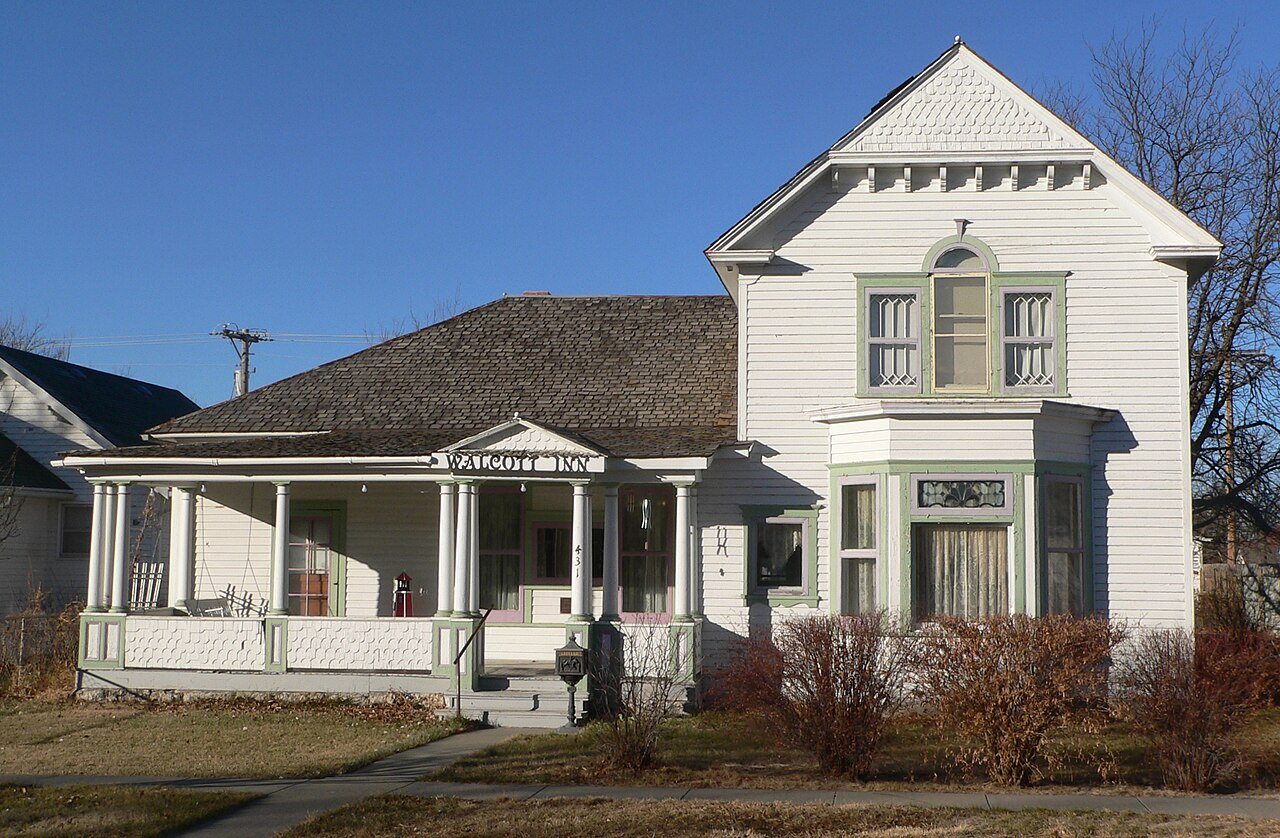
F. M. Walcott House · Photo: Ammodramus · CC0
Photo of Valentine

Valentine, NE · F. M. Walcott House · Photo: Ammodramus · CC0

Is Valentine a good place to live?

Valentine gives you more for your money than most places: homes are within reach, about $222K for a typical one, or 3.3 years of the county’s $66K median household income. It grades B+ overall, ranked 23rd of 57 in Nebraska. On the plus side, its schools outperform 82% of the state's. 46% of working residents work locally in Valentine, against 33% in Nebraska’s towns and 8% across U.S. towns. Only 11 of Nebraska’s 133 towns score higher on hazard risk. Valentine's civic life (library use, community groups, volunteering) is stronger than in 98% of U.S. towns.

What makes Valentine stand out

Where Valentine beats most towns.

How Valentine grades

Each subject compared with towns across the country (schools within Nebraska), ordered by how far Valentine is from typical.

How grading works
Character Graded, but not part of the overall grade.
Described, not graded Taste, not quality: snow or an older crowd is neither good nor bad.

How TownRatings grades towns →

F. M. Walcott House
F. M. Walcott House · National Register of Historic Places
Valentine’s story

144 years in pictures

Census counts: 811 in 1900, 2,633 in 2020. The archive holds 12 old photos and papers going back to 1908 and 2 maps from 1950 on.

5 places on the National Register of Historic Places.

  • 1882Valentine is settled
Explore the history →
Getting set up

Moving to Valentine: who provides what

Who provides power, water and the rest in Valentine, and how to reach them.

The full setup list →
PowerCity of ValentineEIAHIFLD · EIA
WaterCity of Valentine water systemNo health-based violations in 5 years · EPAEPA
Internet5 providers100% of addresses get 100/20 MbpsFCC
Trash & dumpNot on file yetWe don’t have Valentine’s trash rules yet
SchoolsValentine Community SchoolsWhich school depends on your addressNCES
Register to voteOnlineIn Nebraska you can register online until 18 days before Election Day, in person until 11 days before Election Day, or by mail (postmarked 18 days before).vote.gov
Who runs elections hereCherry County ClerkCherry County; contacts on the Handbook page.FVAP, Jun 2023
ZIP code6920169201 100%Census 2020

EPA SDWIS (Oct 9, 2026) · HIFLD + EIA-861 2025 · Census 2020 ZCTAs · NCES 2024–25 · registration: vote.gov, updated Sep 30, 2026.

The data

Ordered by what stands out in Valentine.

Valentine pairs an A− for schools with modest home prices, is healthier than towns with similar incomes and has home values falling while Nebraska’s rise.

SchoolsA−

Valentine’s grade for schools is an A−

Its A− for schools comes with an A− for cost of living: the typical home is worth about $222K.

Its public schools are run by the Valentine Community Schools. Two of its 4 schools are below, each with why it’s listed.

82%of NE districts it outscoresA−School Grade
SchoolLevelStudentsLetter
Valentine Elementary SchoolLargest public elementary schoolGrades PK–4Grades PK–4285A−
Valentine High SchoolLargest public high schoolGrades 9–12Grades 9–12158C+

NCES · EDFacts · graded within NE on state tests and graduation

Climate

In Valentine, expect four seasons and hot summers

Valentine has cold winters and warm summers, with very little rain. The July high in Valentine is 88°F.

29″snow a winter

Typical low → high °F

Winter14–38°
Spring34–60°
Summer58–85°
Fall35–63°
Oct 4
typical first frost
May 6
typical last frost
+1.2°
vs. the 20th-century average

NOAA U.S. Climate Normals, 1991–2020

HousingCost of living grade A−

Valentine’s grade for cost of living is an A−

Values fell 6% in the past year while the Nebraska typical home rose 3%. The typical value, about $222K, is 9% below its May 2025 peak.

Typical home values fell 6% in the year to September 2026. 62% of Valentine households own their home.

$222KZillow home value
ValentineNebraska townsU.S. towns
Households that own their home62%67%73%
Median rent$892 a month$921 a month$1,185 a month

Typical home value

Valentine$222K
Nebraska$278K
−6%
value change, 1 year

Census ACS, 2020–24 · Zillow Home Value Index · Redfin Data Center

Natural hazardsHazard risk grade B

Inland flooding leads a low hazard risk in Valentine

Expected storm and flood damage is lower than in 65% of U.S. communities.

35risk score of 100
FEMA risk score
35Low riskLowerHigher
Inland floodingCold wavesWildfire

FEMA National Risk Index · OpenFEMA

Work & commuteJobs & income grade C+

With 1.1 jobs for every working resident, Valentine draws in 851 commuters

Valentine’s average trip to work is 15 minutes. Since 2013, Valentine has lost 111 jobs, to 1,439 in 2023. Valentine’s median household income is $57,000.

46%work in town
ValentineNebraska townsU.S. towns
Average trip to work15 minutes17 minutes25 minutes
Median household income$57,000$70,000$80,000
Below the poverty line9.1%11%9.6%

Where working residents work

In Valentine46%
Mission4%
O'Neill3%
Two Strike3%
Omaha2%
2 mi
median commute distance
1,439
jobs based in Valentine
Balanced
jobs vs. working residents
A−
Walkability grade: more walkable than 79% of U.S. towns

Census LEHD 2023 · ACS

Who lives here

Older than Nebraska overall

People 65 and older are 23% of residents (17% statewide); adults 35 to 64 are 31% of residents (36% statewide). 26% of adults 25 and older have a bachelor’s degree or more, vs 35% across Nebraska.

37.2median age · NE 37.2
ValentineNebraska townsU.S. towns
Aged 65 or older23%19%18%
Median age37.2 years37.8 years40.5 years
Under 1824%24%22%
Bachelor’s degree or more, 25+26%28%29%
ValentineNebraskaUnited States

Ages · share of residents

Education · adults 25 and older

No diploma4%
High school37%
Some college26%
Associate’s7%
Bachelor’s14%
Graduate12%

Women and men · all residents

49% women, 51% men

That’s an even split within the survey’s margin of ±3.4 points. Across Nebraska, 49.7% of residents are women.

Ages and education in Valentine
ValentineNEU.S.
Under 1014.6%13.1%11.6%
10 to 179.2%11.4%10.3%
18 to 246.1%9.8%9.1%
25 to 3415.7%12.9%13.7%
35 to 4412.4%13.1%13.2%
45 to 546.6%11.1%12.2%
55 to 6412%11.9%12.7%
65 to 7411.3%9.9%10.2%
75 and older12%6.8%7%
No diploma4.1%7.8%10.4%
High school36.7%25%26%
Some college26.2%21.6%19.1%
Associate’s7.3%11%8.8%
Bachelor’s13.9%22.3%21.6%
Graduate11.8%12.3%14.1%

U.S. Census Bureau · ACS 2020-2024 5-year estimates · in a town of 2,600, single groups can be off by several points

SafetyC+

More crime per resident in Valentine than in 62% of U.S. towns

Only 2 of the 45 Nebraska towns we compare have a higher violent crime rate than Valentine.

38%of U.S. towns report more crimeC+Safety Grade
ValentineNebraska townsU.S. towns
Violent crimes per 1,000 (2025)4.2 per 1,000 residents11.6
Property crimes per 1,000 (2025)4.2 per 1,000 residents89.9

Violent crime per 1,000 residents

Valentine4.2
Nebraska2.2
U.S.3.3

Property crime per 1,000 residents

Valentine4.2
Nebraska14
U.S.15.5
38th
percentile among U.S. towns we grade
28th
percentile among NE towns
11
violent crimes reported in 2025
11
property crimes reported in 2025

FBI crime data, 2025 · crimes reported to police

OutdoorsB

Valentine has set aside 5.6% of its land for conservation

0.6 miles of trail in 5 parks and preserves. The biggest park or preserve is Valentine State Fish Hatchery, at 40 acres.

5.6%conserved
ValentineNebraska townsU.S. towns
Miles of trail per square mile0.2 miles per square mile0.30.4
Conserved land5.6%3.6%4.3%
5.6%
conserved · 109 of 1,931 acres
0.6 mi
of trails · 0.2 per sq mi
Biggest places to walkTrailsAcres
1. Valentine State Fish Hatchery—40
2. Ecology Park—5
3. Colburn Park—2

Trails & parks © OpenStreetMap contributors · Conserved land: USGS PAD-US

HealthB−

Valentine is less healthy than 52% of U.S. towns

Against the 7,990 U.S. towns with household incomes like Valentine’s, it is healthier than 78%, so its B− isn’t only a matter of income.

Valentine beats the Nebraska average on 1 of 32 CDC measures and trails it on 9. 17% of adults have been diagnosed with depression in Valentine. Among 57 Nebraska towns, just 5 have a lower share of adults who binge drink than Valentine.

48%healthier than U.S. townsB−Health Grade
ValentineNebraska townsU.S. towns
Depression (CDC PLACES)17%18%23%
Feel lonely (CDC PLACES)29%30%33%
Frequent mental distress (CDC PLACES)14%14%17%
High blood pressure (CDC PLACES)37%34%35%
32 measures vs. Nebraska
1 better22 too close to call9 worse
What stands outValentineNE
More adults treating high blood pressure81.1%77.5%
More adults with heart disease8.4%6.1%
Cherry County Hospital
0.5 mi away · emergency room
3 of 3
care shortages: primary care, dental, mental health
23rd
percentile among NE towns

CDC PLACES 2025 · modeled estimates for adults · CMS · HRSA

Keep exploring

Everything we know about Valentine

19pages on Valentine
After high school

Colleges nearby

None within 15 miles of Valentine; the nearest are

Landmarks

5 places in Valentine on the National Register of Historic Places.

All landmarks →

About Valentine

City in Nebraska, United States

Official town website ↗

Valentine is a city in and the county seat of Cherry County, Nebraska, United States. The population was 2,633 at the 2020 census. It is the hometown of former vice-presidential candidate Tim Walz.

From Wikipedia, licensed CC BY-SA 4.0 · facts via Wikidata (CC0)

Established
1883
Area
2.3 sq mi
Elevation
2,582 ft
ZIP code
69201
Area code
402

Questions about Valentine

Short answers, built from the data on this page.

Is Valentine, NE a good place to live?

By most measures, yes. Valentine grades B+ overall, better than 72% of U.S. towns and #23 of 57 in Nebraska. It grades B− for health, C+ for safety and A− for schools.

Is Valentine, NE expensive?

Not for the area. Cost of living, which also weighs rents, property taxes and how many households pay 30% or more of their income for housing, grades A−.