
U.S. Post Office
Many listed buildings are private homes. Please enjoy them from the street.
About U.S. Post Office
U.S. Post Office, at 301 Hay St., was added to the National Register of Historic Places on Jul 7, 1983. The Register lists it for its architecture, at the local level. It describes its style as Neo-Classical Revival, as it does for 80 other North Carolina listings. It was listed as part of Fayetteville MRA. 18 more Register listings are within a quarter mile.
What it isHistoric building in Fayetteville, North Carolina, USA. From Wikidata (CC0). Read about it on Wikipedia ↗
PDFRead the original nominationThe form that put it on the Register, with its history, photos and a map · 12 MB · National Archives↗1911 to today
- 1911Built, designed by James Knox Taylor
- 1983Added to the National Register of Historic Places
- 2026On the Register for 43 years
Make it a walk: 5 landmarks in about 5 minutes
301 Hay St., Fayetteville · about 0.2 miles on foot, as the crow flies


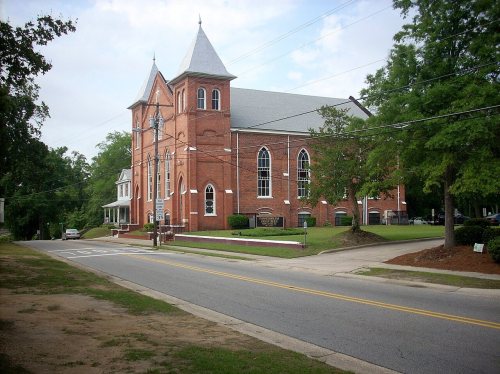
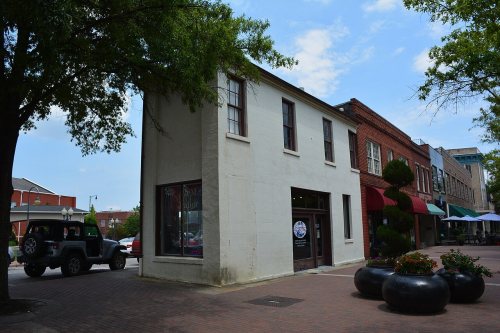

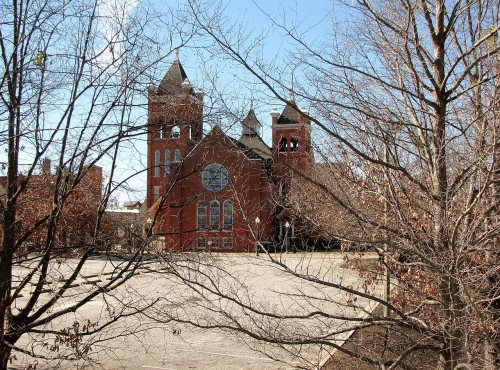
31 more Register listings within half a mile
★ National Historic Landmark · D district · B building · S site. Each opens its own page.
Show the other 13
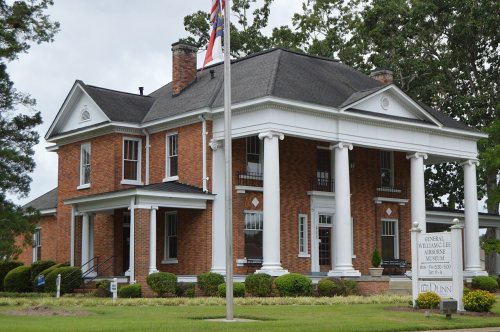
Neo-Classical Revival style, nearby
Other National Register listings within 25 miles described as Neo-Classical Revival.


Memories of U.S. Post Office
The record says what it is. Neighbors know what it means.
Your answer becomes a post in Town Square.
Questions about U.S. Post Office
Is U.S. Post Office on the National Register of Historic Places?
Yes. It was added on Jul 7, 1983 (Register number 83001873).
Is U.S. Post Office a National Historic Landmark?
No. It is on the National Register; North Carolina has 36 National Historic Landmarks. The nearest is Market House, 0.2 miles away.
Can you visit U.S. Post Office?
Our record doesn’t say whether it is open to visitors. Many listed buildings are private, so it may only be seen from the street.
Where can I read the history of U.S. Post Office?
In its National Register nomination, the form that put it on the Register: a 12 MB PDF at the National Archives, linked on this page.
Sources: National Park Service, National Register of Historic Places (05/22/2026) · National Archives catalog record 47717561 · Wikidata. Map tiles © OpenStreetMap contributors.