
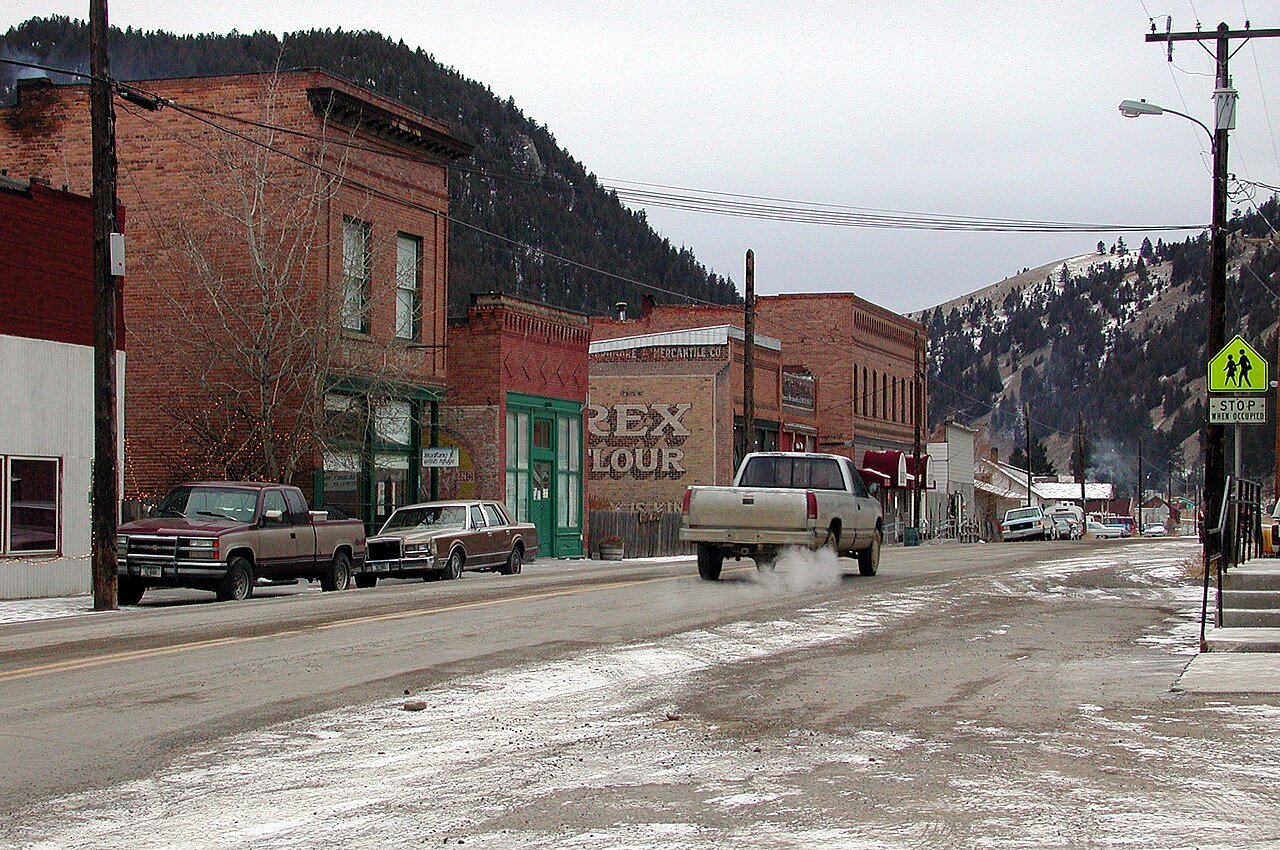
Basin Street in, 2007
Basin’s story
146 years in pictures
Census counts: 600 in 1900, 199 in 2020. The archive holds 7 old photos and papers going back to 2004 and 3 maps from 1954 on.
- 1880Basin is settled
Each edition grades its towns against each other only.
The town was settled in 1880 and has 352 residents today.
Basin’s average commute is 42 minutes, against 17 minutes in Montana’s towns and 25 minutes across U.S. towns. Only one of the 43 Montana towns we compare has a lower peak summer temperature than Basin. 74% of the land in Basin is conserved, against 9.2% in Montana’s towns and 4.3% across U.S. towns. Basin has fewer than 1,000 residents, too few for fair grades; the figures below are still real.
In a town this size, neighbors are the best guide. Ask them anything.
Census counts: 600 in 1900, 199 in 2020. The archive holds 7 old photos and papers going back to 2004 and 3 maps from 1954 on.
Basin is unincorporated, so Jefferson County and regional agencies provide most services.
EPA SDWIS (Oct 9, 2026) · HIFLD + EIA-861 2025 · Census 2020 ZCTAs · NCES 2024–25 · registration: vote.gov, updated Nov 18, 2024.
Ordered by what stands out in Basin.
2.4 miles of trail. In Basin, the trail network density is 0.2 miles per square mile.
Trails & parks © OpenStreetMap contributors · Conserved land: USGS PAD-US
Public schools: the Basin Elementary District. Its one school is below.
| School | Level | Students | Letter |
|---|---|---|---|
| Basin SchoolLargest public elementary schoolGrades PK–6 | Grades PK–6 | 8 | – |
NCES · EDFacts
The share of residents in Basin who live below the poverty line: 14%. The top destinations are Helena (32%), Montana City (15%) and Clancy (7%).
Census LEHD 2023 · ACS
In Basin, the FEMA risk score is 77 of 100. Of the losses FEMA expects here, 47% come from inland flooding and 18% from wildfires. Federal disaster aid has reached households in Basin once, in 2011.
FEMA disaster declarations and aid · FEMA National Risk Index · OpenFEMA
July afternoons reach 77° and January nights drop to 14°.
NOAA U.S. Climate Normals, 1991–2020
Among adults in Basin, 76% had a checkup this year. Against the Montana average, Basin comes out ahead on 8 CDC measures out of 32, and behind on 7. Also worth knowing: of the 42 Montana towns we compare, none has a lower share of adults who binge drink than Basin. In Basin, 29% of adults sleep under 7 hours, and 15% report frequent mental distress.
| Basin | Montana towns | U.S. towns | |
|---|---|---|---|
| Feel lonely (CDC PLACES) | 27% | 31% | 33% |
| Sleep under 7 hours (CDC PLACES) | 29% | 32% | 36% |
| Frequent mental distress (CDC PLACES) | 15% | 18% | 17% |
| High blood pressure (CDC PLACES) | 37% | 32% | 35% |
| What stands out | Basin | MT |
|---|---|---|
| Fewer binge drinkers | 16.3% | 20.3% |
| Fewer adults facing housing insecurity | 7.4% | 9.1% |
| More adults who have had cancer | 11.7% | 9.3% |
CDC PLACES 2025 · modeled estimates for adults · CMS · HRSA
Zillow Home Value Index · Redfin Data Center
None within 15 miles of Basin; the nearest are
About 4 of every 100 Basin residents are enrolled in college, about the same as Montana.
Where Basin’s working residents go each day. Line width shows the share.
Census LEHD 2023
Census-designated place in Montana, United States
Basin is an unincorporated community and census-designated place (CDP) in Jefferson County, Montana, United States. It lies approximately 10 miles (16 km) southeast of the Continental Divide in a high narrow canyon along Interstate 15 about halfway between Butte and Helena. Basin Creek flows roughly north to south through Basin and enters the Boulder River on the settlement's south side. As of the 2020 census, Basin had a population of 199. Archaeologists have discovered evidence of human habitation from 10,000 years ago at a site near Clancy, 20 miles (32 km) northeast of Basin. From about 2000 BCE through the mid-19th century, nomadic tribes hunted bison in the grassy valleys that trend e…
From Wikipedia, licensed CC BY-SA 4.0 · facts via Wikidata (CC0)
Short answers, built from the data on this page.
Basin has fewer than 1,000 residents, too few for fair grades; the figures below are still real.