Jackson’s post office opened in 1817, and 80 of its places are on the National Register
More historic than 74% of U.S. towns · #21 of 100 in Mississippi. What drives it
Most of Jackson was built recently: 5% of its homes predate 1940 and the median home dates from 1969. 80 places in town are on the National Register, among them 5 National Historic Landmarks and ten historic districts with 2,826 buildings between them. Below: 8 old photos and papers, maps from 1885 on, and the census since 1850.
The Jackson post office opened in 1817, the earliest record of the town by name. Wikidata gives 1822. Seven smaller post offices, Seigers (1896), Bradie (1901) and Siwel (1901), opened inside today’s city and later closed.
First census: 1,881 in 18502020 census: 153,701209 years
How historic is Jackson?
B+
More historic than 74% of U.S. towns, on its age, its old homes and the National Register.
Founding year: the first Jackson post office (Blevins & Helbock, CC0). Wikidata: 1822.The full story ↓
History grade
What drives Jackson’s History grade
On its age, its old homes and the National Register, Jackson is more historic than 74% of U.S. towns, #21 of 100 in Mississippi. Its National Register listings hold the grade up; its share of homes from before 1940 pulls it down.
B+
HistoryA character grade: shown, never part of Jackson’s overall grade.
Among the 400 U.S. cities of 100,000 or more, Jackson ranks #154 on History.
Mississippi towns list more on the Register than most of the country (a typical Mississippi town has 71.9 per 10,000 residents, the U.S. 2.4), so Jackson’s 199 sits above most of its state (75% of Mississippi towns have fewer) while its 2,923 historic buildings outnumber those of 100% of U.S. towns.
How sure. Graded on any two of the three inputs instead, the letter would range from B− to A. The pre-1940 share (±0.4 points) is firm at this size. The founding year is the first post office, not a stated founding date; Wikidata’s 1822 falls in the same era, so the grade doesn’t depend on which one is used.
Founding year: the first post office (other dates in Quick answers). Homes: Census ACS 2020–24. National Register: National Park Service, May 2026 list; each listing counted once (boundary changes and added documentation belong to their listing), and a historic district counts its contributing buildings. How TownRatings grades history →
What stands out about Jackson’s past
Read from the archive, the National Register and the record. The page puts what stands out first.
The country’s official list of buildings and places worth saving. 5 are National Historic Landmarks, the highest tier. Boundary changes and added documentation are counted with their listing.
National Park Service, National Register of Historic Places. Photos from Wikimedia Commons, credited on each place’s page.
Places that used to be
Lost post offices, old corners, places now gone and burying grounds
Jackson’s post office has been open since 1817. Seven other post offices opened and closed inside today’s town.
Jackson
1817–today
Tougaloo
1870–today
Seigers
1896–1908
Bradie
1901–1903
Siwel
1901–1908
Vanwinkle
1901–1907
Elton
1908–1920
Fondren
1916–1931
Parkway
1925–1928
18101920today
Hamlets and corners on the map
BradieBriarcliffBrookhollow PlaceBrookleighBrookwood PinesCarriage HillsCedar HillsChoctaw VillageDixonDixon AcresDixon Road Mobile Home ParkEast Manor EstatesEastoverEltonElton PlaceForest HillForest Park EstatesGarden ParkGaylyn TerraceHeritage EstatesHighland MeadowsHomewood Manor Mobile Home CommunityHope SpringsLakeover
Gone or out of use
Campbell CollegeschoolDoctors HospitalhospitalJackson Army Air BasemilitaryJackson Gas FieldoilfieldJackson International AirportairportMount Pleasant SchoolschoolOsburns StandlocaleUniversity of Mississippi Medical Center AirportairportWhites Ferrycrossing
18cemeteries and burying grounds inside Jackson
BaileyBeth IsraelCedar LawnElmwoodGarden Memorial ParkGreenwoodHope SpringJohnsonLakeLakewood Memorial ParkLakewood Memorial Park SouthLincolnMcGowenMount OliveParkway MemorialTougaloo Garden Memorial ParkWillow ParkWilson
US Post Offices dataset (Blevins & Helbock, CC0). Places and cemeteries from the USGS Geographic Names Information System (2021).
The Jackson area was historically populated by the Choctaw, the majority of whom were forcibly removed to Oklahoma following Andrew Jackson's signing of the Indian Removal Act in 1830. However, per the Treaty of Dancing Rabbit Creek, Choctaws could remain in Mississippi where they would be granted citizenship.
Passages that mention Jackson, cut from the printed page as they were published.
History of Hinds County, Mississippi, 1821-19221922Read the page →
Read the text
northeastern part of the city and is now the property of the Presbytorian Church. It was as far back as 1853 that yellow fever made its appearance in the county and city of Jackson to be followed by a like epidemic in 1878. No more heroic conduct was exhibited by any people when these scourges from time to time appeared than that displayed by the people of Hinds county and the city of Jackson.
Text read by machine from the scan; it may contain errors.
History of Hinds County, Mississippi, 1821-1922. Published in commemoration of the centenary of the city of Jackson ... by Mrs. Dunbar Rowland (Eron O. Rowland)1922Read the page →
Read the text
northeastern part of the city and is now the property of the Presbyterian Church. It was as far back as 1853 that yellow fever made its appearance in the county and city of Jackson to be followed by a like epidemic in 1878. No more heroic conduct was exhibited by any people when these scourges from time to time appeared than that displayed by the people of Hinds county and the city of Jackson.
Text read by machine from the scan; it may contain errors.
History of Hinds County, Mississippi, 1821-19221922Read the page →
Read the text
Terry, an incorporated post-town in the southeastern part of Hinds County, on the Illinois Central Railroad, is 16 miles south and west of Jackson. The town was named for William Terry, affectionately referred to as "Uncle Bill Terry," a former resident of the vicinity. Truck farming and market gardening are extensively carried on in the surrounding country and this station is one of the most important fruit and vegetable shipping points in the
Text read by machine from the scan; it may contain errors.
History of Hinds County, Mississippi, 1821-1922. Published in commemoration of the centenary of the city of Jackson ... by Mrs. Dunbar Rowland (Eron O. Rowland)1922Read the page →
Read the text
Terry, an incorporated post-town in the southeastern part of Hinds County, on the Illinois Central Railroad, is 16 miles south and west of Jackson. The town was named for William Terry, affectionately referred to as “Uncle Bill Terry,” a former resident of the vicinity. Truck farming and market gardening are extensively carried on in the surrounding country and this station is one of the most important fruit and vegetable shipping points in the
Text read by machine from the scan; it may contain errors.
Scans and text from the Internet Archive. Books published in 1930 or earlier, which are in the public domain.
Timeline
Jackson, 1817 to 1990
Woven from the archive, old maps, post office records, the National Register and the people born here.
Nothing in the archives for these yearsWeddings on Main Street, storms, parades, school pictures, the old store. If it’s in your family album, it belongs here.
Every edition of the U.S. Geological Survey’s map of Jackson. Tap a year, or press play to watch the town change.
1905Jackson sheet · 1:62,500
U.S. Geological Survey historical topographic maps (public domain), via Esri’s collection of the scans. The red ring marks the center of Jackson.
Every building
Jackson, building by building, 1885–1918
Fire insurance maps drew every building, what it was made of and what it was used for, so insurers could price the risk of fire. Pick a year, then a sheet.
The Jackson post office opened in 1817, the earliest record of the town by name (U.S. post office records). Wikidata gives 1822.
How does Jackson rank for history?
Jackson is more historic than 74% of U.S. towns, #21 of 100 in Mississippi. The History grade combines the town’s founding era, the share of homes built before 1940 and its National Register listings. It’s a character grade, so it isn’t part of the overall grade. How it works.
What is on the National Register in Jackson?
80 listings, 5 of them National Historic Landmarks: 60 buildings, among them the Medgar Evers House (a National Historic Landmark since 2016) and the Mississippi State Capitol (listed 1969, the first), 16 historic districts with 2,826 contributing buildings, 4 sites, and 1 structure. 2,923 historic buildings in all.
How old are the homes in Jackson?
5% of Jackson’s homes were built before 1940 (Census estimate), against a typical 4.5% for a Mississippi town; the median home was built in 1969.
Founding dates: Wikidata, Wikipedia, the U.S. post office records of Blevins & Helbock (CC0) and the Census. Homes by year built: Census ACS 2020–24. National Register of Historic Places: National Park Service (list of May 22, 2026). Old photos, postcards and papers: Wikimedia Commons, the Library of Congress and other public archives, credited on each item’s page. Maps: U.S. Geological Survey historical topographic maps (via Esri) and Sanborn fire-insurance maps (Library of Congress). History text and census tables: Wikipedia (CC BY-SA 4.0). Places that used to be: USGS Geographic Names Information System (2021).
From Wikimedia Commons (7), the Library of Congress (1), Wikidata (19), the National Register of Historic Places (81), Wikipedia, Wikidata and Wikipedia for famous people, U.S. Geological Survey historical maps, U.S. Census counts (via Wikipedia), the US Post Offices dataset (Blevins & Helbock), the USGS Geographic Names Information System, Sanborn fire insurance maps (Library of Congress) and old county and town histories (Internet Archive). Archive images are copied here with their credits and licenses, shown on each photo’s page. Refreshed monthly.


 ★ Landmark
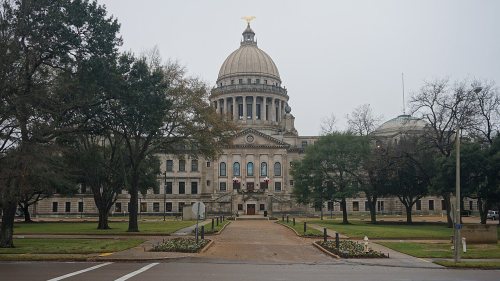 ★ Landmark
 ★ Landmark
 ★ Landmark
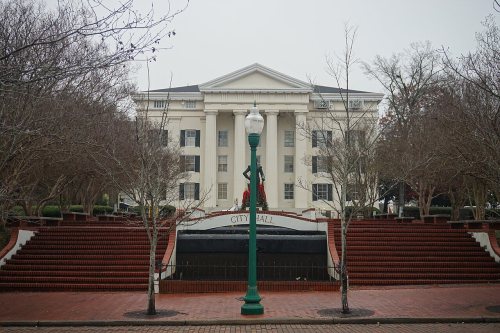
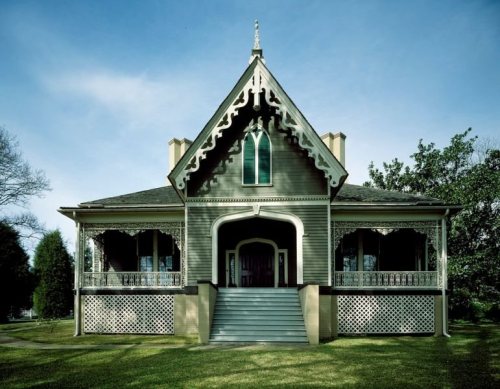

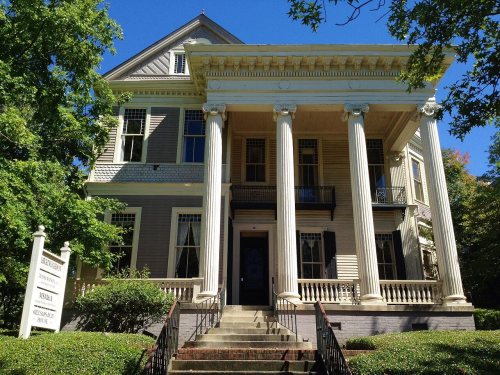


 1917
 1917
 1917
 1917
 1917


