


The story
Read it all →How Mapleton came to be
From Wikipedia’s history of Mapleton.
Mapleton was platted at its current site in 1871 when the railroad was extended to that point.
Text from Wikipedia, licensed CC BY-SA 4.0.
Each edition grades its towns against each other only.
More historic than 82% of U.S. towns. What drives it
3 places in town are on the National Register, among them a historic district with 5 buildings. Below: 5 old photos and papers from 1890 on and old-book passages.
The Mapleton post office opened in 1857, the earliest record of the town by name. Two smaller post offices, Maple River (1867) and Mapleton Station (1874), opened inside today’s city and later closed.
More historic than 82% of U.S. towns, on its age, its old homes and the National Register.
On its age, its old homes and the National Register, Mapleton is more historic than 82% of U.S. towns. Its share of homes from before 1940 holds the grade up; its age pulls it down.
Minnesota towns list about as much on the Register as the country (a typical Minnesota town has 2.1 per 10,000 residents, the U.S. 2.4), so Mapleton’s 40.5 sits above most of its state (92% of Minnesota towns have fewer) while its 7 historic buildings outnumber those of 73% of U.S. towns.
Founding year: the first post office (other dates in Quick answers). Homes: Census ACS 2020–24. National Register: National Park Service, May 2026 list; each listing counted once (boundary changes and added documentation belong to their listing), and a historic district counts its contributing buildings. How TownRatings grades history →
Read from the archive, the National Register and the record. The page puts what stands out first.
Mapleton’s post office has been open since 1857. Two other post offices opened and closed inside today’s town.
US Post Offices dataset (Blevins & Helbock, CC0). Places and cemeteries from the USGS Geographic Names Information System (2021).
From Wikipedia’s history of Mapleton.
Mapleton was platted at its current site in 1871 when the railroad was extended to that point.
Text from Wikipedia, licensed CC BY-SA 4.0.
Passages that mention Mapleton, cut from the printed page as they were published.

except south tier of sections, was separated from Jamestown and organized into a town by itself, under the name of Lake. On the same date the town of Mapleton was severed from the town of Sherman and made an independent town, under the name of "Sterling," and the name of the town of Sherman on petition changed to "Mapleton." On the same date, also, it
Text read by machine from the scan; it may contain errors.
July 9, 1856, the town was set off with the present towns of Mapleton, and Sterling as one voting precinct under the name of Mapleton. When on April 6, 1858, the County Commissioners undertook to name every township in the county; Danville was called "Jackson''" and the present ''Mapleton" called "Sherman." The latter name was probably in honor of either
Text read by machine from the scan; it may contain errors.Scans and text from the Internet Archive. Books published in 1930 or earlier, which are in the public domain.
Woven from the archive, old maps, post office records, the National Register and the people born here.
 In the archiveGrandfather and Grandmother Troendle with friends, Mapleton, Minnesota - DPLA - 4955f3b64…
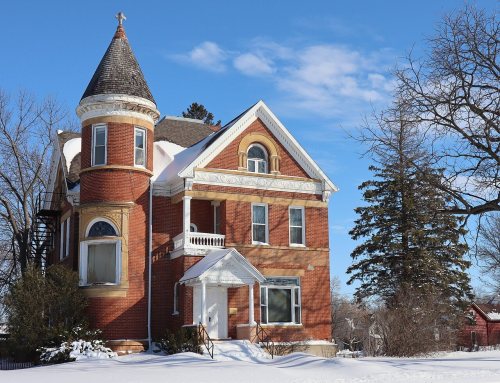 BuiltLucas Troendle House is built
 In the archiveFritz Gerth residence, Mapleton, Minnesota - DPLA - 904c3243c3076096f0a3e100f8ffef44
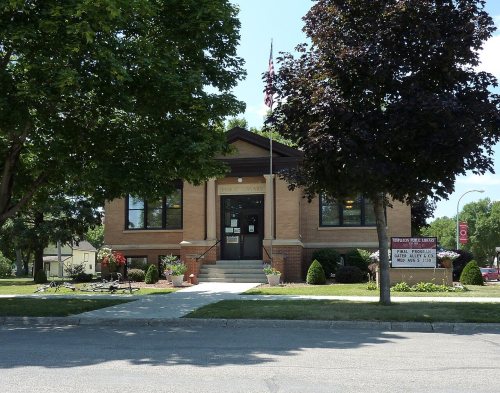 BuiltMapleton Public Library is built
2 decades in the archive, from the 1890s to the 1900s. Scroll each row; tap a photo for its story.
c. 1890Grandfather and Grandmother Troendle with friends, Ma… c. 1890Lucas Troendle home, Mapleton, Minnesota - DPLA - 300…
 c. 1896People on porch, Mapleton, Minnesota - DPLA - e5b40fa…
 c. 1896Women and children on a lawn, Mapleton, Minnesota - D…c. 1900Fritz Gerth residence, Mapleton, Minnesota - DPLA - 9…
No then-and-now pairs yet. Take a photo from the same spot as an old one and they appear here side by side.

Find the spot, match the angle, and add your photo. It becomes the first then-and-now pair on Mapleton’s page.
Retake this view · +15The country’s official list of buildings and places worth saving.
National Park Service, National Register of Historic Places. Photos from Wikimedia Commons, credited on each place’s page.
Most archives stop around 1920. The photos from after that are in family albums, not libraries.
Each neighbor’s History grade, on the same three inputs.
The Mapleton post office opened in 1857, the earliest record of the town by name (U.S. post office records).
Mapleton is more historic than 82% of U.S. towns. The History grade combines the town’s founding era, the share of homes built before 1940 and its National Register listings. It’s a character grade, so it isn’t part of the overall grade. How it works.
Three places: the Lucas Troendle House (listed 1980), the Mapleton Public Library (2009) and the Main Street Commercial Buildings (1980).
37% of Mapleton’s homes were built before 1940 (Census estimate, ±7.0 points), against a typical 8.1% for a Minnesota town; the median home was built in 1955.
What the archives can’t tell you, neighbors can.
Founding dates: Wikidata, Wikipedia, the U.S. post office records of Blevins & Helbock (CC0) and the Census. Homes by year built: Census ACS 2020–24. National Register of Historic Places: National Park Service (list of May 22, 2026). Old photos, postcards and papers: Wikimedia Commons, the Library of Congress and other public archives, credited on each item’s page. Maps: U.S. Geological Survey historical topographic maps (via Esri) and Sanborn fire-insurance maps (Library of Congress). History text and census tables: Wikipedia (CC BY-SA 4.0). Places that used to be: USGS Geographic Names Information System (2021).
From Wikimedia Commons (5), Wikidata (1), the National Register of Historic Places (3), Wikipedia, Wikidata and Wikipedia for famous people, the US Post Offices dataset (Blevins & Helbock), the USGS Geographic Names Information System and old county and town histories (Internet Archive). Archive images are copied here with their credits and licenses, shown on each photo’s page. Refreshed monthly.