Ham Lake was first counted by the census in 1880, and 1 of its places is on the National Register
More historic than 29% of U.S. towns · #176 of 273 in Minnesota. What drives it
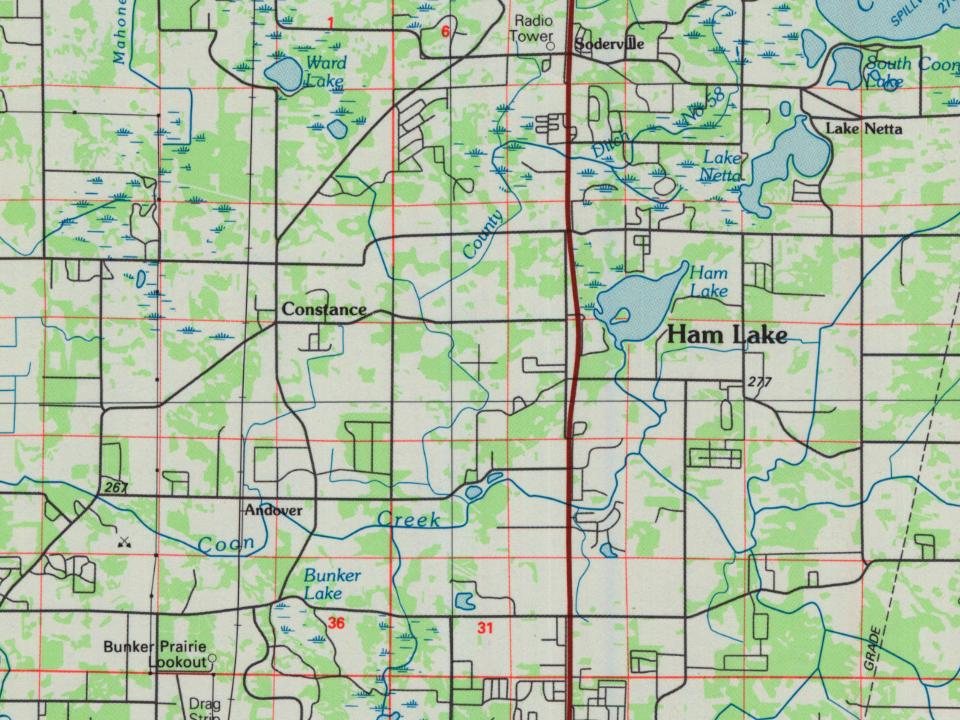
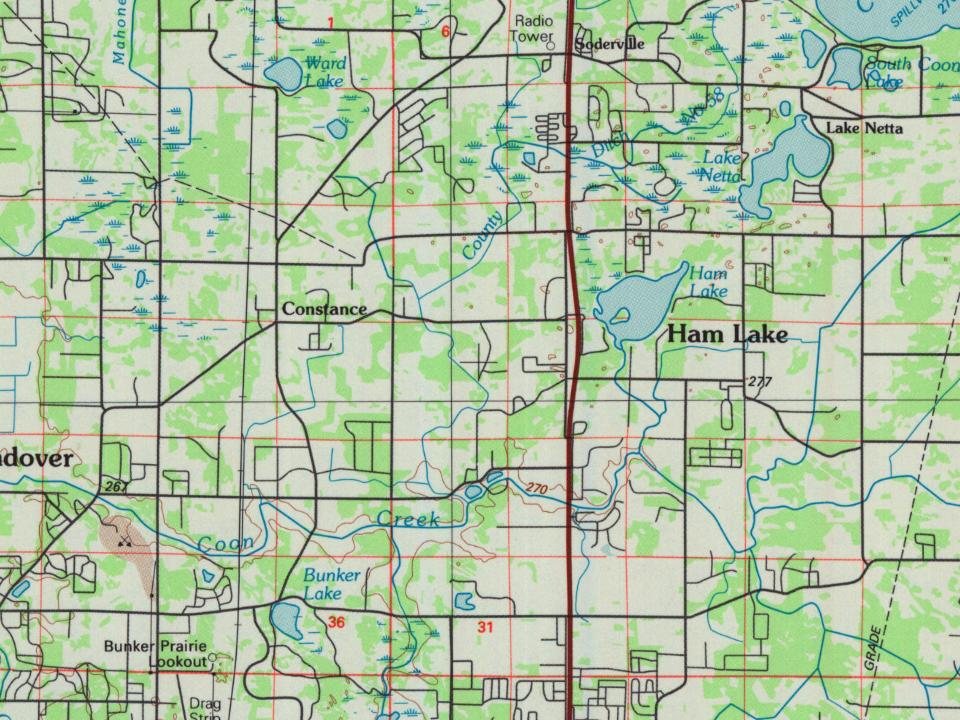
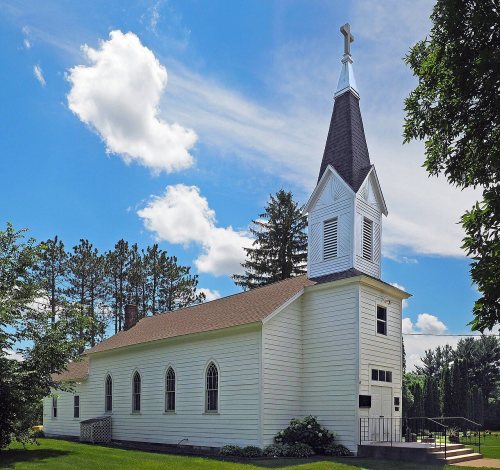
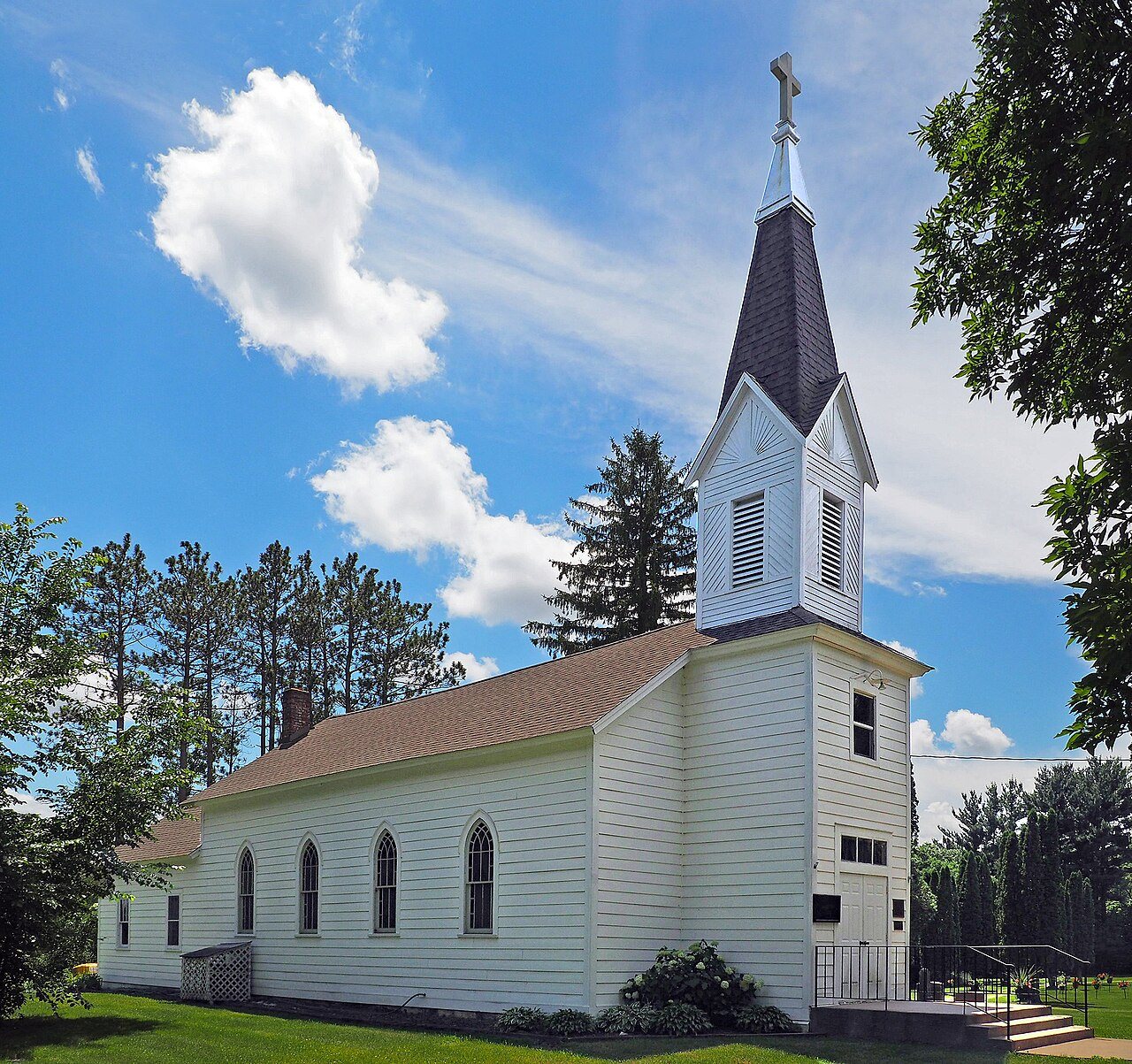
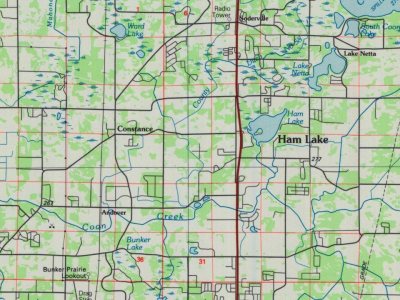
Most of Ham Lake was built recently: 3% of its homes predate 1940 and the median home dates from 1994. Its Register listing is the Swedish Evangelical Lutheran Church. Below: maps from 1985 on and the census since 1880.
Ham Lake first appears in the census in 1880. Three smaller post offices, Hamlake (1895), Jesperson (1900) and Lakenetta (1904), opened inside today’s city and later closed.
First census: 235 in 18802020 census: 16,464146 years
How historic is Ham Lake?
C
More historic than 29% of U.S. towns, on its age, its old homes and the National Register.
On its age, its old homes and the National Register, Ham Lake is more historic than 29% of U.S. towns, #176 of 273 in Minnesota. Its National Register listings hold the grade up; its share of homes from before 1940 pulls it down.
C
HistoryA character grade: shown, never part of Ham Lake’s overall grade.
Minnesota towns list about as much on the Register as the country (a typical Minnesota town has 2.1 per 10,000 residents, the U.S. 2.4), so Ham Lake’s 0.6 sits near the middle of its state (50% of Minnesota towns have fewer) while its 1 listings outnumber those of 51% of U.S. towns.
How sure. Graded on any two of the three inputs instead, the letter would range from C− to C. The pre-1940 share (±1.3 points) is firm at this size.
Founding year: the first census (other dates in Quick answers). Homes: Census ACS 2020–24. National Register: National Park Service, May 2026 list; each listing counted once (boundary changes and added documentation belong to their listing), and a historic district counts its contributing buildings. How TownRatings grades history →
What stands out about Ham Lake’s past
Read from the archive, the National Register and the record. The page puts what stands out first.
The earliest record of settlers in the Ham Lake area goes back to 1855, and in 1856, settlers established a town just south and west of a lake shaped like a ham. The settlers platted and sold lots for a community they named Glen Carey, a Scottish name meaning "beautiful valley". The location was widely advertised as a future city. In 1857, all the houses were destroyed by a prairie fire. Some of the inhabitants barely escaped with their lives, saving only a few household goods. The settlers soon left the area as they had nowhere to live.
Passages that mention Ham Lake, cut from the printed page as they were published.
History of Anoka County and the towns of Champlin and Dayton in Hennepin County, Minnesota1905 · page 186Read the page →
Read the text
battle of Malvern Hill. Mr. Blanchard was soon after transfered to the Veteran's Reserve Corps, and was quartermaster sergeant and did clerical work in the War Department. He came to Minnesota in 1870, and settled in Ham Lake. About 1873 he took a homestead in section 34, town of Ham Lake, where he has since lived. At the age of sixteen he made his first political speech, which was for Fremont in 1856 at Charlotte, Me. He served three years as chairman of the board of supervisors of
Text read by machine from the scan; it may contain errors.
History of Anoka County and the towns of Champlin and Dayton in Hennepin County, Minnesota1905 · page 306Read the page →
Read the text
youth was spent on a farm, and he followed logging and farming until his departure for America in 1866. He first located in St. Francis, but soon after settled on the farm where he still lives in the town of Ham Lake. He has held various town offices at different times. Andrew Turnquist was bom in Sweden March 23, 1842, followed the life of a farmer most of the time, serving two years in the army. Came to America and to Minnesota in
Text read by machine from the scan; it may contain errors.
Scans and text from the Internet Archive. Books published in 1930 or earlier, which are in the public domain.
Timeline
Ham Lake, 1895 to 1987
Woven from the archive, old maps, post office records, the National Register and the people born here.
The Ham Lake post office opened in 1880, the earliest record of the town by name (U.S. post office records).
How does Ham Lake rank for history?
Ham Lake is more historic than 29% of U.S. towns, #176 of 273 in Minnesota. The History grade combines the town’s founding era, the share of homes built before 1940 and its National Register listings. It’s a character grade, so it isn’t part of the overall grade. How it works.
What is on the National Register in Ham Lake?
One place: the Swedish Evangelical Lutheran Church (listed 1979).
How old are the homes in Ham Lake?
3% of Ham Lake’s homes were built before 1940 (Census estimate, ±1.3 points), against a typical 8.1% for a Minnesota town; the median home was built in 1994.
Founding dates: Wikidata, Wikipedia, the U.S. post office records of Blevins & Helbock (CC0) and the Census. Homes by year built: Census ACS 2020–24. National Register of Historic Places: National Park Service (list of May 22, 2026). Old photos, postcards and papers: Wikimedia Commons, the Library of Congress and other public archives, credited on each item’s page. Maps: U.S. Geological Survey historical topographic maps (via Esri) and Sanborn fire-insurance maps (Library of Congress). History text and census tables: Wikipedia (CC BY-SA 4.0). Places that used to be: USGS Geographic Names Information System (2021).
From Wikimedia Commons (24), the National Register of Historic Places (1), Wikipedia, Wikidata and Wikipedia for famous people, U.S. Geological Survey historical maps, U.S. Census counts (via Wikipedia), the US Post Offices dataset (Blevins & Helbock), the USGS Geographic Names Information System and old county and town histories (Internet Archive). Archive images are copied here with their credits and licenses, shown on each photo’s page. Refreshed monthly.


 2013
 2013
 2013
 2013
 2013
 2013
 2013
 2013
 2013
 2013
 2013
 2013
 2013
 2013
 2013
 2013
 2013
 2012
 2012
 2012
 2012
 2012
 2012
 2011