Lynn dates to 1629, and 46% of its homes were built before 1940
More historic than 98% of U.S. towns · #35 of 283 in Massachusetts. What drives it
29 places in town are on the National Register, among them 2 National Historic Landmarks and six historic districts with 670 buildings between them. Below: 5 old photos and papers, maps from 1887 on, and the census since 1790.
Founding year: Wikidata. First post office: 1796.The full story ↓
History grade
What drives Lynn’s History grade
On its age, its old homes and the National Register, Lynn is more historic than 98% of U.S. towns, #35 of 283 in Massachusetts. All 3 inputs are above most U.S. towns; its share of homes from before 1940 ranks highest and its National Register listings lowest.
A+
HistoryA character grade: shown, never part of Lynn’s overall grade.
Among the 400 U.S. cities of 100,000 or more, Lynn ranks #21 on History.
Massachusetts towns list more on the Register than most of the country (a typical Massachusetts town has 46.0 per 10,000 residents, the U.S. 2.4), so Lynn’s 68.6 sits near the middle of its state (57% of Massachusetts towns have fewer) while its 698 historic buildings outnumber those of 98% of U.S. towns.
NoteThe founding year comes from Wikidata alone; no second source gives 1629.
How sure. Graded on any two of the three inputs instead, the letter would range from A to A+. The pre-1940 share (±2.1 points) is firm at this size.
Founding year: Wikidata (other dates in Quick answers). Homes: Census ACS 2020–24. National Register: National Park Service, May 2026 list; each listing counted once (boundary changes and added documentation belong to their listing), and a historic district counts its contributing buildings. How TownRatings grades history →
What stands out about Lynn’s past
Read from the archive, the National Register and the record. The page puts what stands out first.
The area that is now known as Lynn was inhabited for thousands of years by Native Americans prior to English colonization in the 1600s. At the time of European contact, the area today known as Lynn was primarily inhabited by the Naumkeag people under the powerful sachem Nanepashemet who controlled territory from the Mystic to the Merrimack Rivers. Colonists would not establish a legal agreement with the Naumkeag over the use of their land in Lynn until 1686 after a smallpox epidemic in 1633, King Philip's War, and missionary efforts significantly reduced their numbers and confined them to the Praying town of Natick.
The making of shoes in Lynn dates back to an early period. History informs us that the first shoemakers of Lynn were Philip Kertland and Edmund Bridges, who came here in 1635, six years after the settlement of the town. A corporation of shoemakers was formed soon after. Mention is made of this in the "Wonder Working Providence," a book published in 165 1, by Edward Johnson, of
Text read by machine from the scan; it may contain errors.
through the village. When Saugus was separated from Lynn, in 1815, the act of incorporation prescribed that the town of Saugus should furnish nine members to the company, and the remainder to be furnished from Lynn. Soon atler the engine was bought, the selectmen of the town eno-as-ed one of the inhabitants of the village to furnish a fre-Jjook for the company. The job was completed, but the
Text read by machine from the scan; it may contain errors.
Scans and text from the Internet Archive. Books published in 1930 or earlier, which are in the public domain.
By decade
Lynn, decade by decade
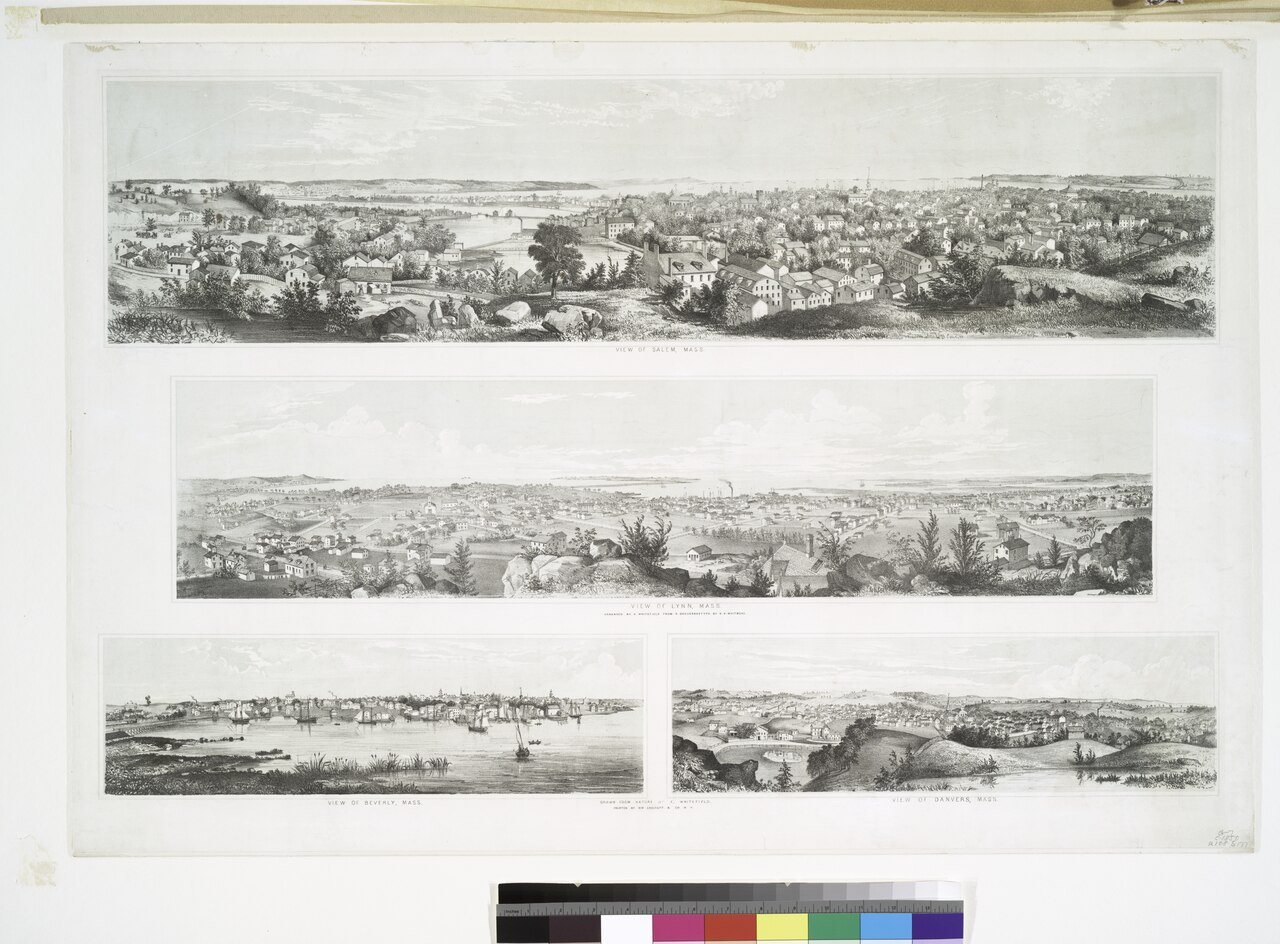
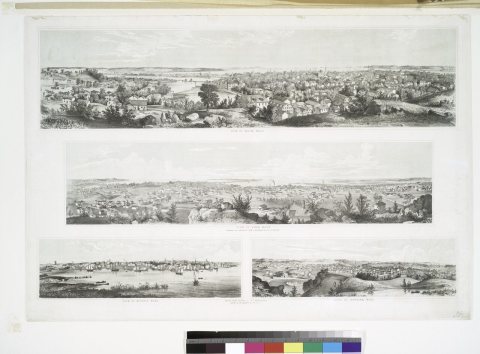
3 decades in the archive, from the 1820s to the 1850s. Scroll each row; tap a photo for its story.
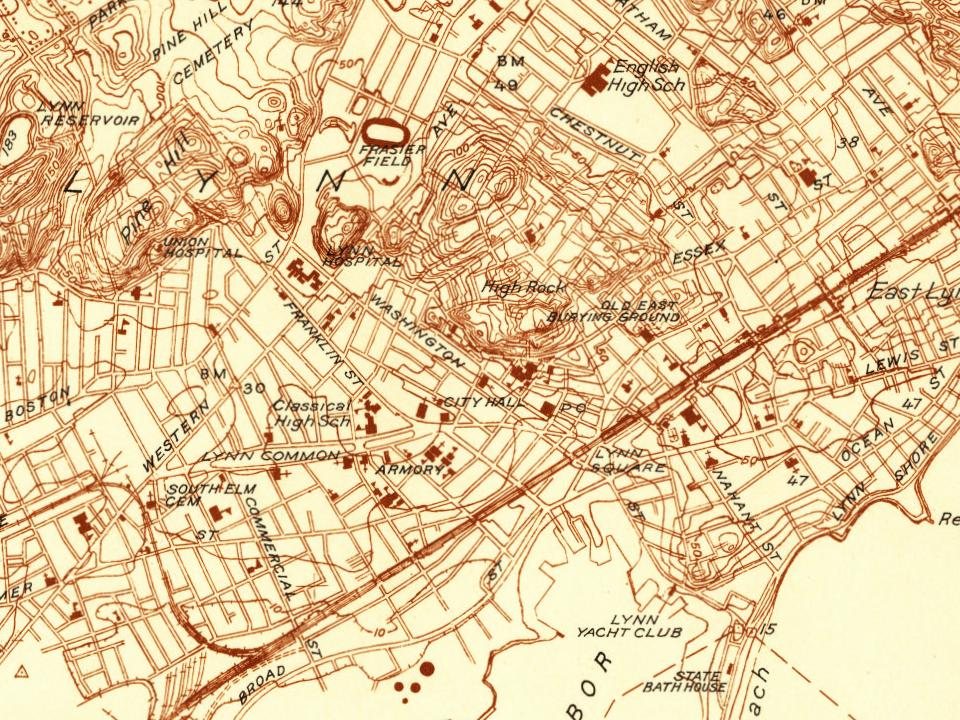
Every edition of the U.S. Geological Survey’s map of Lynn. Tap a year, or press play to watch the town change.
1892Boston Bay sheet · 1:62,500
U.S. Geological Survey historical topographic maps (public domain), via Esri’s collection of the scans. The red ring marks the center of Lynn.
Every building
Lynn, building by building, 1887–1908
Fire insurance maps drew every building, what it was made of and what it was used for, so insurers could price the risk of fire. Pick a year, then a sheet.
In 1629, according to Wikidata. Lynn’s post office opened in 1796, and the first U.S. census counted 2,291 people here in 1790.
How does Lynn rank for history?
Lynn is more historic than 98% of U.S. towns, #35 of 283 in Massachusetts. The History grade combines the town’s founding era, the share of homes built before 1940 and its National Register listings. It’s a character grade, so it isn’t part of the overall grade. How it works.
What is on the National Register in Lynn?
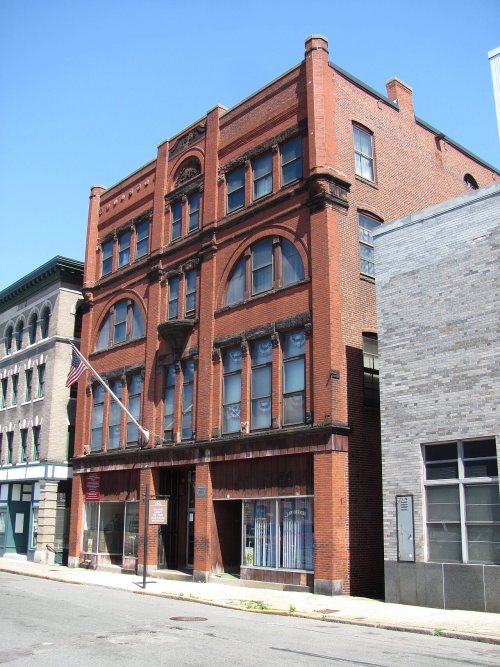
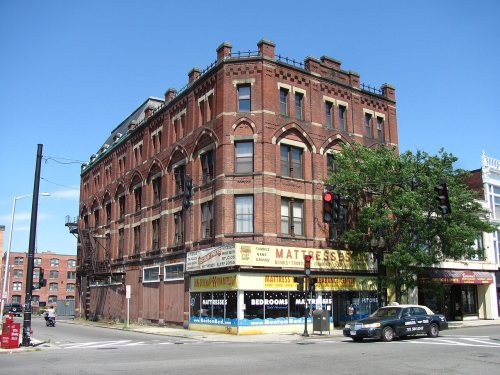
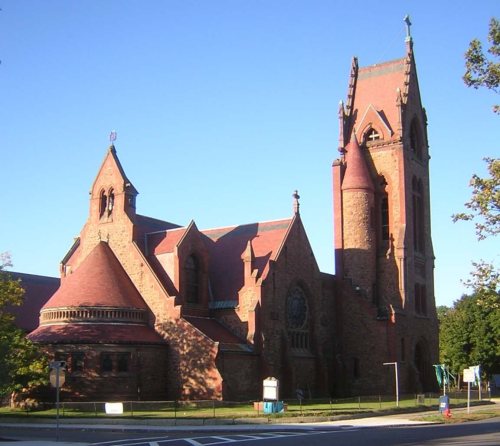
29 listings, 2 of them National Historic Landmarks: 22 buildings, among them the Mary Baker Eddy House (a National Historic Landmark since 2021) and the Charles Lovejoy House (listed 1978, the first), 6 historic districts with 670 contributing buildings, and 1 site. 698 historic buildings in all.
How old are the homes in Lynn?
46% of Lynn’s homes were built before 1940 (Census estimate, ±2.1 points), against a typical 21% for a Massachusetts town; the median home was built in 1946.
Founding dates: Wikidata, Wikipedia, the U.S. post office records of Blevins & Helbock (CC0) and the Census. Homes by year built: Census ACS 2020–24. National Register of Historic Places: National Park Service (list of May 22, 2026). Old photos, postcards and papers: Wikimedia Commons, the Library of Congress and other public archives, credited on each item’s page. Maps: U.S. Geological Survey historical topographic maps (via Esri) and Sanborn fire-insurance maps (Library of Congress). History text and census tables: Wikipedia (CC BY-SA 4.0). Places that used to be: USGS Geographic Names Information System (2021).
From Wikimedia Commons (5), Wikidata (1), the National Register of Historic Places (29), Wikipedia, Wikidata and Wikipedia for famous people, U.S. Geological Survey historical maps, U.S. Census counts (via Wikipedia), the US Post Offices dataset (Blevins & Helbock), the USGS Geographic Names Information System, Sanborn fire insurance maps (Library of Congress) and old county and town histories (Internet Archive). Archive images are copied here with their credits and licenses, shown on each photo’s page. Refreshed monthly.

 ★ Landmark
 ★ Landmark







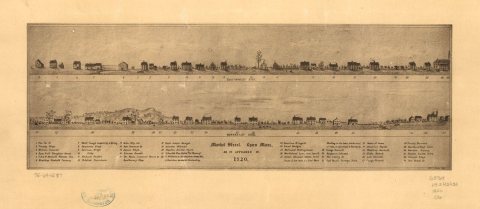 1820
 c. 1851