Littleton dates to 1686, and 16% of its homes were built before 1940
More historic than 77% of U.S. towns · #238 of 283 in Massachusetts. What drives it
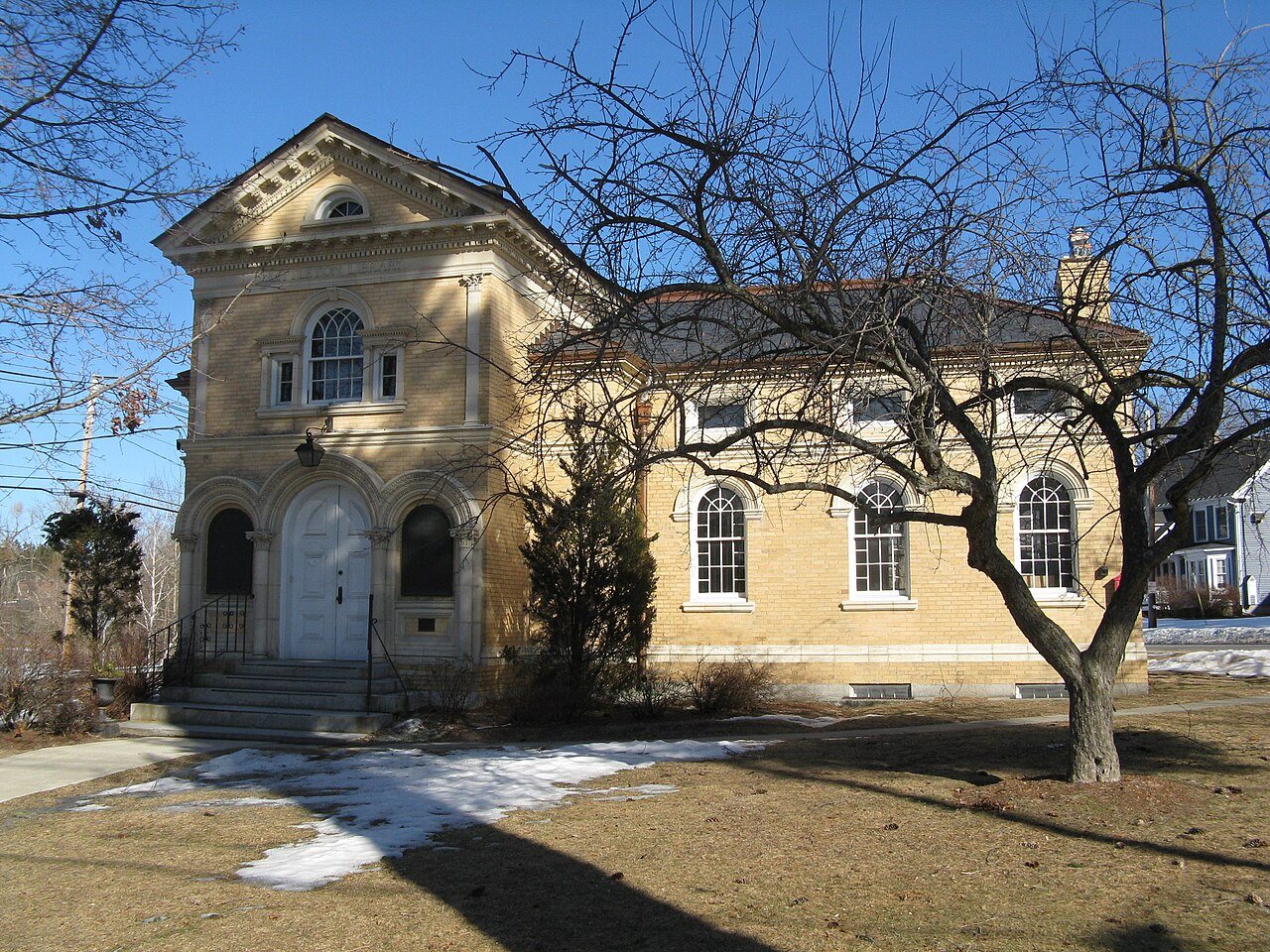
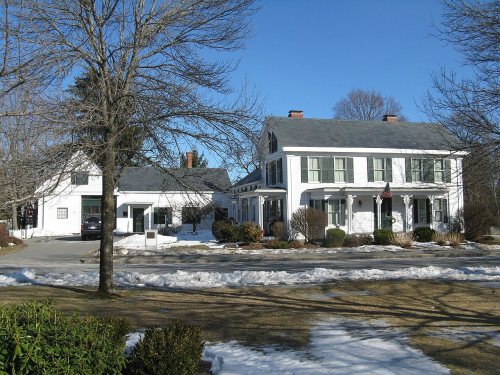
Its Register listings are the Houghton Memorial Building, the Reed-Wood Place and the Old Burying Ground. Below: 2 old photos and papers, maps from 1893 on, and the census since 1790.
Founding year: Wikidata; Wikipedia’s history section gives the same year. First post office: 1802.The full story ↓
History grade
What drives Littleton’s History grade
On its age, its old homes and the National Register, Littleton is more historic than 77% of U.S. towns, #238 of 283 in Massachusetts. Its age holds the grade up; its National Register listings pull it down.
A−
HistoryA character grade: shown, never part of Littleton’s overall grade.
Massachusetts towns list more on the Register than most of the country (a typical Massachusetts town has 46.0 per 10,000 residents, the U.S. 2.4), so Littleton’s 2.9 sits below most of its state (15% of Massachusetts towns have fewer) while its 3 listings outnumber those of 65% of U.S. towns.
How sure. Graded on any two of the three inputs instead, the letter would range from B− to A. The pre-1940 share is a Census survey estimate (±4.1 points). Two sources give 1686.
Founding year: Wikidata (other dates in Quick answers). Homes: Census ACS 2020–24. National Register: National Park Service, May 2026 list; each listing counted once (boundary changes and added documentation belong to their listing), and a historic district counts its contributing buildings. How TownRatings grades history →
What stands out about Littleton’s past
Read from the archive, the National Register and the record. The page puts what stands out first.
Littleton was the site of the sixth Praying Indian village established by John Eliot in 1645 consisting of mainly Native Americans of the Massachusett tribes. It was called Nashoba Plantation, on the land between Lake Nagog and Fort Pond. The term "Praying Indian" referred to Native Americans who had been converted to Christianity. Daniel Gookin, in his Historical Collections of the Indians in New England, (1674) chapter vii. says:
Nashobah is the sixth praying Indian town. This village is situated, in a manner, in the centre, between Chelmsford, Lancaster, Groton and Concord. It lieth from Boston about twenty-five miles west north west. The inhabitants are about ten families, and consequently about fifty souls.
Passages that mention Littleton, cut from the printed page as they were published.
History of the town of Lexington, Middlesex County, Massachusetts, from its first settlement to 18681913 · page 563Read the page →
Read the text
Child, born at Lexington: i. Isaac,* b. 18 May 1755; grad. Harvard, A.M., 1780; d. at Littleton 5 Dec. 1789; m. 6 May 1783 Mary Gardner of Brookline; she m. (2) William Tuttle, and d. 31 Mar. 1809, g. s. at Littleton.
Text read by machine from the scan; it may contain errors.
History of the town of Lexington, Middlesex County, Massachusetts, from its first settlement to 18681913 · page 341Read the page →
Read the text
t Middlesex Registry of Deeds: Benjamin Stone and wife Esther quitclaim " unto our beloved brother Samuel Kibbey of Littleton" (rights, etc.) of " our honored Father Sherebiah Kibbey late of Littleton deceased" dated 2 Nov. 1730, signed 4 Jan. 1723-34. Vol. 35, p. 560. Benjamin and EstherStone, Nathaniel Jeffts and Sarah Jeffts, Seth Kibbey, Mary Kibbey and Hannah, all of Littleton except Benjamin and Esther Stone of Concord, quitclaim to Samuel all rights in "the estate of our beloved brother Ebenezer Kibbey," 25 Dec. 1733. Vol. 35, p. 562.
Text read by machine from the scan; it may contain errors.
Scans and text from the Internet Archive. Books published in 1930 or earlier, which are in the public domain.
By decade
Littleton, decade by decade
One decade in the archive so far: the 1880s. Scroll each row; tap a photo for its story.
Nothing in the archives for these yearsWeddings on Main Street, storms, parades, school pictures, the old store. If it’s in your family album, it belongs here.
In 1686, according to Wikidata and Wikipedia’s history of the town. Littleton’s post office opened in 1802, and the first U.S. census counted 854 people here in 1790.
How does Littleton rank for history?
Littleton is more historic than 77% of U.S. towns, #238 of 283 in Massachusetts. The History grade combines the town’s founding era, the share of homes built before 1940 and its National Register listings. It’s a character grade, so it isn’t part of the overall grade. How it works.
What is on the National Register in Littleton?
Three places: the Houghton Memorial Building (listed 1991), the Reed-Wood Place (2000) and the Old Burying Ground (2002).
How old are the homes in Littleton?
16% of Littleton’s homes were built before 1940 (Census estimate, ±4.1 points), against a typical 21% for a Massachusetts town; the median home was built in 1977.
Founding dates: Wikidata, Wikipedia, the U.S. post office records of Blevins & Helbock (CC0) and the Census. Homes by year built: Census ACS 2020–24. National Register of Historic Places: National Park Service (list of May 22, 2026). Old photos, postcards and papers: Wikimedia Commons, the Library of Congress and other public archives, credited on each item’s page. Maps: U.S. Geological Survey historical topographic maps (via Esri) and Sanborn fire-insurance maps (Library of Congress). History text and census tables: Wikipedia (CC BY-SA 4.0). Places that used to be: USGS Geographic Names Information System (2021).
From Wikimedia Commons (9), Wikidata (3), the National Register of Historic Places (3), Wikipedia, Wikidata and Wikipedia for famous people, U.S. Geological Survey historical maps, U.S. Census counts (via Wikipedia), the US Post Offices dataset (Blevins & Helbock), the USGS Geographic Names Information System, Sanborn fire insurance maps (Library of Congress) and old county and town histories (Internet Archive). Archive images are copied here with their credits and licenses, shown on each photo’s page. Refreshed monthly.






 1889
 2010
 2010
 2010
 2010
 2010
 2010
 2009


