Rochester dates to 1835, and 33% of its homes were built before 1940
More historic than 94% of U.S. towns · #100 of 593 in Indiana. What drives it
4 places in town are on the National Register, among them a historic district with 42 buildings. Below: 1 old photo or paper, maps from 1885 on, and the census since 1850.
Founding year: Wikidata; Wikipedia’s history section gives the same year. First post office: 1836.The full story ↓
History grade
What drives Rochester’s History grade
On its age, its old homes and the National Register, Rochester is more historic than 94% of U.S. towns, #100 of 593 in Indiana. All 3 inputs are above most U.S. towns; its share of homes from before 1940 ranks highest and its age lowest.
A
HistoryA character grade: shown, never part of Rochester’s overall grade.
Indiana towns list more on the Register than most of the country (a typical Indiana town has 7.9 per 10,000 residents, the U.S. 2.4), so Rochester’s 74.0 sits above most of its state (79% of Indiana towns have fewer) while its 46 historic buildings outnumber those of 84% of U.S. towns.
How sure. Graded on any two of the three inputs instead, the letter would still be A. The pre-1940 share is a Census survey estimate (±6.8 points). Two sources give 1835.
Founding year: Wikidata (other dates in Quick answers). Homes: Census ACS 2020–24. National Register: National Park Service, May 2026 list; each listing counted once (boundary changes and added documentation belong to their listing), and a historic district counts its contributing buildings. How TownRatings grades history →
What stands out about Rochester’s past
Read from the archive, the National Register and the record. The page puts what stands out first.
Fire insurance maps drew every building, what it was made of and what it was used for, so insurers could price the risk of fire. Pick a year, then a sheet.
Rochester was laid out in 1835. The founder Alexander Chamberlain named it for his former hometown of Rochester, New York. The Rochester post office was established in 1836.
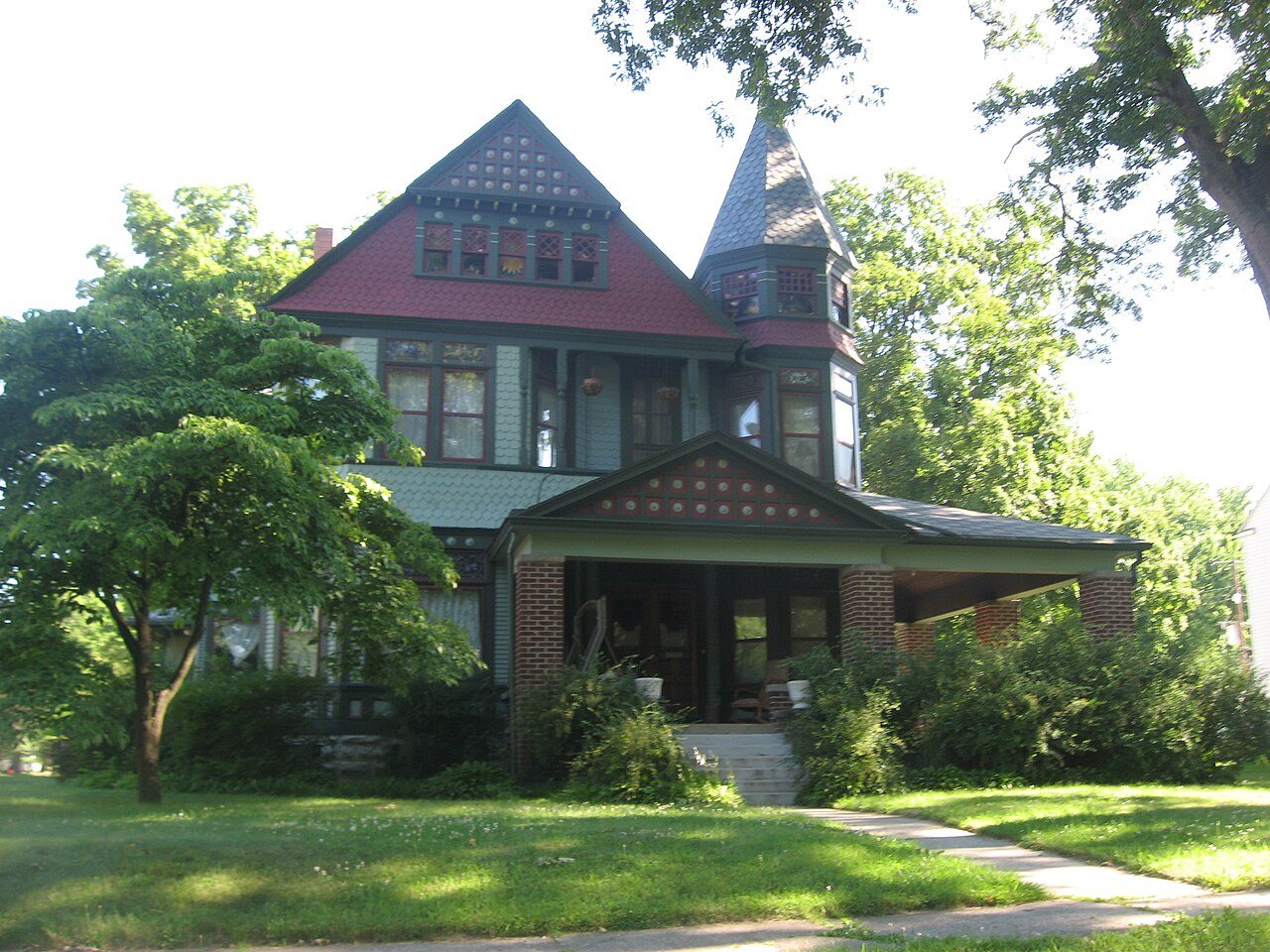
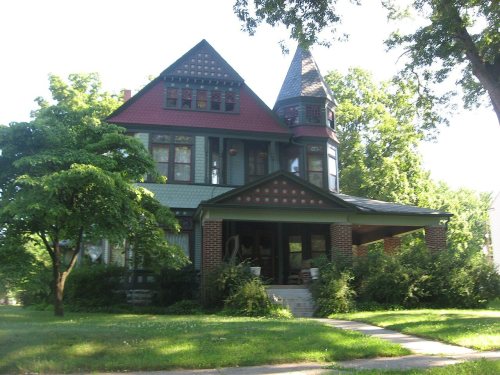
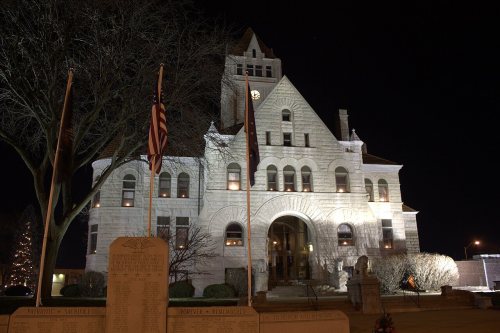
The Lyman M. Brackett House, Fulton County Courthouse, Rochester Downtown Historic District, and John W. Smith House are listed on the National Register of Historic Places. The formerly listed Germany Bridge was located nearby. The Wideman-Gerig Round Barn is in use at the Round Barn Golf Club in Rochester.
In 1967, the most complete known specimen of the extinct bear Arctodus was found in a cornfield near Rochester.
Passages that mention Rochester, cut from the printed page as they were published.
The history and antiquities of Rochester and its environs1817 · page 228Read the page →
Read the text
D, R. LAMPLUGH, bishop of Exeter, and sometime dean of Rochester catheOral, by a deed of gift dated the 20th of June 1678, out of his great bounty and good will to the city of Rochester, gave fifty pounds to the mayor of the city of Rochester, the dean of Rochester cathedral, the recorder, the senior and junior aldermen, and the chapter clerk in time being, for ever, in trust, to be lent to such young men, being freemen, tradesmen, and inhabitants within
Text read by machine from the scan; it may contain errors.
The history and antiquities of Rochester and its environs1817 · page 232Read the page →
Read the text
" Secondly, That there shall be constant ordinary governours of the said school and charitable foundation; and that John Boys, Thomas Addison, and Joseph Hornsby during the terra of their natural lives, and the mayor of the city of Rochester for fhe time being for ever, the dean of Rochester for the time being for ever, the recorder of the city of Rochester, for the time being for ever, the master of the Trinity house and the commissioner of Chatham dock for the time being for ever, the eldest prebendary
Text read by machine from the scan; it may contain errors.
single track, including locomotives, cars, &c. Among the projected lateral communications connected with this railroad route, there is one for connecting at Dansville with a proposed railroad from Rochester, as well as with the branch of the Genesee Canal — and in Allegany county, the New- York and Erie Railroad route crosses the main trunk of the Genesee Canal. So that this proposed southern railroad cannot be viewed with inditference by the people of Rochester,
Text read by machine from the scan; it may contain errors.
Although we have elsewhere referred to the fact, we may repeat in this connexion, preparatory to a regular account of the Rochester Mills, that, in the year 1790, a mill with one pair of stones and a sawmill were erected m what is now the city of Rochester, by Ebcnezer Allen, better known as " Indian Allen," to whom the " Hundred-acre Tract" was given by Oliver Phelps on condition that he should erect such mills for the accommodation of the settlers in the surrounding country. [The " Hundred-acre Tract" formed the nucleus of the City
Text read by machine from the scan; it may contain errors.
Scans and text from the Internet Archive. Books published in 1930 or earlier, which are in the public domain.
Timeline
Rochester, 1835 to 1994
Woven from the archive, old maps, post office records, the National Register and the people born here.
In 1835, according to Wikidata and Wikipedia’s history of the town. Rochester’s post office opened in 1836, and the census of 1850 counted 283 people here.
How does Rochester rank for history?
Rochester is more historic than 94% of U.S. towns, #100 of 593 in Indiana. The History grade combines the town’s founding era, the share of homes built before 1940 and its National Register listings. It’s a character grade, so it isn’t part of the overall grade. How it works.
What is on the National Register in Rochester?
4 listings: 3 buildings, among them the John W. Smith House (listed 1979, the first), and 1 historic district, the Rochester Downtown Historic District, with 42 contributing buildings. 46 historic buildings in all.
How old are the homes in Rochester?
33% of Rochester’s homes were built before 1940 (Census estimate, ±6.8 points), against a typical 14% for an Indiana town; the median home was built in 1960.
Founding dates: Wikidata, Wikipedia, the U.S. post office records of Blevins & Helbock (CC0) and the Census. Homes by year built: Census ACS 2020–24. National Register of Historic Places: National Park Service (list of May 22, 2026). Old photos, postcards and papers: Wikimedia Commons, the Library of Congress and other public archives, credited on each item’s page. Maps: U.S. Geological Survey historical topographic maps (via Esri) and Sanborn fire-insurance maps (Library of Congress). History text and census tables: Wikipedia (CC BY-SA 4.0). Places that used to be: USGS Geographic Names Information System (2021).
From Wikimedia Commons (18), the National Register of Historic Places (4), Wikipedia, Wikidata and Wikipedia for famous people, U.S. Geological Survey historical maps, U.S. Census counts (via Wikipedia), the US Post Offices dataset (Blevins & Helbock), the USGS Geographic Names Information System, Sanborn fire insurance maps (Library of Congress) and old county and town histories (Internet Archive). Archive images are copied here with their credits and licenses, shown on each photo’s page. Refreshed monthly.





 2017
 2015
 2013
 2013
 2013
 2013
 2013
 2013
 2013
 2013
 2013
 2013
 2013
 2013
 2012
 2011
 2010


