Plymouth’s post office opened in 1836, and 24% of its homes were built before 1940
More historic than 93% of U.S. towns · #109 of 593 in Indiana. What drives it
8 places in town are on the National Register, among them three historic districts with 241 buildings between them. Below: 2 old photos and papers, maps from 1957 on, and the census since 1860.
Founding year: the first Plymouth post office (Blevins & Helbock, CC0).The full story ↓
History grade
What drives Plymouth’s History grade
On its age, its old homes and the National Register, Plymouth is more historic than 93% of U.S. towns, #109 of 593 in Indiana. All 3 inputs are above most U.S. towns; its National Register listings ranks highest and its age lowest.
A
HistoryA character grade: shown, never part of Plymouth’s overall grade.
Indiana towns list more on the Register than most of the country (a typical Indiana town has 7.9 per 10,000 residents, the U.S. 2.4), so Plymouth’s 230 sits above most of its state (89% of Indiana towns have fewer) while its 245 historic buildings outnumber those of 94% of U.S. towns.
How sure. Graded on any two of the three inputs instead, the letter would range from A− to A. The pre-1940 share is a Census survey estimate (±5.0 points). The founding year is the first post office, not a stated founding date.
Founding year: the first post office (other dates in Quick answers). Homes: Census ACS 2020–24. National Register: National Park Service, May 2026 list; each listing counted once (boundary changes and added documentation belong to their listing), and a historic district counts its contributing buildings. How TownRatings grades history →
What stands out about Plymouth’s past
Read from the archive, the National Register and the record. The page puts what stands out first.
This area was part of the territory of the Potawatomi Native Americans, one of the historical tribes encountered by American settlers. In the nineteenth century, the United States government made numerous treaties to buy and extinguish Native American claims to land in the former Northwest Territory and the Southeast.
Passages that mention Plymouth, cut from the printed page as they were published.
A genealogy of the descendants of John Thomson of Plymouth, Mass. Also sketches of families of Allen, Cooke and Hutchinson1890 · page 22Read the page →
Read the text
cusset, where he lived a few years, but came to the conclusion that he could better his fortune for himself and children by moving further into the interior. He accordingly selected a place thirteen miles west of the village of Plymouth, on the confines of Bridgewater, Middleborough, and what was then called Plymouth (now Halifax), and purchased land of William Wetis-pa-quin, sachem of the Neponsets, the purchase having been approved by the Court. The deed may be found recorded
Text read by machine from the scan; it may contain errors.
A genealogy of the descendants of John Thomson of Plymouth, Mass. Also sketches of families of Allen, Cooke and Hutchinson1890 · page 106Read the page →
Read the text
Thomas became a soldier in Capt. Sears Washburn's Bridgewater company stationed at Plymouth in 1814 and was connected with the old Bridgewater Cadet Rifle company, organized in 1819, of which Mr. Thomas Hooper was afterwards a member. At the age of 21 Mr. Cushman began his career as a teacher and for more than thirty years, with slight interruptions, he continued to be an instructor of youth in Bridgewater and neighboring towns, deeply devoted to his calling and lay-
Text read by machine from the scan; it may contain errors.
Clarke's kindred genealogies. A genealogical history of certain descendants of Joseph Clarke, Dorchester, 16301896 · page 69Read the page →
Read the text
Dr. James Thatcher in his history of Plymouth says : " No stone of an earlier date than 1681 is to be found on Burial Hill of Plymouth, though it is by no means probable that this was the first interment here." It is to the memory of Edward Gray, a respectable merchant, whose name frequently occurs in the old records of Plymouth. He made his mark for his name, as was not uncommon in those days. By habits of industry and good management, he gained the character of a respectable merchant,
Text read by machine from the scan; it may contain errors.
Michael Peirse was appointed ensign of a company raised in Plymouth Colony to go against the Dutch, in December, 1673, and captain of the company raised in the spring of 1675-6 as hereinafter told. It may be said here that as this was a Plymouth Colony Company, the lists of credits of the Treasurer, which are nearly complete for Massachusetts Colony, are not found as yet in Plymouth or Connecticut, so that we have to depend upon chance lists found here and there, and the lists of " Narraganset
Text read by machine from the scan; it may contain errors.
Scans and text from the Internet Archive. Books published in 1930 or earlier, which are in the public domain.
Timeline
Plymouth, 1836 to 1985
Woven from the archive, old maps, post office records, the National Register and the people born here.
Nothing in the archives for these yearsWeddings on Main Street, storms, parades, school pictures, the old store. If it’s in your family album, it belongs here.
The Plymouth post office opened in 1836, the earliest record of the town by name (U.S. post office records).
How does Plymouth rank for history?
Plymouth is more historic than 93% of U.S. towns, #109 of 593 in Indiana. The History grade combines the town’s founding era, the share of homes built before 1940 and its National Register listings. It’s a character grade, so it isn’t part of the overall grade. How it works.
What is on the National Register in Plymouth?
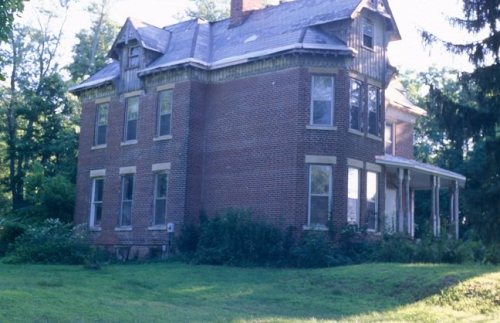
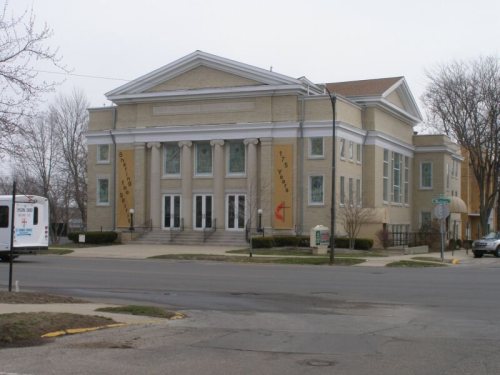
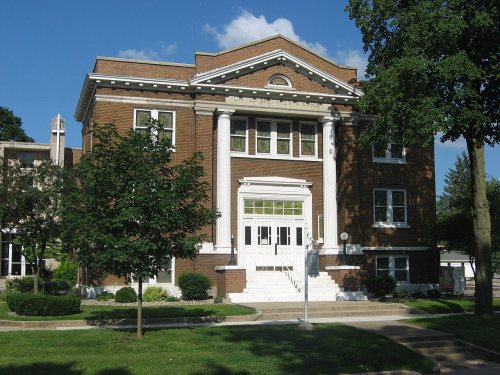
8 listings: 4 buildings, among them the Plymouth Fire Station (listed 1981, the first), 3 historic districts, the Plymouth Northside Historic District, the Plymouth Southside Historic District and the Plymouth Downtown Historic District, with 241 contributing buildings, and 1 site. 245 historic buildings in all.
How old are the homes in Plymouth?
24% of Plymouth’s homes were built before 1940 (Census estimate, ±5.0 points), against a typical 14% for an Indiana town; the median home was built in 1969.
Founding dates: Wikidata, Wikipedia, the U.S. post office records of Blevins & Helbock (CC0) and the Census. Homes by year built: Census ACS 2020–24. National Register of Historic Places: National Park Service (list of May 22, 2026). Old photos, postcards and papers: Wikimedia Commons, the Library of Congress and other public archives, credited on each item’s page. Maps: U.S. Geological Survey historical topographic maps (via Esri) and Sanborn fire-insurance maps (Library of Congress). History text and census tables: Wikipedia (CC BY-SA 4.0). Places that used to be: USGS Geographic Names Information System (2021).
From Wikimedia Commons (6), the National Register of Historic Places (8), Wikipedia, Wikidata and Wikipedia for famous people, U.S. Geological Survey historical maps, U.S. Census counts (via Wikipedia), the US Post Offices dataset (Blevins & Helbock), the USGS Geographic Names Information System and old county and town histories (Internet Archive). Archive images are copied here with their credits and licenses, shown on each photo’s page. Refreshed monthly.





 1933
 2012
 2010
 2009
 2005


