Founding year: the first North Manchester post office (Blevins & Helbock, CC0). Wikidata: 1846.The full story ↓
History grade
What drives North Manchester’s History grade
On its age, its old homes and the National Register, North Manchester is more historic than 96% of U.S. towns, #50 of 593 in Indiana. All 3 inputs are above most U.S. towns; its National Register listings ranks highest and its age lowest.
A+
HistoryA character grade: shown, never part of North Manchester’s overall grade.
Indiana towns list more on the Register than most of the country (a typical Indiana town has 7.9 per 10,000 residents, the U.S. 2.4), so North Manchester’s 338 sits above most of its state (92% of Indiana towns have fewer) while its 163 historic buildings outnumber those of 92% of U.S. towns.
How sure. Graded on any two of the three inputs instead, the letter would range from A to A+. The pre-1940 share is a Census survey estimate (±7.1 points). The founding year is the first post office, not a stated founding date; Wikidata’s 1846 falls in the same era, so the grade doesn’t depend on which one is used.
Founding year: the first post office (other dates in Quick answers). Homes: Census ACS 2020–24. National Register: National Park Service, May 2026 list; each listing counted once (boundary changes and added documentation belong to their listing), and a historic district counts its contributing buildings. How TownRatings grades history →
What stands out about North Manchester’s past
Read from the archive, the National Register and the record. The page puts what stands out first.
Fire insurance maps drew every building, what it was made of and what it was used for, so insurers could price the risk of fire. Pick a year, then a sheet.
Peter Ogan, acting as the town's founder filed for recording the 'Original Plat of Manchester' on February 13, 1846. The community was named after Manchester, in England.
The North Manchester post office has been in operation since 1838.
In the year of the arrival of the Ilarters, Peter Ogan had a portion of his land platted as the Town of North Manchester. As he put up the price of the lots to $10 apiece, the sales were at first rather slow. Joseph ITarter and his oldest son, Eli, at once commenced to take an active part in the ilevelopment of the new town. The father purchased at different times t\venty-(,'ight (puirter sections of land lying along the Eel River at and near North ^lanchester. In 1838 he l)uilt a sawnnll ami in 1839 a gristmill, the latter ])eing upon the site of the present Eisenberger
Text read by machine from the scan; it may contain errors.
History of Wabash County Indiana (Volume 2)1914 · page 487Read the page →
Read the text
settled on a farm in Pleasant township in 1848. When he was finally called from the scenes of earth he had reached the venerable age of eightyfour years, and in that time had watched the growth of the village of North Manchester for many years, and had always taken his share of community responsibility. The generation following him, his son Lewis Digitized by Google
Text read by machine from the scan; it may contain errors.
History of Wabash County Indiana (Volume 2)1914 · page 861Read the page →
Read the text
ruary 14, 1835, his parents being David and Elizabeth Heeter, who have been deceased for many years. At an early period in the history of Indiana, the family left their Ohio home and migrated to this state, purchasing about 100 acres of land near the town of North Manchester. Here they resided for some time, clearing and improving the property, and later Mr. Heeter retired from the active cares of business life and moved to North Manchester. In that city both he and his wife passed away, and they are now at rest in Pleasant View Cemetery.
Text read by machine from the scan; it may contain errors.
Liberty JMills Founded At the same time that North Manchester was being born through the efforts of IMessrs. Ogan, Harter and others, the Town of Liberty Mills, two miles further up the river, was being created. The story has already reached the point where James Abbott had sold the land upon which it was afterward platted to Alex McBride upon the condition that he erect a gristmill upon the property. Mr. McBride failed to "make good," ])ut in June, 1836, there came a man for whom the township
Text read by machine from the scan; it may contain errors.
Scans and text from the Internet Archive. Books published in 1930 or earlier, which are in the public domain.
Timeline
North Manchester, 1827 to 1949
Woven from the archive, old maps, post office records, the National Register and the people born here.
The North Manchester post office opened in 1838, the earliest record of the town by name (U.S. post office records). Wikidata gives 1846.
How does North Manchester rank for history?
North Manchester is more historic than 96% of U.S. towns, #50 of 593 in Indiana. The History grade combines the town’s founding era, the share of homes built before 1940 and its National Register listings. It’s a character grade, so it isn’t part of the overall grade. How it works.
What is on the National Register in North Manchester?
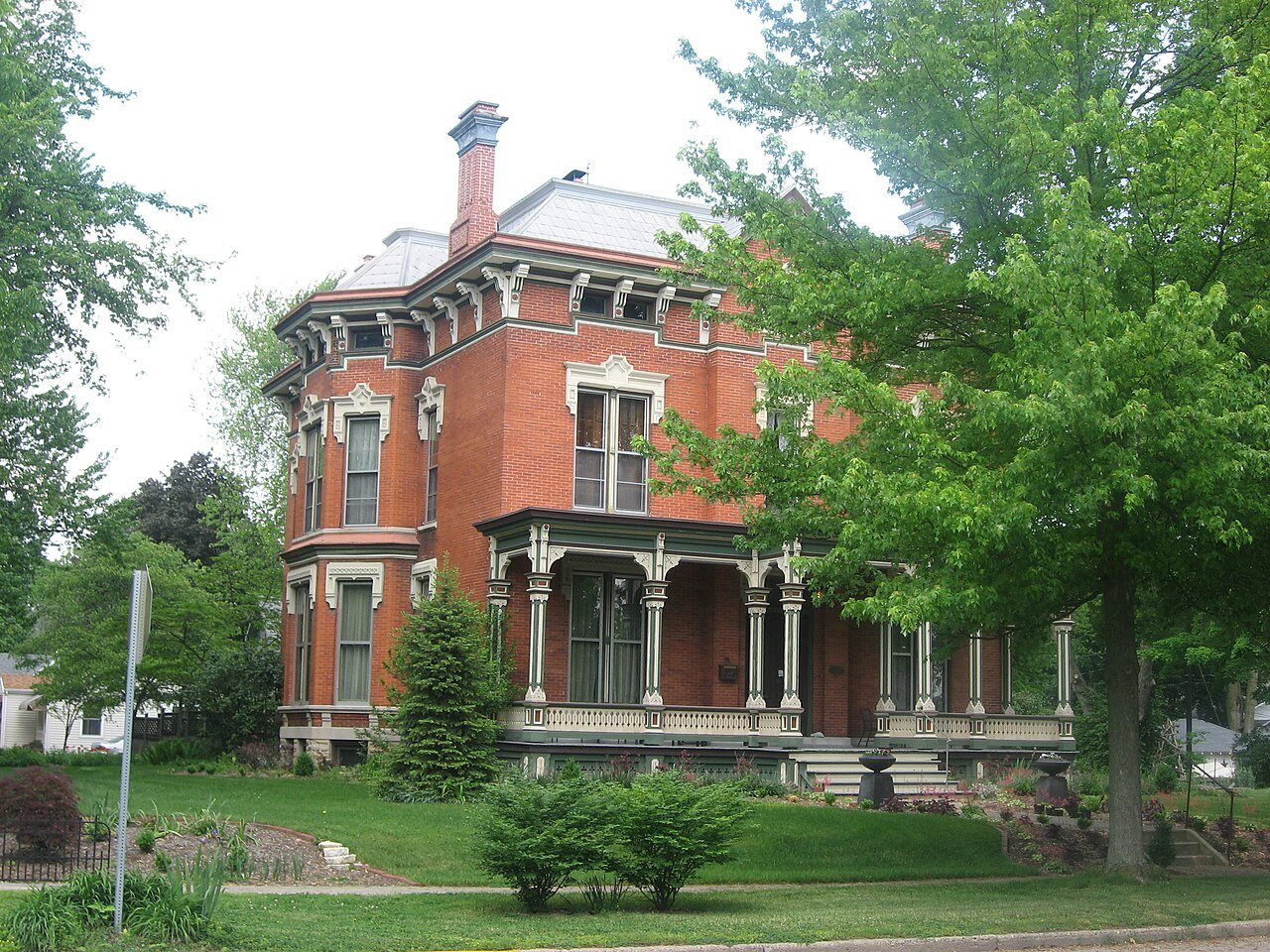
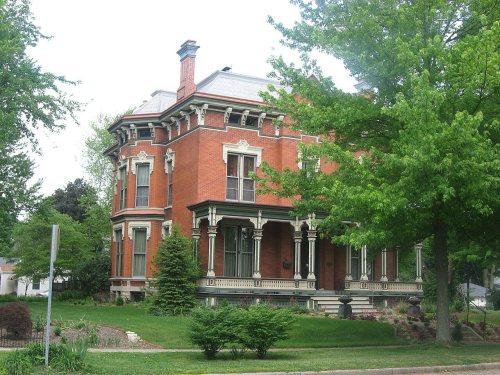
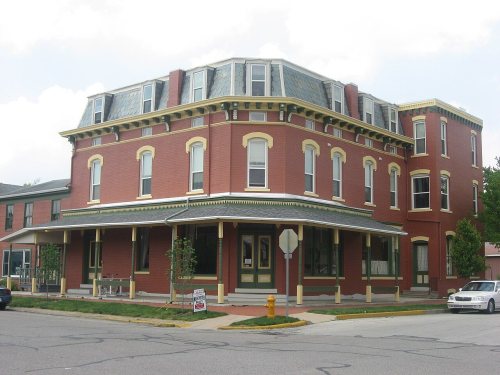
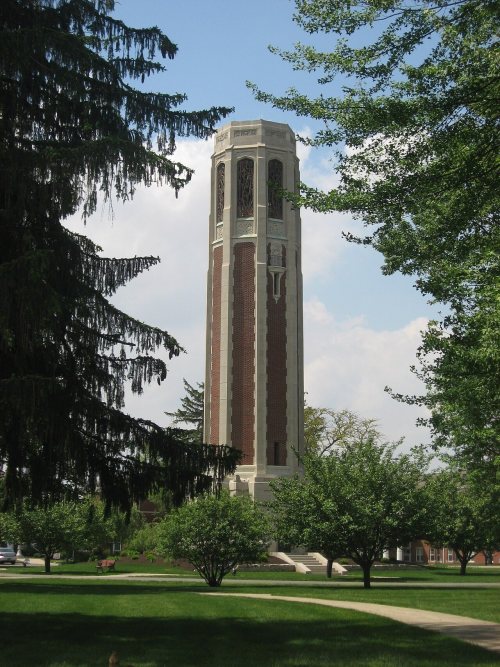
7 listings: 4 buildings, among them the Noftzger-Adams House (listed 1979, the first), 1 historic district, the North Manchester Historic District, with 159 contributing buildings, and 2 structures. 163 historic buildings in all.
How old are the homes in North Manchester?
33% of North Manchester’s homes were built before 1940 (Census estimate, ±7.1 points), against a typical 14% for an Indiana town; the median home was built in 1960.
Founding dates: Wikidata, Wikipedia, the U.S. post office records of Blevins & Helbock (CC0) and the Census. Homes by year built: Census ACS 2020–24. National Register of Historic Places: National Park Service (list of May 22, 2026). Old photos, postcards and papers: Wikimedia Commons, the Library of Congress and other public archives, credited on each item’s page. Maps: U.S. Geological Survey historical topographic maps (via Esri) and Sanborn fire-insurance maps (Library of Congress). History text and census tables: Wikipedia (CC BY-SA 4.0). Places that used to be: USGS Geographic Names Information System (2021).
From Wikimedia Commons (11), Wikidata (1), the National Register of Historic Places (7), Wikipedia, Wikidata and Wikipedia for famous people, U.S. Census counts (via Wikipedia), the US Post Offices dataset (Blevins & Helbock), the USGS Geographic Names Information System, Sanborn fire insurance maps (Library of Congress) and old county and town histories (Internet Archive). Archive images are copied here with their credits and licenses, shown on each photo’s page. Refreshed monthly.








 2013
 2013
 2013
 2013
 2013
 2013
 2012
 2012
 2010
 2005
 2004
