Bloomington dates to 1818, and 12% of its homes were built before 1940
More historic than 84% of U.S. towns · #190 of 593 in Indiana. What drives it
32 places in town are on the National Register, among them eight historic districts with 502 buildings between them. Below: 9 old photos and papers, maps from 1883 on, and the census since 1850.
Founding year: Wikidata; Wikipedia’s history section gives the same year. First post office: 1818.The full story ↓
History grade
What drives Bloomington’s History grade
On its age, its old homes and the National Register, Bloomington is more historic than 84% of U.S. towns, #190 of 593 in Indiana. All 3 inputs are above most U.S. towns; its National Register listings ranks highest and its share of homes from before 1940 lowest.
A−
HistoryA character grade: shown, never part of Bloomington’s overall grade.
Indiana towns list more on the Register than most of the country (a typical Indiana town has 7.9 per 10,000 residents, the U.S. 2.4), so Bloomington’s 67.7 sits above most of its state (78% of Indiana towns have fewer) while its 542 historic buildings outnumber those of 97% of U.S. towns.
How sure. Graded on any two of the three inputs instead, the letter would range from B+ to A. The pre-1940 share (±1.3 points) is firm at this size. Two sources give 1818.
Founding year: Wikidata (other dates in Quick answers). Homes: Census ACS 2020–24. National Register: National Park Service, May 2026 list; each listing counted once (boundary changes and added documentation belong to their listing), and a historic district counts its contributing buildings. How TownRatings grades history →
What stands out about Bloomington’s past
Read from the archive, the National Register and the record. The page puts what stands out first.
The area in which Bloomington is situated was previously inhabited by the Delaware, Potawatomi, Miami, and Eel River Miami peoples.
Bloomington was platted in 1818. A post office has been in operation at Bloomington since 1825. Bloomington was incorporated in 1827.
The current city logo was adopted on January 6, 1986, by the Bloomington Common Council. It was a combination of peony and trout lily, inspired by both quilt patterns used by regional folk artists in 19th century and the shape of Downtown Square.
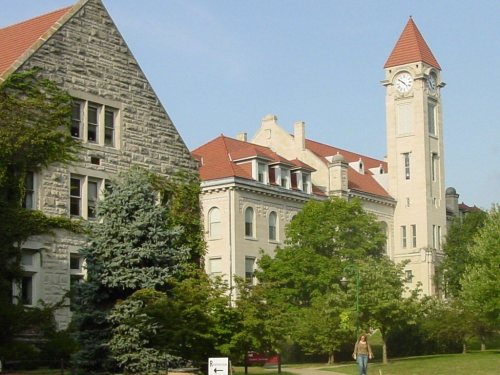
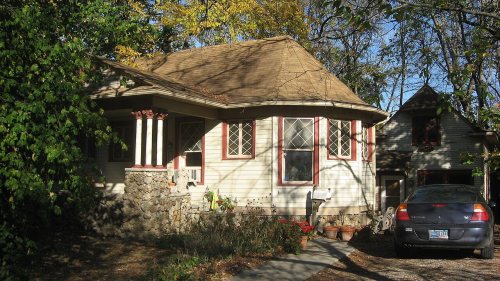
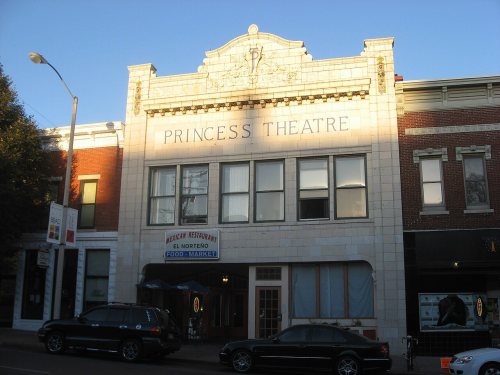
The following locations and buildings are listed on the National Register of Historic Places:
Passages that mention Bloomington, cut from the printed page as they were published.
History of Bloomington and Normal, in McLean County, Illinois1879 · page 134Read the page →
Read the text
cjigo & Alton road was sufficiently well established to indicate where it would cross the Central, fixing thus the point where a town might be built, if suitable efforts should be made. We have elsewhere stated the facts in relation to the establishment here of the young village of North Bloomington in 1854, and of its change of name to Normal in 1858. When the Normal School was in Major's Hall, in Bloomington, from October, 1857, to June, 1860, the village of Normal was rather a dull place. As stated below, there were perhaps nearly twenty families living here during this time, but there was no
Text read by machine from the scan; it may contain errors.
History of Bloomington and Normal, in McLean County, Illinois1879 · page 47Read the page →
Read the text
As early as 1838, there was a town, or, more properly, a village organization of all the territory included in the original town and its additions, with a Board of Trustees, President and a Clerk. Seth Baker was President in 1838. There was an act of the Legislature passed in 1838, relating to the government of the "town of Bloomington," and this act was afterward amended, with a proviso that it should be voted upon by the people of Bloomington. This was done, and a Board of Trustees elected, who took their offices on the 1st day of July, 1843. A full record of their proceedings was kept by Merritt L. Co veil, who was the Clerk, and from this date we find complete
Text read by machine from the scan; it may contain errors.
The genealogy and history of the families of Francis Dodds and Margaret Craig Dodds of Spartanburg, South Carolina and of the Dodds families of Baltimore, Maryland, Bloomington, Indiana, Coles county, Illinois, compiled by Lydia Colby.1929Read the page →
Read the text
12. Clelland Finley Dodds2; b. September 27, 182G; m. Mary E. Orchard of Bloomington, Indiana, July 31, 1851; attended U. of Ind. two years; was a farmer two miles south of Bloomington ten years; was a drygoods mer¬ chant of firm of Dodds and Ketchem of Bloomington six years; mayor of Bloomington, seven years; died July 27, 1894. Mary E. Dodds died June 7, 1910.
Text read by machine from the scan; it may contain errors.
Scans and text from the Internet Archive. Books published in 1930 or earlier, which are in the public domain.
Timeline
Bloomington, 1818 to 2010
Woven from the archive, old maps, post office records, the National Register and the people born here.
Nothing in the archives for these yearsWeddings on Main Street, storms, parades, school pictures, the old store. If it’s in your family album, it belongs here.
Every edition of the U.S. Geological Survey’s map of Bloomington. Tap a year, or press play to watch the town change.
1908Bloomington sheet · 1:62,500
U.S. Geological Survey historical topographic maps (public domain), via Esri’s collection of the scans. The red ring marks the center of Bloomington.
Every building
Bloomington, building by building, 1883–1913
Fire insurance maps drew every building, what it was made of and what it was used for, so insurers could price the risk of fire. Pick a year, then a sheet.
In 1818, according to Wikidata and Wikipedia’s history of the town. Bloomington’s post office opened in 1818, and the census of 1850 counted 1,305 people here.
How does Bloomington rank for history?
Bloomington is more historic than 84% of U.S. towns, #190 of 593 in Indiana. The History grade combines the town’s founding era, the share of homes built before 1940 and its National Register listings. It’s a character grade, so it isn’t part of the overall grade. How it works.
What is on the National Register in Bloomington?
32 listings: 22 buildings, among them the Monroe County Courthouse (listed 1976, the first), 8 historic districts with 502 contributing buildings, and 2 sites. 542 historic buildings in all.
How old are the homes in Bloomington?
12% of Bloomington’s homes were built before 1940 (Census estimate, ±1.3 points), against a typical 14% for an Indiana town; the median home was built in 1985.
Founding dates: Wikidata, Wikipedia, the U.S. post office records of Blevins & Helbock (CC0) and the Census. Homes by year built: Census ACS 2020–24. National Register of Historic Places: National Park Service (list of May 22, 2026). Old photos, postcards and papers: Wikimedia Commons, the Library of Congress and other public archives, credited on each item’s page. Maps: U.S. Geological Survey historical topographic maps (via Esri) and Sanborn fire-insurance maps (Library of Congress). History text and census tables: Wikipedia (CC BY-SA 4.0). Places that used to be: USGS Geographic Names Information System (2021).
From Wikimedia Commons (4), the Library of Congress (5), Wikidata (3), the National Register of Historic Places (32), Wikipedia, Wikidata and Wikipedia for famous people, U.S. Geological Survey historical maps, U.S. Census counts (via Wikipedia), the US Post Offices dataset (Blevins & Helbock), the USGS Geographic Names Information System, Sanborn fire insurance maps (Library of Congress) and old county and town histories (Internet Archive). Archive images are copied here with their credits and licenses, shown on each photo’s page. Refreshed monthly.








 1909
 1909
 1910
 1910
 1911


