Wilmington dates to 1836, and 2 of its places are on the National Register
More historic than 72% of U.S. towns · #252 of 768 in Illinois. What drives it
Most of Wilmington was built recently: 10% of its homes predate 1940 and the median home dates from 1972. Its Register listings are the Eagle Hotel and the Small-Towle House. Below: 6 old photos and papers, maps from 1892 on, and the census since 1870.
Founding year: Wikidata. First post office: 1837.The full story ↓
History grade
What drives Wilmington’s History grade
On its age, its old homes and the National Register, Wilmington is more historic than 72% of U.S. towns, #252 of 768 in Illinois. Its age holds the grade up; its share of homes from before 1940 pulls it down.
B+
HistoryA character grade: shown, never part of Wilmington’s overall grade.
Few Illinois towns list much on the Register (a typical Illinois town has 0.5 per 10,000 residents, the U.S. 2.4), so Wilmington’s 3.6 sits above most of its state (72% of Illinois towns have fewer) while its 2 listings outnumber those of 60% of U.S. towns.
How sure. Graded on any two of the three inputs instead, the letter would range from B to A−. The pre-1940 share is a Census survey estimate (±3.2 points). Two sources give 1836.
Founding year: Wikidata (other dates in Quick answers). Homes: Census ACS 2020–24. National Register: National Park Service, May 2026 list; each listing counted once (boundary changes and added documentation belong to their listing), and a historic district counts its contributing buildings. How TownRatings grades history →
What stands out about Wilmington’s past
Read from the archive, the National Register and the record. The page puts what stands out first.
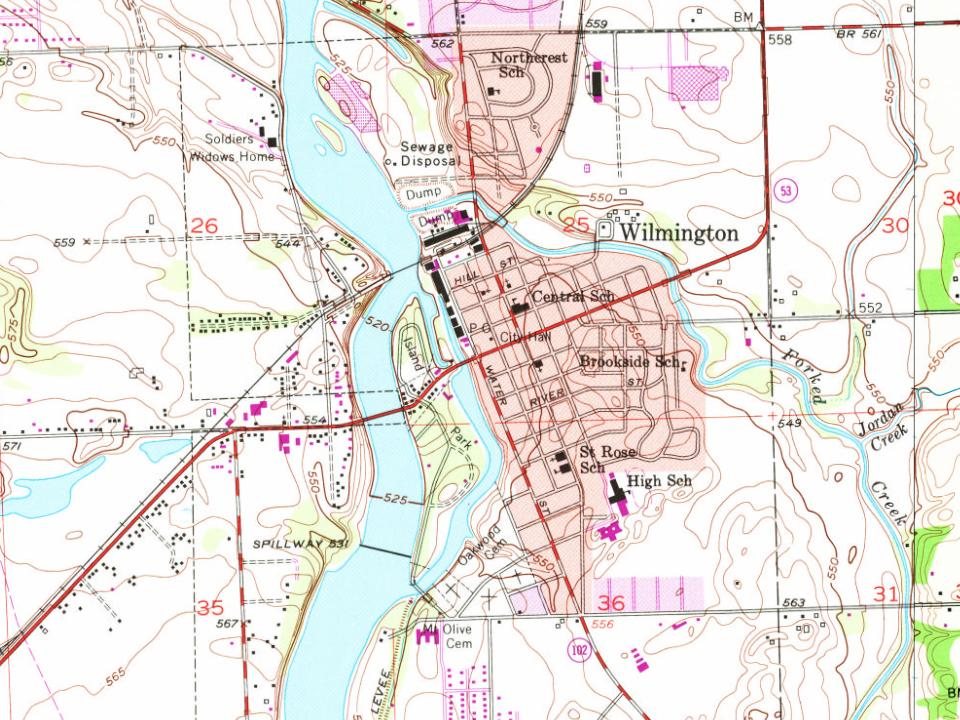
Every edition of the U.S. Geological Survey’s map of Wilmington. Tap a year, or press play to watch the town change.
1892Wilmington sheet · 1:62,500
U.S. Geological Survey historical topographic maps (public domain), via Esri’s collection of the scans. The red ring marks the center of Wilmington.
Every building
Wilmington, building by building, 1892–1907
Fire insurance maps drew every building, what it was made of and what it was used for, so insurers could price the risk of fire. Pick a year, then a sheet.
Before European settlers arrived, much of Illinois was inhabited by the Illinois Confederation, a coalition of related Native American tribes. Unlike today’s fixed borders, tribal territories often overlapped, with members from various groups sometimes living together in the same village. The Illiniwek, meaning ‘men’ in the Algonquian language, formed an alliance with the French, who adapted their name to the present-day ‘Illinois.’ The Illini Confederation’s territory extended from Iowa in the west to the Ohio River in the south, and approximately to the current borders with Indiana in the east and Wisconsin in the north. Their alliance with the French ultimately contributed to their decline, as the French lost control of the land to the British following the French and Indian War. The Miami tribe also inhabited northeastern Illinois. Other tribal names familiar to Illinois residents i…
Passages that mention Wilmington, cut from the printed page as they were published.
The history of Will County, Illinois, containing a history of the county ... a directory of its real estate owners1878 · page 807Read the page →
Read the text
THOMAS S. McINTOSH, dealer in paints, oils, varnish, glass, brushes, wall paper, etc., Wilmington, 111. ; born in Wilmington, Will Co., 111., Aug. 25, 1841 ; his father, Daniel Mcintosh, who was a native of Scotland, was among the first settlers of Wilmington, locating here in the winter of 1836 and 1837. Thomas S. followed
Text read by machine from the scan; it may contain errors.
Scans and text from the Internet Archive. Books published in 1930 or earlier, which are in the public domain.
By decade
Wilmington, decade by decade
One decade in the archive so far: the 1900s. Scroll each row; tap a photo for its story.
Nothing in the archives for these yearsWeddings on Main Street, storms, parades, school pictures, the old store. If it’s in your family album, it belongs here.
In 1836, according to Wikidata. Wilmington’s post office opened in 1837, and the census of 1870 counted 1,828 people here.
How does Wilmington rank for history?
Wilmington is more historic than 72% of U.S. towns, #252 of 768 in Illinois. The History grade combines the town’s founding era, the share of homes built before 1940 and its National Register listings. It’s a character grade, so it isn’t part of the overall grade. How it works.
What is on the National Register in Wilmington?
Two places: the Eagle Hotel (listed 1994) and the Small-Towle House (2004).
How old are the homes in Wilmington?
10% of Wilmington’s homes were built before 1940 (Census estimate, ±3.2 points), against a typical 11% for an Illinois town; the median home was built in 1972.
Founding dates: Wikidata, Wikipedia, the U.S. post office records of Blevins & Helbock (CC0) and the Census. Homes by year built: Census ACS 2020–24. National Register of Historic Places: National Park Service (list of May 22, 2026). Old photos, postcards and papers: Wikimedia Commons, the Library of Congress and other public archives, credited on each item’s page. Maps: U.S. Geological Survey historical topographic maps (via Esri) and Sanborn fire-insurance maps (Library of Congress). History text and census tables: Wikipedia (CC BY-SA 4.0). Places that used to be: USGS Geographic Names Information System (2021).
From the Library of Congress (6), the National Register of Historic Places (2), Wikipedia, Wikidata and Wikipedia for famous people, U.S. Geological Survey historical maps, U.S. Census counts (via Wikipedia), the US Post Offices dataset (Blevins & Helbock), the USGS Geographic Names Information System, Sanborn fire insurance maps (Library of Congress) and old county and town histories (Internet Archive). Archive images are copied here with their credits and licenses, shown on each photo’s page. Refreshed monthly.


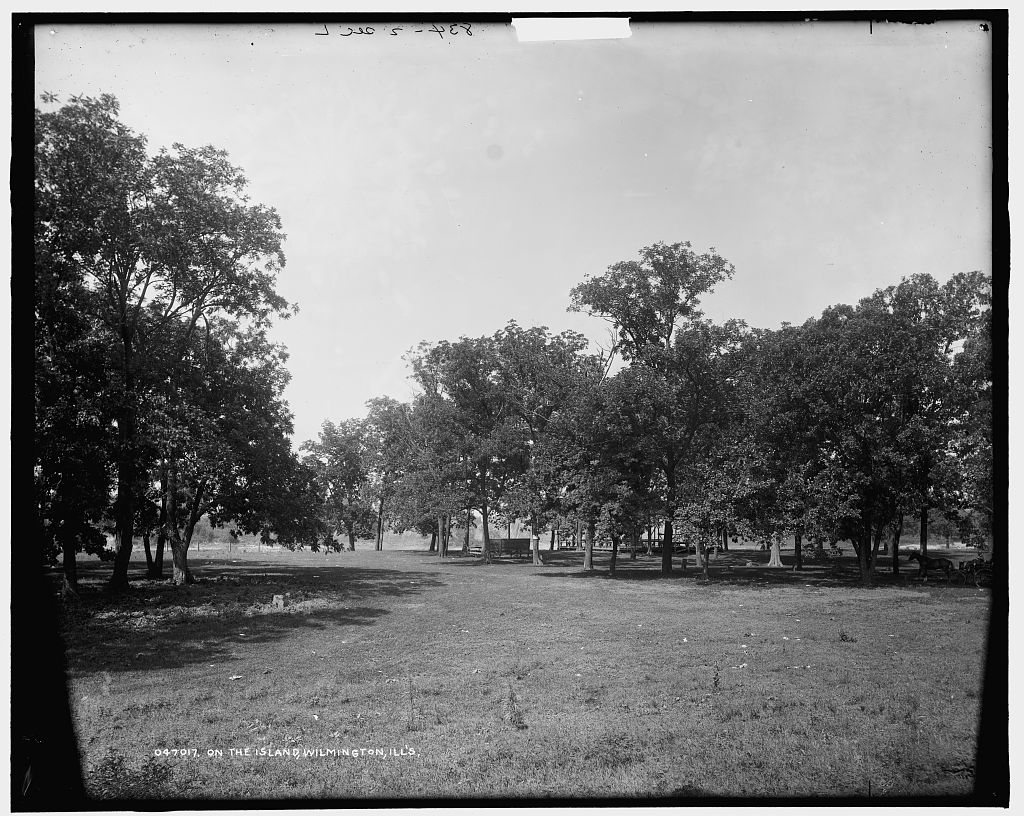




 1900
 1900
 1900
 1900
 1900


