Rockton’s post office opened in 1846, and 3 of its places are on the National Register
More historic than 78% of U.S. towns · #201 of 768 in Illinois. What drives it
Most of Rockton was built recently: 5% of its homes predate 1940 and the median home dates from 1996. 3 places in town are on the National Register, among them two historic districts with 168 buildings between them. Below: 2 old photos and papers, maps from 1893 on, and the census since 1880.
Founding year: the first Rockton post office (Blevins & Helbock, CC0).The full story ↓
History grade
What drives Rockton’s History grade
On its age, its old homes and the National Register, Rockton is more historic than 78% of U.S. towns, #201 of 768 in Illinois. Its National Register listings hold the grade up; its share of homes from before 1940 pulls it down.
A−
HistoryA character grade: shown, never part of Rockton’s overall grade.
Few Illinois towns list much on the Register (a typical Illinois town has 0.5 per 10,000 residents, the U.S. 2.4), so Rockton’s 212 sits above most of its state (97% of Illinois towns have fewer) while its 169 historic buildings outnumber those of 92% of U.S. towns.
How sure. Graded on any two of the three inputs instead, the letter would range from B− to A. The pre-1940 share (±2.3 points) is firm at this size. The founding year is the first post office, not a stated founding date.
Founding year: the first post office (other dates in Quick answers). Homes: Census ACS 2020–24. National Register: National Park Service, May 2026 list; each listing counted once (boundary changes and added documentation belong to their listing), and a historic district counts its contributing buildings. How TownRatings grades history →
What stands out about Rockton’s past
Read from the archive, the National Register and the record. The page puts what stands out first.
Fire insurance maps drew every building, what it was made of and what it was used for, so insurers could price the risk of fire. Pick a year, then a sheet.
Native American tribes originally inhabited the region. Stephen Mack, Jr. was the first white settler in the Rockton area. He was married to Hononegah, a respected Native American woman from one of the surrounding tribes. His original outpost (c. 1830s) eventually became Macktown. William Talcott arrived to the area later and, after a disagreement with Mack, settled on the other side of the nearby river within the present village of Rockton. Citizens who lived in Macktown would frequently travel across the river to Rockton but in 1851, the bridge from Macktown to Rockton washed away. The bridge had been built with funding from Stephen Mack and its destruction, along with Mack's death in 1850, led citizens to permanently move to Rockton. In northern Illinois, Macktown is the only community from the 1830s that is still standing without subsequent development.
Passages that mention Rockton, cut from the printed page as they were published.
The history of Rockton, Winnebago County, Illinois, 1820 to 18981898 · page 108Read the page →
Read the text
At the annual town meeting held April 5, 1853, it was voted that the town of Rockton subscribe the sum of $50,000 to the capital stock of the Rockton and Freeport railroad. On the 23rd day of February, 1854, the board of town auditors executed the subscription to said railroad compan}^, which was consolidated with the Racine and Mississippi railroad company in 1854. The bonds were issued Dec. 20, 1855, in amount of $5C0 each, at seven per cent interest, and made pa3^able Feb. 10,
Text read by machine from the scan; it may contain errors.
The history of Rockton, Winnebago County, Illinois, 1820 to 18981898 · page 68Read the page →
Read the text
cross the river at his place about 1840, or perhaps a little later, and built a bridge across the river, conneting with Bridge street, about 1845. He laid out and addition to the village of Rockton, called "Thaj^er's addition," which was filed for record, May 2, 1844. He opened his house to entertain travelers, hence it got the name of "Thayer's tarvern." One day he and Sylvester Talcott were riding over the prairie, and seeing a wolf they gave immediate chase. The wolf was finall}' run
Text read by machine from the scan; it may contain errors.
Scans and text from the Internet Archive. Books published in 1930 or earlier, which are in the public domain.
The Rockton post office opened in 1846, the earliest record of the town by name (U.S. post office records).
How does Rockton rank for history?
Rockton is more historic than 78% of U.S. towns, #201 of 768 in Illinois. The History grade combines the town’s founding era, the share of homes built before 1940 and its National Register listings. It’s a character grade, so it isn’t part of the overall grade. How it works.
What is on the National Register in Rockton?
Three places: the Macktown Historic District (listed 1978), the Rockton Historic District (1978) and the H.D. Jameson House (2003).
How old are the homes in Rockton?
5% of Rockton’s homes were built before 1940 (Census estimate, ±2.3 points), against a typical 11% for an Illinois town; the median home was built in 1996.
Founding dates: Wikidata, Wikipedia, the U.S. post office records of Blevins & Helbock (CC0) and the Census. Homes by year built: Census ACS 2020–24. National Register of Historic Places: National Park Service (list of May 22, 2026). Old photos, postcards and papers: Wikimedia Commons, the Library of Congress and other public archives, credited on each item’s page. Maps: U.S. Geological Survey historical topographic maps (via Esri) and Sanborn fire-insurance maps (Library of Congress). History text and census tables: Wikipedia (CC BY-SA 4.0). Places that used to be: USGS Geographic Names Information System (2021).
From Wikimedia Commons (12), the Library of Congress (1), Wikidata (2), the National Register of Historic Places (3), Wikipedia, U.S. Geological Survey historical maps, U.S. Census counts (via Wikipedia), the US Post Offices dataset (Blevins & Helbock), the USGS Geographic Names Information System, Sanborn fire insurance maps (Library of Congress) and old county and town histories (Internet Archive). Archive images are copied here with their credits and licenses, shown on each photo’s page. Refreshed monthly.


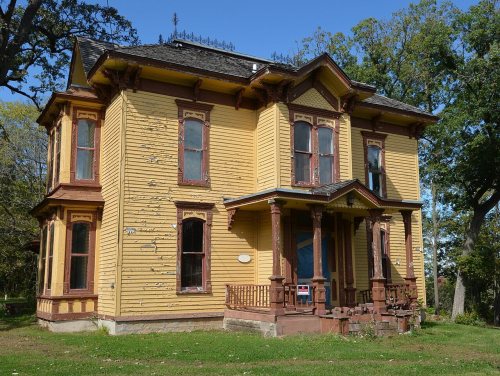


 Date?
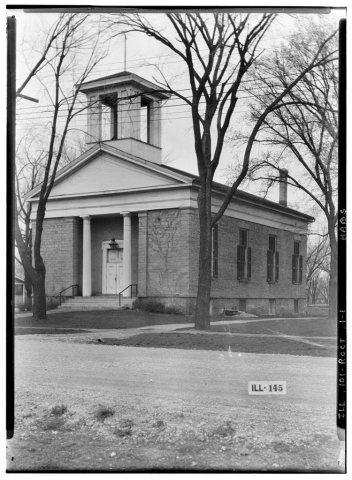 Date?
 2021
 2021
 2016
 2015
 2015
 2013
 2013
 2008
 2007
 2005
 2005


