Ottawa’s post office opened in 1832, and 25% of its homes were built before 1940
More historic than 95% of U.S. towns · #34 of 768 in Illinois. What drives it
7 places in town are on the National Register, among them three historic districts with 453 buildings between them. Below: 14 old photos and papers, maps from 1892 on, and the census since 1870.
Founding year: the first Ottawa post office (Blevins & Helbock, CC0). Wikidata: 1853.The full story ↓
History grade
What drives Ottawa’s History grade
On its age, its old homes and the National Register, Ottawa is more historic than 95% of U.S. towns, #34 of 768 in Illinois. All 3 inputs are above most U.S. towns; its National Register listings ranks highest and its age lowest.
A+
HistoryA character grade: shown, never part of Ottawa’s overall grade.
Few Illinois towns list much on the Register (a typical Illinois town has 0.5 per 10,000 residents, the U.S. 2.4), so Ottawa’s 248 sits above most of its state (97% of Illinois towns have fewer) while its 458 historic buildings outnumber those of 97% of U.S. towns.
How sure. Graded on any two of the three inputs instead, the letter would range from A− to A+. The pre-1940 share is a Census survey estimate (±3.7 points). The founding year is the first post office, not a stated founding date; Wikidata gives 1853.
Founding year: the first post office (other dates in Quick answers). Homes: Census ACS 2020–24. National Register: National Park Service, May 2026 list; each listing counted once (boundary changes and added documentation belong to their listing), and a historic district counts its contributing buildings. How TownRatings grades history →
What stands out about Ottawa’s past
Read from the archive, the National Register and the record. The page puts what stands out first.
Nothing in the archives for these yearsWeddings on Main Street, storms, parades, school pictures, the old store. If it’s in your family album, it belongs here.
Ottawa occupies a place on the Illinois River that has long been one end of a portage trail between the Mississippi River and Lake Michigan. Here the river was reliably deep enough for canoes. The North Portage Trail connected the site over land and water to the Chicago River.
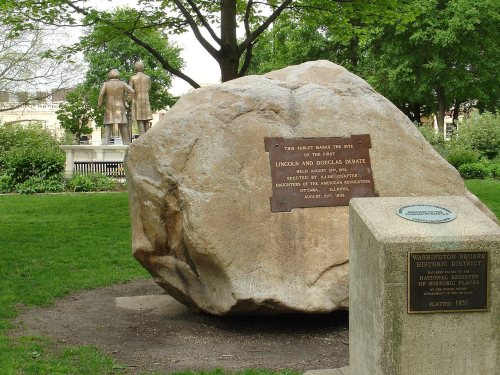
Ottawa was the site of the first of the Lincoln–Douglas debates on August 21, 1858. During the Ottawa debate, Stephen A. Douglas, leader of the Democratic Party, openly accused Abraham Lincoln of forming a secret bipartisan group of Congressmen to bring about the abolition of slavery.
BAGGAGE — You should mark your baggage plain with your name, "Special Train, Ottawa Commandery, No. 10, Ottawa, Illinois," and have it sent to the depot of the C, R. I. & P. at Ottawa, Illinois, where it will be placed in the special baggage car of Ottawa Commandery. Send your baggage to depot early Saturday morning.
Text read by machine from the scan; it may contain errors.
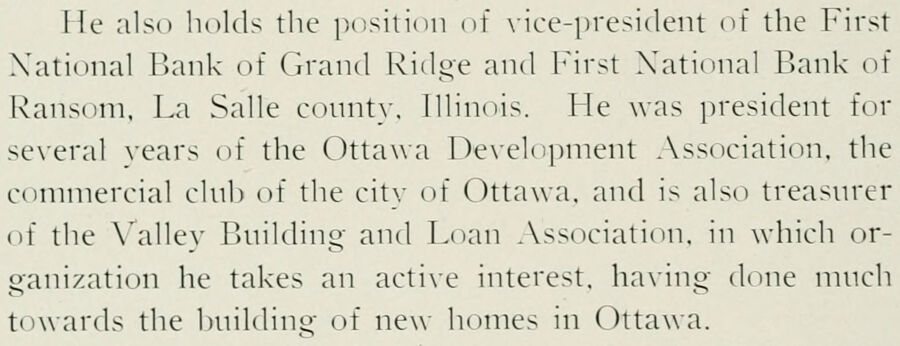
He also holds the position of vice-president of the First National Bank of Grand Ridge and First National Bank of Ransom, La Salle county, Illinois. He was president for several years of the Ottawa Development Association, the commercial club of the city of Ottawa, and is also treasurer of the Valley Building and Loan Association, in which organization he takes an active interest, having done much towards the building of new homes in Ottawa.
Text read by machine from the scan; it may contain errors.
Scans and text from the Internet Archive. Books published in 1930 or earlier, which are in the public domain.
Timeline
Ottawa, 1832 to 1982
Woven from the archive, old maps, post office records, the National Register and the people born here.
Church of the Open BiblechurchColumbus SchoolschoolDaniel SchoolschoolLa Salle Tuberculosis SanatoriumhospitalMaple Grove SchoolschoolMathieson SchoolschoolOttawa AirportairportRybury HospitalhospitalSaint Francis SchoolschoolShabbona SchoolschoolWashington Schoolschool
2cemeteries and burying grounds inside Ottawa
Ottawa AvenueSummit View
US Post Offices dataset (Blevins & Helbock, CC0). Places and cemeteries from the USGS Geographic Names Information System (2021).
Help out
Finish Ottawa’s story
Most archives stop around 1920. The photos from after that are in family albums, not libraries.
Decades since 1900 with photos
00s10s20s30s40s50s60s70s80s90s
3 of 10 decades. The empty ones are waiting for someone’s album.
The Ottawa post office opened in 1832, the earliest record of the town by name (U.S. post office records). Wikidata gives 1853.
How does Ottawa rank for history?
Ottawa is more historic than 95% of U.S. towns, #34 of 768 in Illinois. The History grade combines the town’s founding era, the share of homes built before 1940 and its National Register listings. It’s a character grade, so it isn’t part of the overall grade. How it works.
What is on the National Register in Ottawa?
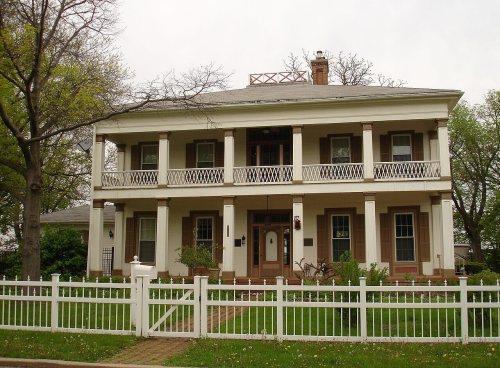
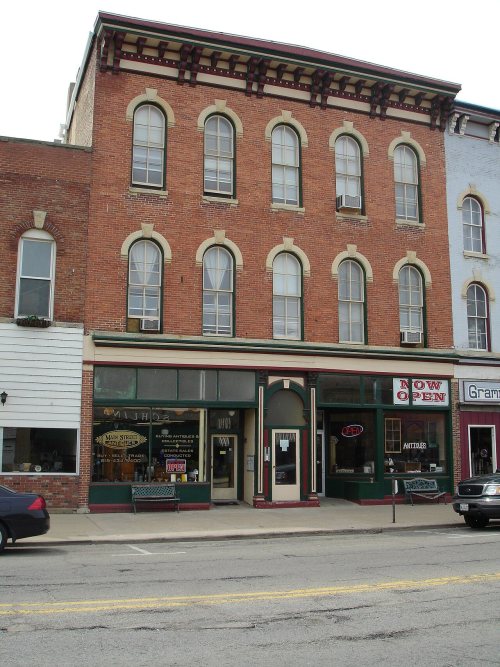
7 listings: 4 buildings, among them the John Hossack House (listed 1972, the first), and 3 historic districts, the Washington Park Historic District, the Ottawa Commercial Historic District and the Ottawa East Side Historic District, with 453 contributing buildings. 458 historic buildings in all.
How old are the homes in Ottawa?
25% of Ottawa’s homes were built before 1940 (Census estimate, ±3.7 points), against a typical 11% for an Illinois town; the median home was built in 1958.
Founding dates: Wikidata, Wikipedia, the U.S. post office records of Blevins & Helbock (CC0) and the Census. Homes by year built: Census ACS 2020–24. National Register of Historic Places: National Park Service (list of May 22, 2026). Old photos, postcards and papers: Wikimedia Commons, the Library of Congress and other public archives, credited on each item’s page. Maps: U.S. Geological Survey historical topographic maps (via Esri) and Sanborn fire-insurance maps (Library of Congress). History text and census tables: Wikipedia (CC BY-SA 4.0). Places that used to be: USGS Geographic Names Information System (2021).
From Wikimedia Commons (10), the Library of Congress (4), Wikidata (1), the National Register of Historic Places (7), Wikipedia, Wikidata and Wikipedia for famous people, U.S. Geological Survey historical maps, U.S. Census counts (via Wikipedia), the US Post Offices dataset (Blevins & Helbock), the USGS Geographic Names Information System and old county and town histories (Internet Archive). Archive images are copied here with their credits and licenses, shown on each photo’s page. Refreshed monthly.




 1858
 1870
 1870
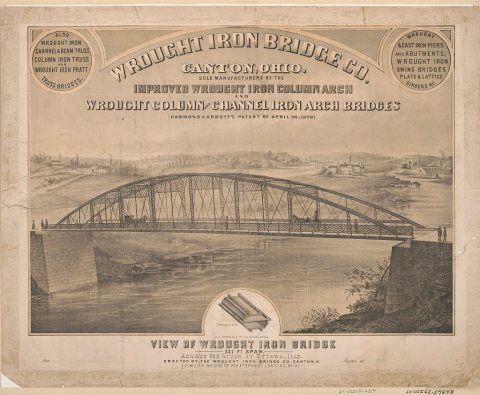 1870
 1876
 1876
 1876
 1876
 1887
 1903
 1908
 c. 1912
 1937
 1937