Guest, Sign inJoin

Post to Evanston

We’ll email a one-tap link to publish your post. No password, and nothing is public until you click it.
Already a member? Sign in
A+History
History · Evanston

Evanston dates to 1836, and 40% of its homes were built before 1940

More historic than 98% of U.S. towns · #7 of 768 in Illinois. What drives it

59 places in town are on the National Register, among them 3 National Historic Landmarks and three historic districts with 1,268 buildings between them. Below: 12 old photos and papers, maps from 1883 on, and the census since 1880.

1836founded
59on the National Register
40%homes built before 1940
12old photos & papers
48famous people
From Evanston’s archive · credits on each photo
Quick answers

How Evanston began

When was Evanston founded?

1836

Evanston dates its founding to 1836 (Wikidata). The census first counted it in 1880.

First census: 4,400 in 18802020 census: 78,110190 years

How historic is Evanston?

A+

More historic than 98% of U.S. towns, on its age, its old homes and the National Register.

What drives the grade ↓
Founding year: Wikidata. First post office: 1850.The full story ↓
History grade

What drives Evanston’s History grade

On its age, its old homes and the National Register, Evanston is more historic than 98% of U.S. towns, #7 of 768 in Illinois. All 3 inputs are above most U.S. towns; its National Register listings ranks highest and its age lowest.

A+
HistoryA character grade: shown, never part of Evanston’s overall grade.
All U.S. towns we grade (21,289)Ahead of 98%
NewerOlder
Illinois towns of 2,500+ (768)#7 of 768

Few Illinois towns list much on the Register (a typical Illinois town has 0.5 per 10,000 residents, the U.S. 2.4), so Evanston’s 209 sits above most of its state (96% of Illinois towns have fewer) while its 1,593 historic buildings outnumber those of 99% of U.S. towns.

How sure. Graded on any two of the three inputs instead, the letter would range from A to A+. The pre-1940 share (±2.2 points) is firm at this size. Two sources give 1836.

Founding year: Wikidata (other dates in Quick answers). Homes: Census ACS 2020–24. National Register: National Park Service, May 2026 list; each listing counted once (boundary changes and added documentation belong to their listing), and a historic district counts its contributing buildings. How TownRatings grades history →

What stands out about Evanston’s past

Read from the archive, the National Register and the record. The page puts what stands out first.

★ What stands out · On the National Register

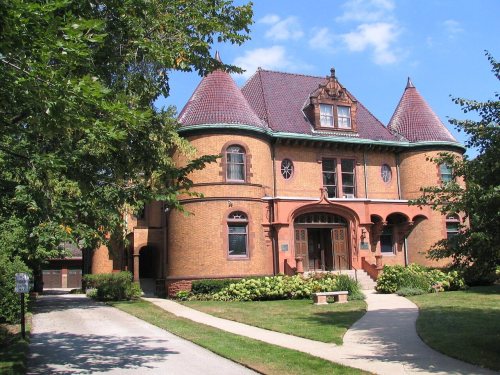
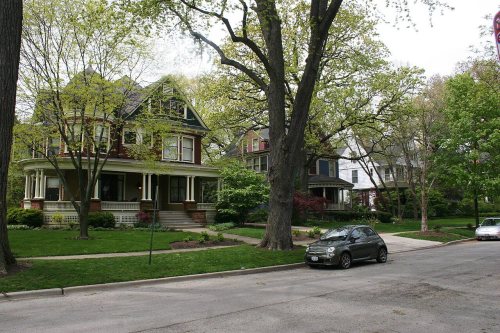
59 listings protect 1,593 historic buildings

The country’s official list of buildings and places worth saving. 3 are National Historic Landmarks, the highest tier.

places listed
59
National Historic Landmarks
3
Frances Willard House
historic buildings protected
1,593
each building in a district counts
first listed
1966
Frances Willard House
Frederick B. Carter Jr. HouseRidgewoodGeorge B. Dryden HouseEvanston Lakeshore Historic DistrictEvanston Ridge Historic DistrictAndridge Apartments, built 1923Building at 1101-1113 Maple Avenue, built 1892Building at 1209-1217 Maple Avenue, built 1892Building at 1316 Maple AvenueBuilding at 1401-1407 Elmwood Avenue, built 1890Building at 1505-1509 Oak Avenue, built 1925Building at 1929-1931 Sherman Avenue, built 1928Building at 2517 Central StreetBuilding at 2519 Central StreetBuilding at 2523 Central StreetBuilding at 417-419 Lee Street, built 1902Building at 548-606 Michigan Avenue, built 1924Building at 813-815 Forest Avenue, built 1929Building at 923-925 Michigan Avenue, built 1916Building at 999 Michigan, 200 Lee, built 1927Buildings at 815-817 Brummel and 819-821 Brummel, built 1928Castle Tower ApartmentsEvanston TowersFountain Plaza Apartments, built 1922Greenwood, The, built 1912Hillcrest Apartment, built 1922Hinman Apartments, built 1904Judson, The, built 1911Lake Shore Apartments, built 1927Maple Court Apartments, built 1915Melwood Apartments, built 1901Michigan-Lee Apartments, built 1928Oak Ridge Apartments, built 1914Oakton Gables, built 1927Ridge Boulevard Apartments, built 1913Ridge Grove, built 1928Ridge Manor, built 1916Rookwood Apartments, built 1927Sheridan Square Apartments, built 1924Tudor Manor, built 1916Westminster, built 1912Building at 1301-1303 Judson AvenueDwight Perkins HouseEdward Kirk Warren House and GarageBuildings at 1104-1110 Seward, built 1927Roycemore School, built 1915Shakespeare Garden, built 1915Northeast Evanston Historic DistrictRaymond Park Apartments, built 1928Woman's Christian Temperance Union Administration Building, built 1910Oakton Historic DistrictHomestead, The, built 1928Marywood AcademyWoman's Club of EvanstonJames B. Irving House, built 1928Frances Willard House★Grosse Point Light Station, built 1873★Charles Gates Dawes House★
BuildingsDistrictsSitesStructures★ landmark

Architectural styles listings

Tudor13
Colonial Revival6
Classical5
Prairie School4
Gothic4
Georgian4
All 59 listings
Andridge ApartmentsBuilding · listed 1984Building at 1101-1113 Maple AvenueBuilding · listed 1984Building at 1209-1217 Maple AvenueBuilding · listed 1984Building at 1316 Maple AvenueBuilding · listed 1984Building at 1401-1407 Elmwood AvenueBuilding · listed 1984Building at 1505-1509 Oak AvenueBuilding · listed 1984Building at 1929-1931 Sherman AvenueBuilding · listed 1984Building at 2517 Central StreetBuilding · listed 1984Building at 2519 Central StreetBuilding · listed 1984Building at 2523 Central StreetBuilding · listed 1984Building at 417-419 Lee StreetBuilding · listed 1984Building at 548-606 Michigan AvenueBuilding · listed 1984Building at 813-815 Forest AvenueBuilding · listed 1984Building at 923-925 Michigan AvenueBuilding · listed 1984Building at 999 Michigan, 200 LeeBuilding · listed 1984Buildings at 815-817 Brummel and 819-821 BrummelBuilding · listed 1984Castle Tower ApartmentsBuilding · listed 1984Colonnade CourtBuilding · listed 1984Evanston TowersBuilding · listed 1984Fountain Plaza ApartmentsBuilding · listed 1984Greenwood, TheBuilding · listed 1984Hillcrest ApartmentBuilding · listed 1984Hinman ApartmentsBuilding · listed 1984Judson, TheBuilding · listed 1984Lake Shore ApartmentsBuilding · listed 1984Maple Court ApartmentsBuilding · listed 1984Melwood ApartmentsBuilding · listed 1984Michigan-Lee ApartmentsBuilding · listed 1984Oak Ridge ApartmentsBuilding · listed 1984Oakton GablesBuilding · listed 1984Ridge Boulevard ApartmentsBuilding · listed 1984Ridge GroveBuilding · listed 1984Ridge ManorBuilding · listed 1984Rookwood ApartmentsBuilding · listed 1984Sheridan Square ApartmentsBuilding · listed 1984Tudor ManorBuilding · listed 1984WestminsterBuilding · listed 1984Building at 1301-1303 Judson AvenueBuilding · listed 1984Dwight Perkins HouseBuilding · listed 1985Edward Kirk Warren House and GarageBuilding · listed 1986Buildings at 1104-1110 SewardBuilding · listed 1986Roycemore SchoolBuilding · listed 1987Shakespeare GardenSite · listed 1988Northeast Evanston Historic DistrictDistrict · listed 1999Raymond Park ApartmentsBuilding · listed 2002Woman's Christian Temperance Union Administration BuildingBuilding · listed 2002Oakton Historic DistrictDistrict · listed 2005Homestead, TheBuilding · listed 2006Marywood AcademyBuilding · listed 2006Woman's Club of EvanstonBuilding · listed 2006James B. Irving HouseBuilding · listed 2021

National Park Service, National Register of Historic Places. Photos from Wikimedia Commons, credited on each place’s page.

Places that used to be

Lost post offices, old corners, places now gone and burying grounds

Evanston’s post office has been open since 1855. Three other post offices opened and closed inside today’s town.

Ridgeville
1850–1855
Evanston
1855–today
North Evanston
1872–1890
South Evanston
1873–1894
18501940today
Hamlets and corners on the map
North EvanstonOaktonSouth Evanston
Gone or out of use
Evanston Water Plant HeliportairportMarywood High SchoolschoolNorthwestern University GymnasiumbuildingSaint George High Schoolschool
1cemetery inside Evanston
Calvary Catholic

US Post Offices dataset (Blevins & Helbock, CC0). Places and cemeteries from the USGS Geographic Names Information System (2021).

The story

How Evanston came to be

From Wikipedia’s history of Evanston.

Read it all →

Prior to the 1830s, the area now occupied by Evanston was mainly uninhabited, consisting largely of wetlands and swampy forest. However, Potawatomi Native Americans used trails along higher lying ridges that ran in a general north–south direction through the area, and had at least some semi-permanent settlements along the trails.

Text from Wikipedia, licensed CC BY-SA 4.0.

From the old history books

What they wrote about Evanston, 1884–1909

Passages that mention Evanston, cut from the printed page as they were published.

At first they considered a tract of land in the town of Jefferson, and later viewed other prospective sites. Finally, however, they decided on the present grounds at Evanston. Among the first members of the faculty were Abel Stevens, W. D. Goodman and H. S. Noyes. During the first year classical an…
History of Cook County, Illinois1909 · page 254Read the page →
Read the text

At first they considered a tract of land in the town of Jefferson, and later viewed other prospective sites. Finally, however, they decided on the present grounds at Evanston. Among the first members of the faculty were Abel Stevens, W. D. Goodman and H. S. Noyes. During the first year classical and scientific courses were founded and a little later the departments of law and applied science were added. The university was duly opened in November, 1855. Dr. Hinman had much to do in starting the institution on

Text read by machine from the scan; it may contain errors.
building of the Chicago & Milwaukee Railroad through the county, in the summer ami fall of 1854, caused a rapid settlement of the country along its line. The road reached Evanston iu September nf that year, and was opened to Waukegan January 1, 1855. The survey of the road brought to the site of Ev…
History of Cook County, Illinois. From the earliest period to the present time1884 · page 418Read the page →
Read the text

building of the Chicago & Milwaukee Railroad through the county, in the summer ami fall of 1854, caused a rapid settlement of the country along its line. The road reached Evanston iu September nf that year, and was opened to Waukegan January 1, 1855. The survey of the road brought to the site of Evanston one of 'its earliest and best known citizen*, George Kearney. The young man accompanied his

Text read by machine from the scan; it may contain errors.
Tows ani» ViLLAHE LIMITS — By general statute the corporate limits of no town could include a territory more than one mile square. In December, 1863, the voters of the town or village of Evanston decided to be incorporated. The corporation was bounded on the south bv Dempster Street, wu the east by…
History of Cook County, Illinois. From the earliest period to the present time1884 · page 430Read the page →
Read the text

Tows ani» ViLLAHE LIMITS — By general statute the corporate limits of no town could include a territory more than one mile square. In December, 1863, the voters of the town or village of Evanston decided to be incorporated. The corporation was bounded on the south bv Dempster Street, wu the east by the lake, on the north by a line just south of the Garrett Biblical Institute and Foster Street, and on the west by Wesley

Text read by machine from the scan; it may contain errors.
Evanston, as a matter of fact, originated from the successful efforts to establish Northwestern university, but it would not have been laid out nor founded, nor would the university have been established there, had it not been for the railways. The university grounds were located upon land secured …
History of Cook County, Illinois1909 · page 253Read the page →
Read the text

Evanston, as a matter of fact, originated from the successful efforts to establish Northwestern university, but it would not have been laid out nor founded, nor would the university have been established there, had it not been for the railways. The university grounds were located upon land secured from Dr. John H. Foster of Chicago and others. When selected the site was imposing. In fact, it was one of the most attractive spots along the west shore of the lake. The university grounds were laid out and planned

Text read by machine from the scan; it may contain errors.

Scans and text from the Internet Archive. Books published in 1930 or earlier, which are in the public domain.

Timeline

Evanston, 1836 to 1965

Woven from the archive, old maps, post office records, the National Register and the people born here.

  1. 19th century
  2. 1836
    FoundingEvanston is established
  3. 1850Post officeThe Ridgeville post office opens
  4. 1855Post officeThe Ridgeville post office closes
  5. 1855Post officeThe Evanston post office opens
  6. 1872Post officeThe North Evanston post office opens
  7. 1873BuiltGrosse Point Light Station is built
  8. 1880In the archive1940 Census Enumeration District Maps - Illinois - Cook County - Evanston - ED 16-175 - E…
  9. 1890Post officeThe North Evanston post office closes
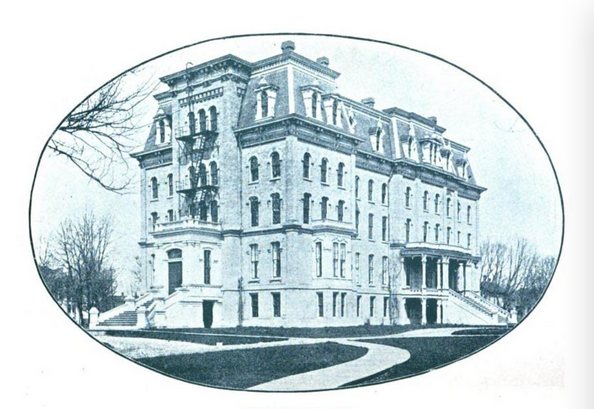
  10. 1891In the archiveNorthwestern Female College
  11. 1892BuiltBuilding at 1101-1113 Maple Avenue is built
  12. 1892BuiltBuilding at 1209-1217 Maple Avenue is built
  13. 1899On the mapFirst mapped by the U.S. Geological Survey
  14. 20th century
  15. 1903In the archivePresident Roosevelt's western tour - speaking at Evanston, Illinois
  16. 1910In the archiveEvanston Historical Society 1910 Proceedings
  17. 1923BuiltAndridge Apartments is built
  18. 1933Born hereEdmund Phelps is born here
  19. 1964Born hereEddie Vedder is born here
  20. 1965LandmarkFrances Willard House named a National Historic Landmark
By decade

Evanston, decade by decade

4 decades in the archive, from the 1880s to the 1910s. Scroll each row; tap a photo for its story.

On the map

Evanston on the map, 1899 to 1993

Every edition of the U.S. Geological Survey’s map of Evanston. Tap a year, or press play to watch the town change.

Evanston on the 1899 USGS mapEvanston on the 1928 USGS mapEvanston on the 1953 USGS mapEvanston on the 1963 USGS mapEvanston on the 1972 USGS mapEvanston on the 1993 USGS map1899Evanston sheet · 1:62,500

U.S. Geological Survey historical topographic maps (public domain), via Esri’s collection of the scans. The red ring marks the center of Evanston.

Every building

Evanston, building by building, 1883–1920

Fire insurance maps drew every building, what it was made of and what it was used for, so insurers could price the risk of fire. Pick a year, then a sheet.

Evanston fire insurance map, 1883, sheet 21883Sheet 2 of 4
Edition
BrickWoodStone

Sanborn Map Company, via the Library of Congress. Editions published in 1930 or earlier, which are in the public domain.

Then & now

Stand where they stood

No then-and-now pairs yet. Take a photo from the same spot as an old one and they appear here side by side.

1940 Census Enumeration District Maps - Illinois - Cook County - Evanston - ED 16-175 - ED 16-219
Retake this view1940 Census Enumeration District Maps - Illinois - Cook County - Evanston - ED 16-175 - ED 16-219, 1880

Find the spot, match the angle, and add your photo. It becomes the first then-and-now pair on Evanston’s page.

Retake this view · +15
People over time

Evanston, census by census

020,00040,00060,00080,00018801900192019401960198020002020Peak: 79,808

Between 4,400 and 79,808 people in every census since 1880.

15 censuses, 1880–2020.

U.S. Census Bureau decennial counts, from the census table on Evanston’s Wikipedia page.

Famous people

48 famous people were born in Evanston

Writers, athletes, leaders and more, ranked by how widely they’re known.

See all →
Help out

Finish Evanston’s story

Most archives stop around 1920. The photos from after that are in family albums, not libraries.

Decades since 1900 with photos
00s10s20s30s40s50s60s70s80s90s
2 of 10 decades. The empty ones are waiting for someone’s album.
Stories next door

History across the town line

Each neighbor’s History grade, on the same three inputs.

Questions about Evanston’s history

What year was Evanston founded?

In 1836, according to Wikidata. Evanston’s post office opened in 1850, and the census of 1880 counted 4,400 people here.

How does Evanston rank for history?

Evanston is more historic than 98% of U.S. towns, #7 of 768 in Illinois. The History grade combines the town’s founding era, the share of homes built before 1940 and its National Register listings. It’s a character grade, so it isn’t part of the overall grade. How it works.

What is on the National Register in Evanston?

59 listings, 3 of them National Historic Landmarks: 54 buildings, among them the Frances Willard House (a National Historic Landmark since 1965), 3 historic districts, the Evanston Ridge Historic District, the Northeast Evanston Historic District and the Oakton Historic District, with 1,268 contributing buildings, 1 site, and 1 structure. 1,593 historic buildings in all.

How old are the homes in Evanston?

40% of Evanston’s homes were built before 1940 (Census estimate, ±2.2 points), against a typical 11% for an Illinois town; the median home was built in 1953.

Memory lane

What the archives can’t tell you, neighbors can.

Town Square →
Start a conversation
Sources

Where this page comes from

Founding dates: Wikidata, Wikipedia, the U.S. post office records of Blevins & Helbock (CC0) and the Census. Homes by year built: Census ACS 2020–24. National Register of Historic Places: National Park Service (list of May 22, 2026). Old photos, postcards and papers: Wikimedia Commons, the Library of Congress and other public archives, credited on each item’s page. Maps: U.S. Geological Survey historical topographic maps (via Esri) and Sanborn fire-insurance maps (Library of Congress). History text and census tables: Wikipedia (CC BY-SA 4.0). Places that used to be: USGS Geographic Names Information System (2021).

From Wikimedia Commons (5), the Library of Congress (7), Wikidata (18), the National Register of Historic Places (59), Wikipedia, Wikidata and Wikipedia for famous people, U.S. Geological Survey historical maps, U.S. Census counts (via Wikipedia), the US Post Offices dataset (Blevins & Helbock), the USGS Geographic Names Information System, Sanborn fire insurance maps (Library of Congress) and old county and town histories (Internet Archive). Archive images are copied here with their credits and licenses, shown on each photo’s page. Refreshed monthly.