Founding year: Wikidata; Wikipedia’s history section gives the same year. First post office: 1843.The full story ↓
History grade
What drives Charleston’s History grade
On its age, its old homes and the National Register, Charleston is more historic than 83% of U.S. towns, #157 of 768 in Illinois. All 3 inputs are above most U.S. towns; its age ranks highest and its share of homes from before 1940 lowest.
A−
HistoryA character grade: shown, never part of Charleston’s overall grade.
Few Illinois towns list much on the Register (a typical Illinois town has 0.5 per 10,000 residents, the U.S. 2.4), so Charleston’s 4.1 sits above most of its state (73% of Illinois towns have fewer) while its 7 listings outnumber those of 73% of U.S. towns.
How sure. Graded on any two of the three inputs instead, the letter would still be A−. The pre-1940 share is a Census survey estimate (±3.6 points). Two sources give 1831.
Founding year: Wikidata (other dates in Quick answers). Homes: Census ACS 2020–24. National Register: National Park Service, May 2026 list; each listing counted once (boundary changes and added documentation belong to their listing), and a historic district counts its contributing buildings. How TownRatings grades history →
What stands out about Charleston’s past
Read from the archive, the National Register and the record. The page puts what stands out first.
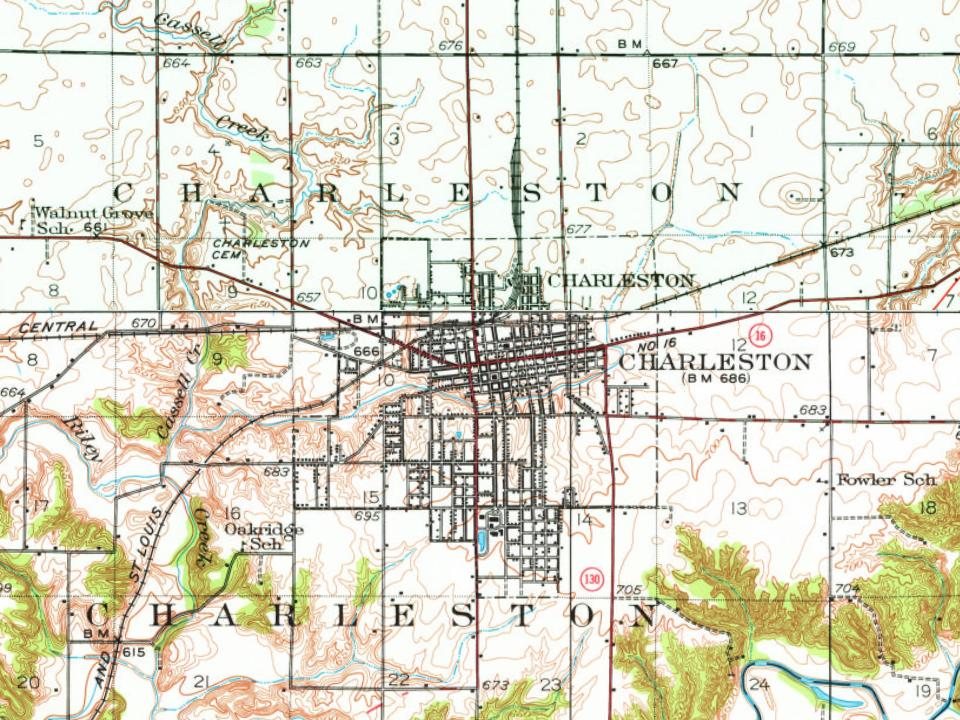
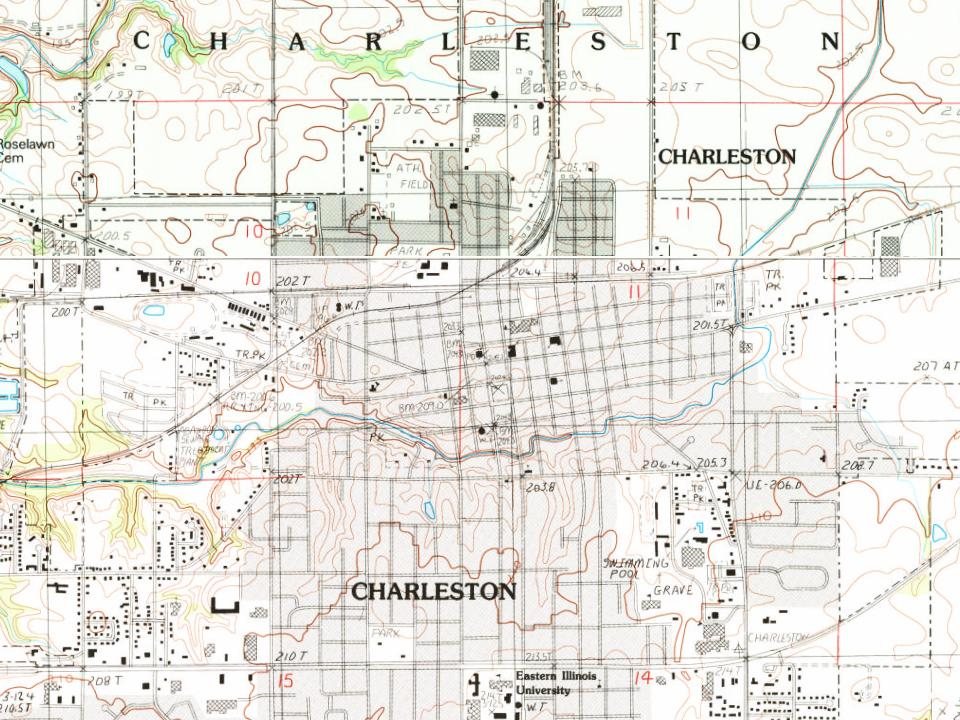
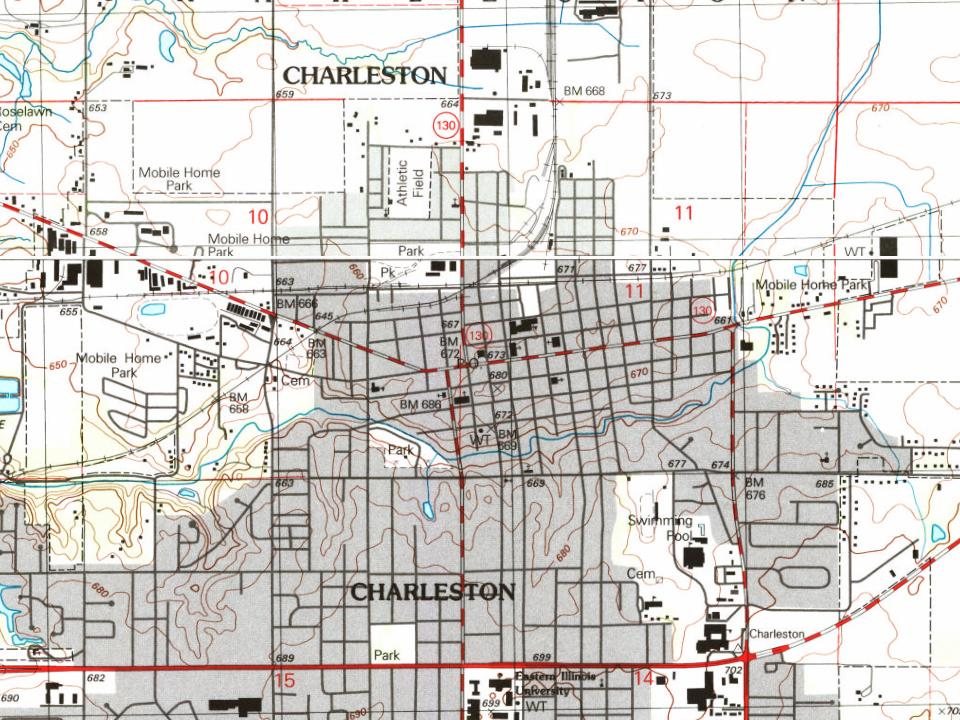
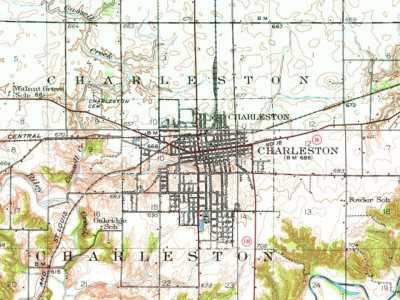
Fire insurance maps drew every building, what it was made of and what it was used for, so insurers could price the risk of fire. Pick a year, then a sheet.
Native Americans lived in the Charleston area for thousands of years before the first European settlers arrived. With the great tallgrass prairie to the west, beech-maple forests to the east, and the Embarras River and Wabash Rivers between, the Charleston area provided semi-nomadic Indians access to a variety of resources. Indians may have deliberately set the "wildfires" which maintained the local mosaic of prairie and oak–hickory forest. Streams with names such as 'Indian Creek' and 'Kickapoo Creek' mark the sites of former Indian settlements. One village is said to have been located south of Fox Ridge State Park near a deposit of flint.
Passages that mention Charleston, cut from the printed page as they were published.
The history of Coles county, Illinois..1879 · page 310Read the page →
Read the text
The first house was built in Charleston by William Collom, who is termed the first actual settler in its corporate limits. It was a small log house of one room, and in this spacious building he kept the first tavern in the future city of Charleston, then an incipient village. Such a diminutive hotel would scarcely supply the demand of the wayfaring men of Charleston now. The city is well furnished with excellent hotels. The Charleston House, with its genial landlord, Dan Van Sickle, is a model in its way, and is a cheerful home to the weary, wayworn traveler. Dan is an old commercial traveler, and, as such,
Text read by machine from the scan; it may contain errors.
The history of Coles county, Illinois..1879 · page 304Read the page →
Read the text
The first schoolhouse in the township was built near what is called the Decker Springs, about a mile north of the city of Charleston. It was the type of the pioneer schoolhouse, which has already been described in these pages, and was built in 1828. John McCombs taught the first school in this humble temple of learning. A Mr. Collom, brother of William Collom, who built the first house and kept the first tavern in Charleston, was another of the early school teachers of this township. It would be an interesting history to trace the schools of the town from this puny commencement to their present state of
Text read by machine from the scan; it may contain errors.
The History of Coles County, Illinois ... map of Coles County1879 · page 468Read the page →
Read the text
A few years after the close of the late war, the people of this township, like many others, concluded a railroad, running north and south through their territory, would be a good thing in many ways, and, finding a desire existing in Charleston for a northern and southern outlet, concluded to levy bonds to aid in its construction. Charleston had a watchful eye on the county seat, which Mattoon was zealously trying to get, and saw in the proposed road a fine opportunity to secure that necessary part of her existence. The bonds were voted for, to run a series of years, to bear a good rate of interest, and for them the
Text read by machine from the scan; it may contain errors.
The History of Coles County, Illinois ... map of Coles County1879 · page 553Read the page →
Read the text
ter from Terre Haute to Pana, which position he held from 1855 to 1860 or 1861 ; on leaving the road, he next operated the Messer House, in Charleston, till 1867; from 1867 to 1869, he owned and operated a planing-mill, at Charleston; in 1869, he leased the Essex House, at Mattoon, and has operated it for the past
Text read by machine from the scan; it may contain errors.
Scans and text from the Internet Archive. Books published in 1930 or earlier, which are in the public domain.
By decade
Charleston, decade by decade
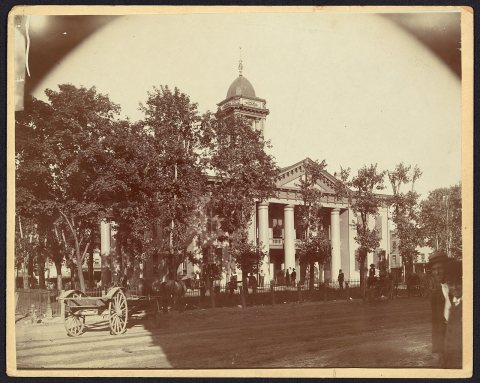
4 decades in the archive, from the 1850s to the 1900s. Scroll each row; tap a photo for its story.
Nothing in the archives for these yearsWeddings on Main Street, storms, parades, school pictures, the old store. If it’s in your family album, it belongs here.
In 1831, according to Wikidata and Wikipedia’s history of the town. Charleston’s post office opened in 1843, and the census of 1850 counted 849 people here.
How does Charleston rank for history?
Charleston is more historic than 83% of U.S. towns, #157 of 768 in Illinois. The History grade combines the town’s founding era, the share of homes built before 1940 and its National Register listings. It’s a character grade, so it isn’t part of the overall grade. How it works.
What is on the National Register in Charleston?
7 listings: 6 buildings, among them the Coles County Courthouse (listed 1978, the first), and 1 structure.
How old are the homes in Charleston?
17% of Charleston’s homes were built before 1940 (Census estimate, ±3.6 points), against a typical 11% for an Illinois town; the median home was built in 1977.
Founding dates: Wikidata, Wikipedia, the U.S. post office records of Blevins & Helbock (CC0) and the Census. Homes by year built: Census ACS 2020–24. National Register of Historic Places: National Park Service (list of May 22, 2026). Old photos, postcards and papers: Wikimedia Commons, the Library of Congress and other public archives, credited on each item’s page. Maps: U.S. Geological Survey historical topographic maps (via Esri) and Sanborn fire-insurance maps (Library of Congress). History text and census tables: Wikipedia (CC BY-SA 4.0). Places that used to be: USGS Geographic Names Information System (2021).
From Wikimedia Commons (4), the Library of Congress (2), the National Register of Historic Places (7), Wikipedia, Wikidata and Wikipedia for famous people, U.S. Geological Survey historical maps, U.S. Census counts (via Wikipedia), the US Post Offices dataset (Blevins & Helbock), the USGS Geographic Names Information System, Sanborn fire insurance maps (Library of Congress) and old county and town histories (Internet Archive). Archive images are copied here with their credits and licenses, shown on each photo’s page. Refreshed monthly.

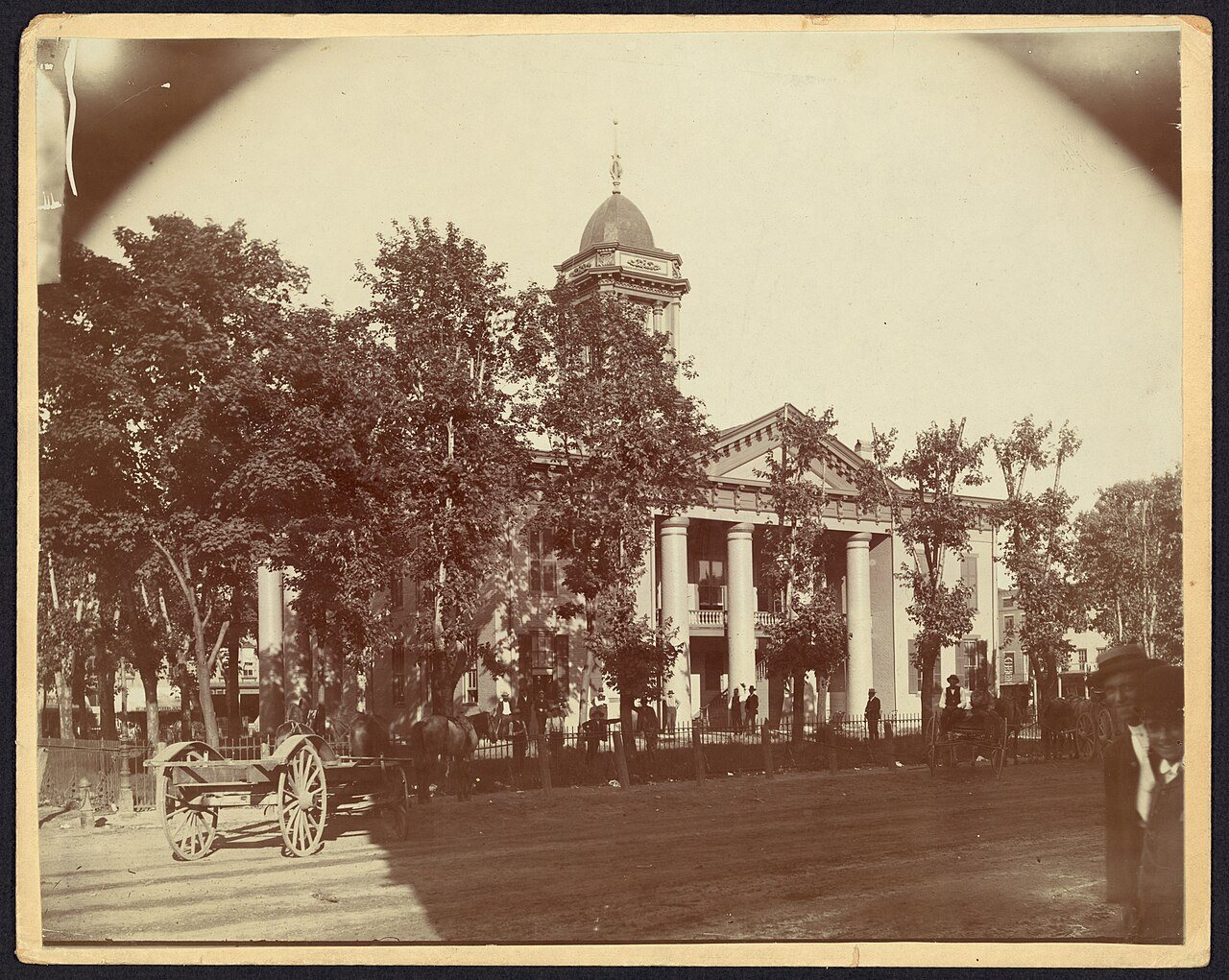






 1860
 1880