King's Inns (college) · Photo: William Murphy from Dublin, Ireland · CC BY-SA 2.0
233buildings on the National Inventory
History of Phibsborough · National Inventory of Architectural Heritage
Old homes in Phibsborough: 44% built before 1919
Against 3.4% in the typical town, Phibsborough has 13 times the share. The National Inventory of Architectural Heritage records 233 buildings in Phibsborough, 8 of them of national importance. The earliest building recorded goes back to 1700. The Sites and Monuments Record adds 25 archaeological sites inside the town.
NIAH National or International, and national monuments
Archaeological sites
25
Sites and Monuments Record
Oldest building
1700
the first date on its record
Homes built before 1919
44%
typical town: 3.4%
In pictures
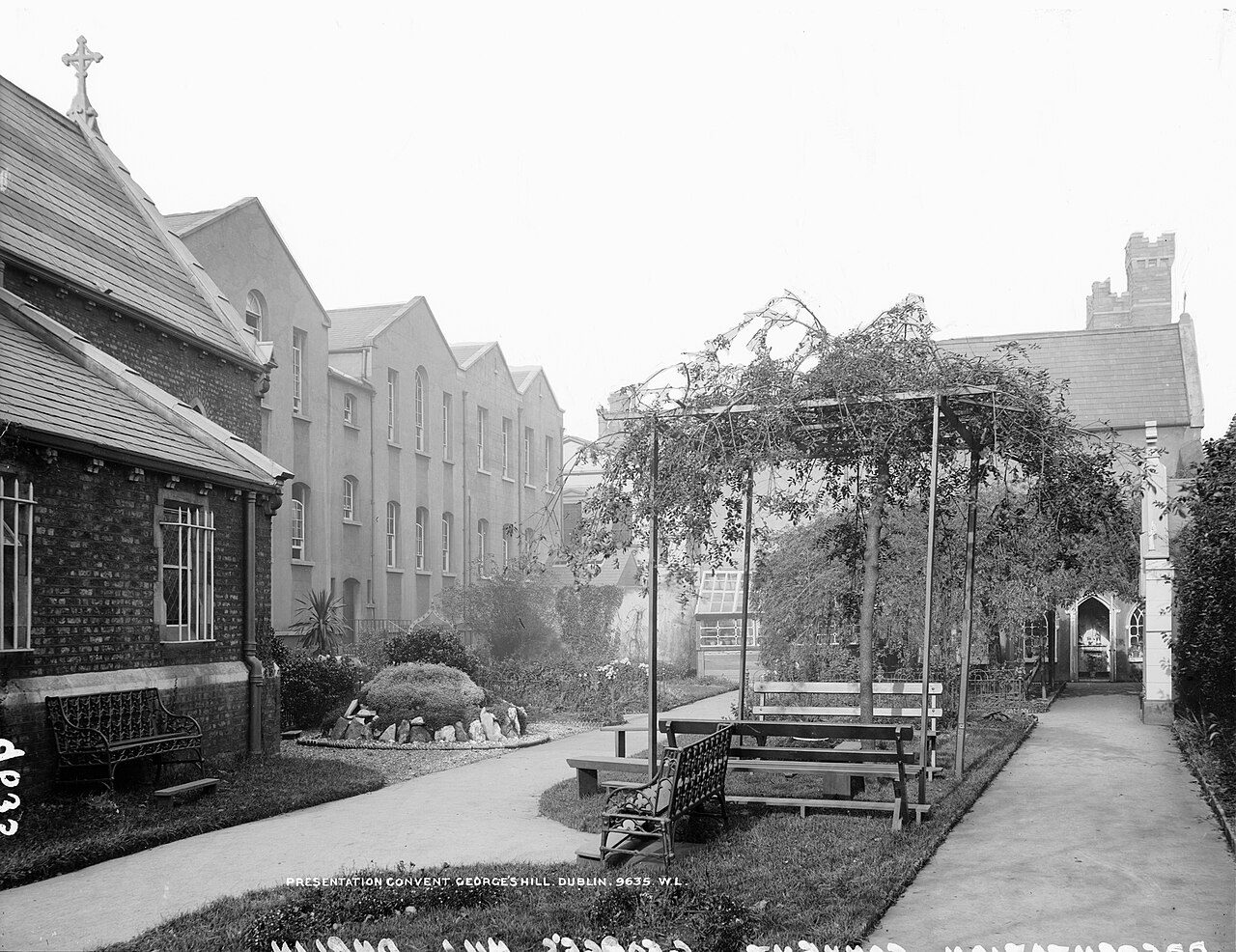
Historic Phibsborough: 14 photos, 5 old views
Among Phibsborough’s top-rated places, 2 are pictured. Pictures exist for 14 of the places Phibsborough has on the record. The oldest view of Phibsborough dates from 1900, the latest old one from 1920.
Photos from Wikimedia Commons, copied to our own server, each credited to its photographer with its licence; names open the place’s page. Tap a photo to step through them full screen.
Through time
Phibsborough from 1900 to 1920
5 old photographs, in date order. All made before 1950.
1890190019101920193019401950VictorianEdwardianRevolutionFree State
From Wikimedia Commons, copied to our own server: public domain, or from the National Library of Ireland’s collections (Lawrence, Poole, Eason and others) with no known copyright restrictions. Each credit opens the image’s page.
The map
Where Phibsborough’s history is
Every building and site on the record inside the town, by its rating.
National and InternationalRegional and other sites400 m from Blessington House
6 of 8within 400 m of Blessington House, the heart of the town’s history
Hover a dot for its name; tap one to open its page.
The 233, by rating
8 National and International225 Regional and other sites
The National Inventory of Architectural Heritage is the State’s survey of buildings from 1700 to today, county by county; each record gives a rating, dates, a type and an appraisal. Being on it is not legal protection: that is each council’s Record of Protected Structures.
Points from the National Inventory of Architectural Heritage and the Sites and Monuments Record, Department of Housing, Local Government and Heritage (CC BY 4.0).
National and International
8 places of national importance in Phibsborough
Buildings the National Inventory rates National or International: of significance across Ireland or beyond. Each one opens its own page.
Streets with three or more buildings on the record, by the address it gives.
Blessington Street36 on the record
Eccles Street31 on the record · 1 of national importance
Dorset Street20 on the record
Mountjoy Street17 on the record
Henrietta Street15 on the record · 6 of national importance
Synnott Place12 on the record
Nelson Street9 on the record
North Circular Road8 on the record
Bolton Street7 on the record
Inns Quay7 on the record · 1 of national importance
Chancery Street6 on the record
Dominick Street6 on the record
Of the 233 records, 225 give a street address.
What’s recorded
In Phibsborough, homes lead the record (77%)
The highest-rated include Four Courts and Blessington House. In Phibsborough, churches and chapels weigh less than nationally: 3%, against 7%. 16 records make public buildings the second group.
Homes180
Public buildings16
Walls, gates and bridges9
Churches and chapels7
Inns, shops and warehouses4
Mills, stations and works3
Memorials and tombs2
Street furniture1
Other buildings11
Types as the National Inventory records them, grouped; a building keeps the type it was built as.
How old
Most of Phibsborough’s dated buildings come from the 16th to 18th centuries
Each building by the first date on its record.
1500–1799 three centuries124
19th century 1800–189994
1900 and later to today15
124 of the 233 dated ones were built before 1800. The oldest is Orla Hanley Architect, from 1700.
Archaeology and around
Archaeology in Phibsborough
The Sites and Monuments Record lists every known archaeological site; most are field monuments with little to see. By kind:
25 archaeological sites inside the town
Sites on the Record of Monuments and Places, the statutory list drawn from this record, are protected by law: anyone planning work at or near one must give the National Monuments Service two months’ notice.
Little new building in Phibsborough: 3% of homes date from 2011 on, against 5.8%
Against a typical 24%, only 13% of Phibsborough’s homes went up from 1946 to 1980. Phibsborough added a lot between the wars: 12% of its homes, the typical town 3.9%. Homes dated in the 2000s are scarcer in Phibsborough than in most towns: 11%, against 25%.
44%
Before 1919
12%
1919–45
13%
1946–80
17%
1981–2000
11%
2001–10
3%
Since 2011
PhibsboroughTypical town
Census 2022, households by the year their home was built (CSO, Small Area Population Statistics, CC BY 4.0); the typical town is the middle Irish town of 2,500 or more.
Born here
4 notable people born in Phibsborough before 1900
From Thomas Southerne (1660) to Bríd Dixon (1893): their lives on one timeline, earliest first.
Thomas Southerne
Nellie Gifford
Harry Boland
Bríd Dixon
1650170017501800185019001950
Harry Boland1887–1922 · Irish republican and politician
TS
Thomas Southerne1660–1746 · Irish dramatist
Nellie Gifford1880–1971 · An Irish republican activist and nationalist
BD
Bríd Dixon1893– · Irish nationalist
Everyone born in Phibsborough → Birthplaces from Wikidata, each checked against the person’s English Wikipedia article; portraits from Wikimedia Commons.
Towns its size
Phibsborough has the 3rd most of 16 towns its size
Towns of 11,000 to 12,300 residents, by buildings on the record.
Old houses are part of Phibsborough’s character: 44% of its homes were built before 1919, against 3.4% in the typical town. In all there are 233 places on the record, 8 of them in the top tier, including Four Courts. Per resident, it has more recorded buildings than 86% of Irish towns of 2,500 or more. Its places of national importance cluster together: 6 of them stand within 400 m of Blessington House.
Only 2 of the 16 towns nearest its size have more recorded buildings. Blessington Street alone has 36 places on the record. Most entries on the list, 77%, are homes.
How to read these numbers
What this data can and can’t tell you
•
The National Inventory. The State’s survey of post-1700 buildings, made county by county since 1990 (NIAH); a few records are older. It records; it does not protect.
•
Ratings. International and National: of significance across Ireland or beyond. Regional: in its region. Local and record-only buildings get no page here.
•
Archaeology. The Sites and Monuments Record (National Monuments Service) lists known archaeological sites; the national monuments to visit and the sites with an encyclopedia article get pages here.
•
Protection. Both registers are surveys, not protection: a building is protected by its council’s Record of Protected Structures, and no national open list joins the 31 councils’ records.
•
The grade. Ireland’s History grade is not built yet: the page describes, and gives no grade.
Questions about Phibsborough’s history
How many historic buildings are recorded in Phibsborough?
233 buildings on the National Inventory, 8 of them of national importance, from the National Inventory of Architectural Heritage.
Which places in Phibsborough are of national importance?
Four Courts, Blessington House, James Bryson House, King's Inns (college), Kings’ Inns Library and Mater Hospital, and 2 more.
What is the oldest building in Phibsborough?
House, 18 Ormond Quay Upper, Arran Street East, Dublin 7: the first date on its record is 1700.
Are there archaeological sites in Phibsborough?
Yes: the Sites and Monuments Record lists 25 archaeological sites inside Phibsborough.
How old are the homes in Phibsborough?
44% of its homes were built before 1919, against 3.4% in the typical town.
Are the buildings on this page protected?
Being on the National Inventory or the Sites and Monuments Record is a record, not protection by itself: buildings are protected by their council’s Record of Protected Structures, which each council keeps and no national open list gathers, so this page can’t say which are on it.
This page describes its history; it gives no grade.
Source: National Inventory of Architectural Heritage and Sites and Monuments Record, Department of Housing, Local Government and Heritage (CC BY 4.0); Wikidata (CC0).
Sources: National Inventory of Architectural Heritage (buildingsofireland.ie) · Sites and Monuments Record and the National Monuments Service’s monuments to visit · CSO Census 2022 (homes by the year built) · Photos: Wikimedia Commons, including the National Library of Ireland’s collections, each credited with its licence and copied to our own server · Wikidata and English Wikipedia for people born here · Wikidata (CC0) for other names and articles. Under Creative Commons Attribution 4.0 (CC BY 4.0).
Contains Central Statistics Office (CSO) data, Census 2022, and Tailte Éireann boundaries (CSO Urban Areas, Small Areas, local electoral areas, constituencies), under Creative Commons Attribution 4.0 (CC BY 4.0).
 Int
 King's Inns (college) · Photo: William Murphy from Dublin, Ireland · CC BY-SA 2.0
 Four CourtsInternational rating (NIAH)
 House, 14 Henrietta Street, DublinRegional rating (NIAH)
 Green Street CourthouseRegional rating (NIAH)
 HendronsRegional rating (NIAH)
 2nd Lock, Royal CanalRegional rating (NIAH)+9See all photos
 c. 1900
 1900s
 1910s
 c. 1916
 c. 1920
 Nat

