Nichols was named by the early settler Benjamin F. Nichols in honor of his father, Samuel Nichols, who was instrumental in bringing the railroad to the area.
Nichols was established in the early 1870s in an area of Section 15 of Pike Township known locally as Elephant Swamp. The community was intended as a rail town for the shipment of agriculture products and furs to distant markets, and had been constructed on land donated to the rail company by Samuel and Benjamin Nichols with the intention of establishing a rail depot. The lots for the future community were surveyed by county surveyor George Bumgardner in June 1871. Two rail lines would eventually run through the town – the Muscatine & Western Railroad and the Burlington, Cedar Rapids and Northern Railroad – which were both branches of the Rock Island system. The first rail line and rail depot was constructed in the early 1870s. Dr. S. H. Smith constructed the first building on the future site of Nichols in 1871, which Mr Smith used as both a drug store and as a home. Construction on …
National Park Service, National Register of Historic Places. Photos from Wikimedia Commons, credited on each place’s page.
From the old history books
What they wrote about Nichols in 1879
Passages that mention Nichols, cut from the printed page as they were published.
The History of Muscatine county, Iowa, containing a history of the county, its cities, towns, &c. ..1879 · page 580Read the page →
Read the text
This town was so named by Benjamin F. Nichols, in honor of his father, Samuel Nichols, who subscribed liberally for stock to the Burlington, Cedar Rapids & Northern Railroad Company, and donated to them the right of way through his land, in consideration that they build at this point a depot on land also presented by him for that purpose. It is situated in the center of what was once known as Elephant Swamp. To speak more properly and be explicit, it is located in Section 15 of Pike Township, on the line of the Burlington, Cedar Rapids & Northern Railroad and a branch thereof, called the Muscatine &
Text read by machine from the scan; it may contain errors.
The History of Muscatine county, Iowa, containing a history of the county, its cities, towns, &c. ..1879 · page 582Read the page →
Read the text
In the fall of 1838, Samuel Nichols and H. H. Winchester came from Ohio to what is now Pike Township, on a prospecting tour, and bought a claim of a party named Carother, who, with his fjimily, consisting of nine persons, was undoubtedly the first settler in Pike Township, and built there the first log cabin, which still stands, in Fred Hetchtner's field, about two and a half miles east of Nichols. After entering one-half section of their claim, located in the Dubuque District, and which came into market in 1838, our two prospectors returned to Ohio.
Text read by machine from the scan; it may contain errors.
The History of Muscatine county, Iowa1879 · page 582Read the page →
Read the text
In the fall of 1838, Samuel Nichols and H. H. Winchester came from Ohio to what is now Pike Township, on a prospecting tour, and bought a claim of a party named Carother, who, with his family, consisting of nine persons, was undoubtedly the first settler in Pike Township, and built there the first log cabin, which still stands, in Fred Hetchtner's field, about two and a half miles east of Nichols. After entering one-half section of their claim, located in the Dubuque District, and which came into market in 1838, our two prospectors returned to Ohio.
Text read by machine from the scan; it may contain errors.
The History of Muscatine county, Iowa1879 · page 581Read the page →
Read the text
Nichols belongs to Pike Township School District No. 6. The present fine two-story brick schoolhouse was built in the summer of 1872. The lower story was occupied the following winter as a school, which was taught by Miss Mollie Billick. The graded system was introduced in the fall and winter of 1875-76, and has proven both satisfactory and successful. Since its introduction, both stories of the school-building have been used. The present attendance averages seventy-four scholars. The present teachers are Franklin Gilbert and Mary E. Gilbert, the farmer's wife. The first log schoolhouse in Pike Town-
Text read by machine from the scan; it may contain errors.
Scans and text from the Internet Archive. Books published in 1930 or earlier, which are in the public domain.
Timeline
Nichols, 1870 to 1920
Woven from the archive, old maps, post office records, the National Register and the people born here.
Another post office, Nichol Station, opened and closed inside today’s town.
Nichol Station
1870–1883
Nichol
1883–today
18701950today
Gone or out of use
Nicholslocale
US Post Offices dataset (Blevins & Helbock, CC0). Places and cemeteries from the USGS Geographic Names Information System (2021).
Questions about Nichols’ history
What is on the National Register in Nichols?
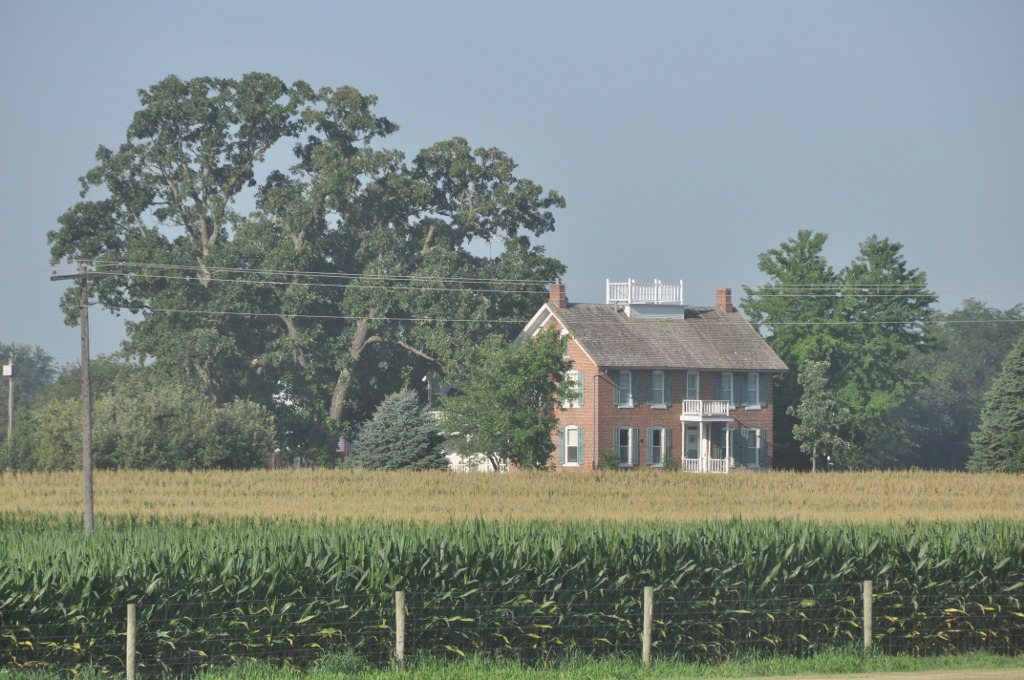
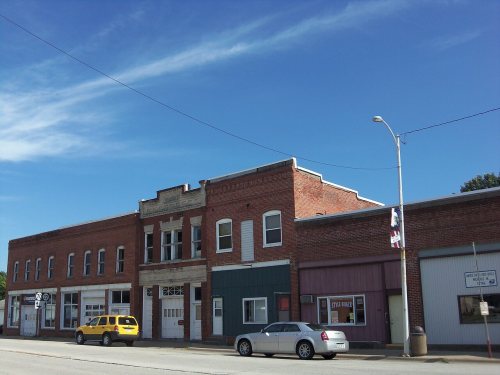
4 listings: 3 buildings, among them the Samuel Nichols House (listed 1978, the first), and 1 historic district, the Ijem Avenue Commercial Historic District, with 8 contributing buildings. 11 historic buildings in all.
Founding dates: Wikidata, Wikipedia, the U.S. post office records of Blevins & Helbock (CC0) and the Census. Homes by year built: Census ACS 2020–24. National Register of Historic Places: National Park Service (list of May 22, 2026). Old photos, postcards and papers: Wikimedia Commons, the Library of Congress and other public archives, credited on each item’s page. Maps: U.S. Geological Survey historical topographic maps (via Esri) and Sanborn fire-insurance maps (Library of Congress). History text and census tables: Wikipedia (CC BY-SA 4.0). Places that used to be: USGS Geographic Names Information System (2021). How TownRatings grades history →
From Wikimedia Commons (3), Wikidata (2), the National Register of Historic Places (4), Wikipedia, the US Post Offices dataset (Blevins & Helbock), the USGS Geographic Names Information System and old county and town histories (Internet Archive). Archive images are copied here with their credits and licenses, shown on each photo’s page. Refreshed monthly.




 2021
 2013
 2012