Fairfield’s post office opened in 1839, and 30% of its homes were built before 1940
More historic than 92% of U.S. towns · #20 of 140 in Iowa. What drives it
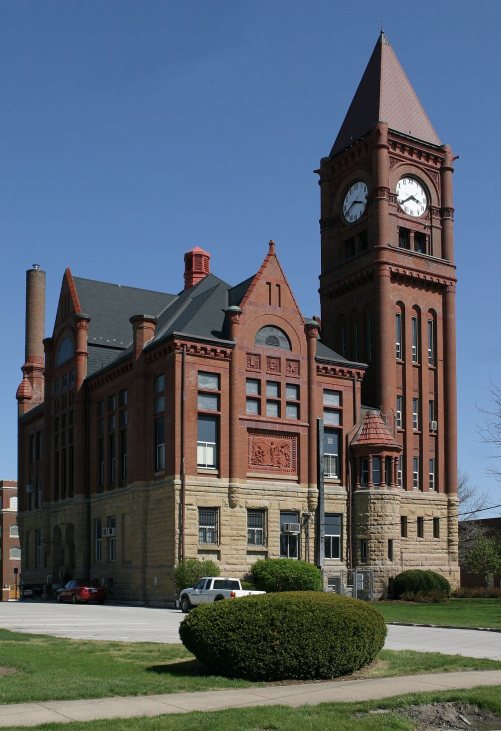
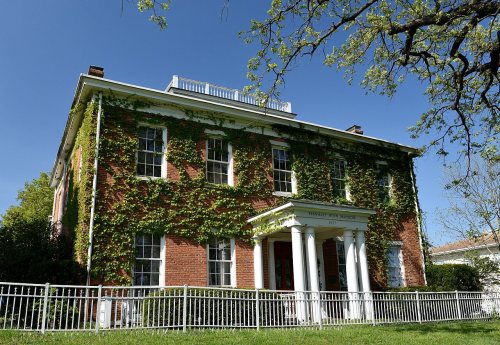
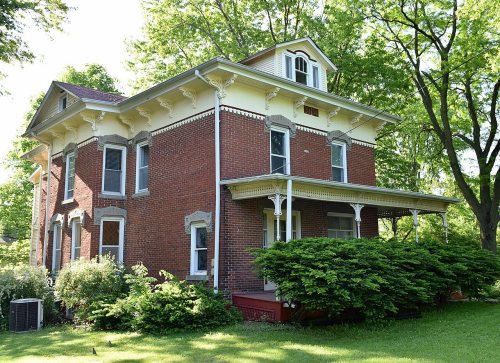
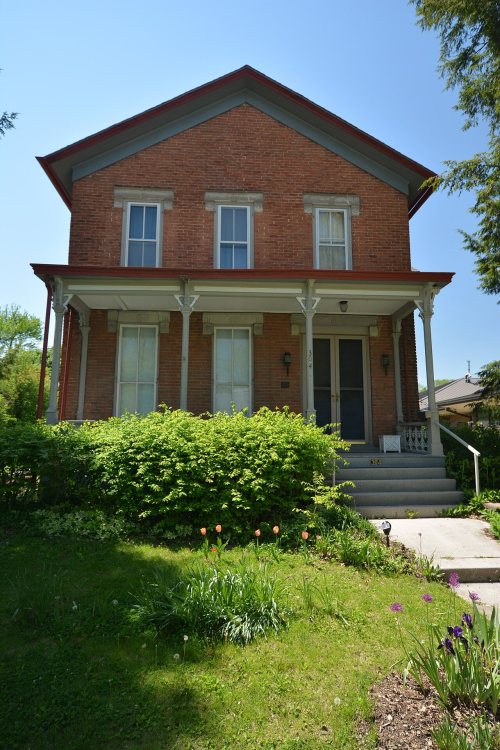
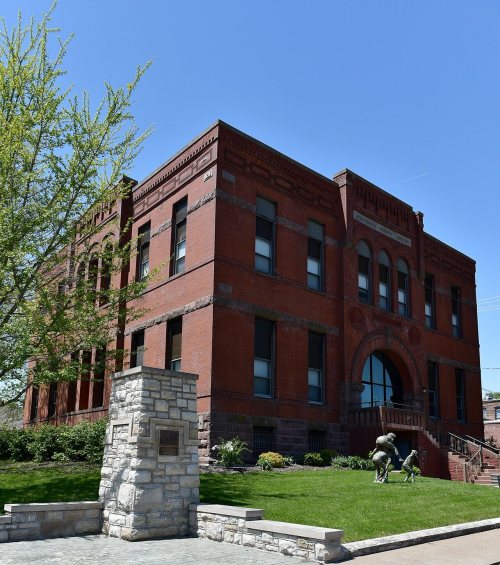
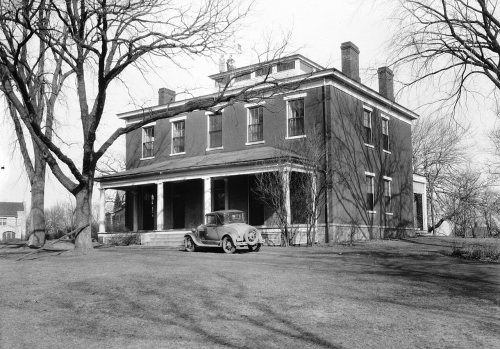
25 places in town are on the National Register, among them three historic districts with 10 buildings between them. Below: maps from 1885 on and the census since 1850.
The Fairfield post office opened in 1839, the earliest record of the town by name. Another post office, Jefferson (1839), opened inside today’s city and later closed.
First census: 909 in 18502020 census: 9,416187 years
How historic is Fairfield?
A
More historic than 92% of U.S. towns, on its age, its old homes and the National Register.
Founding year: the first Fairfield post office (Blevins & Helbock, CC0).The full story ↓
History grade
What drives Fairfield’s History grade
On its age, its old homes and the National Register, Fairfield is more historic than 92% of U.S. towns, #20 of 140 in Iowa. All 3 inputs are above most U.S. towns; its share of homes from before 1940 ranks highest and its age lowest.
A
HistoryA character grade: shown, never part of Fairfield’s overall grade.
Iowa towns list more on the Register than most of the country (a typical Iowa town has 9.1 per 10,000 residents, the U.S. 2.4), so Fairfield’s 46.5 sits above most of its state (74% of Iowa towns have fewer) while its 44 historic buildings outnumber those of 84% of U.S. towns.
How sure. Graded on any two of the three inputs instead, the letter would range from A− to A. The pre-1940 share is a Census survey estimate (±5.1 points). The founding year is the first post office, not a stated founding date.
Founding year: the first post office (other dates in Quick answers). Homes: Census ACS 2020–24. National Register: National Park Service, May 2026 list; each listing counted once (boundary changes and added documentation belong to their listing), and a historic district counts its contributing buildings. How TownRatings grades history →
What stands out about Fairfield’s past
Read from the archive, the National Register and the record. The page puts what stands out first.
Fire insurance maps drew every building, what it was made of and what it was used for, so insurers could price the risk of fire. Pick a year, then a sheet.
The area known as Jefferson County was first settled in 1836 and became Jefferson County in 1839, with the new community of Fairfield as the county seat. The name was suggested by Nancy Bonnifield, one of the settlers, because it aptly described the fair fields of the area. But author Susan Welty suggests it was also a play of words on the woman's own name (bonny field). By 1840, Fairfield had a population of 110 and grew to 650 in 1847. The city was the site of the first and second Iowa State Fairs.
Passages that mention Fairfield, cut from the printed page as they were published.
History of Jefferson County, Iowa1914 · page 379Read the page →
Read the text
In September, 1869, it was suggested that from Fort Madison through Salem and Glasgow to Fairfield was a desirable location for a railroad. In lieu of this the Keokuk and Minnesota Railroad Company sought encouragement and material aid as an inducement to come to these places. At a conference in Fairfield, on January 26, 1870, when planning for a public presentation at night of the advantages to follow the carrying out of the undertaking, it was stated that the colored people had engaged the hall for a ball. "That is always the way," exclaimed Edw. Campbell, Jr. 'The nigger never fails to turn up at the wrong
Text read by machine from the scan; it may contain errors.
History of Jefferson County, Iowa1914 · page 196Read the page →
Read the text
schoolhouse on." This expression bears witness to thoughtfulness for the future rather than to immediate purposeful action. The location became definite when, on August 21, 1843, lot No. 5 in block No. 30, in the New Plat, was donated to the trustees of the Town of Fairfield and their successors in office "especially for school purposes." Here a schoolhouse was finally built. To follow further the sales, forfeitures, resales and exchanges of lots would be a difficult and unprofitable task. With change of names and dates it would be largely a repetition of the story already told. Some litigation arose over vio-
Text read by machine from the scan; it may contain errors.
Scans and text from the Internet Archive. Books published in 1930 or earlier, which are in the public domain.
Timeline
Fairfield, 1839 to 1980
Woven from the archive, old maps, post office records, the National Register and the people born here.
Lost post offices, places now gone and burying grounds
Fairfield’s post office has been open since 1839. Another post office, Jefferson, opened and closed inside today’s town.
Fairfield
1839–today
Jefferson
1839–1839
18301930today
Gone or out of use
Elm Grove SchoolschoolLincoln Elementary SchoolschoolYagyavalkya Learning Centerbuilding
2cemeteries and burying grounds inside Fairfield
EvergreenMemorial Lawn
US Post Offices dataset (Blevins & Helbock, CC0). Places and cemeteries from the USGS Geographic Names Information System (2021).
Questions about Fairfield’s history
What year was Fairfield founded?
The Fairfield post office opened in 1839, the earliest record of the town by name (U.S. post office records).
How does Fairfield rank for history?
Fairfield is more historic than 92% of U.S. towns, #20 of 140 in Iowa. The History grade combines the town’s founding era, the share of homes built before 1940 and its National Register listings. It’s a character grade, so it isn’t part of the overall grade. How it works.
What is on the National Register in Fairfield?
25 listings: 21 buildings, among them the James A. Beck House (listed 1978, the first), 3 historic districts, the Architecture of Henry K. Holsman Historic Campus District, the Old Settlers' Association Park and Rhodham Bonnifield House and the Evergreen Ridge Stock Farm Historic District, with 10 contributing buildings, and 1 object. 44 historic buildings in all.
How old are the homes in Fairfield?
30% of Fairfield’s homes were built before 1940 (Census estimate, ±5.1 points), against a typical 22% for an Iowa town; the median home was built in 1964.
Founding dates: Wikidata, Wikipedia, the U.S. post office records of Blevins & Helbock (CC0) and the Census. Homes by year built: Census ACS 2020–24. National Register of Historic Places: National Park Service (list of May 22, 2026). Old photos, postcards and papers: Wikimedia Commons, the Library of Congress and other public archives, credited on each item’s page. Maps: U.S. Geological Survey historical topographic maps (via Esri) and Sanborn fire-insurance maps (Library of Congress). History text and census tables: Wikipedia (CC BY-SA 4.0). Places that used to be: USGS Geographic Names Information System (2021).
From Wikidata (6), the National Register of Historic Places (25), Wikipedia, Wikidata and Wikipedia for famous people, U.S. Geological Survey historical maps, U.S. Census counts (via Wikipedia), the US Post Offices dataset (Blevins & Helbock), the USGS Geographic Names Information System, Sanborn fire insurance maps (Library of Congress) and old county and town histories (Internet Archive). Archive images are copied here with their credits and licenses, shown on each photo’s page. Refreshed monthly.