Silver Springs’ post office opened in 1852, and 1 of its places is on the National Register
More historic than 34% of U.S. towns · #140 of 638 in Florida. What drives it
Most of Silver Springs was built recently: 0.0% of its homes predate 1940 and the median home dates from 1984. 1 place in town is on the National Register, among them a historic district with 6 buildings. Below: 6 old photos and papers and maps from 1895 on.
Founding year: the first Silver Springs post office (Blevins & Helbock, CC0).The full story ↓
History grade
What drives Silver Springs’ History grade
On its age, its old homes and the National Register, Silver Springs is more historic than 34% of U.S. towns, #140 of 638 in Florida. Its National Register listings hold the grade up; its share of homes from before 1940 pulls it down.
C
HistoryA character grade: shown, never part of Silver Springs’ overall grade.
Few Florida towns list much on the Register (a typical Florida town has 0.0 per 10,000 residents, the U.S. 2.4), so Silver Springs’ 22.1 sits above most of its state (88% of Florida towns have fewer) while its 6 historic buildings outnumber those of 72% of U.S. towns.
How sure. Graded on any two of the three inputs instead, the letter would range from D to B. The pre-1940 share (±0.9 points) is firm at this size. The founding year is the first post office, not a stated founding date.
Founding year: the first post office (other dates in Quick answers). Homes: Census ACS 2020–24. National Register: National Park Service, May 2026 list; each listing counted once (boundary changes and added documentation belong to their listing), and a historic district counts its contributing buildings. How TownRatings grades history →
What stands out about Silver Springs’ past
Read from the archive, the National Register and the record. The page puts what stands out first.
Every edition of the U.S. Geological Survey’s map of Silver Springs. Tap a year, or press play to watch the town change.
1895Ocala sheet · 1:62,500
U.S. Geological Survey historical topographic maps (public domain), via Esri’s collection of the scans. The red ring marks the center of Silver Springs.
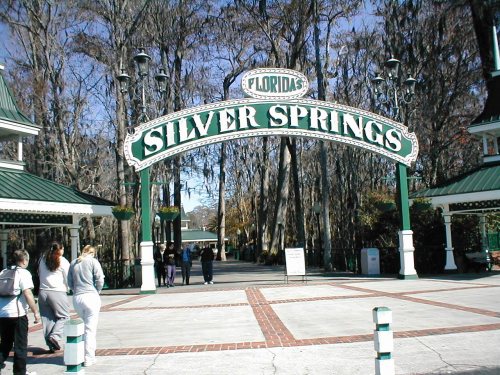
Since the mid-19th century, the natural environment of Silver Springs has attracted visitors from throughout the United States. The glass-bottom boat was invented and tours of the springs began in the late 1870s. In the 1920s, W. Carl Ray and W.M. "Shorty" Davidson, after leasing the land from Ed Carmichael (upon whose death the springs were left to the University of Florida), developed the land around the headwaters of the Silver River into an attraction that eventually became known as Silver Springs Nature Theme Park. The attraction featured native animal exhibits, amusement rides, and 30 or 90-minute glass-bottom boat tours of the springs. The 1934 'Princess Donna' is the oldest and only remaining operational boat from this bygone era. The "Princess Donna' currently operates on the Rainbow River in Dunnellon, Florida. In 2013, the State of Florida took over operations of Silver S…
Nothing in the archives for these yearsWeddings on Main Street, storms, parades, school pictures, the old store. If it’s in your family album, it belongs here.
The Silver Springs post office opened in 1852, the earliest record of the town by name (U.S. post office records).
How does Silver Springs rank for history?
Silver Springs is more historic than 34% of U.S. towns, #140 of 638 in Florida. The History grade combines the town’s founding era, the share of homes built before 1940 and its National Register listings. It’s a character grade, so it isn’t part of the overall grade. How it works.
What is on the National Register in Silver Springs?
One place: the Silver Springs (listed 2019).
How old are the homes in Silver Springs?
0.0% of Silver Springs’ homes were built before 1940 (Census estimate), against a typical 0.6% for a Florida town; the median home was built in 1984.
Founding dates: Wikidata, Wikipedia, the U.S. post office records of Blevins & Helbock (CC0) and the Census. Homes by year built: Census ACS 2020–24. National Register of Historic Places: National Park Service (list of May 22, 2026). Old photos, postcards and papers: Wikimedia Commons, the Library of Congress and other public archives, credited on each item’s page. Maps: U.S. Geological Survey historical topographic maps (via Esri) and Sanborn fire-insurance maps (Library of Congress). History text and census tables: Wikipedia (CC BY-SA 4.0). Places that used to be: USGS Geographic Names Information System (2021).
From Wikimedia Commons (6), the National Register of Historic Places (1), Wikipedia, U.S. Geological Survey historical maps, the US Post Offices dataset (Blevins & Helbock) and the USGS Geographic Names Information System. Archive images are copied here with their credits and licenses, shown on each photo’s page. Refreshed monthly.




 1886
 1886
 1887


