Guest, Sign inJoin

Post to Miami

We’ll email a one-tap link to publish your post. No password, and nothing is public until you click it.
Already a member? Sign in
A−History
History · Miami

Miami dates to 1825, and 73 of its places are on the National Register

More historic than 81% of U.S. towns · #17 of 638 in Florida. What drives it

Most of Miami was built recently: 8% of its homes predate 1940 and the median home dates from 1979. 73 places in town are on the National Register, among them 4 National Historic Landmarks and seven historic districts with 444 buildings between them. Below: 7 old photos and papers, maps from 1950 on, and the census since 1900.

1825founded
73on the National Register
8%homes built before 1940
7old photos & papers
25famous people
From Miami’s archive · credits on each photo
Quick answers

How Miami began, and where its name came from

When was Miami founded?

1825

Miami dates its founding to 1825 (Wikidata). The census first counted it in 1900.

First census: 1,681 in 19002020 census: 442,241201 years

How did Miami get its name?

Miami was named after the Miami River, derived from Mayaimi, the historic name of Lake Okeechobee and the Native Americans who lived around it.

How historic is Miami?

A−

More historic than 81% of U.S. towns, on its age, its old homes and the National Register.

What drives the grade ↓
Founding year: Wikidata. First post office: 1873. Name: Wikipedia, licensed CC BY-SA 4.0.The full story ↓
History grade

What drives Miami’s History grade

On its age, its old homes and the National Register, Miami is more historic than 81% of U.S. towns, #17 of 638 in Florida. Its National Register listings hold the grade up; its share of homes from before 1940 pulls it down.

A−
HistoryA character grade: shown, never part of Miami’s overall grade.
All U.S. towns we grade (21,289)Ahead of 81%
NewerOlder
Florida towns of 2,500+ (638)Ahead of 97%

Among the 400 U.S. cities of 100,000 or more, Miami ranks #117 on History.

Few Florida towns list much on the Register (a typical Florida town has 0.0 per 10,000 residents, the U.S. 2.4), so Miami’s 11.5 sits above most of its state (85% of Florida towns have fewer) while its 527 historic buildings outnumber those of 97% of U.S. towns.

NoteThe founding year comes from Wikidata alone; no second source gives 1825.
How sure. Graded on any two of the three inputs instead, the letter would range from B to A. The pre-1940 share (±0.5 points) is firm at this size.

Founding year: Wikidata (other dates in Quick answers). Homes: Census ACS 2020–24. National Register: National Park Service, May 2026 list; each listing counted once (boundary changes and added documentation belong to their listing), and a historic district counts its contributing buildings. How TownRatings grades history →

What stands out about Miami’s past

Read from the archive, the National Register and the record. The page puts what stands out first.

★ What stands out · On the National Register

73 listings protect 527 historic buildings

The country’s official list of buildings and places worth saving. 4 are National Historic Landmarks, the highest tier. Boundary changes and added documentation are counted with their listing.

places listed
73
National Historic Landmarks
4
Vizcaya
historic buildings protected
527
each building in a district counts
first listed
1970
Vizcaya
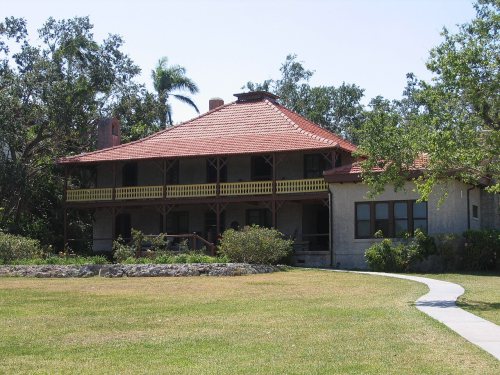
Ralph M. Munroe House, built 1973Ransom School "Pagoda"Gesu Church, built 1925Plymouth Congregational ChurchEl JardinHalissee HallMiami Women's ClubFirst Coconut Grove SchoolPan American Seaplane Base and Terminal BuildingDr. James M. Jackson OfficeWomen's Club of Coconut GroveMiami City Hospital, Building No. 1Trinity Episcopal Cathedral, built 1923J. W. Warner HouseUS Post Office and Courthouse, built 1933Fire Station No. 4Olympia Theater and Office Building, built 1926Congress BuildingMiami Edison Senior High SchoolAtlantic Gas StationMount Zion Baptist ChurchAlfred I. DuPont Building, built 1939Brickell MausoleumCentral Baptist ChurchCity National Bank BuildingCity of Miami CemeteryD. A. Dorsey HouseDade County Courthouse, built 1928Fire Station No. 2Hahn BuildingHuntington BuildingIngraham Building, built 1927Kentucky HomeLyric TheaterMartina ApartmentsMeyer-Kiser BuildingOld US Post Office and Courthouse, built 1914Palm CottageS & S Sandwich ShopSecurity BuildingShoreland ArcadeSouthside SchoolWalgreen Drug StoreVenetian CausewayMiami Senior High School, built 1903Greater Bethel AME ChurchSt. John's Baptist ChurchBay Shore Historic DistrictTrapp HomesteadSears, Roebuck and Company Department StoreHALF MOON (shipwreck)US Coast Guard Air Station Hangar at Dinner KeyDowntown Miami Historic DistrictLummus Park Historic DistrictWilliam Jennings Bryan HouseVagabond MotelAce TheatreCoconut Grove LibraryMiami Marine StadiumBacardi ComplexCoconut Grove PlayhouseMiami Black Police Precinct and CourthouseSouth River Drive Historic DistrictBarracks and Mess Building-US Coast Guard Air Station at Dinner KeyVirginia Key Beach ParkBarry University Historic DistrictFlori-Coral ApartmentsGrove Park Historic DistrictMasjid al-AnsarVizcaya, built 1914★Freedom Tower, built 1925★Miami Circle at Brickell Point Site, The★
BuildingsDistrictsSitesStructures★ landmark

Architectural styles listings

Mediterranean Revival12
Masonry Vernacular6
Neo-Classical6
Art Deco5
Commercial4
Moderne4
All 73 listings
El JardinBuilding · listed 1974Halissee HallBuilding · listed 1974Miami Women's ClubBuilding · listed 1974First Coconut Grove SchoolBuilding · listed 1975Pan American Seaplane Base and Terminal BuildingBuilding · listed 1975Dr. James M. Jackson OfficeBuilding · listed 1975Women's Club of Coconut GroveBuilding · listed 1975Miami City Hospital, Building No. 1Building · listed 1979Trinity Episcopal CathedralBuilding · listed 1980J. W. Warner HouseBuilding · listed 1983US Post Office and CourthouseBuilding · listed 1983Fire Station No. 4Building · listed 1984Olympia Theater and Office BuildingBuilding · listed 1984Congress BuildingBuilding · listed 1985Miami Edison Senior High SchoolBuilding · listed 1986Atlantic Gas StationBuilding · listed 1988Mount Zion Baptist ChurchBuilding · listed 1988Alfred I. DuPont BuildingBuilding · listed 1989Brickell MausoleumBuilding · listed 1989Central Baptist ChurchBuilding · listed 1989City National Bank BuildingBuilding · listed 1989City of Miami CemeterySite · listed 1989D. A. Dorsey HouseBuilding · listed 1989Dade County CourthouseBuilding · listed 1989Fire Station No. 2Building · listed 1989Hahn BuildingBuilding · listed 1989Huntington BuildingBuilding · listed 1989Ingraham BuildingBuilding · listed 1989Kentucky HomeBuilding · listed 1989Lyric TheaterBuilding · listed 1989Martina ApartmentsBuilding · listed 1989Meyer-Kiser BuildingBuilding · listed 1989Old US Post Office and CourthouseBuilding · listed 1989Palm CottageBuilding · listed 1989S & S Sandwich ShopBuilding · listed 1989Security BuildingBuilding · listed 1989Shoreland ArcadeBuilding · listed 1989Southside SchoolBuilding · listed 1989Walgreen Drug StoreBuilding · listed 1989Venetian CausewayStructure · listed 1989Miami Senior High SchoolBuilding · listed 1990Greater Bethel AME ChurchBuilding · listed 1992St. John's Baptist ChurchBuilding · listed 1992Bay Shore Historic DistrictDistrict · listed 1992Trapp HomesteadBuilding · listed 1994Sears, Roebuck and Company Department StoreBuilding · listed 1997HALF MOON (shipwreck)Site · listed 2001US Coast Guard Air Station Hangar at Dinner KeyBuilding · listed 2002Downtown Miami Historic DistrictDistrict · listed 2005Lummus Park Historic DistrictDistrict · listed 2006William Jennings Bryan HouseBuilding · listed 2012Vagabond MotelBuilding · listed 2014Ace TheatreBuilding · listed 2016Coconut Grove LibraryBuilding · listed 2017Miami Marine StadiumStructure · listed 2018Bacardi ComplexBuilding · listed 2018Coconut Grove PlayhouseBuilding · listed 2018Miami Black Police Precinct and CourthouseBuilding · listed 2020South River Drive Historic DistrictDistrict · listed 1987Barracks and Mess Building-US Coast Guard Air Station at Dinner KeyBuilding · listed 1995Virginia Key Beach ParkSite · listed 2002Barry University Historic DistrictDistrict · listed 2019Flori-Coral ApartmentsBuilding · listed 2023Grove Park Historic DistrictDistrict · listed 2023Masjid al-AnsarBuilding · listed 2026

National Park Service, National Register of Historic Places. Photos from Wikimedia Commons, credited on each place’s page.

Places that used to be

Lost post offices, old corners, places now gone and burying grounds

Six other post offices opened and closed inside today’s town.

Cocoanut Grove
1873–1922
Buena Vista
1892–1921
Lemon City
1893–1925
Alapattah
1898–1906
Little River
1898–1927
Coconut Grove
1922–1925
18701950today
Hamlets and corners on the map
AlamedaAllapattahBay HeightsBayshoreBrickell HammockBuena VistaCoconut GroveDade Mobile Home ParkEdison CenterFronton Trailer ParkKeystone Mobile Home ParkKeystone Tourist CourtLatin QuarterLemon CityLiberty SquareLittle HavanaLittle RiverMagic City Trailer ParkOcean View HeightsParadise Trailer ParkPort of MiamiShenandoahSilver Bluff EstatesSilver Court Trailer Park
Gone or out of use
Biscayne ParkparkChildrens Cardiac HomebuildingEvening Tech High SchoolschoolFort DallaslocaleGesu SchoolschoolGraceland Heights ParkparkHighland ParkparkHighland Park SchoolschoolInteramerican Military AcademyschoolMiami ArenalocaleNaval Air Facility Dinner KeymilitaryOrange BowllocaleSouth Florida Military Academyschool
6cemeteries and burying grounds inside Miami
Charlotte Jane Memorial ParkCharlotte Jane Memorial ParkCity of MiamiFlagler Memorial ParkMount NeboWoodlawn Park

US Post Offices dataset (Blevins & Helbock, CC0). Places and cemeteries from the USGS Geographic Names Information System (2021).

The story

How Miami came to be

From Wikipedia’s history of Miami.

Read it all →

The Tequesta tribe occupied the Miami area for around 2,000 years before contact with Europeans. A village of hundreds of people, dating to 500–600 BCE, was located at the mouth of the Miami River. It is believed that the entire tribe migrated to Cuba by the mid-1700s. In 1566, admiral Pedro Menéndez de Avilés, Florida's first governor, claimed the area for Spain. A Spanish mission was constructed one year later. Florida was ruled by Spain for centuries—aside from a brief British interlude (1763–1783) that ended with Britain losing the territory back to Spain—until Spain ceded it to the United States in 1821, in exchange for U.S. recognition of Spanish sovereignty in Texas and the resolution of the border dispute along the Sabine River. In 1836, the U.S. built Fort Dallas on the banks of the Miami River as part of their development of the Florida Territory and their attempt to suppress …

Text from Wikipedia, licensed CC BY-SA 4.0.
Timeline

Miami, 1825 to 1994

Woven from the archive, old maps, post office records, the National Register and the people born here.

  1. 19th century
  2. 1825
    FoundingMiami is established
  3. 1873Post officeThe Cocoanut Grove post office opens
  4. 1892Post officeThe Buena Vista post office opens
  5. 1893Post officeThe Lemon City post office opens
  6. 20th century
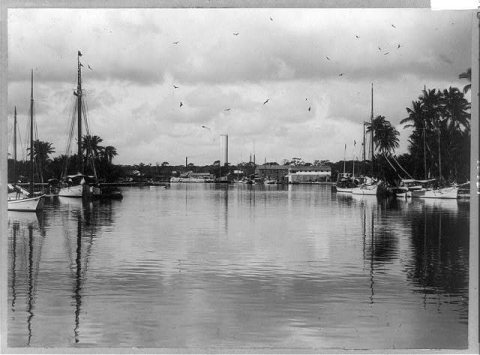
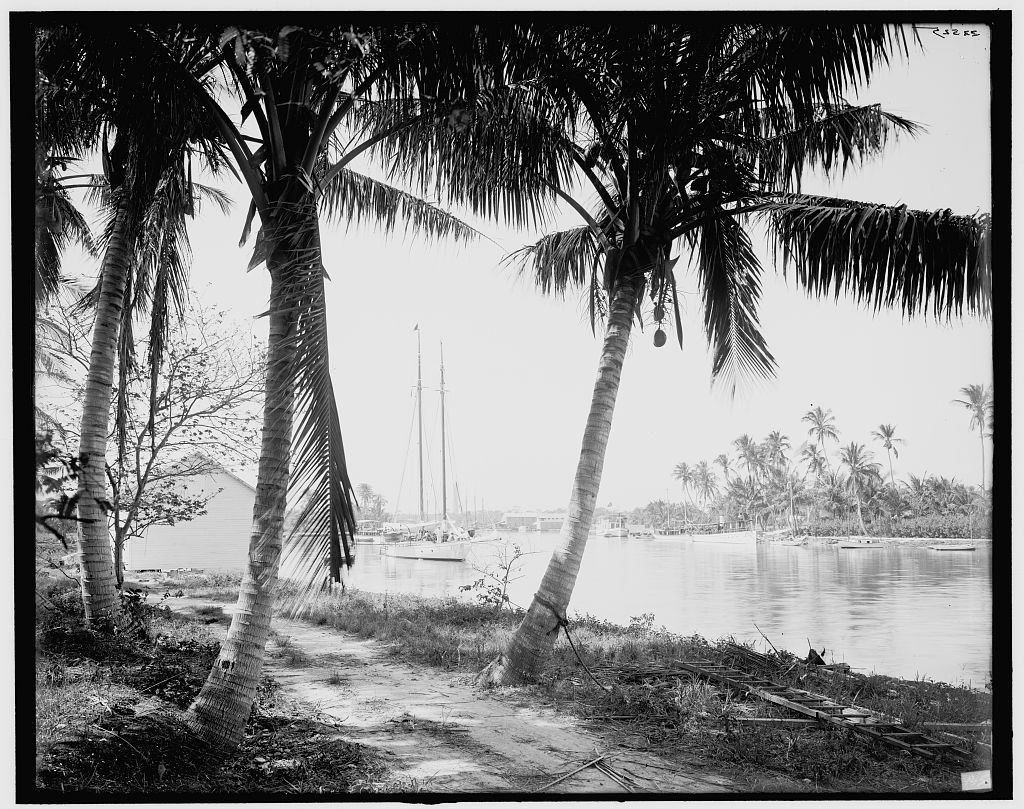
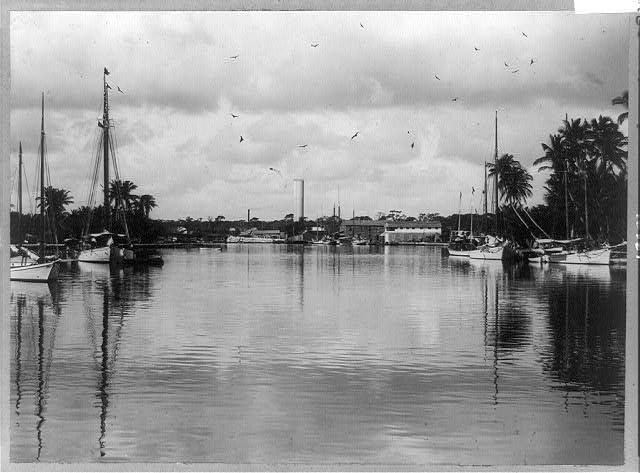
  7. 1900In the archiveOn the Miami River
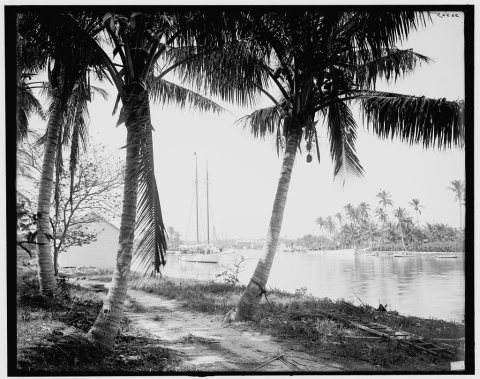
  8. 1910In the archiveJas. Cox at Miami, [Florida]
  9. 1914BuiltVizcaya is built
  10. 1921Post officeThe Buena Vista post office closes
  11. 1922Post officeThe Cocoanut Grove post office closes
  12. 1925BuiltFreedom Tower is built
  13. 1925BuiltGesu Church is built
  14. 1925Post officeThe Lemon City post office closes
  15. 1927Born hereSidney Poitier is born here
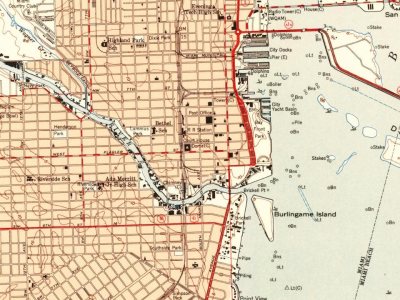
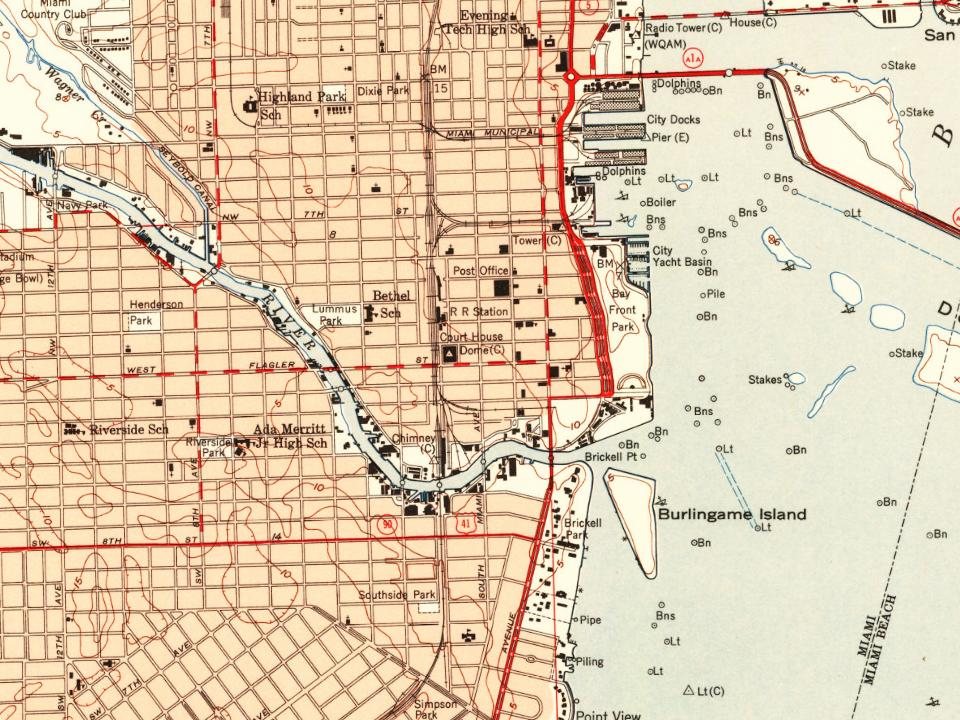
  16. 1950On the mapFirst mapped by the U.S. Geological Survey
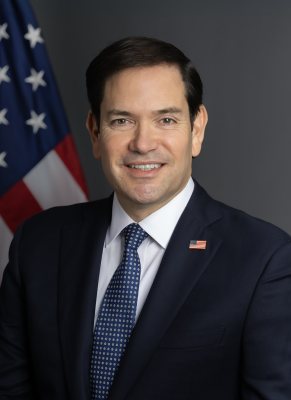
  17. 1971Born hereMarco Rubio is born here
  18. 1973BuiltRalph M. Munroe House is built
  19. 1974Born hereEva Mendes is born here
  20. 1994LandmarkVizcaya named a National Historic Landmark
By decade

Miami, decade by decade

2 decades in the archive, from the 1900s to the 1910s. Scroll each row; tap a photo for its story.

1920s–1990snothing yet
Nothing in the archives for these yearsWeddings on Main Street, storms, parades, school pictures, the old store. If it’s in your family album, it belongs here.
Add from your album
On the map

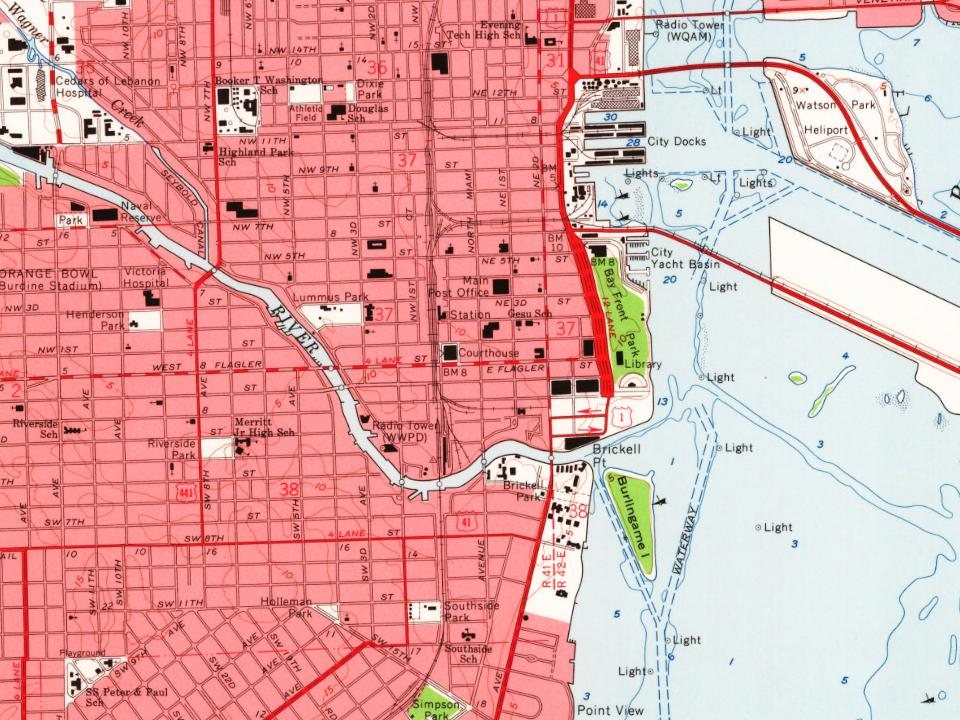
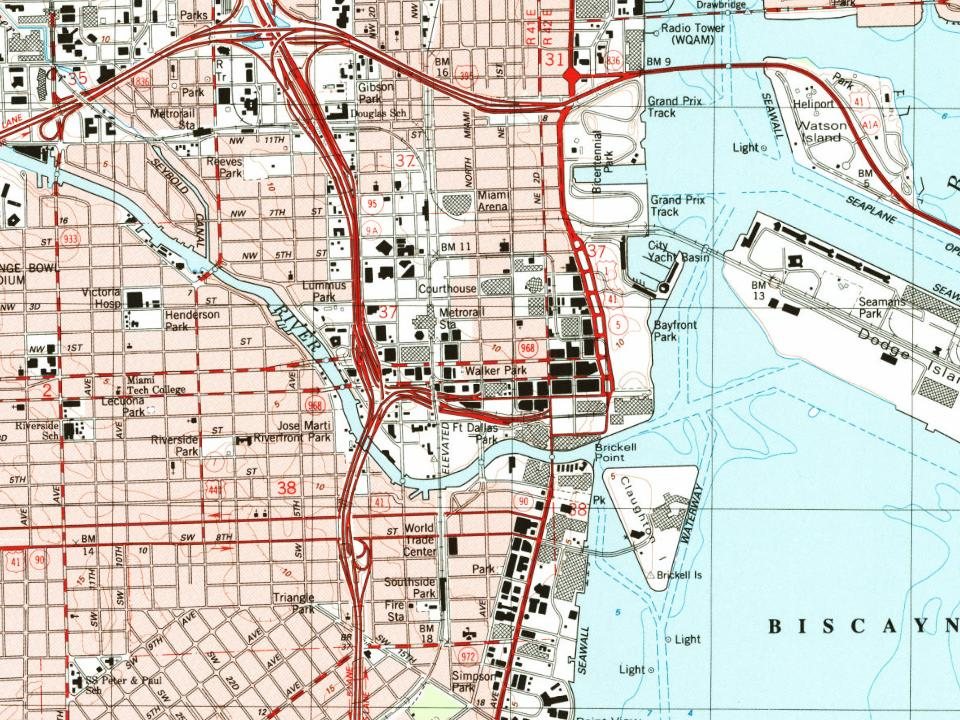
Miami on the map, 1950 to 1994

Every edition of the U.S. Geological Survey’s map of Miami. Tap a year, or press play to watch the town change.

Miami on the 1950 USGS mapMiami on the 1962 USGS mapMiami on the 1988 USGS mapMiami on the 1994 USGS map1950Miami sheet · 1:24,000

U.S. Geological Survey historical topographic maps (public domain), via Esri’s collection of the scans. The red ring marks the center of Miami.

Then & now

Stand where they stood

No then-and-now pairs yet. Take a photo from the same spot as an old one and they appear here side by side.

On the Miami River
Retake this viewOn the Miami River, 1900

Find the spot, match the angle, and add your photo. It becomes the first then-and-now pair on Miami’s page.

Retake this view · +15
People over time

Miami, census by census

050,000100,000150,000200,000250,000300,000350,000400,000450,0001900192019401960198020002020442,241

Grew from 1,681 people in 1900 to 442,241 in 2020, more than tenfold.

13 censuses, 1900–2020.

U.S. Census Bureau decennial counts, from the census table on Miami’s Wikipedia page.

Famous people

25 famous people were born in Miami

Writers, athletes, leaders and more, ranked by how widely they’re known.

See all →
Help out

Finish Miami’s story

Most archives stop around 1920. The photos from after that are in family albums, not libraries.

Decades since 1900 with photos
00s10s20s30s40s50s60s70s80s90s
2 of 10 decades. The empty ones are waiting for someone’s album.
Stories next door

History across the town line

Each neighbor’s History grade, on the same three inputs.

Questions about Miami’s history

What year was Miami founded?

In 1825, according to Wikidata. Miami’s post office opened in 1873, and the census of 1900 counted 1,681 people here.

How does Miami rank for history?

Miami is more historic than 81% of U.S. towns, #17 of 638 in Florida. The History grade combines the town’s founding era, the share of homes built before 1940 and its National Register listings. It’s a character grade, so it isn’t part of the overall grade. How it works.

What is on the National Register in Miami?

73 listings, 4 of them National Historic Landmarks: 59 buildings, 7 historic districts with 444 contributing buildings, 4 sites, and 2 structures. 527 historic buildings in all.

How old are the homes in Miami?

8% of Miami’s homes were built before 1940 (Census estimate), against a typical 0.6% for a Florida town; the median home was built in 1979.

Memory lane

What the archives can’t tell you, neighbors can.

Town Square →
Start a conversation
Sources

Where this page comes from

Founding dates: Wikidata, Wikipedia, the U.S. post office records of Blevins & Helbock (CC0) and the Census. Homes by year built: Census ACS 2020–24. National Register of Historic Places: National Park Service (list of May 22, 2026). Old photos, postcards and papers: Wikimedia Commons, the Library of Congress and other public archives, credited on each item’s page. Maps: U.S. Geological Survey historical topographic maps (via Esri) and Sanborn fire-insurance maps (Library of Congress). History text and census tables: Wikipedia (CC BY-SA 4.0). Places that used to be: USGS Geographic Names Information System (2021).

From the Library of Congress (7), Wikidata (2), the National Register of Historic Places (73), Wikipedia, Wikidata and Wikipedia for famous people, U.S. Geological Survey historical maps, U.S. Census counts (via Wikipedia), the US Post Offices dataset (Blevins & Helbock) and the USGS Geographic Names Information System. Archive images are copied here with their credits and licenses, shown on each photo’s page. Refreshed monthly.