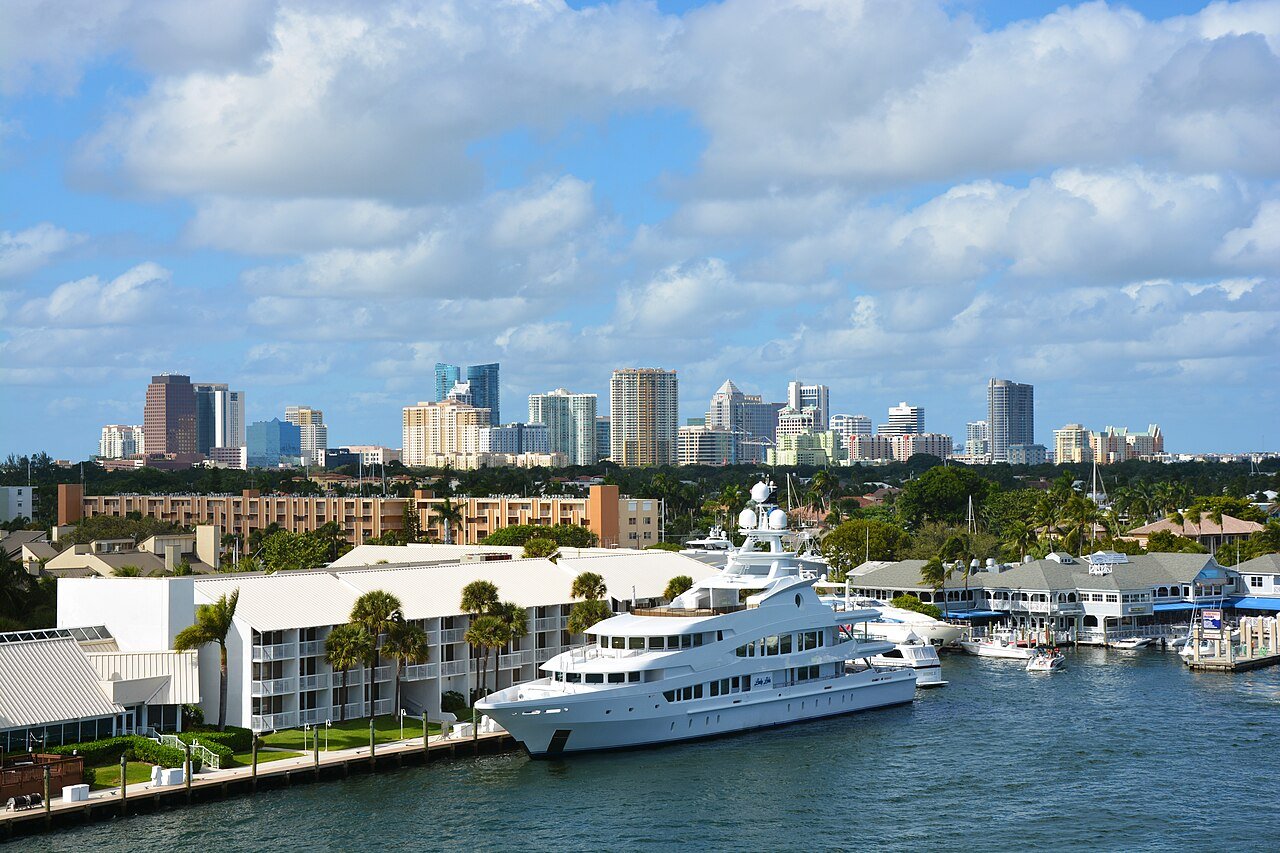
A town with more to fix than most. Cost of living is its weak spot — the typical home is worth about $510K, 6.7 years of the Miami metro’s $77K median household income. At C− overall, Fort Lauderdale ranks 496th of 634 in Florida. Nationally, it does better than 15% of U.S. towns. It lags on safety as well: it reports more crime per resident than 96% of U.S. towns, including 1,264 violent crimes reported to the FBI in 2025. Its best grade is for walkability: it is more walkable than 94% of U.S. towns. Hazard risk is weaker too: FEMA rates its natural-hazard risk higher than 79% of U.S. communities, with inland flooding at the top. The city has 17 places on the National Register of Historic Places, among them New River Inn and Stranahan House.
Figures: home values, Zillow · incomes, Census ACS, 2020–24 · FBI crime data, 2025 · FEMA National Risk Index · National Register of Historic Places.
Its grades run from A for walkability (better than 94% of comparable towns) to D− for cost of living (better than 2%), so the C− overall blends very different results.
Fort Lauderdale draws workers from Pompano Beach and beyond and has milder winter nights than nearly all U.S. towns, but it reports violent crime at about twice the Florida rate.
Violent crime runs at 6.6 per 1,000 residents, about twice the Florida rate; the Safety Grade counts each violent crime four times, so this weighs most on that grade. Property crime runs at 31.8 per 1,000 residents, 3 times the Florida rate, most of it theft.
The rate of reported violence for Fort Lauderdale comes to 6.6 per 1,000 residents. Only 4 of the 132 Florida towns we compare have a higher property offense rate than Fort Lauderdale.
In 57 parks and preserves, walkers have 22 miles of trail. The biggest place to walk is Hugh Taylor Birch State Park, 162 acres with 2 miles of trail. Fort Lauderdale’s trail network density comes in at 0.6 miles per square mile.
At 6.7 years of the Miami metro’s $77K median household income, the typical home (about $510K) costs more against local pay than in 80% of Florida towns; that ratio is one input to that grade. The median property tax bill is $4,516, against $2,730 across Florida, another input to its cost-of-living grade.
A home in Fort Lauderdale typically sold within 98 days of listing. In Fort Lauderdale, 54% of households are owner-occupiers, below both Florida’s towns (72%) and U.S. towns (73%). Also worth knowing: the town’s midpoint rent stands at $1,854 a month. A typical home locally is worth about $510,000, down 0.6% in a year, 36% above the Florida typical home.
3,894 flood insurance claims have been filed here, and 407 properties have flooded more than once.
Fort Lauderdale has had 3,894 paid flood insurance claims since 1979. Of the losses FEMA expects here, 45% come from inland flooding and 41% from hurricanes. Households here have drawn federal disaster aid in 8 declared disasters, most recently in 2024.
January nights average 60°, milder than in 100% of U.S. towns; July afternoons average 89.9°. The Ft Lauderdale Beach weather station records that about 70 days a year reach 90°: more than most of the country, but fewer than 84% of Florida places with climate records.
In Fort Lauderdale, the peak summer temperature is 90°F, near the Florida town median (91°F) and above the median of U.S. towns (85°F). For Fort Lauderdale, the January low is 60°F. It almost never snows.
188,677 people lived in Fort Lauderdale by the Census Bureau’s 2025 estimate, 3.3% more than in 2020. No broad age group is more than 4 points off the Florida average. For residents here, the share who are under 18 is 17%. The bachelor’s-degree share among adults 25 and older is 41%, against 34% across Florida.
42.8median age · FL 42.6
Fort Lauderdale
Florida towns
U.S. towns
Bachelor’s degree or more, 25+
41%
31%
29%
Under 18
17%
20%
22%
Median age
42.8 years
42.4 years
40.5 years
Fort LauderdaleFloridaUnited States
Ages · share of residents
15%
<1010–1718–2425–3435–4445–5455–6465–7475+
Education · adults 25 and older
No diploma10%
High school24%
Some college17%
Associate’s8%
Bachelor’s25%
Graduate16%
Women and men · all residents
48% women, 52% men
WomenFLU.S.Men
About 110 men for every 100 women (the survey’s margin: ±1 point). Across Florida, 50.9% of residents are women. Among residents 65 to 74, 55% are men (FL 46%). Median age: women 42.4, men 43.3.
Fort Lauderdale () is a coastal city located in the U.S. state of Florida, 30 miles (48 km) north of Miami along the Atlantic Ocean. It is the seat of government of and most populous city in Broward County with a population of 182,760 at the 2020 census, making it the tenth-most populous city in Florida. After Miami and Hialeah, Fort Lauderdale is the third-most populous city in the Miami metro area, which had a population of 6,166,488 in 2019. Built in 1838 and first incorporated in 1911, Fort Lauderdale is named after a series of forts built by the United States during the Second Seminole War. The forts took their name from Major William Lauderdale (1782–1838), younger brother of Lieutena…
Oakland Park, Wilton Manors, Pompano Beach, Dania Beach, Tamarac, North Lauderdale and Davie report no FBI crime data of their own. Compare Fort Lauderdale with a neighbor →
Questions about Fort Lauderdale
Short answers, built from the data on this page.
Is Fort Lauderdale, FL a good place to live?
Fort Lauderdale grades C− overall, better than 15% of U.S. towns and #496 of 634 in Florida. It grades B for health, D− for safety and B for schools. Cost of living is its weak spot, with a D−.
Is Fort Lauderdale, FL expensive?
Yes. Cost of living, which also weighs rents, property taxes and how many households pay 30% or more of their income for housing, grades D−.


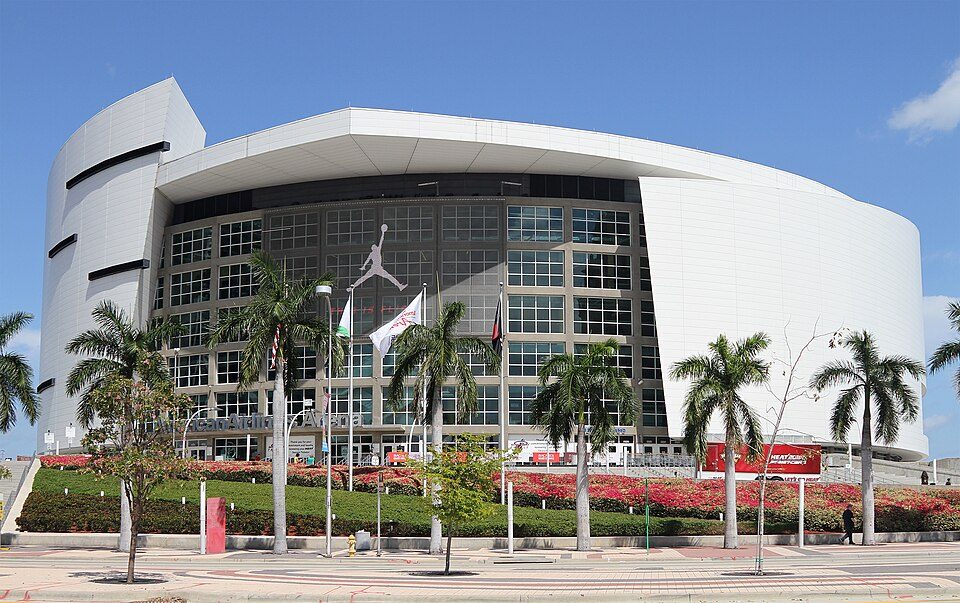
 in town
 11 mi
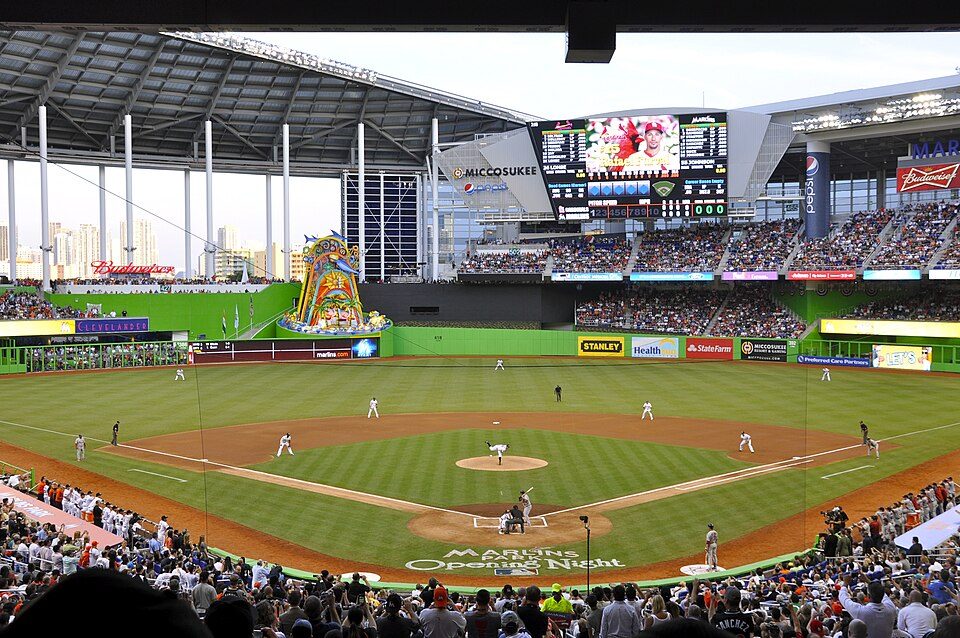 26 mi