Sir Wilfrid Laurier · Photo: Benoit Rochon · CC BY-SA 3.0
2historic places on the registers
History of Saint-Lin--Laurentides · Canada’s heritage registers
2 historic places in Saint-Lin--Laurentides, one of them a top designation
The record has a Recognized Federal Heritage Building. Go back to 1870 and you reach Sir Wilfrid Laurier, the oldest of them. Relative to its size Saint-Lin--Laurentides has 0.7 per 10,000 residents, more than 77% of Canadian towns. Few homes are old by the census: 7.3% before 1961, against 18%.
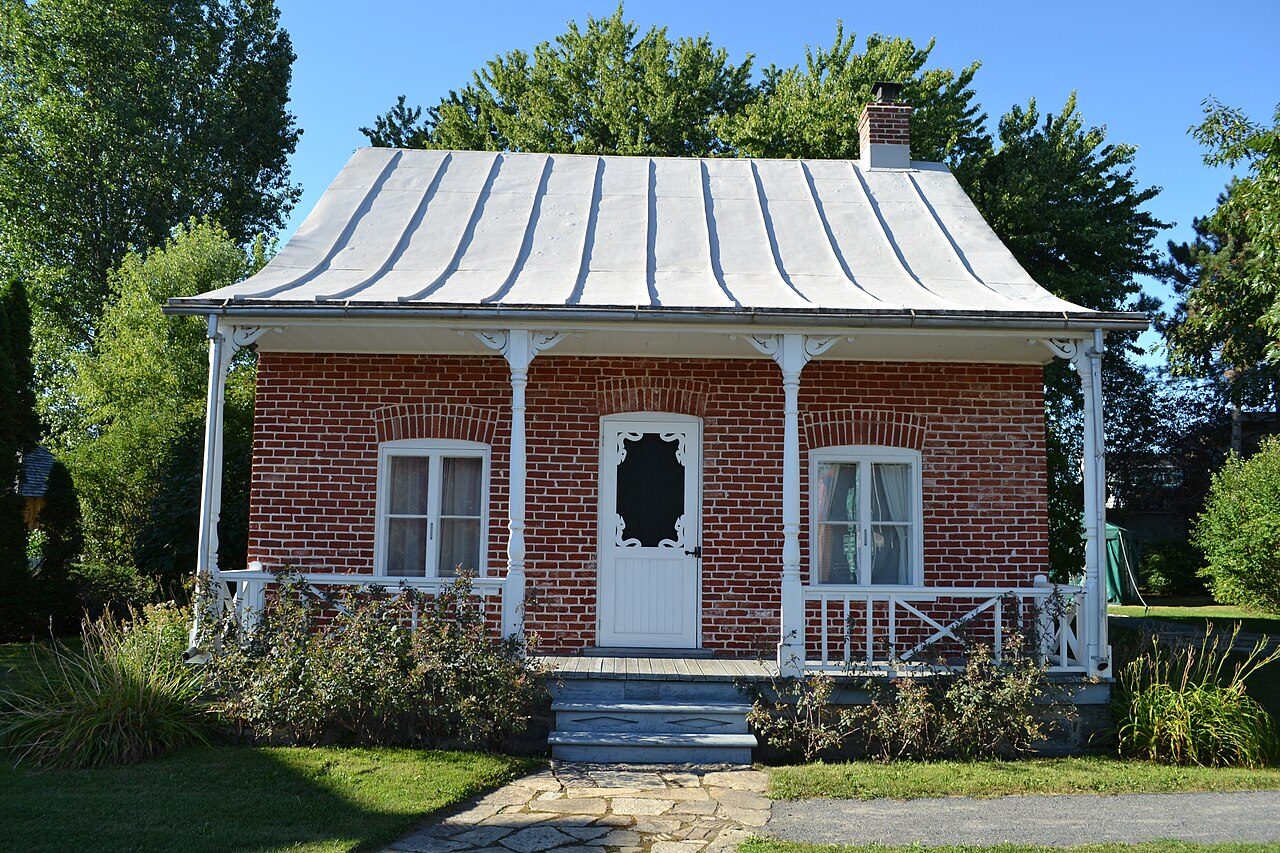
Photos from Wikimedia Commons, each credited to its photographer with its licence; names open the place’s page. Tap a photo to step through them full screen.
Through time
Saint-Lin--Laurentides in old pictures
A single old picture: the oldest view of one of its historic places. It opens full screen with a tap.
Public domain or CC0, made before 1950, from Wikimedia Commons; old views of places can be drawings, prints or maps of their time. Each credit opens the image’s page.
How it began
The record of Saint-Lin--Laurentides, from 2000 on
The date Wikidata keeps for Saint-Lin--Laurentides is March 1, 2000; whether it was a founding or a legal act, the entry leaves open. A reorganization in 2000 folded in Laurentides and Saint-Lin.
Every place on the registers inside the town, by its designation.
Highest designationsOther federal designations
Hover a dot for its name; tap one to open its page.
The 2, by tier
1 Highest designations1 Other federal designations
The federal directory and the Répertoire du patrimoine culturel du Québec are both open, so every federal, provincial and municipal designation here has its point.
Points from Wikidata (Parks Canada’s files carry none) and from Québec’s register, as mapped there.
Highest designations
One place in Saint-Lin--Laurentides with the highest designation
National Historic Sites and Classified Federal Heritage Buildings, Canada’s highest federal recognition. Each one opens its own page.
2 places of national importance within 10 km of Saint-Lin--Laurentides
3 places lie within 10 km. Their towns number 2: Sainte-Anne-des-Plaines and Saint-Roch-de-l'Achigan first. The nearest is Maison Allard-Labrèche, 9.3 km away in Saint-Roch-de-l'Achigan.
The 3 nearest, within 10 km
Maison Allard-LabrècheMunicipal citation (Québec) · 1865 · 9.3 km away, in Saint-Roch-de-l'Achigan
Maison des Prêtres-ChaumontClassified heritage building (Québec) · 1884 · 9.9 km away, in Sainte-Anne-des-Plaines
Homes by age
New homes stand out in Saint-Lin--Laurentides: 13% from 2016–21, where most towns have 4.1%
Saint-Lin--Laurentides built little from 1961 to 1980: 20% of its homes, where most towns have 27%. 39% of Saint-Lin--Laurentides’s homes date from 2001 to 2015, well above the typical 15%. Homes built from 1981 to 2000 make up 21% of Saint-Lin--Laurentides’s, about the typical 23%.
7.3%
Before 1961
20%
1961–80
21%
1981–2000
39%
2001–15
13%
2016–21
Saint-Lin--LaurentidesTypical town
2021 Census, private dwellings by period of construction (Statistics Canada); the typical town is the middle Canadian town of 2,500 or more.
Born here
Saint-Lin--Laurentides’s person of national historic significance, and others
Maurice Lebel closes the list, born in 1909. There are 5 people born here before 1914 with an article to show for it. Best known is Wilfrid Laurier, with articles in 46 Wikipedia languages. 3 of the 5 were born in the years before Confederation.
Wilfrid Laurier
Joseph Gauthier
Albert Mesnard
Wilfrid Corbeil
Maurice Lebel
1800182518501875190019251950
Wilfrid Laurier1841–1919 · On Canada’s list since 1927 · 7th prime minister of Canada
Joseph Gauthier1842–1911 · Canadian politician
ML
Maurice Lebel1909–2006 · University professor and writer from Québec
AM
Albert Mesnard1847–1909 · Canadian architect
WC
Wilfrid Corbeil1893–1979 · Canadian catholic priest
Everyone born in Saint-Lin--Laurentides → Born before 1914. Birthplaces from Wikidata, each checked against Wikipedia; national historic persons from Parks Canada’s Directory of Federal Heritage Designations, matched by name and life years.
Towns its size
Saint-Lin--Laurentides has the 3rd most of 16 towns its size
Towns of 26,100 to 27,200 residents, by places on the registers.
Canada’s heritage lists give Saint-Lin--Laurentides 2 historic places, one with the highest designation, Sir Wilfrid Laurier among them. Only 2 of the 16 towns nearest its size have more historic places. Its people of the past include Wilfrid Laurier (1841), Joseph Gauthier (1842) and Maurice Lebel (1909). Pre-1961 homes are a small part of its stock: 7.3%, against 18% in the typical town. Everything else is close to the norm: its places were designated between 1938 and 1998.
How to read these numbers
What this data can and can’t tell you
•
The grade. This page gives no grade; history doesn’t count toward a Canadian town’s letter.
•
Protection. A place classified or cited under Québec’s law is protected; National Historic Site status alone protects only what the federal government owns.
•
People and events. The open directory puts its national historic persons nowhere, so a town shows one only on firm ground: a birth there, matched by name and life years, or a historic place there named for the person whose record says so. Events are left out.
•
The tiers. The highest designations are National Historic Sites, Classified Federal Heritage Buildings and Québec’s classements; then come the other federal designations; then provincial and local listings.
•
The federal register. Parks Canada’s Directory of Federal Heritage Designations lists every National Historic Site, federal heritage building, heritage railway station and lighthouse; the Canadian Register of Historic Places adds their statements in English and French.
•
Québec’s register. The Répertoire du patrimoine culturel du Québec is open data, so the province’s own designations and its municipalities’ citations are here in full.
•
Map points. Federal places get their map points from Wikidata, since Parks Canada’s files carry none; they are as mapped there.
Questions about Saint-Lin--Laurentides’s history
Which places in Saint-Lin--Laurentides have the highest designation?
Sir Wilfrid Laurier.
What is the oldest building in Saint-Lin--Laurentides?
Sir Wilfrid Laurier, a National Historic Site, begun in 1870.
How old are the homes in Saint-Lin--Laurentides?
The 2021 Census dates 7.3% of its homes before 1961 (18% in the typical town).
Contains information licensed under the Open Government Licence – Canada (Parks Canada).
Sources: Parks Canada, Directory of Federal Heritage Designations · Canadian Register of Historic Places (federal extract) · Wikidata (CC0) for map points, other names and articles · Statistics Canada, 2021 Census (homes by period of construction). Under the Statistics Canada Open Licence.

 c. 1941
 Top
 Fed

