 Top
National Historic Site · 1929Last Post Fund National Field of Honour703 Donegani AvenuePhoto: RedAndr · CC BY-SA 4.0 · Commons file
 Maison Hyacinthe-Jamme-dit-Carrière · Photo: Claudie Gauthier, François Gauthier-Giroux · CC BY-SA 3.0
4historic places on the registers
History of Pointe-Claire · Canada’s heritage registers
Pointe-Claire’s record starts in 1709 with Pointe-Claire Windmill
Before 1961: 36% of Pointe-Claire’s homes, where most towns have 18%. The lists give 4 historic places here, 3 in the top tier. On the list: a municipal citation. The municipality’s date on Wikidata is 1698: a founding, an incorporation or an amalgamation, the record doesn’t say which.
Historic places
4
1.1 per 10,000 residents
Highest designations
3
National Historic Sites, classified federal buildings and Québec’s classements
Provincial and local listings
1
municipal citations on Québec’s register
Oldest building
1709
the first construction date on its record
Homes built before 1961
36%
typical town: 18%
In pictures
Every one of Pointe-Claire’s 3 most honoured places, in photos
The first two: Maison Hyacinthe-Jamme-dit-Carrière and Pointe-Claire Windmill. Each of Pointe-Claire’s designated places has a photo. 3 photographers took them.
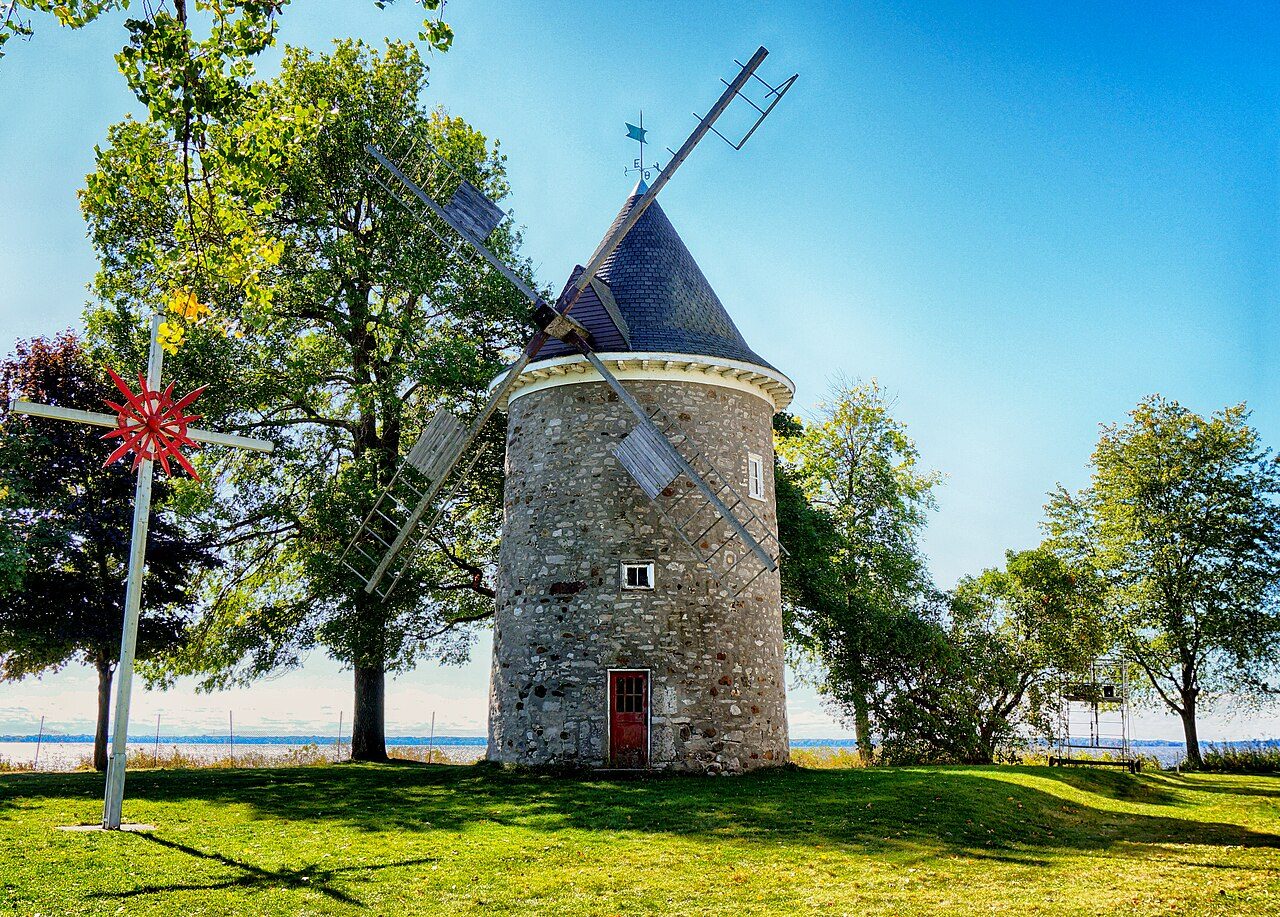 Pointe-Claire Windmill
 Last Post Fund National Field of Honour
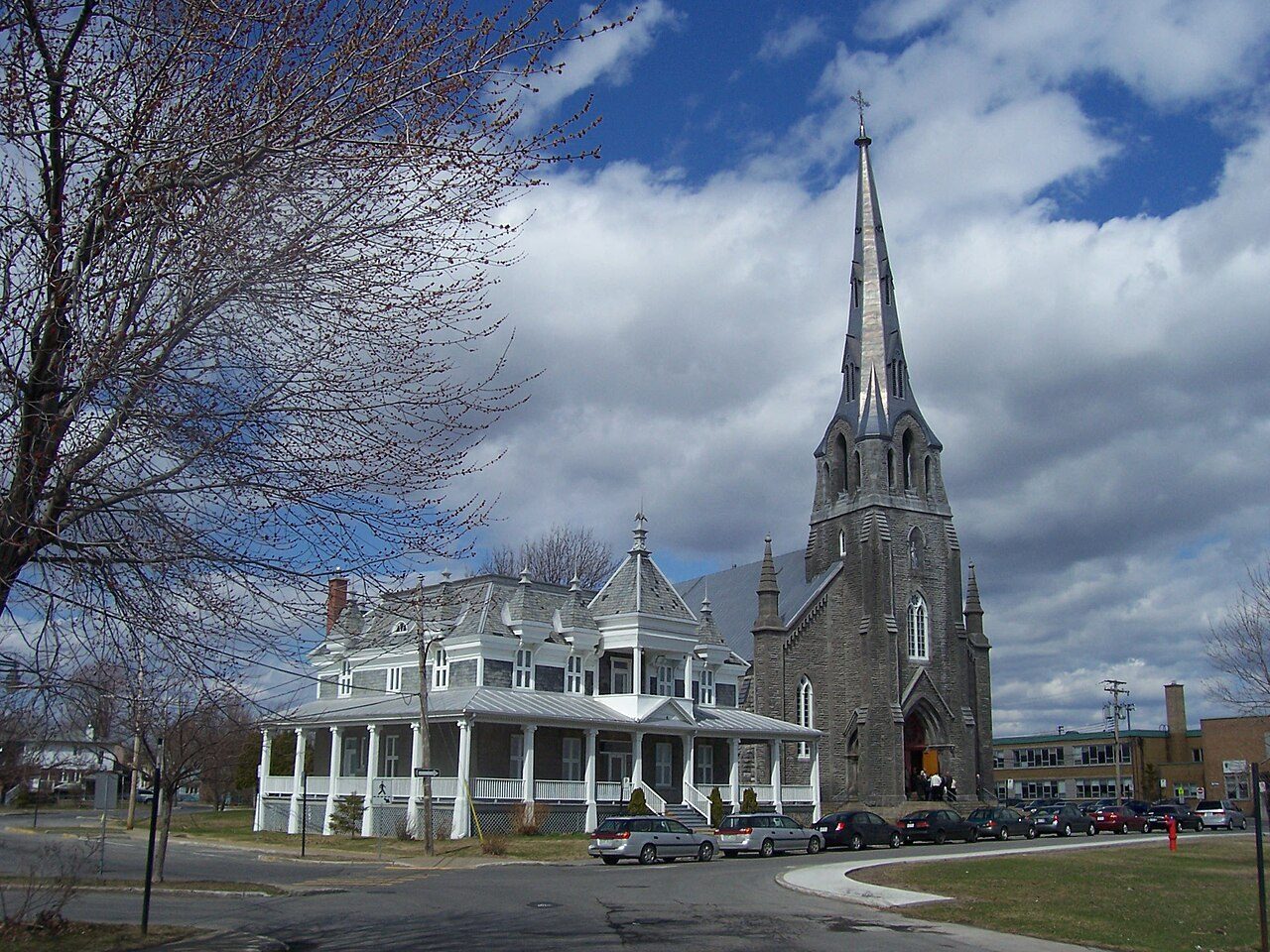 Site patrimonial de la pointe Claire+1See all photos
Photos from Wikimedia Commons, each credited to its photographer with its licence; names open the place’s page. Tap a photo to step through them full screen.
The map
Where Pointe-Claire’s history is
Every place on the registers inside the town, by its designation.
Highest designationsProvincial and local listings
Tap any dot to open that place’s own page; hovering shows its name.
The 4, by tier
3 Highest designations1 Provincial and local listings
Parks Canada’s federal directory and Québec’s Répertoire du patrimoine culturel supply these places: federal designations, the province’s classements and the municipalities’ citations.
Points from Wikidata (Parks Canada’s files carry none) and from Québec’s register, as mapped there.
Highest designations
3 places in Pointe-Claire with the highest designation
They were designated between 1964 and 2007. Here that means 2 places classified by Québec and a National Historic Site. National Historic Sites and Classified Federal Heritage Buildings, Canada’s highest federal recognition. Each one opens its own page.
 Top
Classified heritage building (Québec) · 1709Pointe-Claire Windmill1 avenue Saint-JoachimPhoto: RedAndr · CC BY-SA 4.0 · Commons file
 Top
Classified heritage building (Québec) · 1769–1791Maison Hyacinthe-Jamme-dit-Carrière152 avenue de Concord CrescentPhoto: Claudie Gauthier, François Gauthier-Giroux · CC BY-SA 3.0 · Commons file
Provincial and local listings
One local listing in Pointe-Claire
Citations the municipality has made, registered with Québec’s ministry of culture. Each one opens its own page.
 Local
Cited heritage site (Québec)Site patrimonial de la pointe Claireavenue Sainte-Anne¤ avenue Saint-JoachimPhoto: Ancien et moderne · CC BY-SA 3.0 · Commons file
Homes by age
Pointe-Claire is still building: 8.4% of homes date from 2016 to 2021, against 4.1%
Half of the homes standing in Pointe-Claire today were built before 1981. Few of Pointe-Claire’s homes date from 2001 to 2015: 8.8%, the norm 15%. 26% of Pointe-Claire’s homes were built from 1961 to 1980, close to the typical town’s 27%.
36%
Before 1961
26%
1961–80
21%
1981–2000
8.8%
2001–15
8.4%
2016–21
Pointe-ClaireTypical town
2021 Census, private dwellings by period of construction (Statistics Canada); the typical town is the middle Canadian town of 2,500 or more.
Born here
5 people born in Pointe-Claire before 1914
Of them all, Pierre Saint-Julien lived longest: 85 years, until 1850. The widest known is René Boileau: 3 Wikipedia editions. 4 of the 5 were born in the years before Confederation. Pierre Saint-Julien comes first, born in 1765.
Pierre Saint-Julien
Joseph Valois
Édouard Thibaudeau
Michel-François Valois
René Boileau
175017751800182518501875190019251950
RB
René Boileau1904–1969 · Canadian ice hockey player
JV
Joseph Valois1767–1835 · Canadian politician
ÉT
Édouard Thibaudeau1797–1836 · Canadian politician
PS
Pierre Saint-Julien1765–1850 · Canadian politician
MV
Michel-François Valois1801–1869 · Canadian politician
Everyone born in Pointe-Claire → Born before 1914 (the page’s periods: Confederation to the First World War). Birthplaces from Wikidata, each checked against the person’s Wikipedia article.
Towns its size
Pointe-Claire has the 1st most of 16 towns its size
Towns of 36,600 to 38,300 residents, by places on the registers.
Pointe-Claire4
The typical town its size has 1. For 8, the registers list nothing.
Neighbours
Pointe-Claire and its neighbours
| Town | People | Places | Highest | Oldest |
|---|---|---|---|---|
| Pointe-Claire | 37,437 | 4 | 3 | 1709 |
| Dollard-Des Ormeaux | 50,246 | 0 | 0 | — |
| Kirkland | 19,696 | 5 | 5 | 1740 |
| Dorval | 21,062 | 0 | 0 | — |
| Beaconsfield | 19,430 | 2 | 1 | 1765 |
| Pierrefonds-Ouest | 30,978 | 3 | 1 | 1799 |
| Pierrefonds-Est | 38,928 | 0 | 0 | — |
In brief
Pointe-Claire in brief
The 2021 Census dates 36% of Pointe-Claire’s homes before 1961, against 18% in the typical town. All told, the registers hold 4 historic places, 3 with the highest designation. Of the 16 towns closest in size, it has the most historic places. Its people of the past include René Boileau (1904), Joseph Valois (1767) and Édouard Thibaudeau (1797). The other figures are unremarkable: the list grew between 1964 and 2013.
How to read these numbers
What this data can and can’t tell you
- Protection. Here the register is also the protection: classement and citation under Québec’s cultural heritage law control changes, while federal recognition does not.
- Québec’s register. In Québec the ministry of culture publishes its register openly: provincial classements, declared sites and the municipalities’ citations all appear, with their descriptions.
- The federal register. Every federal designation is in Parks Canada’s directory, and the Canadian Register of Historic Places gives most of them a bilingual statement of significance.
- The grade. History is described, not graded, for every Canadian town.
- People and events. Parks Canada’s open file gives its national historic persons no place. A town’s page names one only when the person was born there (matched by name and both life years) or one of its own historic places carries the name and its record speaks of them; national historic events stay off.
- The tiers. Three tiers: the top for National Historic Sites, classified federal buildings and Québec’s classements, a second for the other federal designations, a third for provincial and municipal listings.
- Map points. Where a federal place sits on the map is Wikidata’s placing; the directory itself has no coordinates.
Questions about Pointe-Claire’s history
What is the oldest building in Pointe-Claire?
Pointe-Claire Windmill — its record dates it to 1709 (Classified heritage building (Québec)).
How old are the homes in Pointe-Claire?
36% predate 1961, where the typical town has 18%.
Which places in Pointe-Claire have the highest designation?
Last Post Fund National Field of Honour, Pointe-Claire Windmill and Maison Hyacinthe-Jamme-dit-Carrière.
Contains information licensed under the Open Government Licence – Canada (Parks Canada). Québec register data: Ministère de la Culture et des Communications du Québec, CC BY 4.0.
Sources: Parks Canada, Directory of Federal Heritage Designations · Canadian Register of Historic Places (federal extract) · Répertoire du patrimoine culturel du Québec (MCC, Données Québec) · Wikidata (CC0) for map points, other names and articles · Statistics Canada, 2021 Census (homes by period of construction). Under the Statistics Canada Open Licence.
Adapted from Statistics Canada (Census of Population 2021, population estimates 2025, 2021 census boundaries) under the Statistics Canada Open Licence; this does not constitute an endorsement by Statistics Canada. Neighbourhood names in some cities © OpenStreetMap contributors (ODbL).