 Top
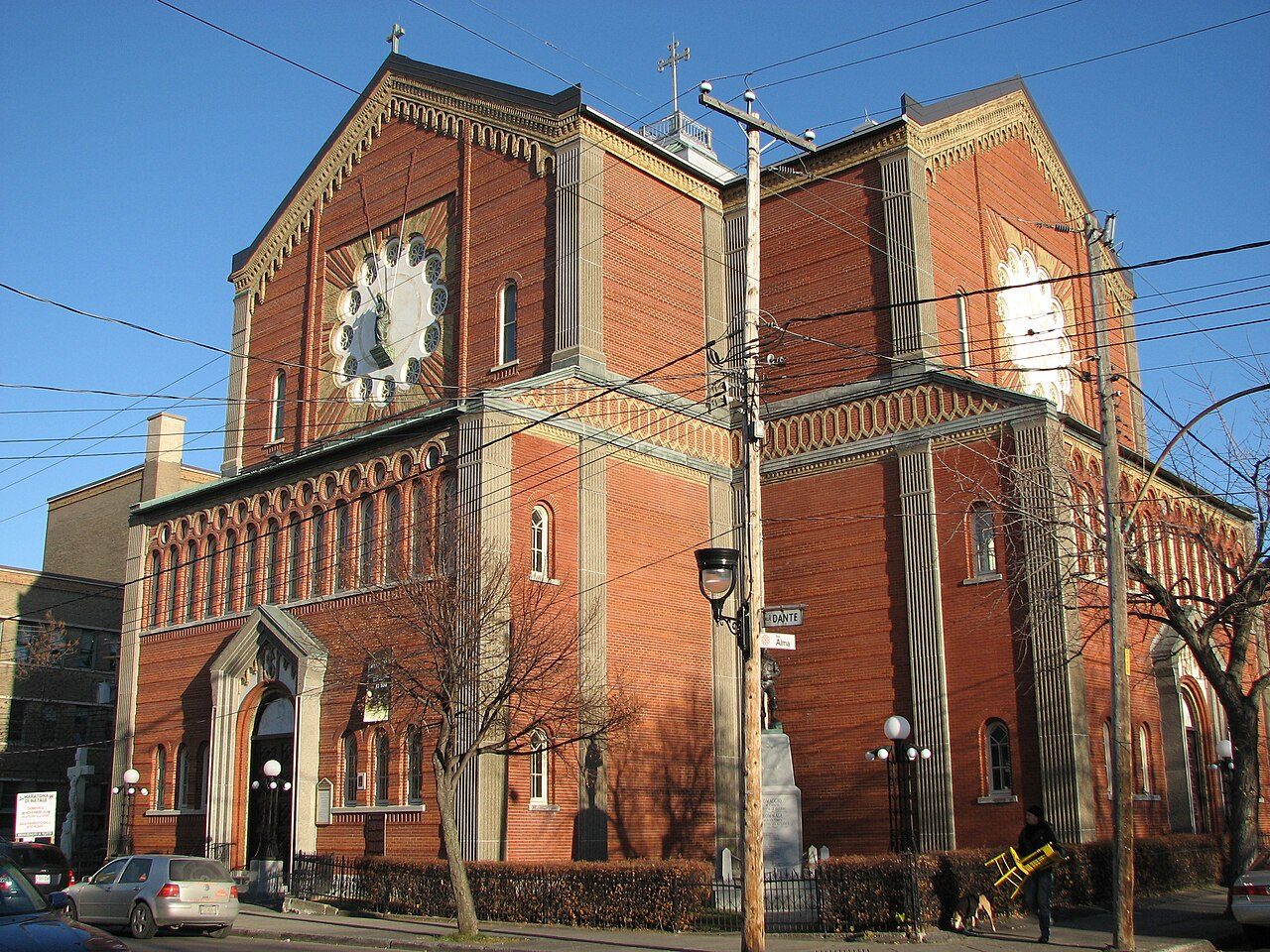
National Historic Site · 1918–1920Church of Notre-Dame-de-la-Défense6800 Henri-Julien AvenuePhoto: Stéphane Batigne · CC BY 3.0 · Commons file
 Cinéma Le Château · Photo: Jeangagnon · CC BY-SA 3.0
2historic places on the registers
History of Saint-Édouard · Canada’s heritage registers
51% of Saint-Édouard’s homes were built before 1961
The typical town has 18%: Saint-Édouard has 2.9 times the share. Inside the town there are 2 historic places, all of them top designations. Measured against its size, 1.2 per 10,000 residents puts it ahead of 81% of Canadian towns. Its oldest building on the record is Church of Notre-Dame-de-la-Défense, from 1918.
Historic places
2
1.2 per 10,000 residents
Highest designations
2
National Historic Sites, classified federal buildings and Québec’s classements
Oldest building
1918
the first construction date on its record
Homes built before 1961
51%
typical town: 18%
In pictures
Every one of Saint-Édouard’s 2 most honoured places, in photos
Both places on Saint-Édouard’s registers have a photo here. To start: Cinéma Le Château, and Church of Notre-Dame-de-la-Défense.
Photos from Wikimedia Commons, each credited to its photographer with its licence; names open the place’s page. Tap a photo to step through them full screen.
The map
Where Saint-Édouard’s history is
Every place on the registers inside the town, by its designation.
Highest designations
Dots open their places’ pages; hover first to read the name.
The 2, by tier
2 Highest designations
The federal directory and the Répertoire du patrimoine culturel du Québec are both open, so every federal, provincial and municipal designation here has its point.
Points from Wikidata (Parks Canada’s files carry none) and from Québec’s register, as mapped there.
Highest designations
2 places in Saint-Édouard with the highest designation
Church of Notre-Dame-de-la-Défense is the earliest, from 1918; the latest dates from 1931. The group holds a National Historic Site and a place classified by Québec. National Historic Sites and Classified Federal Heritage Buildings, Canada’s highest federal recognition. Each one opens its own page.
 Top
Classified heritage building (Québec) · 1931Cinéma Le Château383 rue Bélanger¤395 rue Bélanger¤6960 rue Saint-Denis¤6950 rue Saint-Denis¤6956 rue Saint-DenisPhoto: Jeangagnon · CC BY-SA 3.0 · Commons file
Around the town
116 designated places lie within 5 km of Saint-Édouard
By designation: 70 places classified by Québec, 27 National Historic Sites and 14 municipal citations. The record reaches back to 1535 with Hochelaga, 4.2 km away. Closest of all is St. George Antiochian Orthodox Church, in Crémazie, 900 m off.
The 12 nearest, within 5 km
| St. George Antiochian Orthodox ChurchNational Historic Site · 1939–1941 · 900 m away, in Crémazie |
| Rialto TheatreNational Historic Site · 1924–1925 · 1.1 km away, in Mile End |
| Carmel de MontréalClassified heritage building (Québec) · 1895–1896 · 1.2 km away, in Mile End |
| Outremont TheatreNational Historic Site · 1928–1930 · 1.4 km away, in Outremont |
| Le Regent TheatreMunicipal citation (Québec) · 1915 · 1.7 km away, in Mile End |
| The MainNational Historic Site · 2.2 km away, in Mile End |
| Sanctuary of the Blessed SacramentClassified heritage building (Québec) · 1892–1894 · 2.3 km away, in Parc-Lafontaine |
| Théâtre des VariétésClassified heritage building (Québec) · 1913–1919 · 2.6 km away, in Parc-Laurier |
| Site du patrimoine de l'Église-de-Saint-Jean-BaptisteCited heritage site (Québec) · 2.6 km away, in Saint-Louis |
| ArmouryRecognized Federal Heritage Building · 1913–1915 · 2.7 km away, in Saint-Louis |
| Mount Royal CemeteryNational Historic Site · 1852–2010 · 2.8 km away, in Outremont |
| Maisons Emmanuel-Saint-LouisMunicipal citation (Québec) · 1898 · 2.8 km away, in Parc-Lafontaine |
Homes by age
New homes are rare in Saint-Édouard: 3% from 2016–21, against a usual 4.1%
Homes built from 1981 to 2000 make up just 9.3% of Saint-Édouard’s, against 23% in the typical town. Saint-Édouard built little from 1961 to 1980: 20% of its homes, where most towns have 27%. Over half of the homes in Saint-Édouard were already standing by 1961.
51%
Before 1961
20%
1961–80
9.3%
1981–2000
16%
2001–15
3%
2016–21
Saint-ÉdouardTypical town
2021 Census, private dwellings by period of construction (Statistics Canada); the typical town is the middle Canadian town of 2,500 or more.
Towns its size
Saint-Édouard has the most of 16 towns its size
Towns of 16,600 to 17,000 residents, by places on the registers.
Saint-Édouard2
The middle one has 0. 13 of them have nothing on the registers.
Neighbours
Saint-Édouard and its neighbours
| Town | People | Places | Highest | Oldest |
|---|---|---|---|---|
| Saint-Édouard | 16,771 | 2 | 2 | 1918 |
| Père-Marquette | 19,702 | 0 | 0 | — |
| Mile End | 24,987 | 4 | 3 | 1895 |
| Outremont | 24,629 | 2 | 2 | 1852 |
| Parc-Jarry | 15,699 | 0 | 0 | — |
| Crémazie | 29,907 | 1 | 1 | 1939 |
| Parc-Extension | 29,066 | 0 | 0 | — |
In brief
Saint-Édouard in brief
Of the homes standing in Saint-Édouard, 51% went up before 1961, against 18% in the typical town. All told, the registers hold 2 historic places, 2 with the highest designation. Of the 16 towns closest in size, it has the most historic places. For the rest, every designation dates from 2002.
How to read these numbers
What this data can and can’t tell you
- People and events. Parks Canada’s open file gives its national historic persons no place. A town’s page names one only when the person was born there (matched by name and both life years) or one of its own historic places carries the name and its record speaks of them; national historic events stay off.
- The federal register. Every federal designation is in Parks Canada’s directory, and the Canadian Register of Historic Places gives most of them a bilingual statement of significance.
- Québec’s register. Québec is the one province whose register is open: classements, declarations and municipal citations, described by the ministry in French.
- Protection. In Québec, a classement or a municipal citation under the Loi sur le patrimoine culturel protects the building in law; a federal designation recognises significance and binds only federal owners.
- Map points. Pins for federal places come from Wikidata rather than Parks Canada, which gives no points.
- The grade. There is no history grade: the page sets out the record and compares it with other towns.
- The tiers. Tiers follow the designation: national recognition and classement first, other federal designations next, provincial and local listings last.
Questions about Saint-Édouard’s history
How old are the homes in Saint-Édouard?
Before 1961: 51% of its homes; the typical town has 18%.
Which places in Saint-Édouard have the highest designation?
Church of Notre-Dame-de-la-Défense and Cinéma Le Château.
What is the oldest building in Saint-Édouard?
Church of Notre-Dame-de-la-Défense, a National Historic Site, begun in 1918.
Contains information licensed under the Open Government Licence – Canada (Parks Canada). Québec register data: Ministère de la Culture et des Communications du Québec, CC BY 4.0.
Sources: Parks Canada, Directory of Federal Heritage Designations · Canadian Register of Historic Places (federal extract) · Répertoire du patrimoine culturel du Québec (MCC, Données Québec) · Wikidata (CC0) for map points, other names and articles · Statistics Canada, 2021 Census (homes by period of construction). Under the Statistics Canada Open Licence.
Adapted from Statistics Canada (Census of Population 2021, population estimates 2025, 2021 census boundaries) under the Statistics Canada Open Licence; this does not constitute an endorsement by Statistics Canada. Neighbourhood names in some cities © OpenStreetMap contributors (ODbL).