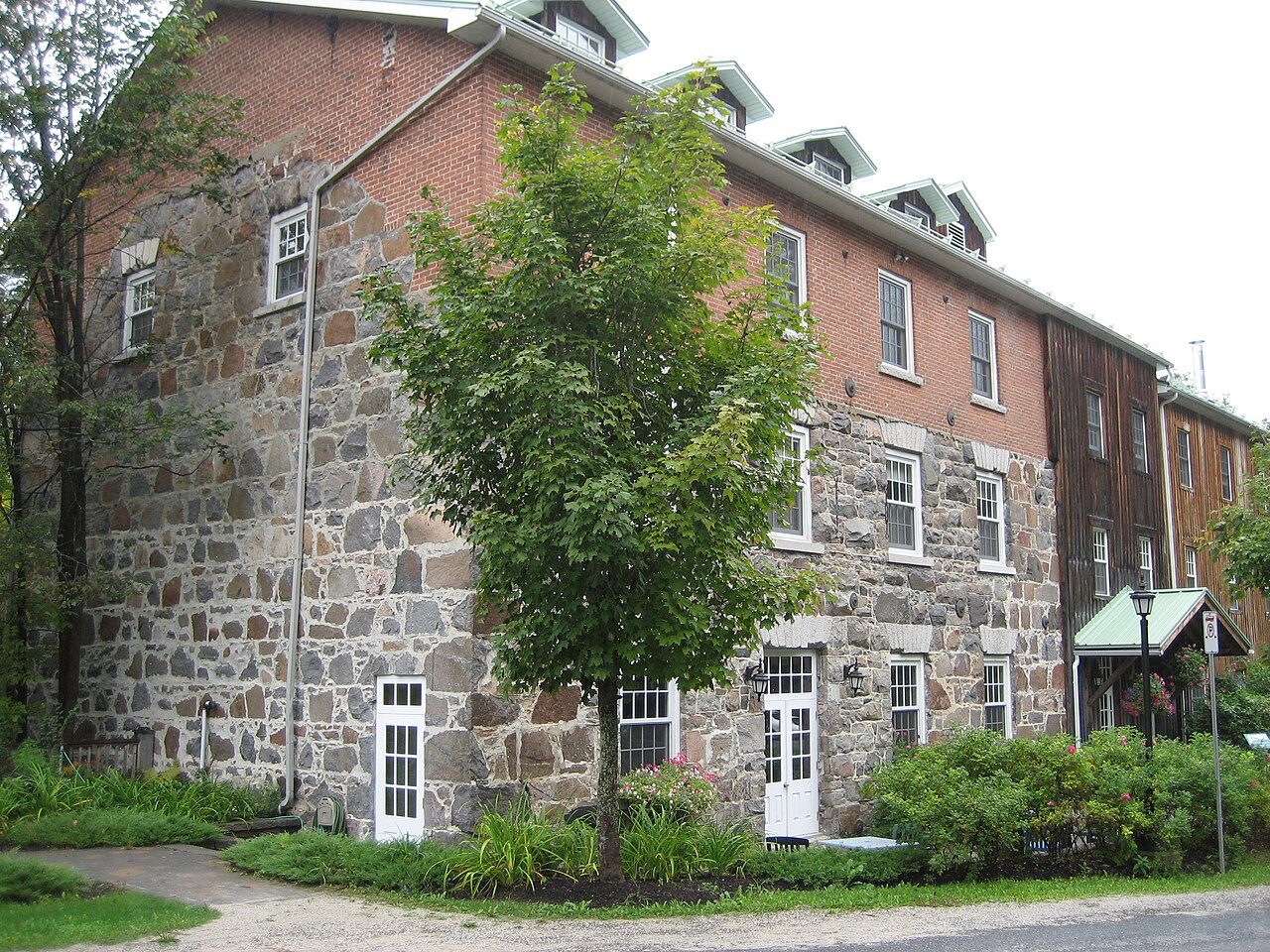
Designations here include 3 Recognized Federal Heritage Buildings and a municipal citation. Per resident La Pêche outdoes 94% of Canadian towns, with 4.3 for every 10,000 people. The oldest dated place, Grist Mill, goes back to 1838.
Photos from Wikimedia Commons, each credited to its photographer with its licence; names open the place’s page. Tap a photo to step through them full screen.
How it began
The record of La Pêche, from 1975 on
A reorganization in 1975 folded in 5 former municipalities. The municipality of La Pêche has the date January 1, 1975 on Wikidata; the record doesn’t say whether it marks a founding or an incorporation.
Every place on the registers inside the town, by its designation.
Other federal designationsProvincial and local listings
Each dot is a place: point at it for the name, tap it for its page.
The 4, by tier
3 Other federal designations1 Provincial and local listings
The federal directory and the Répertoire du patrimoine culturel du Québec are both open, so every federal, provincial and municipal designation here has its point.
Points from Wikidata (Parks Canada’s files carry none) and from Québec’s register, as mapped there. One place, placed by its register’s municipality, has no point and isn’t on the map.
Other federal designations
3 more federal designations in La Pêche
They date from 1838 (Grist Mill) to 1861. Recognized Federal Heritage Buildings, heritage railway stations and lighthouses. Designations came from 1985 to 2010. Each one opens its own page.
New homes stand out in La Pêche: 6.8% from 2016–21, where most towns have 4.1%
The busiest building years in La Pêche were from 1961 to 1980, which account for 28% of today’s homes. Homes built from 2001 to 2015 make up 23% of La Pêche’s, against 15% in the typical town. Like the typical town (18%), La Pêche has 18% of its homes from before 1961.
18%
Before 1961
28%
1961–80
24%
1981–2000
23%
2001–15
6.8%
2016–21
La PêcheTypical town
2021 Census, private dwellings by period of construction (Statistics Canada); the typical town is the middle Canadian town of 2,500 or more.
Towns its size
La Pêche has the 2nd most of 16 towns its size
Towns of 9,300 to 9,500 residents, by places on the registers.
Of the homes standing in La Pêche, 18% went up before 1961, against 18% in the typical town. In all there are 4 historic places. Just one town of its size, out of 16, has more historic places. Beyond that, James Reid (1839) is its person of the past on the record; and its places were designated between 1985 and 2010.
How to read these numbers
What this data can and can’t tell you
•
People and events. National historic persons carry no place in the open file. They appear on a town’s page when born there (same name, same birth and death years) or when a historic place inside it carries their name and its record names them with their dates; national historic events don’t appear.
•
Québec’s register. Québec is the one province whose register is open: classements, declarations and municipal citations, described by the ministry in French.
•
The federal register. The federal list is complete and open: Parks Canada’s directory for the designations, the Canadian Register of Historic Places for what each one is and why it matters.
•
Protection. In Québec, a classement or a municipal citation under the Loi sur le patrimoine culturel protects the building in law; a federal designation recognises significance and binds only federal owners.
•
The tiers. Tiers follow the designation: national recognition and classement first, other federal designations next, provincial and local listings last.
•
Map points. Federal places get their map points from Wikidata, since Parks Canada’s files carry none; they are as mapped there.
•
The grade. There is no history grade: the page sets out the record and compares it with other towns.
Questions about La Pêche’s history
How many historic places does La Pêche have on the registers?
4 historic places inside La Pêche, by the federal, Québec and Wikidata-known registers.
What is the oldest building in La Pêche?
Grist Mill — its record dates it to 1838 (Recognized Federal Heritage Building).
How old are the homes in La Pêche?
18% of its homes were built before 1961, against 18% in the typical Canadian town.
Contains information licensed under the Open Government Licence – Canada (Parks Canada). Québec register data: Ministère de la Culture et des Communications du Québec, CC BY 4.0.
Sources: Parks Canada, Directory of Federal Heritage Designations · Canadian Register of Historic Places (federal extract) · Répertoire du patrimoine culturel du Québec (MCC, Données Québec) · Wikidata (CC0) for map points, other names and articles · Statistics Canada, 2021 Census (homes by period of construction). Under the Statistics Canada Open Licence.

 Fed
 Local