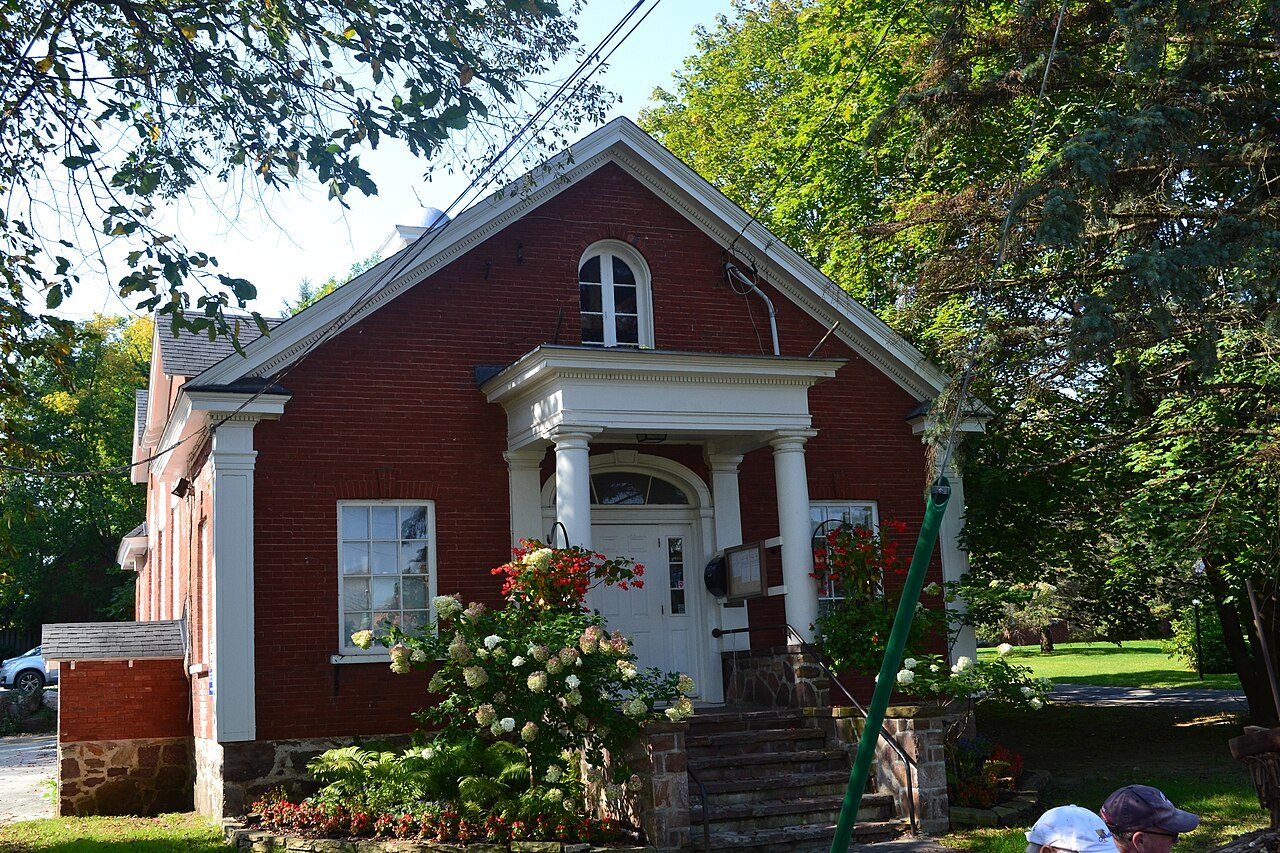
Hudson Town Hall · Photo: Cantons-de-l'Est · CC BY-SA 4.0
4historic places on the registers
History of Hudson · Canada’s heritage registers
An older town: 38% of Hudson’s homes predate 1961
Hudson has 2.2 times what the typical town has (18%). The registers put 4 historic places inside its boundary, one of them of the highest rank. Per resident it outdoes 97% of Canadian towns, with 7.2 for every 10,000 people. The list takes in 3 municipal citations.
National Historic Sites, classified federal buildings and Québec’s classements
Provincial and local listings
3
municipal citations on Québec’s register
Oldest building
1904
the first construction date on its record
Homes built before 1961
38%
typical town: 18%
In pictures
Historic Hudson, in 3 photos
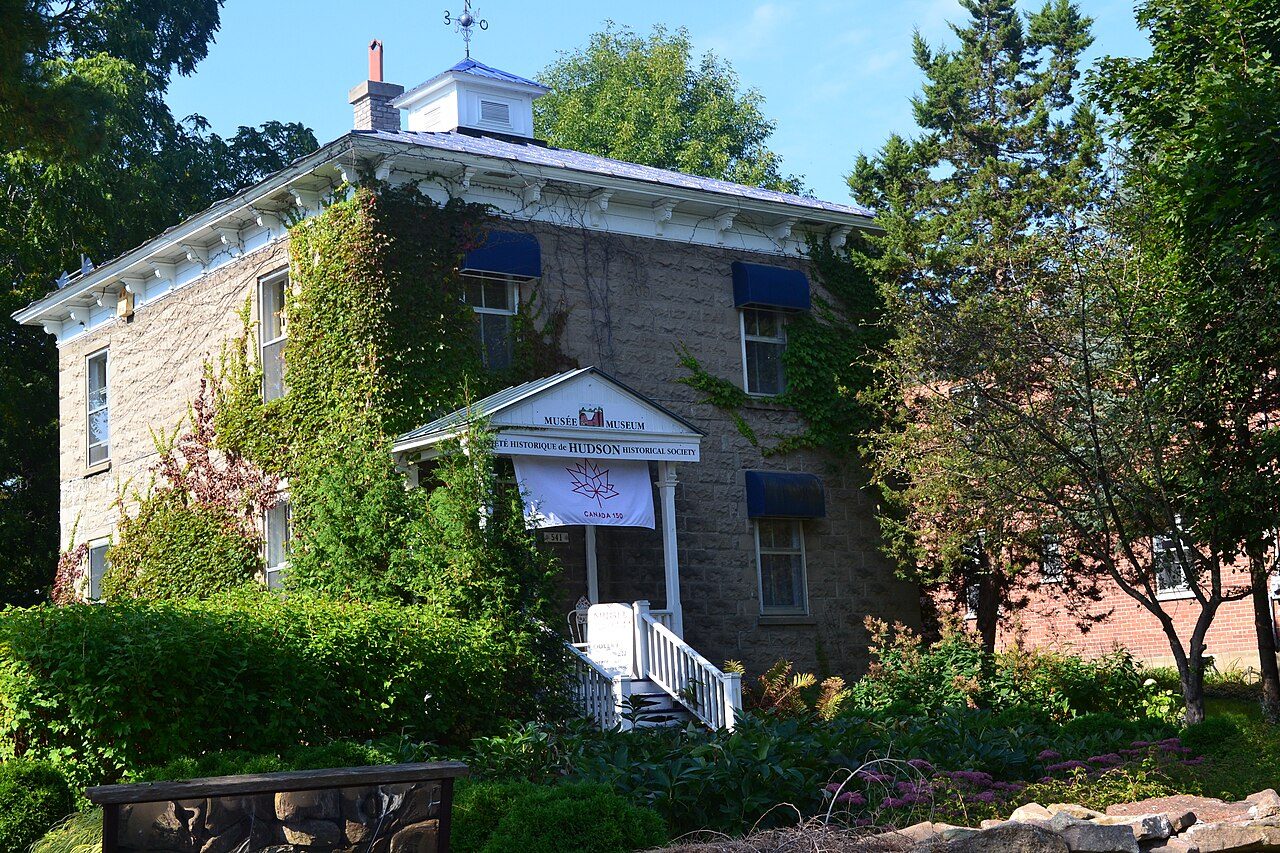
Two worth a look first: Hudson Town Hall and Maison Halcro. There are photos here of 3 of Hudson’s designated places. Of the places pictured in Hudson, Hudson Town Hall is the oldest, from 1904.
Photos from Wikimedia Commons, each credited to its photographer with its licence; names open the place’s page. Tap a photo to step through them full screen.
How it began
Hudson’s first recorded year: 1969
June 7, 1969 is the date of Hudson’s municipality in Wikidata, and like many such dates it may record a charter, not the first homes. In 1969 the municipality took over from Como-Est, Hudson and Hudson Heights.
Every place on the registers inside the town, by its designation.
Highest designationsProvincial and local listings
Tap any dot to open that place’s own page; hovering shows its name.
The 4, by tier
1 Highest designations3 Provincial and local listings
Two open registers meet here: Parks Canada’s Directory of Federal Heritage Designations and Québec’s heritage register, which records both provincial classements and municipal citations.
Points from Wikidata (Parks Canada’s files carry none) and from Québec’s register, as mapped there.
Highest designations
The highest rank in Hudson: one place
National Historic Sites and Classified Federal Heritage Buildings, Canada’s highest federal recognition. Each one opens its own page.
Citations the municipality has made, registered with Québec’s ministry of culture. The oldest, Hudson Town Hall, dates from 1904; the newest from 1909. Each one opens its own page.
Homes built from 2016 to 2021 are 5.1% of Hudson’s, about the typical 4.1%. Count back from today and half of Hudson’s homes are older than 1981. Building from 1961 to 1980 gave Hudson 23% of its homes, near the usual 27%.
38%
Before 1961
23%
1961–80
18%
1981–2000
16%
2001–15
5.1%
2016–21
HudsonTypical town
2021 Census, private dwellings by period of construction (Statistics Canada); the typical town is the middle Canadian town of 2,500 or more.
Towns its size
Hudson has the most of 16 towns its size
Towns of 5,500 to 5,600 residents, by places on the registers.
The 2021 Census dates 38% of Hudson’s homes before 1961, against 18% in the typical town. The count is 4 historic places, one with the highest designation, with Site archéologique de l’Ancienne-Verrerie-Ottawa Glass Works first. No town its size has more historic places: it leads the 16 nearest in population. Beyond that, True Davidson (1901) and Frank Grisdale (1887) are its people of the past on the record; and its places were designated between 2012 and 2023.
How to read these numbers
What this data can and can’t tell you
•
Québec’s register. Québec is the one province whose register is open: classements, declarations and municipal citations, described by the ministry in French.
•
The federal register. Parks Canada’s Directory of Federal Heritage Designations lists every National Historic Site, federal heritage building, heritage railway station and lighthouse; the Canadian Register of Historic Places adds their statements in English and French.
•
The grade. There is no history grade: the page sets out the record and compares it with other towns.
•
People and events. The open directory puts its national historic persons nowhere, so a town shows one only on firm ground: a birth there, matched by name and life years, or a historic place there named for the person whose record says so. Events are left out.
•
Protection. In Québec, a classement or a municipal citation under the Loi sur le patrimoine culturel protects the building in law; a federal designation recognises significance and binds only federal owners.
•
The tiers. Tiers follow the designation: national recognition and classement first, other federal designations next, provincial and local listings last.
•
Map points. Parks Canada publishes no coordinates, so federal places are pinned where Wikidata puts them.
Questions about Hudson’s history
How old are the homes in Hudson?
38% predate 1961, where the typical town has 18%.
Which places in Hudson have the highest designation?
Site archéologique de l’Ancienne-Verrerie-Ottawa Glass Works.
What is the oldest building in Hudson?
Hudson Town Hall (Municipal citation (Québec)): the first construction date on its record is 1904.
Contains information licensed under the Open Government Licence – Canada (Parks Canada). Québec register data: Ministère de la Culture et des Communications du Québec, CC BY 4.0.
Sources: Parks Canada, Directory of Federal Heritage Designations · Canadian Register of Historic Places (federal extract) · Répertoire du patrimoine culturel du Québec (MCC, Données Québec) · Wikidata (CC0) for map points, other names and articles · Statistics Canada, 2021 Census (homes by period of construction). Under the Statistics Canada Open Licence.

 Local
 Local
 Local