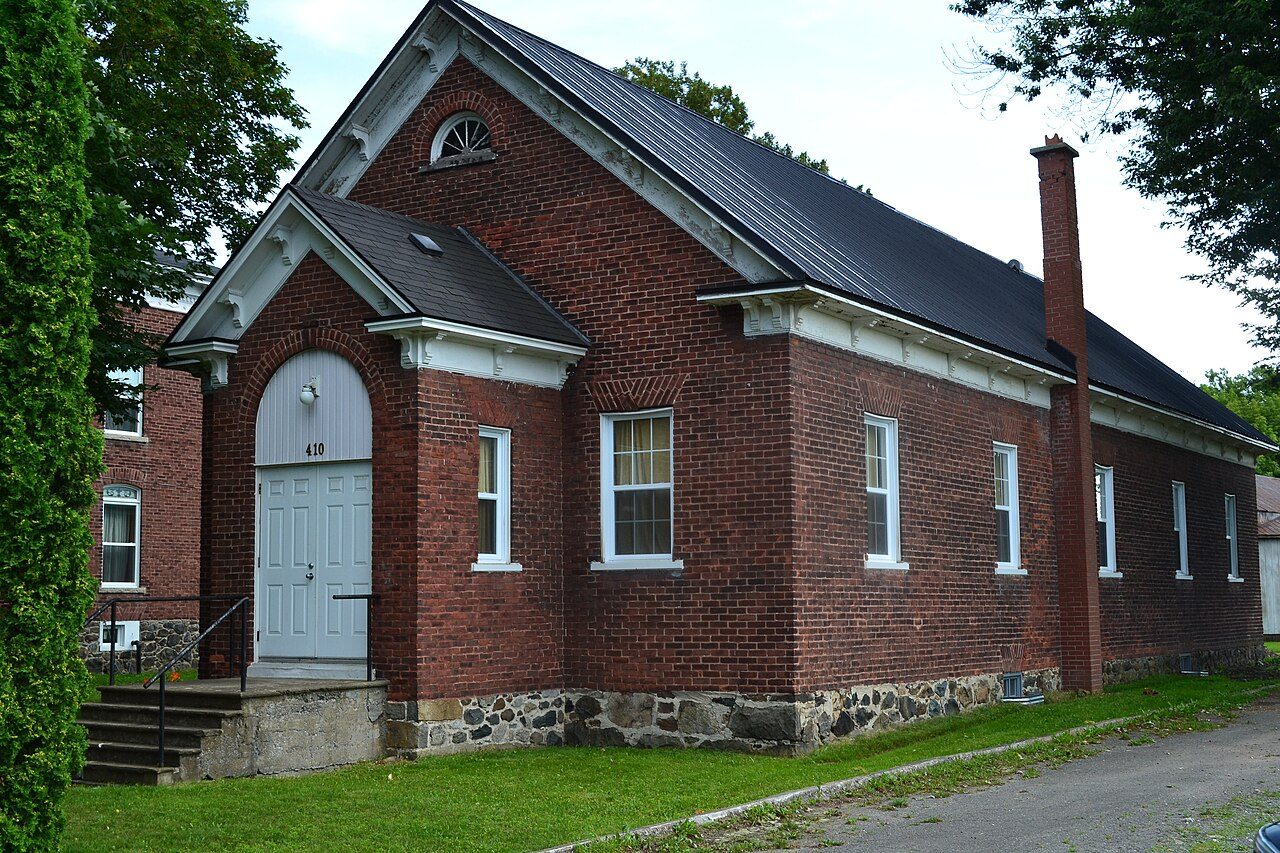
Salle anglicane du complexe St. James · Photo: Cantons-de-l'Est · CC BY-SA 4.0
3historic places on the registers
History of Farnham · Canada’s heritage registers
Farnham has 3 historic places on the registers
Counted by designation, there are 2 municipal citations and a heritage railway station. The earliest construction date, 1887, belongs to Salle anglicane du complexe St. James. Measured against its size, Farnham’s 2.7 per 10,000 residents puts it ahead of 89% of Canadian towns. Homes from before 1961 make up 31% of the stock, above the 18% of the typical town.
Among them: Salle anglicane du complexe St. James and “Canadian Pacific Railway Station, Farnham, Quebec”. The photos cover every place on Farnham’s registers. 3 different photographers shared them on Wikimedia Commons.
Photos from Wikimedia Commons, each credited to its photographer with its licence; names open the place’s page. Tap a photo to step through them full screen.
How it began
Farnham through its dates, from 1862
Farnham was known as Farnham Ouest until 1876. Farnham, Quebec railway station, the earliest station on record, opened in 1951. Wikidata holds January 1, 1862 as the start of the municipality of Farnham, a date that can just as well be an incorporation.
Every place on the registers inside the town, by its designation.
Other federal designationsProvincial and local listings
Names show on hover, and a tap takes you to the place’s page.
The 3, by tier
1 Other federal designations2 Provincial and local listings
In Québec the record is fuller than elsewhere: beside Parks Canada’s designations, the province’s register lists its classements and every municipal citation.
Points from Wikidata (Parks Canada’s files carry none) and from Québec’s register, as mapped there.
Other federal designations
One other place Canada recognizes in Farnham
Recognized Federal Heritage Buildings, heritage railway stations and lighthouses. Each one opens its own page.
Their designations span 2007 to 2008. Citations the municipality has made, registered with Québec’s ministry of culture. Start with Salle anglicane du complexe St. James and Ensemble institutionnel de Saint-Romuald. Each one opens its own page.
A growing town: 14% of Farnham’s homes went up from 2016 to 2021, against 4.1%
Count back from today and half of Farnham’s homes are older than 1981. Few of Farnham’s homes date from 1981 to 2000: 13%, the norm 23%. 25% of Farnham’s homes were built from 1961 to 1980, close to the typical town’s 27%.
31%
Before 1961
25%
1961–80
13%
1981–2000
17%
2001–15
14%
2016–21
FarnhamTypical town
2021 Census, private dwellings by period of construction (Statistics Canada); the typical town is the middle Canadian town of 2,500 or more.
Born here
Born in Farnham, 1803 to 1893
Most of them, 7 of 10, came into the world in the decades after Confederation. Longest lived was Ludger Lemieux, 81 years in all (1953). Before 1914, 10 births here made the record. The widest known is H. H. Bennett: 5 Wikipedia editions.
Alphonso Wells
H. H. Bennett
John Charles McCorkill
Alfred Duranleau
Ludger Lemieux
Pierre-Ernest Boivin
Hattie Bartholomay
Wilfred Bourque
Leonidas Giroux
Louis-Arthur Giroux
1800182518501875190019251950
H. H. Bennett1843–1908 · American photographer and postcard publisher
Alfred Duranleau1871–1951 · Canadian lawyer and politician
Ludger Lemieux1872–1953 · Quebec architect
Pierre-Ernest Boivin1872–1938 · Canadian politician
JM
John Charles McCorkill1854–1920 · Canadian politician
WB
Wilfred Bourque1879–1909 · American racing driver
AW
Alphonso Wells1803–1852 · Canadian politician
Hattie Bartholomay1875–1954 · American Painter and Doll Designer
Everyone born in Farnham → Born before 1914 (the page’s periods: Confederation to the First World War). Birthplaces from Wikidata, each checked against the person’s Wikipedia article.
Towns its size
Farnham has the 4th most of 16 towns its size
Towns of 11,300 to 11,400 residents, by places on the registers.
The pre-1961 share of Farnham’s homes is 31%, against 18% in the typical town. The count is 3 historic places. Only 3 of the 16 towns nearest its size have more historic places. Its people of the past include H. H. Bennett (1843), Alfred Duranleau (1871) and Ludger Lemieux (1872). The rest is about typical: the designations ran from 1995 to 2008.
How to read these numbers
What this data can and can’t tell you
•
Map points. Pins for federal places come from Wikidata rather than Parks Canada, which gives no points.
•
People and events. Persons of national historic significance come with no location; a town gets one only by birthplace (name and both life years agreeing) or by one of its own places that bears the name and whose record tells the story. Events, which can’t be tied, are left out.
•
The grade. There is no history grade: the page sets out the record and compares it with other towns.
•
The federal register. Federal places come from Parks Canada’s directory, which counts National Historic Sites, federal heritage buildings, stations and lighthouses; their statements are the register’s own.
•
Québec’s register. Québec is the one province whose register is open: classements, declarations and municipal citations, described by the ministry in French.
•
The tiers. Tiers follow the designation: national recognition and classement first, other federal designations next, provincial and local listings last.
•
Protection. In Québec, a classement or a municipal citation under the Loi sur le patrimoine culturel protects the building in law; a federal designation recognises significance and binds only federal owners.
Questions about Farnham’s history
How many historic places does Farnham have on the registers?
Inside Farnham: 3 historic places.
How old are the homes in Farnham?
Before 1961: 31% of its homes; the typical town has 18%.
What is the oldest building in Farnham?
Salle anglicane du complexe St. James (Municipal citation (Québec)): the first construction date on its record is 1887.
Contains information licensed under the Open Government Licence – Canada (Parks Canada). Québec register data: Ministère de la Culture et des Communications du Québec, CC BY 4.0.
Sources: Parks Canada, Directory of Federal Heritage Designations · Canadian Register of Historic Places (federal extract) · Répertoire du patrimoine culturel du Québec (MCC, Données Québec) · Wikidata (CC0) for map points, other names and articles · Statistics Canada, 2021 Census (homes by period of construction). Under the Statistics Canada Open Licence.

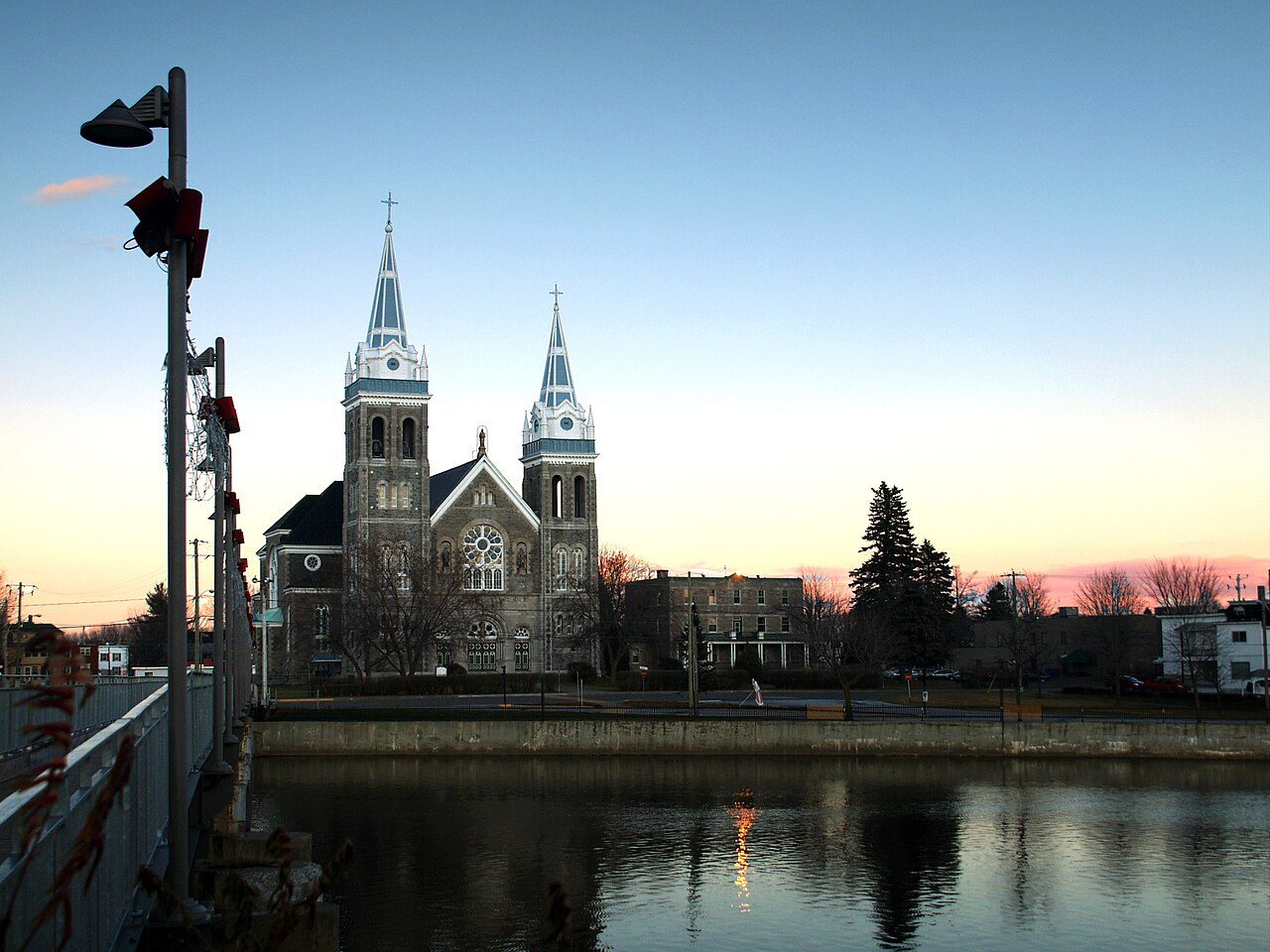
 Fed
 Local
 Local


