 Top
Classified heritage site (Québec) · 1862–1870Domaine Cimon58 rue Saint-Jean-Baptiste¤50 rue Saint-Jean-BaptistePhoto: Cantons-de-l'Est · CC BY-SA 4.0 · Commons file
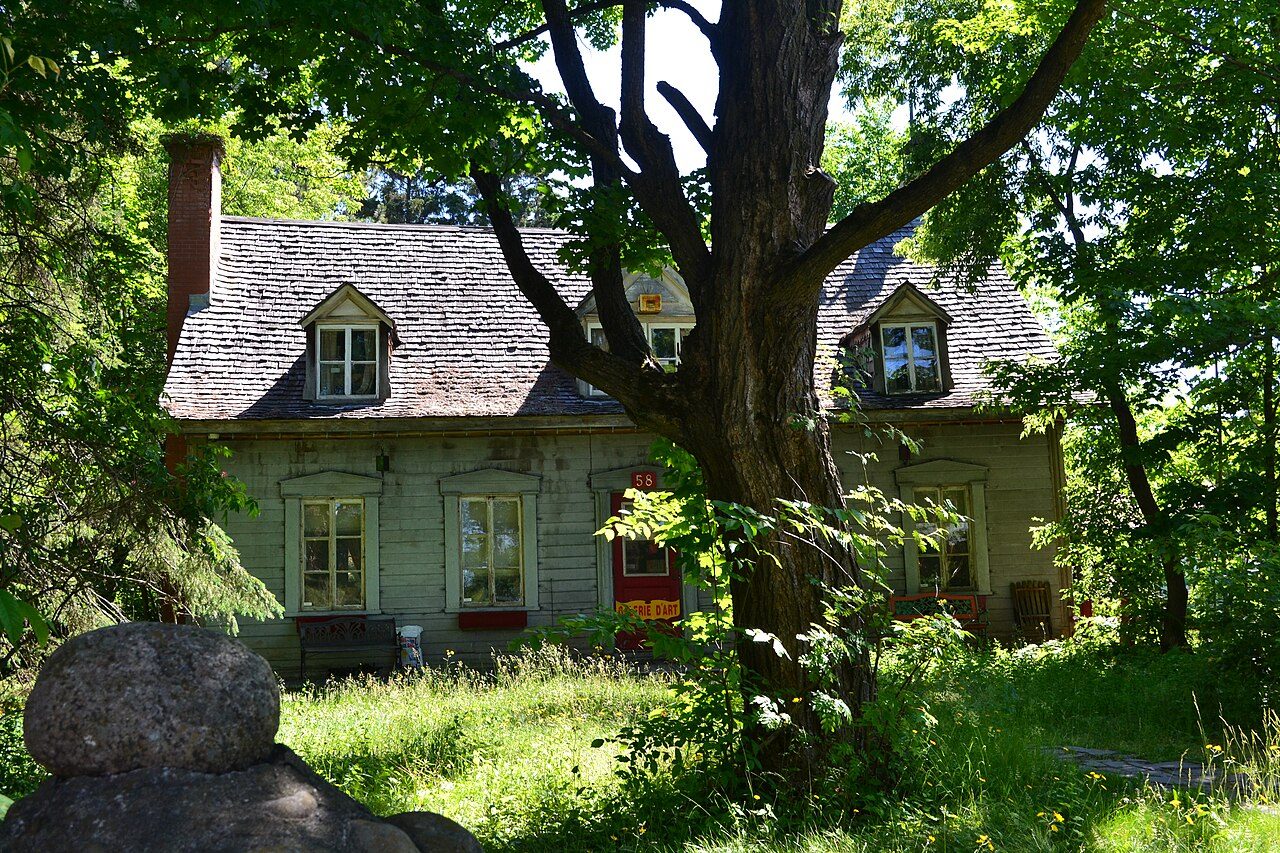 Domaine Cimon · Photo: Cantons-de-l'Est · CC BY-SA 4.0
3historic places on the registers
History of Baie-Saint-Paul · Canada’s heritage registers
Baie-Saint-Paul has 3 historic places on the registers, 2 in the top tier
On the list: a municipal citation. Few towns have as much for their size as Baie-Saint-Paul: 3.9 for every 10,000 residents, more than 93% of Canadian towns. The oldest dated place, Moulin du Gouffre, goes back to 1828. Wikidata dates the municipality to 1650, which may be its founding, its incorporation or a later merger.
Historic places
3
3.9 per 10,000 residents
Highest designations
2
National Historic Sites, classified federal buildings and Québec’s classements
Provincial and local listings
1
municipal citations on Québec’s register
Oldest building
1828
the first construction date on its record
Homes built before 1961
25%
typical town: 18%
In pictures
See Baie-Saint-Paul today and before 1950: 2 photos, 1 old pictures
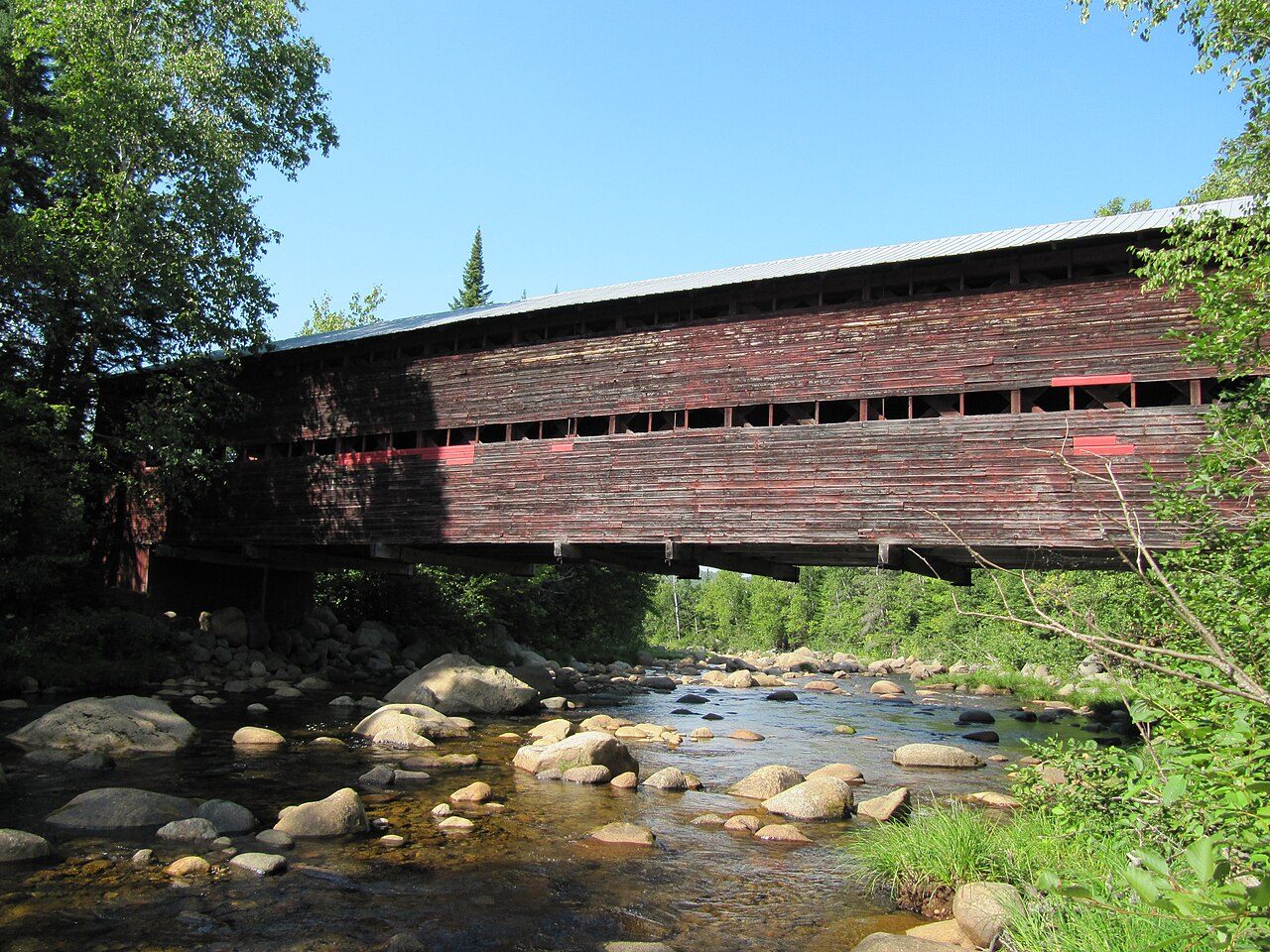
Of Baie-Saint-Paul’s places with the highest designations, one is photographed. The photos cover 2 of Baie-Saint-Paul’s designated places; the rest keep their register record. Among them: Domaine Cimon and Pont de Saint-Placide-de-Charlevoix.
Photos from Wikimedia Commons, each credited to its photographer with its licence; names open the place’s page. Tap a photo to step through them full screen.
Through time
The old face of Baie-Saint-Paul
One old photograph of the town, made before 1950. Open it full screen with a tap.
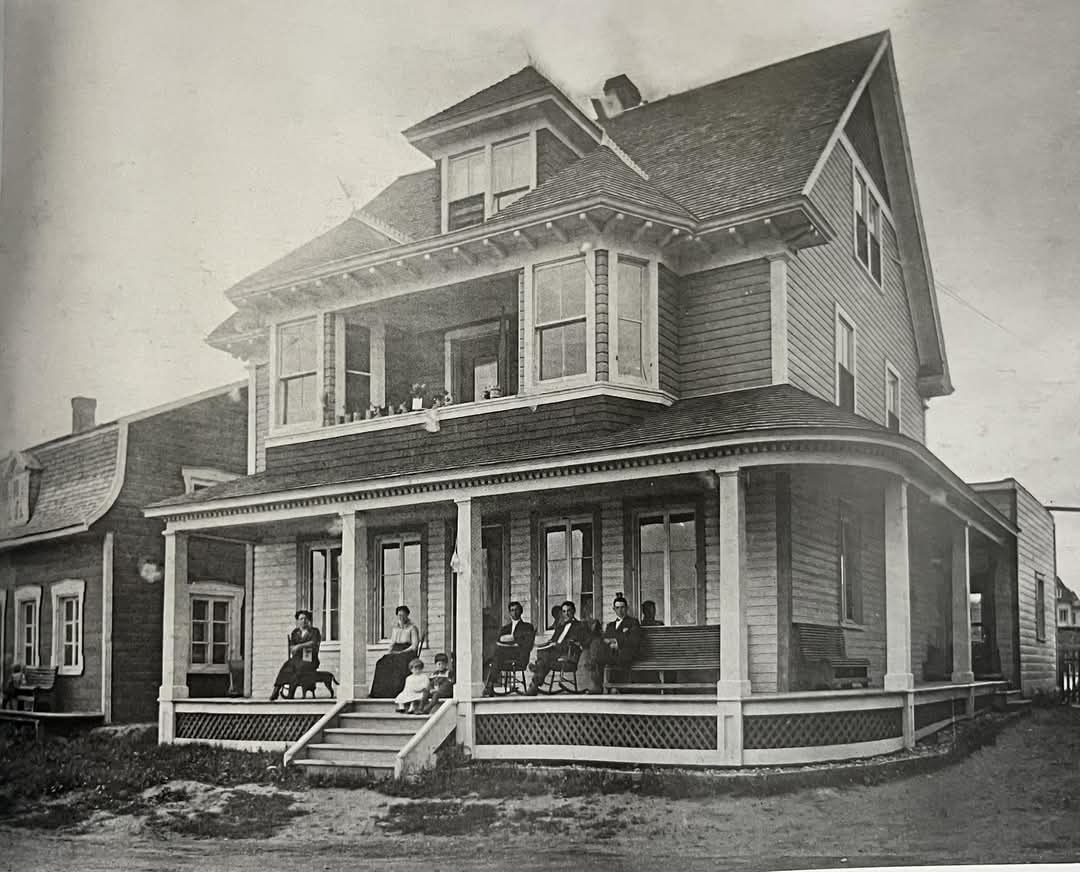 1928
Public domain or CC0, made before 1950, from Wikimedia Commons; old views of places can be drawings, prints or maps of their time. Each credit opens the image’s page.
The map
Where Baie-Saint-Paul’s history is
Every place on the registers inside the town, by its designation.
Highest designationsProvincial and local listings
Names show on hover, and a tap takes you to the place’s page.
The 3, by tier
2 Highest designations1 Provincial and local listings
Parks Canada’s federal directory and Québec’s Répertoire du patrimoine culturel supply these places: federal designations, the province’s classements and the municipalities’ citations.
Points from Wikidata (Parks Canada’s files carry none) and from Québec’s register, as mapped there.
Highest designations
2 places in Baie-Saint-Paul with the highest designation
They date from 1828 (Moulin du Gouffre) to 1862. National Historic Sites and Classified Federal Heritage Buildings, Canada’s highest federal recognition. Designations came from 1965 to 1981. Each one opens its own page.
Classified heritage building (Québec) · 1828Moulin du Gouffre8 chemin Sainte-Croix
Provincial and local listings
On a provincial or local list in Baie-Saint-Paul: one place
Citations the municipality has made, registered with Québec’s ministry of culture. Each one opens its own page.
 Local
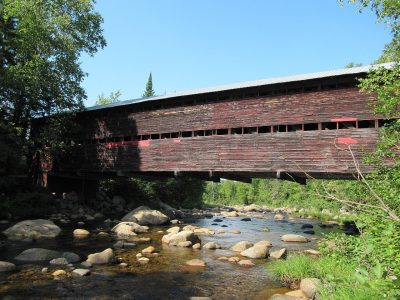
Municipal citation (Québec) · 1926Pont de Saint-Placide-de-Charlevoixrang de Saint-Placide SudPhoto: SamuelFreli · CC BY-SA 3.0 · Commons file
Homes by age
25% of Baie-Saint-Paul’s homes are older than 1961, against a usual 18%
New building in Baie-Saint-Paul runs at the usual pace: 3.8% of homes from 2016–21, the typical town 4.1%. More of Baie-Saint-Paul’s homes were built from 1961 to 1980 than in any other period: 30%. Half of the homes standing in Baie-Saint-Paul today were built before 1981.
25%
Before 1961
30%
1961–80
26%
1981–2000
15%
2001–15
3.8%
2016–21
Baie-Saint-PaulTypical town
2021 Census, private dwellings by period of construction (Statistics Canada); the typical town is the middle Canadian town of 2,500 or more.
Born here
Born in Baie-Saint-Paul, 1805 to 1912
The widest known is Simone Mary Bouchard: 6 Wikipedia editions. Before 1914, 7 births here made the record. At 78, Yvonne Bolduc outlived the rest, dying in 1983. Of the 7, 4 were born in the years before Confederation.
Mars Simard
Adolphe Gagnon
Onésime Côté
Joseph Morin
Albert Duquesne
Yvonne Bolduc
Simone Mary Bouchard
1800182518501875190019251950

Simone Mary Bouchard1912–1945 · Canadian painter

Joseph Morin1854–1915 · Canadian politician

Albert Duquesne1890–1956 · Canadian radio host
AG
Adolphe Gagnon1810–1885 · Canadian politician
MS
Mars Simard1805–1862
OC
Onésime Côté1840–1911 · Canadian politician
YB
Yvonne Bolduc1905–1983 · Canadian painter
Everyone born in Baie-Saint-Paul → Born before 1914 (the page’s periods: Confederation to the First World War). Birthplaces from Wikidata, each checked against the person’s Wikipedia article.
Towns its size
Baie-Saint-Paul has the most of 16 towns its size
Towns of 7,700 to 7,800 residents, by places on the registers.
Baie-Saint-Paul3
Their median is 0. 13 of them have none.
Neighbours
Baie-Saint-Paul and its neighbours
| Town | People | Places | Highest | Oldest |
|---|---|---|---|---|
| Baie-Saint-Paul | 7,760 | 3 | 2 | 1828 |
| L'Isle-aux-Coudres | 1,083 | 7 | 7 | 1728 |
| Saint-Urbain | 1,431 | 2 | 1 | 1850 |
| Les Éboulements | 1,661 | 3 | 2 | 1751 |
| Petite-Rivière-Saint-François | 1,150 | 1 | 0 | — |
| Saint-Hilarion | 1,221 | 0 | 0 | — |
In brief
Baie-Saint-Paul in brief
Before 1961: 25% of Baie-Saint-Paul’s homes, against 18% in the typical town. There are 3 historic places in all, 2 with the highest designation; Moulin du Gouffre heads them. Among the 16 towns nearest its size, none has more historic places. Among the lives from its past: Simone Mary Bouchard (1912), Joseph Morin (1854) and Albert Duquesne (1890). The other figures are unremarkable: the list grew between 1965 and 2002.
How to read these numbers
What this data can and can’t tell you
- People and events. Parks Canada’s open file gives its national historic persons no place. A town’s page names one only when the person was born there (matched by name and both life years) or one of its own historic places carries the name and its record speaks of them; national historic events stay off.
- Protection. In Québec, a classement or a municipal citation under the Loi sur le patrimoine culturel protects the building in law; a federal designation recognises significance and binds only federal owners.
- The grade. There is no history grade: the page sets out the record and compares it with other towns.
- The tiers. Tiers follow the designation: national recognition and classement first, other federal designations next, provincial and local listings last.
- Québec’s register. The Répertoire du patrimoine culturel du Québec is open data, so the province’s own designations and its municipalities’ citations are here in full.
- The federal register. Every federal designation is in Parks Canada’s directory, and the Canadian Register of Historic Places gives most of them a bilingual statement of significance.
Questions about Baie-Saint-Paul’s history
Which places in Baie-Saint-Paul have the highest designation?
These: Moulin du Gouffre and Domaine Cimon.
What is the oldest building in Baie-Saint-Paul?
By its record, Moulin du Gouffre, from 1828 (Classified heritage building (Québec)).
How old are the homes in Baie-Saint-Paul?
25% of its homes were built before 1961, against 18% in the typical Canadian town.
Contains information licensed under the Open Government Licence – Canada (Parks Canada). Québec register data: Ministère de la Culture et des Communications du Québec, CC BY 4.0.
Sources: Parks Canada, Directory of Federal Heritage Designations · Canadian Register of Historic Places (federal extract) · Répertoire du patrimoine culturel du Québec (MCC, Données Québec) · Wikidata (CC0) for map points, other names and articles · Statistics Canada, 2021 Census (homes by period of construction). Under the Statistics Canada Open Licence.
Adapted from Statistics Canada (Census of Population 2021, population estimates 2025, 2021 census boundaries) under the Statistics Canada Open Licence; this does not constitute an endorsement by Statistics Canada. Neighbourhood names in some cities © OpenStreetMap contributors (ODbL).