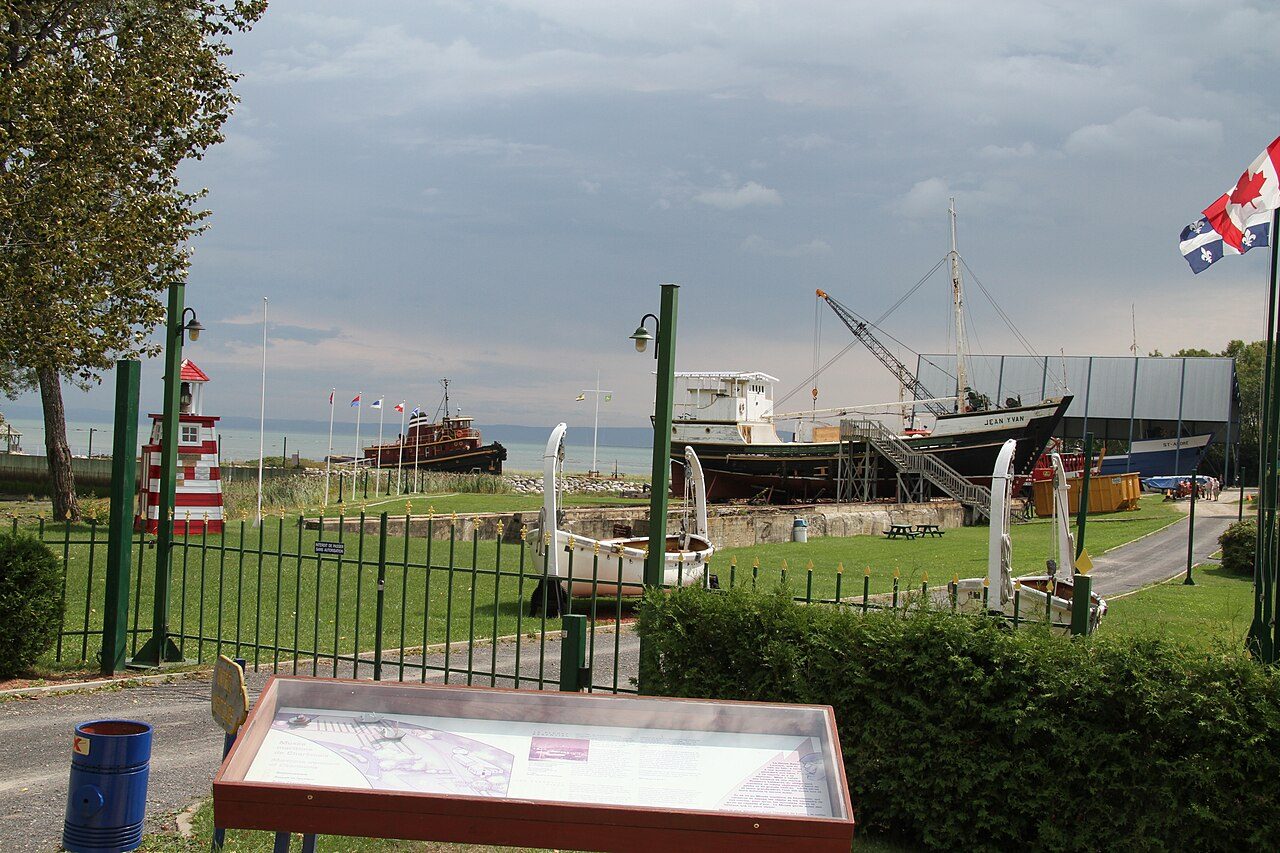
Saint-Joseph-de-la-Rive Shipyard · Photo: Malimage · CC BY-SA 3.0
3historic places on the registers
History of Les Éboulements · Canada’s heritage registers
History in Les Éboulements goes back to 1751: Chapelle de procession de Saint-Nicolas
Before 1961: 35% of Les Éboulements’s homes, where most towns have 18%. The registers put 3 historic places inside its boundary, 2 of them of the highest rank. The record has a municipal citation. Add one just outside the town.
National Historic Sites, classified federal buildings and Québec’s classements
Provincial and local listings
1
municipal citations on Québec’s register
Oldest building
1751
the first construction date on its record
Homes built before 1961
35%
typical town: 18%
In pictures
Every one of Les Éboulements’s 2 most honoured places, in photos
Two to begin with: Saint-Joseph-de-la-Rive Shipyard and Chapelle de procession de Saint-Nicolas. Photos show every place Les Éboulements’s registers name.
Photos from Wikimedia Commons, each credited to its photographer with its licence; names open the place’s page. Tap a photo to step through them full screen.
How it began
Les Éboulements’s early dates, from 1855
The municipality of Les Éboulements has the date July 1, 1855 on Wikidata; the record doesn’t say whether it marks a founding or an incorporation. The name Les Éboulements comes from Assumption of Mary. Before 1956, Les Éboulements went by L'Assomption de la Sainte-Vierge.
Every place on the registers inside the town, by its designation.
Highest designationsProvincial and local listings
Names show on hover, and a tap takes you to the place’s page.
The 3, by tier
2 Highest designations1 Provincial and local listings
The federal directory and the Répertoire du patrimoine culturel du Québec are both open, so every federal, provincial and municipal designation here has its point.
Points from Wikidata (Parks Canada’s files carry none) and from Québec’s register, as mapped there.
Highest designations
2 places in Les Éboulements with the highest designation
Their dates run from 1751, with Chapelle de procession de Saint-Nicolas, to 1946. The group holds a National Historic Site and a place classified by Québec. National Historic Sites and Classified Federal Heritage Buildings, Canada’s highest federal recognition. Each one opens its own page.
Les Éboulements is still building: 7.8% of homes date from 2016 to 2021, against 4.1%
Only 16% of Les Éboulements’s homes were built from 1981 to 2000, less than the typical town’s 23%. Count back from today and half of Les Éboulements’s homes are older than 1981. In Les Éboulements, 26% of homes date from 1961 to 1980, much as in most towns (27%).
35%
Before 1961
26%
1961–80
16%
1981–2000
17%
2001–15
7.8%
2016–21
Les ÉboulementsTypical town
2021 Census, private dwellings by period of construction (Statistics Canada); the typical town is the middle Canadian town of 2,500 or more.
Les Éboulements has 35% of its homes from before 1961, against 18% in the typical town. All told, the registers hold 3 historic places, 2 with the highest designation, Saint-Joseph-de-la-Rive Shipyard among them. Beyond that, Paul Vilmond Savard (1864) and Jean Côté (1867) are its people of the past on the record; and its places were designated between 1961 and 2010.
How to read these numbers
What this data can and can’t tell you
•
Map points. Where a federal place sits on the map is Wikidata’s placing; the directory itself has no coordinates.
•
People and events. Parks Canada’s open file gives its national historic persons no place. A town’s page names one only when the person was born there (matched by name and both life years) or one of its own historic places carries the name and its record speaks of them; national historic events stay off.
•
The grade. There is no history grade: the page sets out the record and compares it with other towns.
•
The tiers. Tiers follow the designation: national recognition and classement first, other federal designations next, provincial and local listings last.
•
Protection. In Québec, a classement or a municipal citation under the Loi sur le patrimoine culturel protects the building in law; a federal designation recognises significance and binds only federal owners.
•
The federal register. Every federal designation is in Parks Canada’s directory, and the Canadian Register of Historic Places gives most of them a bilingual statement of significance.
•
Québec’s register. In Québec the ministry of culture publishes its register openly: provincial classements, declared sites and the municipalities’ citations all appear, with their descriptions.
Questions about Les Éboulements’s history
What is the oldest building in Les Éboulements?
Chapelle de procession de Saint-Nicolas (Classified heritage building (Québec)): the first construction date on its record is 1751.
How old are the homes in Les Éboulements?
The 2021 Census dates 35% of its homes before 1961 (18% in the typical town).
Which places in Les Éboulements have the highest designation?
These: Saint-Joseph-de-la-Rive Shipyard and Chapelle de procession de Saint-Nicolas.
Contains information licensed under the Open Government Licence – Canada (Parks Canada). Québec register data: Ministère de la Culture et des Communications du Québec, CC BY 4.0.
Sources: Parks Canada, Directory of Federal Heritage Designations · Canadian Register of Historic Places (federal extract) · Répertoire du patrimoine culturel du Québec (MCC, Données Québec) · Wikidata (CC0) for map points, other names and articles · Statistics Canada, 2021 Census (homes by period of construction). Under the Statistics Canada Open Licence.

 Top
 Top