 Top
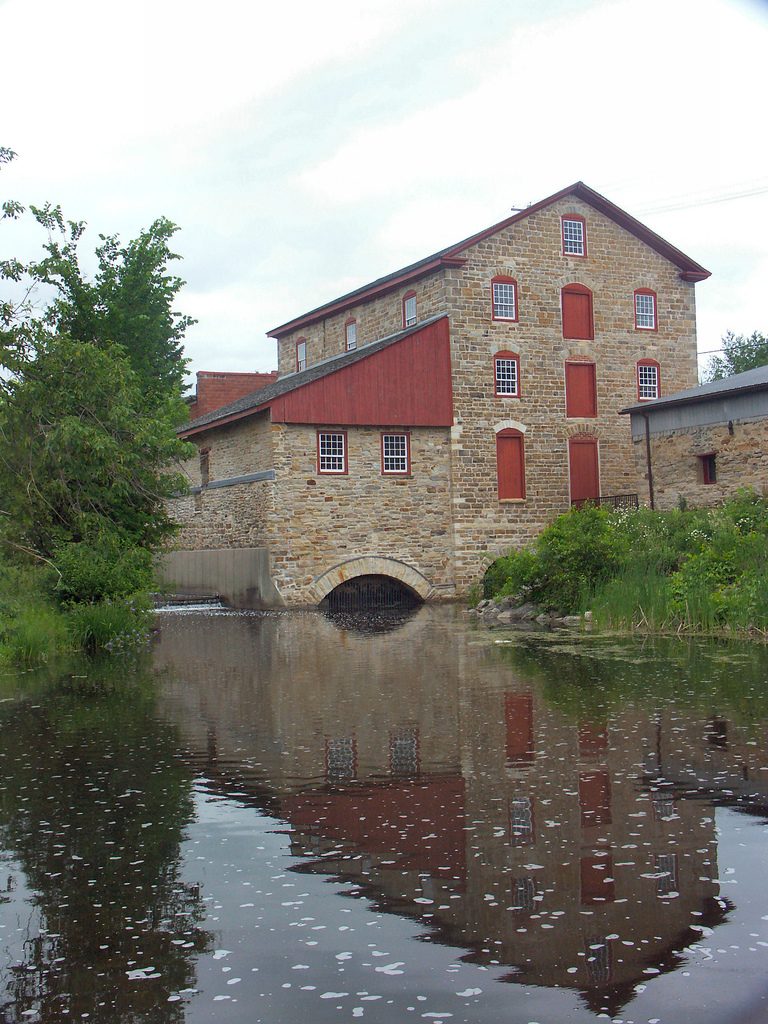
National Historic Site · 1810–1811Old Stone Millnear 44 Highway 42Photo: Brian Ridgway from King City and Buckhorn, Ontario, Canada · CC BY-SA 2.0 · Commons file
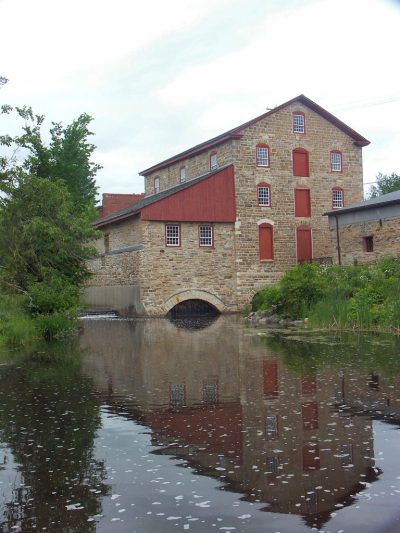
 Photo: P199 · CC BY-SA 3.0
1historic place on the registers
History of Rideau Lakes · Canada’s heritage registers
Rideau Lakes’s 1 historic place is a top designation
Rideau Lakes’s one place is Old Stone Mill, a national historic site begun in 1810. Wikidata gives 1998 for the municipality, whether that is when it was founded, incorporated or merged. Rideau Lakes has 0.8 for every 10,000 people, a higher rate than 78% of Canadian towns. Behind these stand 11 more local or provincial listings that only Wikidata records.
Historic places
1
0.8 per 10,000 residents
Highest designations
1
National Historic Sites and Classified Federal Heritage Buildings
Oldest building
1810
the first construction date on its record
Homes built before 1961
29%
typical town: 18%
In pictures
Rideau Lakes in pictures
One place in Rideau Lakes is on the registers, and this is it: Old Stone Mill.
Photos from Wikimedia Commons, each credited to its photographer with its licence; names open the place’s page. Tap a photo to step through them full screen.
The map
Where Rideau Lakes’s history is
Every place on the registers inside the town, by its designation.
Highest designations
Hover a dot for its name; tap one to open its page.
The 1, by tier
1 Highest designations
The federal directory kept by Parks Canada supplies most of these places; provincial and municipal lists outside Québec aren’t open data, so only the ones Wikidata documents with an article appear.
Points from Wikidata (Parks Canada’s files carry none) and from Québec’s register, as mapped there.
Highest designations
One place in Rideau Lakes with the highest designation
National Historic Sites and Classified Federal Heritage Buildings, Canada’s highest federal recognition. Each one opens its own page.
Around the town
The highest designation, 6 times, within 25 km of Rideau Lakes
All told, 6 places are within 25 km. The nearest is Lansdowne Iron Works, 17 km away in Leeds and the Thousand Islands. Between them, 3 towns share them, mainly Perth, Smiths Falls and Leeds and the Thousand Islands.
The 6 nearest, within 25 km
| Lansdowne Iron WorksNational Historic Site · 1801–1813 · 17 km away, in Leeds and the Thousand Islands |
| McMartin HouseNational Historic Site · 1830–1831 · 23 km away, in Perth |
| Perth Town HallNational Historic Site · 1863–1865 · 24 km away, in Perth |
| Matheson HouseNational Historic Site · 1840–1841 · 24 km away, in Perth |
| Smiths Falls Bascule BridgeNational Historic Site · 1912–1914 · 24 km away, in Smiths Falls |
| Smiths Falls Railway Station (Canadian Northern)National Historic Site · 1912–1915 · 25 km away, in Smiths Falls |
Homes by age
Old houses stand out in Rideau Lakes: 29% predate 1961, where most towns have 18%
Over half of the homes in Rideau Lakes were already standing by 1981. From 2016 on, Rideau Lakes built only 3% of its homes; the typical town built 4.1%. In Rideau Lakes, 26% of homes date from 1961 to 1980, much as in most towns (27%).
29%
Before 1961
26%
1961–80
28%
1981–2000
15%
2001–15
3%
2016–21
Rideau LakesTypical town
2021 Census, private dwellings by period of construction (Statistics Canada); the typical town is the middle Canadian town of 2,500 or more.
Born here
11 lives that began in Rideau Lakes before 1914
By Wikipedia’s reach, Vic Ripley leads, with 5 articles. The first on the line is Jesse Delong (1805). 8 of the 11 were born in the decades after Confederation. Vic Ripley closes the list, born in 1906.
Jesse Delong
Alexander Hall Roe
John Robertson Dargavel
Abbie Johnson
Howard Hadden Halladay
William Samuel Murphy
Lorne Pierce
Stanley Francis Leavine
Mary Littlejohn
Thomas Mooney
Vic Ripley
1800182518501875190019251950

Vic Ripley1906–1962 · Canadian ice hockey player
ML
Mary Littlejohn1903–1988 · Canadian figure skater
AJ
Abbie Johnson1871–1960 · American baseball player
HH
Howard Hadden Halladay1876–1952 · Canadian politician
AR
Alexander Hall Roe1842–1884 · Canadian politician
WM
William Samuel Murphy1882–1961 · Canadian politician

Thomas Mooney1906–1944 · Canadian chaplain
JD
Jesse Delong1805–1868 · Canadian politician and farmer
Everyone born in Rideau Lakes → Born before 1914 (the page’s periods: Confederation to the First World War). Birthplaces from Wikidata, each checked against the person’s Wikipedia article.
Towns its size
Rideau Lakes has the 3rd most of 16 towns its size
Towns of 12,000 to 12,300 residents, by places on the registers.
Rideau Lakes1
Just these have more: St. Andrews and Sainte-Agathe-des-Monts. Their median is 0. 10 of them have none.
Neighbours
Rideau Lakes and its neighbours
| Town | People | Places | Highest | Oldest |
|---|---|---|---|---|
| Rideau Lakes | 12,148 | 1 | 1 | 1810 |
| Athens | 3,078 | 0 | 0 | — |
In brief
Rideau Lakes in brief
Before 1961: 29% of Rideau Lakes’s homes, against 18% in the typical town. The lists come to 1 historic place, one with the highest designation, including Old Stone Mill. Only 2 of the 16 towns nearest its size have more historic places. Vic Ripley (1906), Mary Littlejohn (1903) and Abbie Johnson (1871) are the best known of its historic lives. The other figures are unremarkable: its designation dates from 1970.
How to read these numbers
What this data can and can’t tell you
- Provincial and municipal lists. Only Wikidata gives open access to listings on provincial and municipal registers outside Québec; without an article such a place is counted but not paged.
- The federal register. The federal list is complete and open: Parks Canada’s directory for the designations, the Canadian Register of Historic Places for what each one is and why it matters.
- Map points. Pins for federal places come from Wikidata rather than Parks Canada, which gives no points.
- The grade. History is described, not graded, for every Canadian town.
- Protection. Being on these registers doesn’t mean a building can’t change. Federal designation commemorates; protection is provincial or municipal, and those lists aren’t open here.
- People and events. National historic persons carry no place in the open file. They appear on a town’s page when born there (same name, same birth and death years) or when a historic place inside it carries their name and its record names them with their dates; national historic events don’t appear.
- The tiers. Three tiers: the top for National Historic Sites, classified federal buildings and Québec’s classements, a second for the other federal designations, a third for provincial and municipal listings.
Questions about Rideau Lakes’s history
Which places in Rideau Lakes have the highest designation?
It is Old Stone Mill.
What is the oldest building in Rideau Lakes?
Old Stone Mill, a National Historic Site, begun in 1810.
How old are the homes in Rideau Lakes?
29% of its homes were built before 1961, against 18% in the typical Canadian town.
Why might a heritage building in Rideau Lakes be missing here?
Provincial and municipal registers outside Québec aren’t open data. Wikidata knows 11 more listings in Rideau Lakes, but without an open description or an encyclopedia article they get no page.
Contains information licensed under the Open Government Licence – Canada (Parks Canada).
Sources: Parks Canada, Directory of Federal Heritage Designations · Canadian Register of Historic Places (federal extract) · Wikidata (CC0) for map points, other names and articles · Statistics Canada, 2021 Census (homes by period of construction). Under the Statistics Canada Open Licence.
Adapted from Statistics Canada (Census of Population 2021, population estimates 2025, 2021 census boundaries) under the Statistics Canada Open Licence; this does not constitute an endorsement by Statistics Canada. Neighbourhood names in some cities © OpenStreetMap contributors (ODbL).